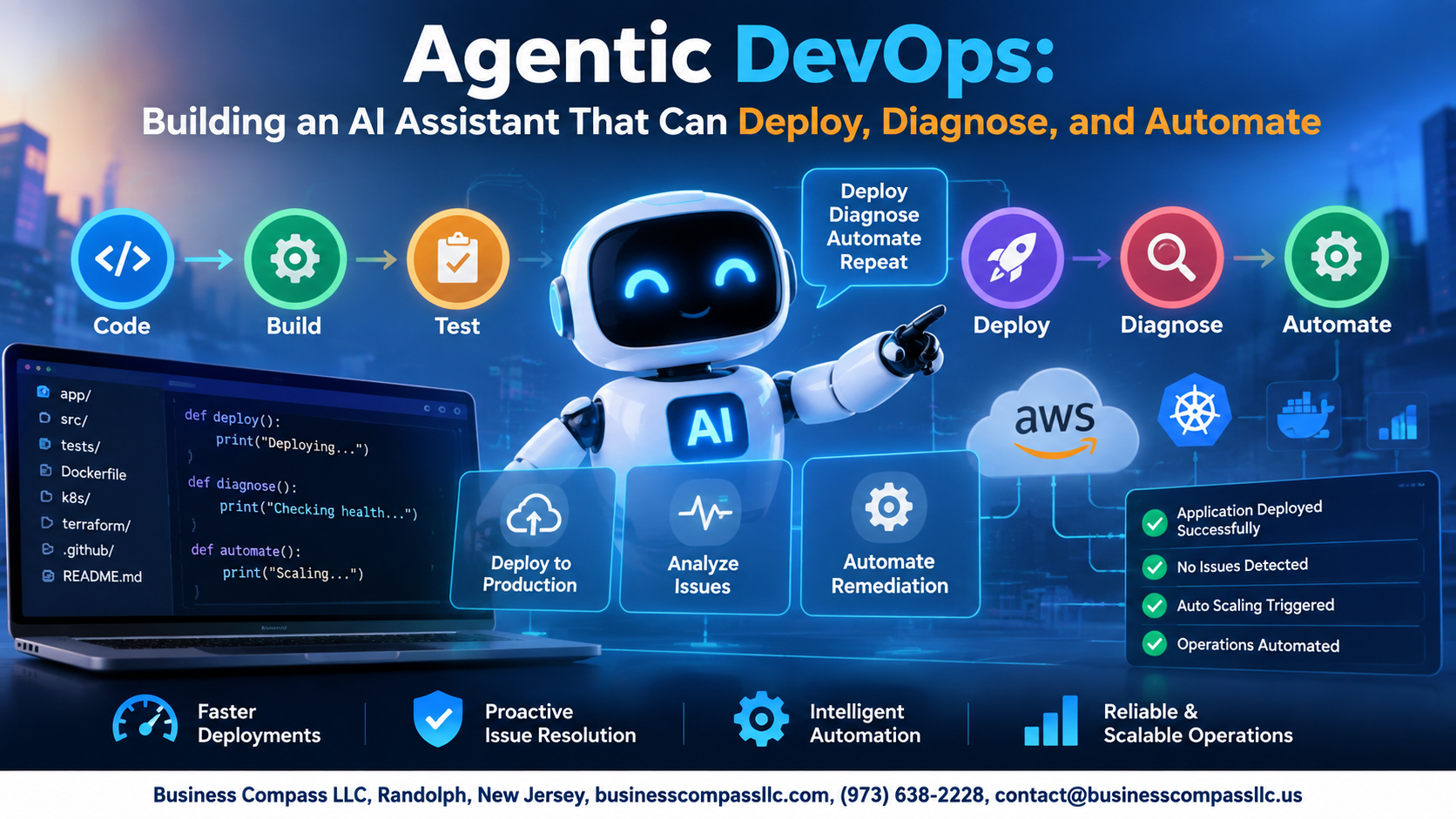
Agentic DevOps: Building an AI Assistant That Can Deploy, Diagnose, and Automate
If you’ve ever been paged at 2 AM because a deployment broke production, you already know the problem this guide is solving.
Agentic DevOps is a hands-on approach where an AI DevOps assistant doesn’t just surface alerts — it acts on them. We’re talking about autonomous deployment automation, real-time infrastructure diagnostics AI, and LLM-based DevOps automation that handles the grunt work your team is tired of doing manually.
This guide is for DevOps engineers, platform teams, and software architects who want to move beyond basic automation scripts and actually build an intelligent DevOps workflow automation system that can think, decide, and execute.
Here’s what we’ll walk through together:
- How agentic AI fits into DevOps — what makes an AI agent different from a regular automation tool, and why that distinction matters for your pipelines
- Building and deploying your AI agent — the architecture decisions behind an AI agent for CI/CD pipelines that can ship code and catch failures without waiting for a human to press go
- Diagnosing and automating at scale — how your agent handles real-world incidents and takes over repetitive tasks so your team can focus on work that actually needs them
By the end, you’ll have a clear, practical blueprint for building AI-powered DevOps tools that earn their place in your stack.
Understanding Agentic AI in the Context of DevOps

What Makes an AI Agent Different from Traditional Automation
Traditional automation follows fixed scripts. Agentic DevOps systems reason, adapt, and make decisions — handling unexpected failures without human intervention.
Core Capabilities of an Agentic DevOps System
- Real-time infrastructure diagnostics
- Autonomous deployment automation
- LLM-based decision-making across CI/CD pipelines
Why DevOps Teams Benefit Most
Agentic AI absorbs toil instantly, freeing engineers for high-value work.
Designing the Architecture of Your AI DevOps Assistant

Choosing the Right AI Models and Frameworks
Pick LLMs like GPT-4 or Claude for reasoning, paired with LangChain or AutoGen for orchestration.
Structuring Agent Workflows
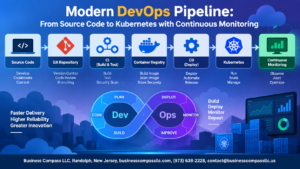
Break tasks into discrete steps: plan, execute, verify.
Integrating with CI/CD Tools
Connect agents directly to Jenkins, GitHub Actions, or ArgoCD.
Safety Guardrails
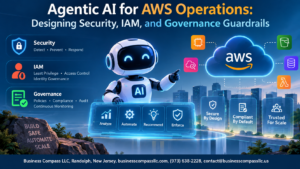
Always gate high-risk actions behind human approval checkpoints.
Enabling Your AI Assistant to Deploy with Confidence

Automating Environment Setup and Configuration Management
AI DevOps assistants handle environment provisioning, config drift detection, and dependency management automatically.
Teaching the Agent to Validate Builds Before Pushing to Production
The agent runs tests, checks health metrics, and flags anomalies before any autonomous deployment automation reaches production.
Handling Rollbacks Automatically When Deployments Fail
When deployments break, the AI DevOps assistant triggers instant rollbacks without human intervention.
Empowering the Agent to Diagnose Issues in Real Time

Connecting to Logs, Metrics, and Alerting Systems
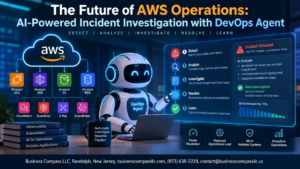
Real-time infrastructure diagnostics AI plugs directly into Prometheus, Datadog, or CloudWatch, pulling signals across your stack instantly.
Autonomous Triage & Root Cause Analysis
- Correlates anomalies across services
- Surfaces actionable fixes fast
- Escalates to humans only when confidence thresholds drop
- Learns from past incidents, sharpening future diagnostics automatically
Automating Repetitive DevOps Tasks at Scale
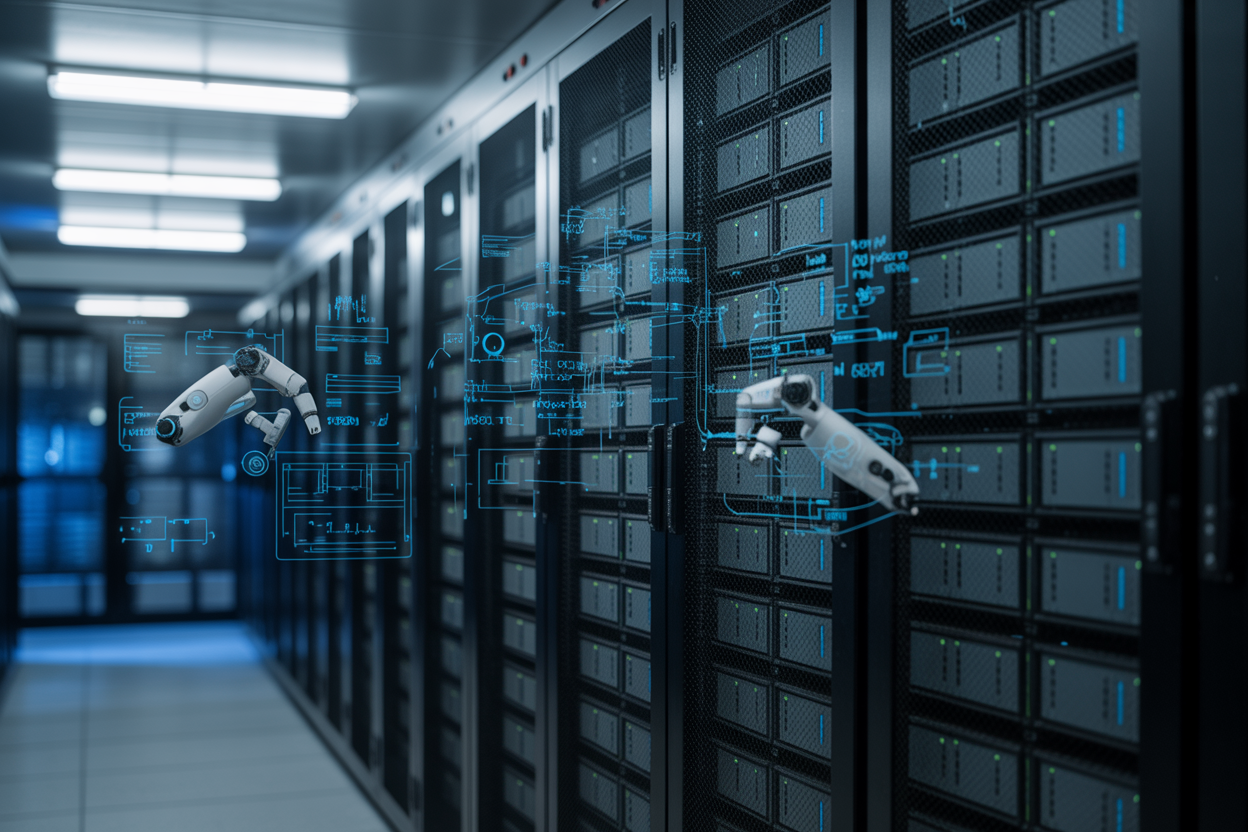
Identifying High-Value Tasks Worth Delegating to an AI Agent
- Ticket triage, log rotation, and environment provisioning top the list.
Streamlining On-Call Responses and Runbook Execution
- Agentic DevOps tools auto-trigger runbooks, cutting mean-time-to-resolution dramatically.
Automating Compliance Checks and Security Patch Management
- AI DevOps assistants scan, flag, and patch vulnerabilities without human queuing.
Measuring the Real-World Impact of Your Agentic DevOps System

Key Metrics to Track Performance, Reliability, and Time Savings
Track deployment frequency, mean time to recovery (MTTR), and incident reduction rates to gauge your agentic DevOps system’s real impact.
Gathering Team Feedback to Continuously Refine Agent Behavior
- Run weekly retrospectives
- Log edge cases your AI DevOps assistant mishandled
Scaling the System Across Teams and Larger Infrastructure Environments
Modular agent configs make scaling straightforward.
Agentic DevOps is not just a fancy upgrade to your existing toolchain — it’s a whole new way of thinking about how software gets built, shipped, and kept alive. From designing a solid architecture to giving your AI assistant the ability to deploy, spot problems on the fly, and handle the repetitive stuff that eats up your team’s day, the pieces all work together to create something genuinely powerful. And when you start measuring the real-world results, the impact becomes hard to ignore.
If you’re ready to move beyond scripts and dashboards and actually put AI to work in your pipeline, now is a great time to start small, experiment with one use case, and build from there. Give your AI assistant a real job to do — whether that’s watching your deployment logs or flagging anomalies before they become incidents — and let the results guide your next move. The teams that get comfortable with agentic systems today are the ones that will ship faster, break less, and sleep better tomorrow.