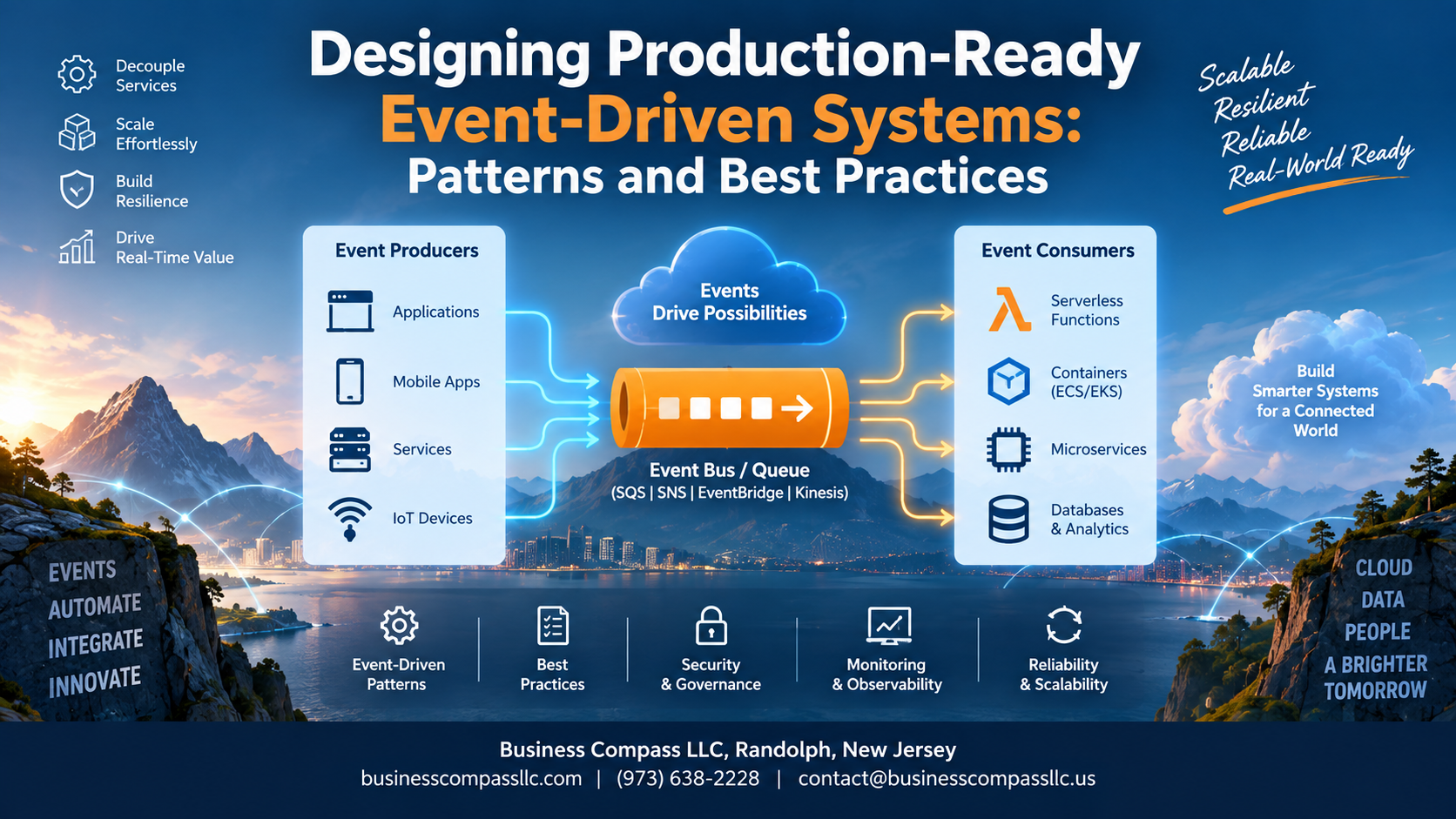
Designing Production-Ready Event-Driven Systems: Patterns and Best Practices
Building an event-driven system that actually holds up in production is a different challenge than building one that works in a demo. Most teams hit the same walls: events get lost, consumers fall behind, debugging feels like detective work, and scaling introduces failure modes nobody anticipated.
This guide is for backend engineers, software architects, and platform teams who are moving beyond the basics and want to ship event-driven architecture that’s reliable, observable, and ready for real traffic.
Here’s what we’ll walk through:
- Broker selection — how to think through the Kafka vs RabbitMQ comparison and pick the right event broker for your specific workload
- Reliability patterns — what it actually takes to design reliable event producers and build resilient consumers that handle failures gracefully
- Production operations — how to approach event-driven observability, secure your message queues, and scale event-driven architecture without it falling apart under load
No fluff, no theory for theory’s sake. Just the patterns and decisions that matter when you’re shipping to production.
Core Principles of Event-Driven Architecture

Understand the Key Differences Between Event-Driven and Request-Driven Systems
Request-driven systems wait for responses; event-driven systems fire-and-forget, letting services react asynchronously.
Identify the Right Use Cases for Event-Driven Design
- Real-time data pipelines
- Decoupled microservices communication
Define Events, Commands, and Messages Clearly
- Event: something that happened
- Command: an instruction to act
Choosing the Right Event Broker for Your System

Compare Leading Brokers: Kafka, RabbitMQ, and AWS EventBridge
Picking the right broker shapes everything downstream. Kafka suits high-throughput streaming; RabbitMQ handles complex routing well; AWS EventBridge simplifies SaaS integrations. Match your choice to actual workload needs—throughput, durability, latency—and wrap brokers behind abstraction layers early to dodge painful vendor lock-in later.
Designing Reliable Event Producers

Guarantee Delivery with Outbox Pattern Implementation
Write events to a local outbox table within the same database transaction as your business logic, then relay them asynchronously to your broker.
Structure Event Payloads for Long-Term Compatibility
- Include
eventId,timestamp, andversionfields always
Version Your Events to Support Safe Schema Evolution
Use schema registries like Confluent’s to enforce backward-compatible changes.
Building Resilient Event Consumers

Handle Duplicate Events Gracefully with Idempotency
Track processed event IDs to skip duplicates safely.
Implement Dead Letter Queues
Capture failed events for retry or manual review.
Control Consumer Lag
Monitor offset lag; scale consumers before backlogs grow unmanageable.
Backpressure Strategies
Rate-limit ingestion to protect downstream services from overload.
Sequence Event Processing
Use partition keys to maintain strict ordering and data consistency.
Implementing Fault Tolerance and Error Handling

Apply Retry Policies Without Creating Infinite Failure Loops
Use exponential backoff with jitter to space out retries and cap attempts at a sensible limit.
Use Circuit Breakers to Isolate Failing Components
Trip the breaker after repeated failures, blocking calls to struggling services instantly.
Design for Partial Failures to Keep the System Running
Dead-letter queues catch poison messages, keeping healthy consumers processing normally.
Ensuring Observability Across Event Flows
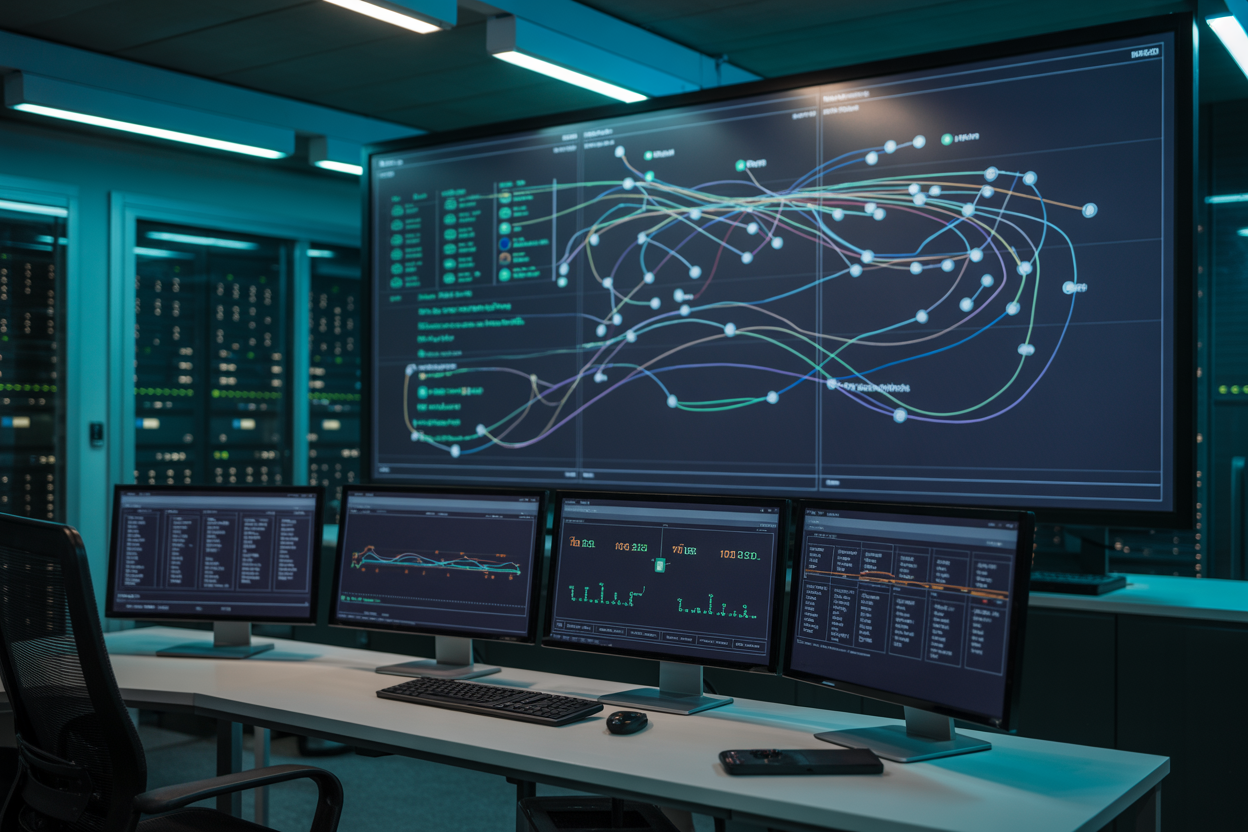
Implement Distributed Tracing to Follow Events End to End
Attach correlation IDs to every event at the source, then propagate them through each consumer so you can trace a single event’s journey across services using tools like Jaeger or OpenTelemetry.
Define Meaningful Metrics for Consumer Lag and Processing Time
Track:
- Consumer lag
- Processing latency
- Dead-letter queue growth
Set Up Alerting Thresholds That Signal Real Problems Early
Alert on lag spikes, not just errors.
Centralize Logs for Faster Root Cause Analysis
Ship all logs to one place—ELK or Datadog.
Securing Your Event-Driven Infrastructure

Enforce Authentication and Authorization at the Broker Level
Use SASL or mTLS to verify every producer and consumer connecting to your broker. Role-based access control (RBAC) limits who can publish or read specific topics.
Encrypt Sensitive Data Within Event Payloads
Encrypt payloads using AES-256 before publishing.
Audit Event Access to Meet Compliance Requirements
- Log all access attempts
- Retain audit trails per regulatory needs
Scaling Event-Driven Systems for Production Workloads

A. Partition Topics Strategically
Split topics by domain or tenant to maximize parallel processing across consumer groups.
B. Scale Consumers Dynamically
Match consumer count to queue depth using autoscaling triggers.
C. Optimize Resources
Right-size brokers; consolidate low-traffic topics.
D. Test at Scale
Run load tests mimicking peak traffic before deploying.

Building a production-ready event-driven system is no small feat, but getting the fundamentals right makes all the difference. From picking the right event broker to designing reliable producers and resilient consumers, every decision you make shapes how well your system holds up under real-world pressure. Layering in fault tolerance, solid error handling, and end-to-end observability means you can catch problems early and fix them fast — before they snowball into bigger issues. And with security and scalability baked in from the start, your system stays protected and performs well as your workload grows.
The good news is that none of this has to happen all at once. Start with a strong architectural foundation, apply the patterns that fit your use case, and keep refining as you learn more about how your system behaves in production. Take these best practices, put them into action one step at a time, and you will be in a great position to build event-driven systems that are not just functional, but truly production-ready.