Stop Losing Sleep Over Downtime: Build Fault-Tolerant Applications on AWS with Multi-AZ Architecture
Outages happen. A single availability zone goes down, your database becomes unreachable, and suddenly your users are staring at error pages. If you’re a cloud architect, DevOps engineer, or backend developer responsible for keeping production systems alive, this guide is for you.
Here, you’ll get a practical walkthrough of AWS fault tolerance using Multi-AZ architecture — not the textbook version, but the kind that actually holds up when things break at 2 AM. Specifically, you’ll learn how to design a resilient Multi-AZ network foundation that keeps traffic flowing during failures, how to build stateless application tiers that make AWS Multi-AZ failover nearly seamless, and how to cut costs without quietly punching holes in your AWS resilient architecture design.
No fluff, no hand-waving — just real patterns you can apply to your own AWS high availability setup starting today.
Understanding Fault Tolerance and Why It Matters for Your AWS Applications

Key Differences Between Fault Tolerance, High Availability, and Disaster Recovery
- Fault tolerance: Zero downtime, even during failures
- High availability: Minimal downtime with quick recovery
- AWS disaster recovery: Restoring systems after major outages
Real-World Costs of Downtime
Downtime averages $5,600/minute. Multi-AZ architecture automatically reroutes traffic, preventing revenue loss.
How AWS Availability Zones Work
Physically separate data centers sharing low-latency connections provide true isolation.
Core AWS Services That Enable Multi-AZ Fault Tolerance

Amazon RDS Multi-AZ, ELB, Auto Scaling & S3
AWS fault tolerance relies on four workhorses:
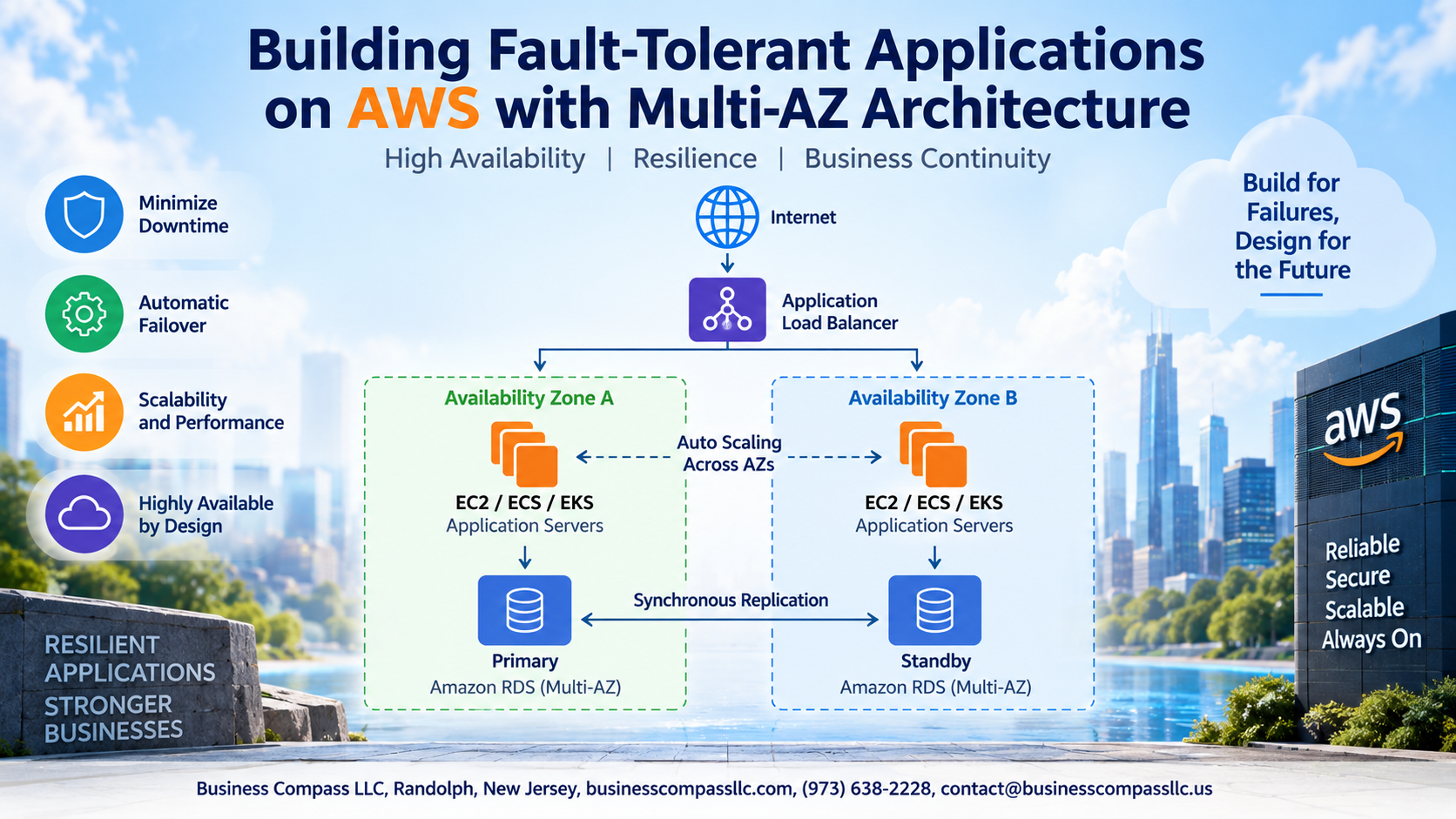
- RDS Multi-AZ handles automatic database failover in seconds
- Elastic Load Balancing routes traffic only to healthy instances
- Auto Scaling Groups replace failed capacity instantly
- S3 replicates data across AZs by default, no configuration needed
Designing a Resilient Multi-AZ Network Foundation

Structuring VPCs with Public and Private Subnets Across Multiple AZs
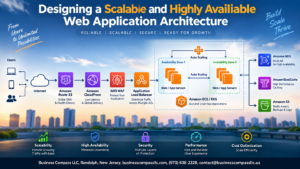
Deploy subnets in at least two AZs, splitting public-facing resources from private ones. This AWS resilient architecture design keeps your databases and app servers shielded while load balancers handle incoming traffic across AZs, making Multi-AZ failover seamless when one zone goes down.
Implementing Stateless Application Tiers for Seamless Failover

Decoupling Application State Using ElastiCache and DynamoDB
Store sessions in ElastiCache or DynamoDB so any instance handles any request.
Leveraging Amazon SQS to Prevent Message Loss During Instance Failures
SQS retains messages when instances fail, keeping workflows intact.
Deploying EC2 Instances Across AZs With Launch Templates
Launch templates keep configurations identical across every AZ.
Storing Session Data Externally
External session storage enables instant traffic rerouting during failover.
Testing and Validating Your Fault-Tolerant Architecture

Running Chaos Engineering Experiments with AWS Fault Injection Simulator
Use AWS FIS to inject real failures—CPU spikes, network latency, instance terminations—into your Multi-AZ architecture safely.
Simulating AZ Failures to Measure Recovery Time Objectives
Track actual AWS disaster recovery performance against your RTO targets during controlled AZ outages.
Using Amazon CloudWatch to Monitor Failover Events
- Watch Multi-AZ failover metrics in real time
- Set alarms on unhealthy host counts
Optimizing Costs Without Compromising Fault Tolerance
Right-sizing, Savings Plans & Smart Scaling
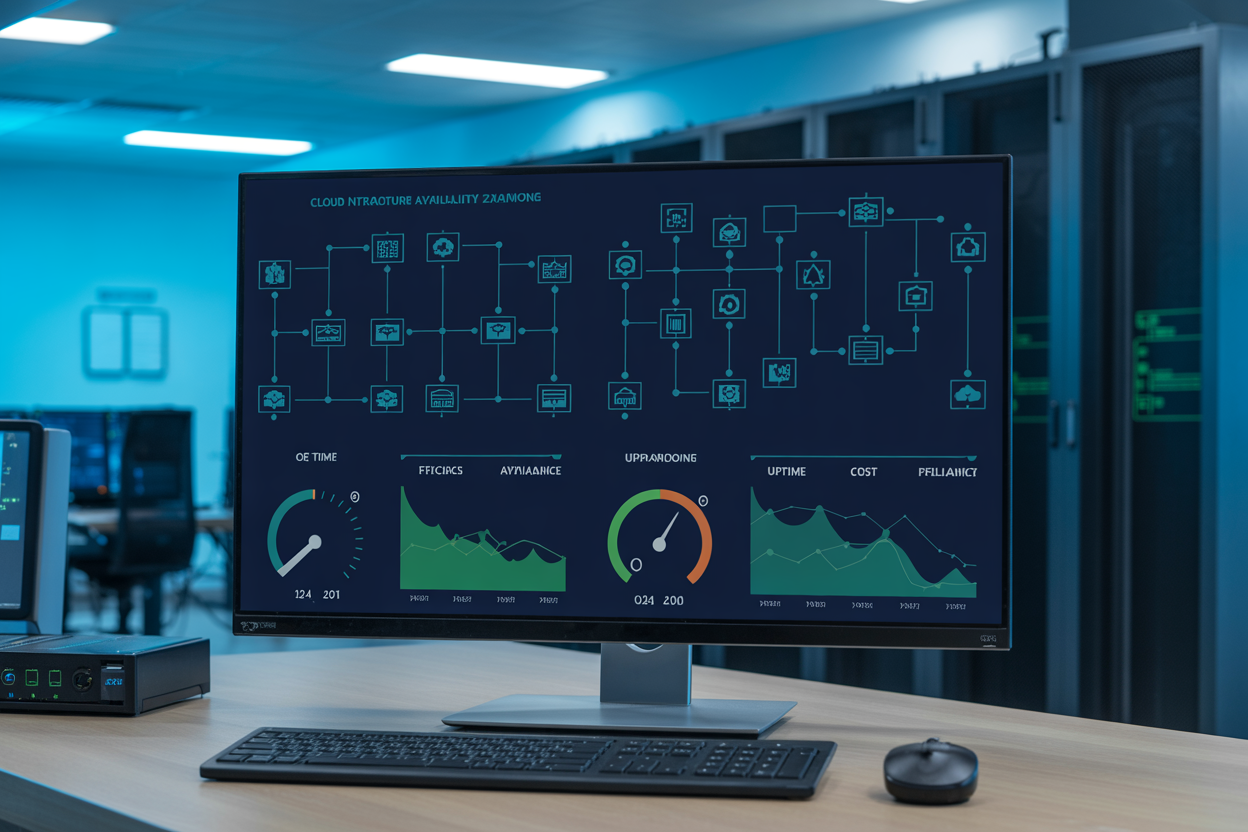
Cost-optimized fault tolerance AWS deployments stay lean by right-sizing instances across AZs, avoiding duplicate oversized resources. Grab Reserved Instances or Savings Plans for predictable workloads, cutting multi-AZ expenses significantly. Minimize cross-AZ data transfer by keeping traffic local where possible, and auto-scale aggressively to kill idle capacity fast.

Fault-tolerant applications don’t happen by accident. They’re built with intention, using the right AWS services, a solid Multi-AZ network foundation, and stateless application tiers that can handle failures without breaking a sweat. From understanding why fault tolerance matters in the first place to validating your architecture through real-world testing, every step plays a role in keeping your applications running when things go sideways — and they will go sideways at some point.
The good news is that building resilience on AWS doesn’t have to drain your budget. With smart design choices, you can protect your applications and keep costs in check at the same time. Start small if you need to, test often, and keep refining your setup as your application grows. Your users expect reliability, and a well-designed Multi-AZ architecture is how you deliver it.