Build a Scalable RAG Application with Amazon Bedrock
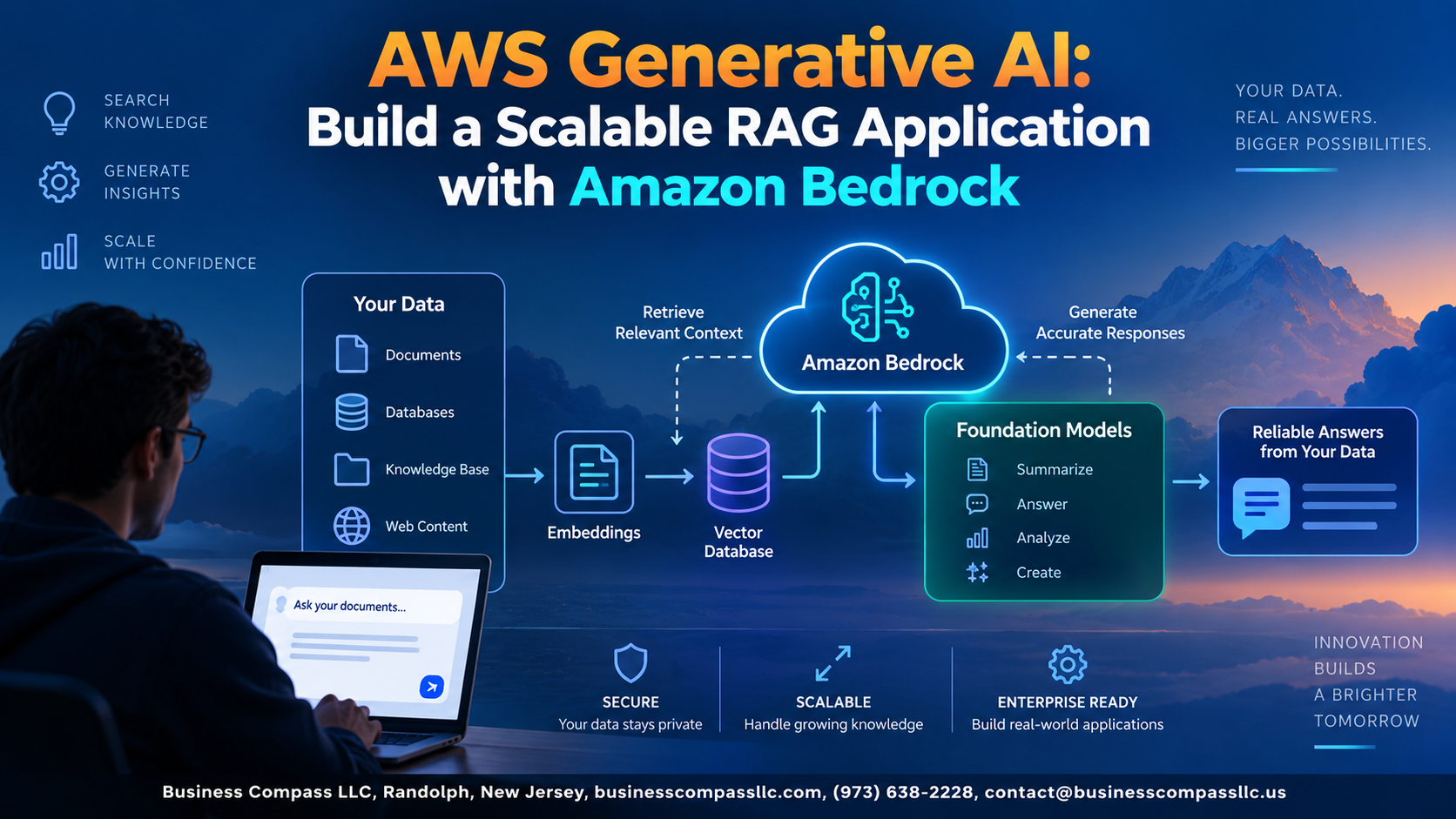
If you’ve been trying to make large language models actually useful for your business — not just impressive in demos — Retrieval-Augmented Generation (RAG) is the approach worth your time. Instead of relying on what a model already knows, RAG pulls in fresh, relevant data at query time and hands it to the model as context. The result? Answers that are accurate, grounded, and tied to your actual content.
This guide is for developers, ML engineers, and cloud architects who want to move beyond theory and ship something real on AWS.
Here’s what you’ll walk away with:
- A clear understanding of RAG — how it works, why it outperforms fine-tuning alone, and when to reach for it
- A hands-on look at Amazon Bedrock — how to set up your environment and connect the pieces of a working retrieval pipeline
- A production-ready mindset — scaling strategies and real-world use cases that tie directly to business outcomes
No fluff, no vague overviews. Just a practical breakdown of how to build a RAG application on AWS that holds up when real users hit it.
Understanding Retrieval-Augmented Generation and Why It Matters

How RAG Overcomes the Limitations of Traditional LLMs
Traditional LLMs get stuck on outdated training data and hallucinate facts. RAG fixes this by pulling real-time, relevant documents before generating answers.
Key Benefits of RAG for Enterprise AI Applications
- Accurate, grounded responses
- Reduced hallucinations
- Domain-specific knowledge integration
Why Amazon Bedrock Is the Ideal Platform for RAG Workloads
Bedrock bundles managed embeddings, vector search, and foundation models together, cutting setup time dramatically.
Core Components of a Scalable RAG Architecture on AWS
Foundation Models Available Through Amazon Bedrock
Amazon Bedrock gives you access to models from Anthropic, Meta, and Amazon Nova.
Knowledge Bases and Vector Store Integration
Connect OpenSearch or Pinecone to store and retrieve embeddings fast.
Embedding Models That Power Accurate Retrieval
Amazon Titan Embeddings converts text into vectors for similarity search.
Amazon S3 as a Scalable Data Source
Drop documents into S3; Bedrock ingests them automatically.
Setting Up Your Amazon Bedrock Environment for Success
Configuring IAM Roles and Permissions for Secure Access
- Attach
AmazonBedrockFullAccessto your execution role - Scope down with resource-level policies per model ARN
Enabling Foundation Models in the Bedrock Console
- Request access under Model Access tab; approval is instant for most models
Connecting Data Sources to Bedrock Knowledge Bases
- Link S3 buckets, sync embeddings into OpenSearch Serverless automatically
Building the Retrieval Pipeline That Delivers Accurate Results

Ingesting and Chunking Documents for Optimal Retrieval
Split documents into 256–512 token chunks with overlap to preserve context across boundaries.
Generating and Storing Embeddings with Amazon Titan
Use Titan Embeddings V2 to convert chunks into vectors, stored in OpenSearch Serverless.
Querying the Vector Store
Run k-NN similarity search to pull the top relevant chunks instantly.
Passing Context to the Foundation Model
Inject retrieved chunks directly into the prompt before the user query.
Handling Edge Cases
- Filter low-confidence results using score thresholds
- Add metadata filters for domain-specific precision
Scaling Your RAG Application to Meet Production Demands

Designing a Serverless Architecture with AWS Lambda and API Gateway
- Route requests through API Gateway → Lambda → Bedrock for zero-server management
Optimizing Latency and Throughput for High-Traffic Workloads
- Cache frequent queries with ElastiCache to cut response times dramatically
Monitoring Performance and Costs with Amazon CloudWatch
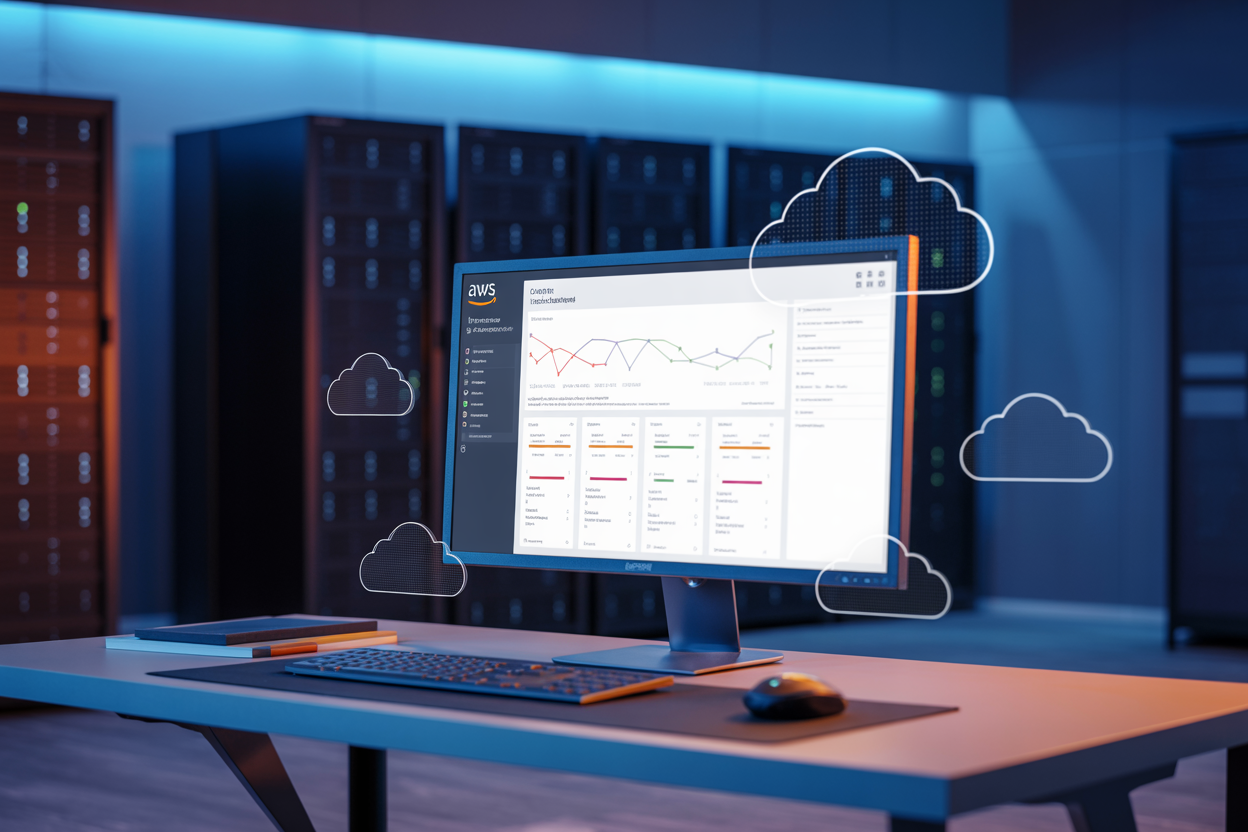
- Track token usage, latency metrics, and Lambda errors through custom CloudWatch dashboards
Applying Real-World Use Cases to Maximize Business Value

Building an Intelligent Customer Support Knowledge Assistant
RAG-powered assistants pull answers from your existing docs instantly, cutting ticket volume dramatically.
Accelerating Internal Enterprise Search and Document Retrieval
Teams find policies, reports, and contracts in seconds instead of hours.
Enhancing Compliance Workflows with Domain-Specific RAG Solutions
- Flag regulatory gaps automatically
- Surface relevant precedents fast
Building a scalable RAG application with Amazon Bedrock doesn’t have to feel overwhelming. By breaking it down into the right components — from setting up your Bedrock environment to building a solid retrieval pipeline — you can create an AI-powered system that actually delivers accurate, meaningful results. The key is understanding how retrieval-augmented generation works at its core, designing your architecture to scale cleanly, and keeping real business value in mind every step of the way.
Now it’s time to stop reading and start building. Whether you’re tackling customer support automation, internal knowledge management, or something entirely unique to your business, the tools are right there in AWS. Spin up your Bedrock environment, map out your retrieval pipeline, and test your way to production. The best RAG application is the one you actually ship.