Designing Cloud-Native Applications with AWS Lambda and Amazon ECS
Building cloud-native applications can feel overwhelming when you’re staring down a long list of AWS services and trying to figure out which ones actually fit your project. If you’re a developer, solutions architect, or engineering lead looking to move beyond traditional server-based setups, this guide is written for you.
We’ll cut through the noise and get into the practical side of cloud-native application design — specifically how AWS Lambda serverless functions and Amazon ECS containerization work, when to use each one, and how to combine them into a hybrid cloud architecture that’s both flexible and cost-effective.
Here’s what we’ll cover:
- The fundamentals of cloud-native architecture — what it actually means and why it changes how you build and deploy software
- AWS Lambda vs. Amazon ECS — a straight-up comparison of serverless workloads and container deployment so you can pick the right tool for the job
- Bringing Lambda and ECS together — how to design an integrated setup that plays to the strengths of both services without overcomplicating your stack
By the end, you’ll have a clear picture of how to make smart architectural decisions, optimize performance, and keep your AWS bill in check.
Understanding Cloud-Native Architecture Fundamentals

Key Principles That Make Applications Truly Cloud-Native
- Stateless design, loose coupling, and automation-first thinking
How Cloud-Native Design Reduces Costs and Improves Scalability
- Pay only for what you use; scale instantly without pre-provisioning
Why AWS Lambda and Amazon ECS Are Ideal Cloud-Native Building Blocks
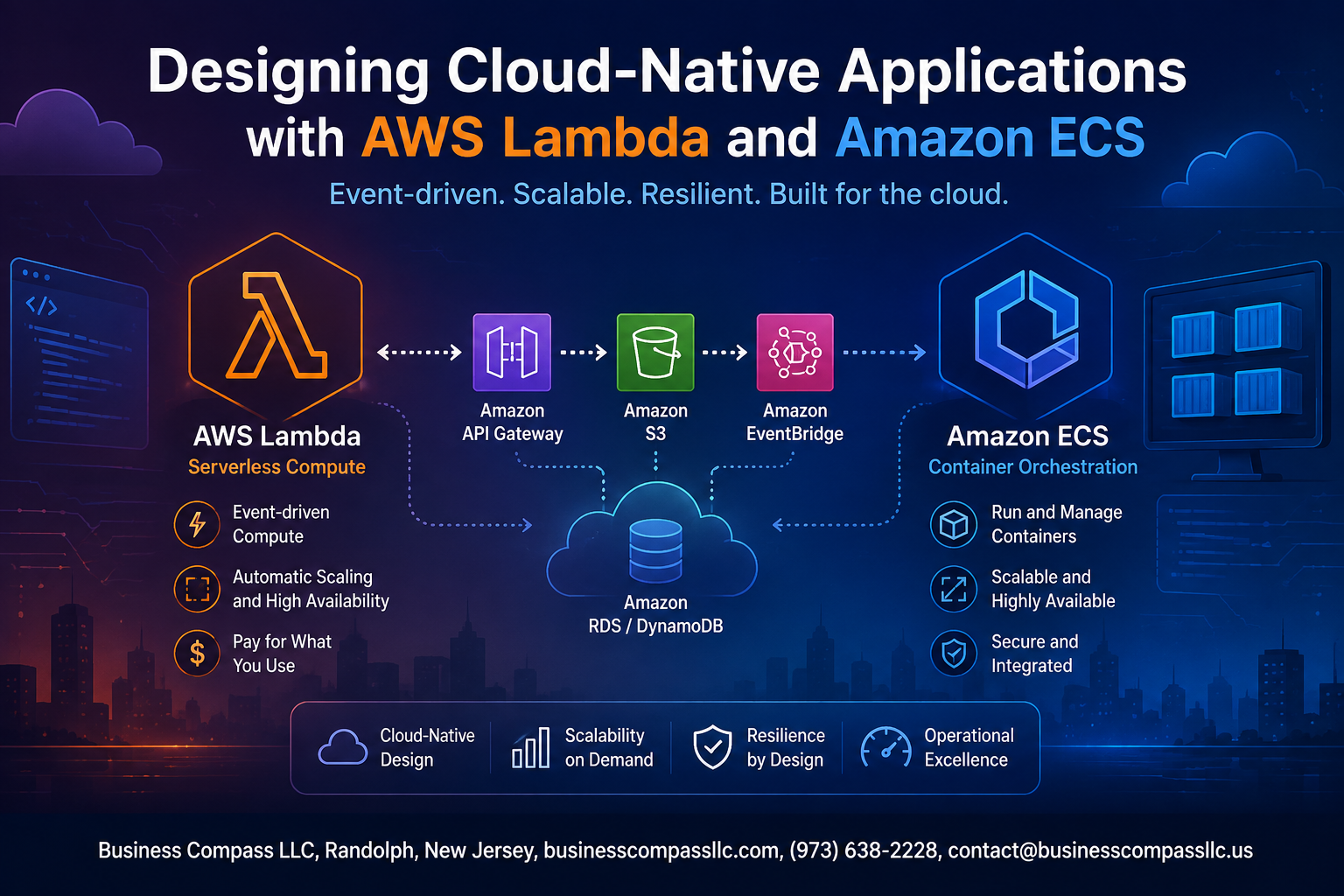
AWS Lambda handles event-driven serverless workloads effortlessly, while Amazon ECS manages containerized services with precision — together covering virtually every cloud-native application design pattern you’ll encounter.
Getting Started with AWS Lambda for Serverless Workloads

Identifying the Right Use Cases for Lambda Functions
AWS Lambda serverless shines for event-driven tasks like API requests, file processing, and scheduled jobs.
Structuring Lambda Functions for Maximum Performance
- Keep functions small and single-purpose
- Store secrets in environment variables
Managing Concurrency and Reducing Cold Starts
Set reserved concurrency limits; use provisioned concurrency to eliminate cold start latency instantly.
Leveraging Amazon ECS for Containerized Application Deployment

Choosing Between ECS Fargate and EC2 Launch Types
- Fargate: No server management, pay per task
- EC2: More control, better for predictable workloads
Securing Containerized Workloads
Attach least-privilege IAM roles directly to ECS tasks—never hardcode credentials.
Auto-Scaling ECS Services
Track CPU/memory metrics; set target-tracking policies to match real traffic patterns automatically.
Combining Lambda and ECS for a Powerful Hybrid Architecture

Deciding When to Use Lambda Versus ECS
- Use Lambda for short, event-driven tasks like API calls or file processing
- Choose ECS for long-running, stateful workloads needing persistent connections
Enabling Communication Between Lambda and ECS
Use Amazon SQS or EventBridge to pass messages between services seamlessly.
Using Event-Driven Triggers
Lambda can trigger ECS tasks via CloudWatch Events, connecting both workflows efficiently.
Optimizing Performance and Cost Across Your Cloud-Native Stack

Monitoring Lambda and ECS Metrics with Amazon CloudWatch
Track cold starts, memory usage, and task CPU spikes using CloudWatch dashboards and alarms.
Reducing Costs with Right-Sizing and Spot Capacity
- Use Fargate Spot for non-critical ECS workloads
- Match Lambda memory to actual usage via AWS Compute Optimizer
Distributed Tracing with AWS X-Ray
Pinpoint bottlenecks across Lambda and ECS services instantly.
Automating with AWS CDK and CI/CD Pipelines
Deploy infrastructure changes safely through automated pipelines.

Building cloud-native applications with AWS Lambda and Amazon ECS gives you a genuinely flexible way to handle modern workloads. Lambda takes care of your serverless needs without making you think about infrastructure, while ECS keeps your containerized services running smoothly at scale. When you bring both together in a hybrid setup, you get the best of both worlds — event-driven efficiency and the control that comes with containers. Throw in some smart performance tuning and cost optimization practices, and you have a stack that can grow with your business without bleeding your budget dry.
The next step is simple — start small. Pick one workload, deploy it using Lambda or ECS depending on what fits best, and get a feel for how these services work in practice. As you grow more comfortable, start combining them to build something more powerful. The AWS ecosystem has all the tools you need; it’s really just a matter of rolling up your sleeves and diving in.