Designing a Scalable and Highly Available Web Application Architecture
Building a web app that stays fast and online when traffic spikes is not a luxury — it’s a baseline expectation. Users leave if a page takes too long to load, and they don’t come back if it goes down. If you’re an engineer, architect, or technical lead trying to build systems that hold up under real-world pressure, this guide is for you.
We’ll walk through what it actually takes to design a scalable web application architecture that doesn’t fall apart at the seams. Here’s a quick look at what we’ll cover:
- Resilient and distributed application layer design — how to structure your app so a single failure doesn’t take everything down
- Database scaling techniques — what to do when your data layer becomes the bottleneck at peak demand
- Load balancing strategies and traffic management — how to route requests smartly so no single server gets buried
By the end, you’ll have a clear, practical framework for building fault-tolerant web systems — from your cloud infrastructure foundation all the way through to monitoring and observability. No fluff, no theory for theory’s sake — just the decisions that actually move the needle.
Core Principles of Scalable and Highly Available Systems

Understanding Scalability vs. High Availability and Why Both Matter
Scalability handles growing traffic; high availability keeps your system running during failures. A scalable web application architecture without fault-tolerant design still crashes. Both work together — scale handles demand, availability ensures uptime. Skipping either creates costly gaps, especially when peak traffic coincides with unexpected outages.
Choosing the Right Infrastructure Foundation

Cloud vs. On-Premise vs. Hybrid Environments Compared
- Cloud wins on scalability and flexibility; on-premise suits strict compliance needs; hybrid balances both.
Selecting the Optimal Region and Availability Zone Strategy
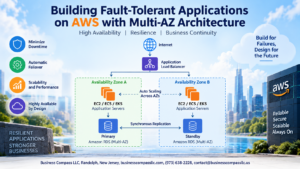
- Deploy across multiple availability zones to eliminate single points of failure, keeping latency low for target users.
Designing a Resilient and Distributed Application Layer

Adopting Microservices to Improve Flexibility and Fault Isolation
Break your app into small, independent services so one failure doesn’t crash everything.
Using Stateless Application Design for Seamless Horizontal Scaling
Stateless apps store no session data locally, making horizontal scaling effortless.
Implementing API Gateways to Centralize Traffic Control
- Routes requests efficiently
- Handles authentication centrally
Scaling Your Data Layer for Peak Demand

Choosing Between SQL and NoSQL Databases
Pick SQL for structured, relational data needing strong consistency. Choose NoSQL when handling massive scale, flexible schemas, or unstructured data.
Caching Strategies
- Use Redis or Memcached to cut database load dramatically
- Cache frequently-read data, session tokens, and computed results
Replication, sharding, and smart backups keep your database scaling smoothly under peak demand.
Optimizing Traffic Management and Load Distribution

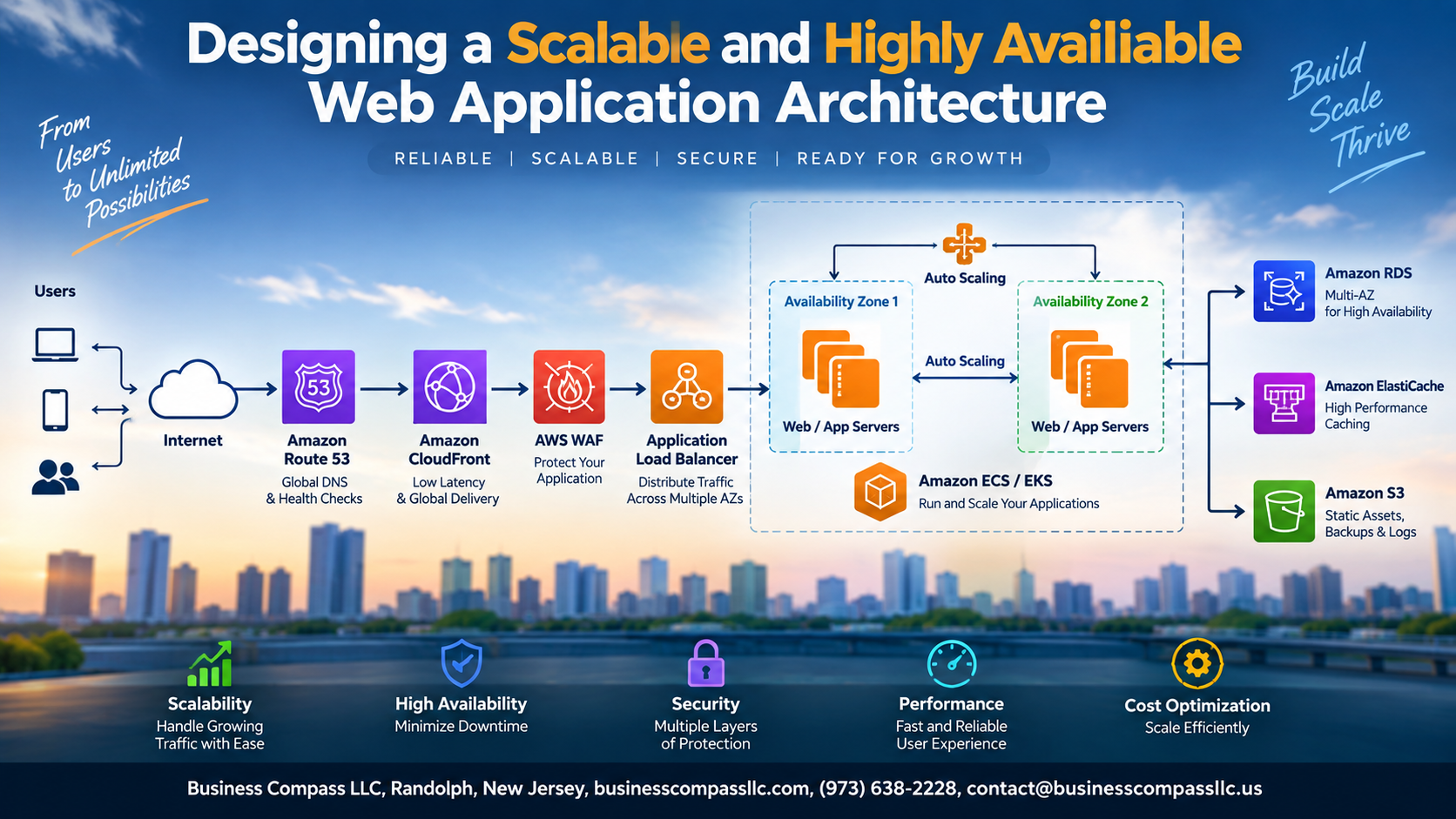
Using Load Balancers to Eliminate Single Points of Failure
Implementing Auto-Scaling Policies to Handle Traffic Spikes Efficiently
Leveraging Content Delivery Networks to Boost Global Performance
Distribute incoming traffic across multiple servers using load balancing strategies, ensuring no single instance becomes a bottleneck. Pair this with auto-scaling policies that spin up resources during traffic spikes automatically. CDNs cache static assets closer to users globally, slashing latency and keeping your scalable web application architecture running smoothly under pressure.
Strengthening Security Across Your Architecture

Applying the Principle of Least Privilege to Limit Exposure
Grant users and services only the permissions they actually need—nothing more.
Encrypting Data in Transit and at Rest to Protect Sensitive Information
Use TLS for all traffic and encrypt stored data using AES-256.
Using Web Application Firewalls to Block Malicious Traffic
- Block SQL injection, XSS, and DDoS attacks at the edge before they hit your web app security layer.
Monitoring, Observability, and Continuous Improvement

Building Comprehensive Logging and Alerting Systems
Centralize logs using tools like Datadog or ELK Stack, and set smart alerts—not noisy ones.
Using Distributed Tracing to Identify and Fix Performance Bottlenecks
Tools like Jaeger pinpoint slow services fast across your distributed application layer.
Conducting Regular Load Testing
Simulate peak traffic with k6 or Locust to validate real scalability limits.
Establishing Incident Response Playbooks
Pre-built runbooks cut recovery time dramatically when things break at 2 AM.

Building a web application that can handle growth and stay reliable under pressure isn’t a one-time task — it’s an ongoing commitment. From picking the right infrastructure foundation to distributing traffic smartly, designing resilient application layers, and keeping your data layer ready for peak demand, every decision you make shapes how well your system holds up when things get tough. Layering strong security practices on top of all that, while keeping a close eye on performance through solid monitoring and observability, ties everything together into an architecture that doesn’t just survive — it thrives.
Start small if you need to, but always build with scale and resilience in mind from day one. Revisit your architecture regularly, learn from your metrics, and keep refining. The best systems aren’t built perfectly overnight — they’re shaped over time by smart decisions, real-world feedback, and a willingness to keep improving.