Building intelligent AI applications just got easier with the Model Context Protocol (MCP). This comprehensive guide shows developers how to harness MCP for creating context-aware AI applications that understand and respond to nuanced user needs.
Who this guide is for: Software developers, AI engineers, and tech teams ready to build GenAI tools that go beyond basic question-and-answer functionality.
You’ll learn the core concepts behind Model Context Protocol and discover how it transforms simple AI interactions into sophisticated, contextual conversations. We’ll walk through setting up your development environment with the right tools and frameworks for MCP implementation tutorial success.
You’ll also master building your first context-aware generative AI application from scratch, plus explore advanced strategies for creating production-ready intelligent AI applications that scale.
By the end, you’ll have the knowledge to deploy context-aware AI applications that deliver personalized, relevant experiences your users will love.
Understanding Model Context Protocol Fundamentals

Core Architecture and Communication Patterns
Model Context Protocol operates on a client-server architecture where applications communicate through standardized message exchanges. Unlike traditional request-response patterns, MCP establishes persistent connections that enable real-time context sharing between AI models and external systems. This bidirectional communication allows applications to maintain contextual awareness throughout extended interactions, creating more intelligent and responsive GenAI tools.
The protocol implements resource discovery mechanisms that let clients identify available context sources dynamically. MCP servers expose contextual resources through structured interfaces, enabling AI applications to access databases, APIs, file systems, and other data sources seamlessly. This architecture supports multiple concurrent connections and implements robust error handling to ensure reliable context delivery in production environments.
Key Differences from Traditional API Approaches
Traditional APIs require developers to manually orchestrate data retrieval and context assembly before AI model interactions. MCP eliminates this complexity by providing automatic context management and intelligent resource allocation. While REST APIs operate stateless, MCP maintains session-aware connections that preserve context across multiple AI interactions, reducing latency and improving response relevance.
The protocol abstracts away the complexity of context formatting and delivery timing. Developers no longer need to write custom integration code for each data source or manually manage context windows. MCP handles these operations automatically, allowing teams to focus on building sophisticated AI applications rather than managing infrastructure concerns.
Protocol Specifications and Standards
MCP follows JSON-RPC 2.0 standards for message formatting and exchange protocols. The specification defines three core message types: requests for resource access, notifications for state changes, and responses containing contextual data. Each message includes standardized headers for authentication, routing, and error handling, ensuring consistent communication patterns across different implementations.
Resource schemas within MCP use structured metadata to describe available context sources and their capabilities. The protocol supports versioning mechanisms that enable backward compatibility as specifications evolve. Security protocols include OAuth 2.0 integration and TLS encryption for secure context transmission between distributed systems.
Integration Capabilities with Existing Systems
MCP adapts to existing technology stacks through flexible adapter patterns and plugin architectures. The protocol integrates with popular development frameworks, databases, and cloud services without requiring significant infrastructure changes. Organizations can implement MCP gradually, adding context-aware capabilities to existing AI applications while maintaining current system functionality.
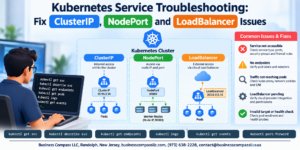
Container orchestration platforms like Kubernetes support MCP deployment through standardized service discovery and configuration management. The protocol works with microservices architectures, enabling distributed context management across multiple application components. Integration libraries provide native support for Python, JavaScript, and other popular programming languages used in AI development.
Setting Up Your Development Environment

Required tools and dependencies
Getting started with Model Context Protocol development requires a solid foundation of essential tools. You’ll need Python 3.8 or higher as your primary runtime environment, along with the official MCP SDK package available through pip. Development environments like VS Code or PyCharm work best for MCP implementation tutorial projects, offering excellent debugging capabilities for context-aware AI applications.
SDK installation and configuration
Installing the MCP SDK is straightforward through Python’s package manager. Run pip install mcp-sdk to get the core libraries needed for GenAI tools development. After installation, configure your development workspace by creating a new project directory and initializing the MCP client with proper connection parameters. The SDK includes built-in examples and templates that accelerate your AI context management setup process.
Authentication and security setup
Security forms the backbone of any production-ready contextual AI programming solution. Set up API keys and authentication tokens through environment variables to keep credentials secure during MCP for developers workflows. Configure SSL certificates and establish encrypted connections between your application and context providers. Most MCP implementations require OAuth 2.0 or API key authentication, depending on your chosen context sources and intelligent AI applications architecture.
Building Your First Context-Aware Application

Designing Context Schemas for Your Use Case
Context schemas form the backbone of any MCP implementation, defining how your AI application understands and processes information. Start by mapping out the specific data types your application needs – whether it’s user preferences, historical interactions, or domain-specific knowledge. Create structured JSON schemas that capture both static context (user profiles, system configuration) and dynamic context (real-time events, changing states). Your schema design should balance completeness with performance, ensuring you capture essential context without overwhelming the system with unnecessary data.
Implementing Bidirectional Communication Flows
Effective MCP development requires establishing seamless two-way communication between your GenAI tools and context sources. Build message handlers that can both send context updates to your AI model and receive feedback about context relevance. Implement event-driven architectures using WebSockets or message queues to handle real-time data exchange. Your communication layer should include error handling, message validation, and retry mechanisms to maintain reliability during context-aware AI applications development.
Handling Real-Time Context Updates
Real-time context management transforms static AI interactions into dynamic, responsive experiences. Design your system to process streaming context updates without blocking the main application thread. Implement context buffering strategies that prioritize recent, relevant information while maintaining historical context when needed. Use techniques like context windowing and selective updating to manage memory usage while keeping your MCP implementation responsive to changing conditions.
Testing and Debugging Your Implementation
Comprehensive testing ensures your context-aware GenAI tools perform reliably across different scenarios. Create test suites that validate context schema compliance, communication flow integrity, and real-time update handling. Build debugging tools that provide visibility into context flow, allowing you to trace how information moves through your MCP development pipeline. Include load testing to verify your implementation handles concurrent context updates and stress conditions effectively.
Performance Optimization Techniques
Optimize your MCP implementation through strategic caching, efficient data structures, and smart context filtering. Implement context compression techniques to reduce memory footprint while preserving essential information. Use asynchronous processing for non-critical context updates and implement connection pooling for database-backed context sources. Profile your application regularly to identify bottlenecks in context processing and communication flows, ensuring your intelligent AI applications maintain optimal performance at scale.
Advanced MCP Implementation Strategies

Multi-modal context integration
Integrating multiple data types into your MCP implementation creates richer, more comprehensive AI applications. By combining text, images, audio, and structured data streams, developers can build context-aware GenAI tools that understand complex scenarios across different input modalities. This approach allows your application to correlate visual information with textual descriptions, audio cues with written instructions, or sensor data with user interactions, creating a unified contextual understanding that single-modal systems simply can’t match.
Context persistence and state management
Effective MCP development requires robust mechanisms for maintaining contextual information across user sessions and application restarts. Smart developers implement hierarchical context storage that prioritizes recent interactions while preserving important historical data. Redis or similar caching solutions work well for short-term context, while databases handle long-term persistence. The key is designing your state management to gracefully handle context expiration, user privacy requirements, and memory limitations without losing critical conversational flow.
Error handling and fallback mechanisms
Building resilient MCP implementations means preparing for context corruption, network failures, and unexpected data formats. Your error handling strategy should include automatic context reconstruction from partial data, graceful degradation when full context isn’t available, and clear user communication about system limitations. Smart fallback mechanisms might involve switching to simpler context models, requesting user clarification, or temporarily operating with reduced functionality while maintaining the core application experience.
Real-World Use Cases and Applications

Customer support automation with contextual awareness
Modern customer support systems powered by Model Context Protocol transform user interactions by maintaining awareness of previous conversations, purchase history, and product specifications. These intelligent systems analyze customer intent while considering their unique journey, enabling personalized responses that resolve issues faster. Context-aware AI applications can access relevant documentation, previous tickets, and user preferences simultaneously, creating seamless support experiences.
GenAI tools development in customer service focuses on building systems that remember context across multiple touchpoints. When customers reach out through different channels – email, chat, or phone – the AI maintains conversation continuity and accesses relevant account information without requiring users to repeat themselves repeatedly.
Code generation tools with project context
Code generation becomes significantly more powerful when AI understands entire project structures, coding standards, and existing dependencies. MCP implementation tutorial demonstrates how context-aware AI programming tools analyze codebases to generate functions that integrate seamlessly with existing architectures. These tools examine import statements, variable naming conventions, and project-specific patterns to produce relevant, consistent code.
Intelligent AI applications for development teams can suggest refactoring opportunities, identify potential bugs, and generate documentation that matches project style guides. Context-aware generative AI considers the broader codebase when making suggestions, ensuring generated code aligns with team conventions and maintains project integrity.
Document analysis and intelligent summarization
Document analysis systems using Model Context Protocol excel at understanding relationships between multiple documents, extracting insights that span across entire document collections. These systems recognize recurring themes, cross-references, and contextual connections that traditional tools miss. AI context management enables comprehensive analysis of legal contracts, research papers, and business reports while maintaining awareness of related documents.
MCP development guide principles show how summarization tools benefit from understanding document hierarchies, author perspectives, and temporal relationships. Context-aware AI applications can generate summaries that highlight connections between documents, identify contradictions, and provide insights based on the complete document ecosystem rather than isolated text analysis.
Personalized content recommendation systems
Recommendation engines powered by contextual AI programming deliver highly personalized experiences by analyzing user behavior patterns, preferences, and real-time context. These systems consider factors like time of day, device usage, location data, and social interactions to suggest relevant content. Context-aware generative AI builds detailed user profiles that evolve continuously, improving recommendation accuracy over time.
Personalization extends beyond simple preference matching to understand user intent and emotional state. GenAI tools development for recommendations incorporates contextual signals like browsing patterns, engagement metrics, and seasonal preferences to deliver content that resonates with users’ current needs and interests.
Best Practices for Production Deployment

Scalability considerations and load balancing
Deploying Model Context Protocol applications at scale requires careful architecture planning and resource allocation strategies. Context-aware GenAI tools often handle large volumes of contextual data, making horizontal scaling essential for maintaining response times. Implement load balancers that understand MCP session affinity to ensure consistent context delivery across distributed instances. Container orchestration platforms like Kubernetes work exceptionally well for MCP implementation tutorial scenarios, allowing dynamic scaling based on context processing demands. Consider using Redis or similar caching layers to store frequently accessed context data, reducing database load and improving overall system performance.
Monitoring and observability implementation
Effective monitoring of context-aware AI applications goes beyond traditional metrics to include context quality, retrieval accuracy, and prompt effectiveness tracking. Set up comprehensive logging that captures context flow patterns, MCP development guide adherence, and GenAI tools development performance indicators. Deploy distributed tracing systems to monitor request paths through your contextual AI programming stack, identifying bottlenecks in context retrieval and processing. Create dashboards that visualize context freshness, relevance scores, and intelligent AI applications behavior patterns. Alert systems should trigger on context staleness, failed context retrievals, and unusual context-aware generative AI response patterns to maintain optimal system health.
Security protocols and data privacy compliance
Context-aware systems handle sensitive user data and require robust security frameworks that protect both stored contexts and in-flight processing. Encrypt all contextual data at rest and in transit, implementing proper key rotation policies for AI context management systems. Deploy API gateway solutions that authenticate and authorize MCP requests while rate-limiting to prevent abuse. Regular security audits should focus on context data access patterns, ensuring compliance with GDPR, CCPA, and other privacy regulations. Implement context data retention policies that automatically purge outdated information while maintaining audit trails for compliance purposes.

Model Context Protocol opens up exciting possibilities for developers who want to build smarter, more responsive GenAI applications. By understanding the fundamentals, setting up the right development environment, and following proven implementation strategies, you can create tools that truly understand and adapt to user context. The real-world applications we’ve explored show just how powerful context-aware AI can be across different industries and use cases.
Ready to start building? Begin with a simple context-aware application using the setup guidelines we covered, then gradually incorporate advanced MCP strategies as you gain confidence. Remember to keep production best practices in mind from the beginning – it’s much easier to build scalable, maintainable code from the start than to refactor later. Your users will notice the difference when your AI tools can remember conversations, understand their workflow, and provide genuinely helpful responses based on what’s actually happening in their world.