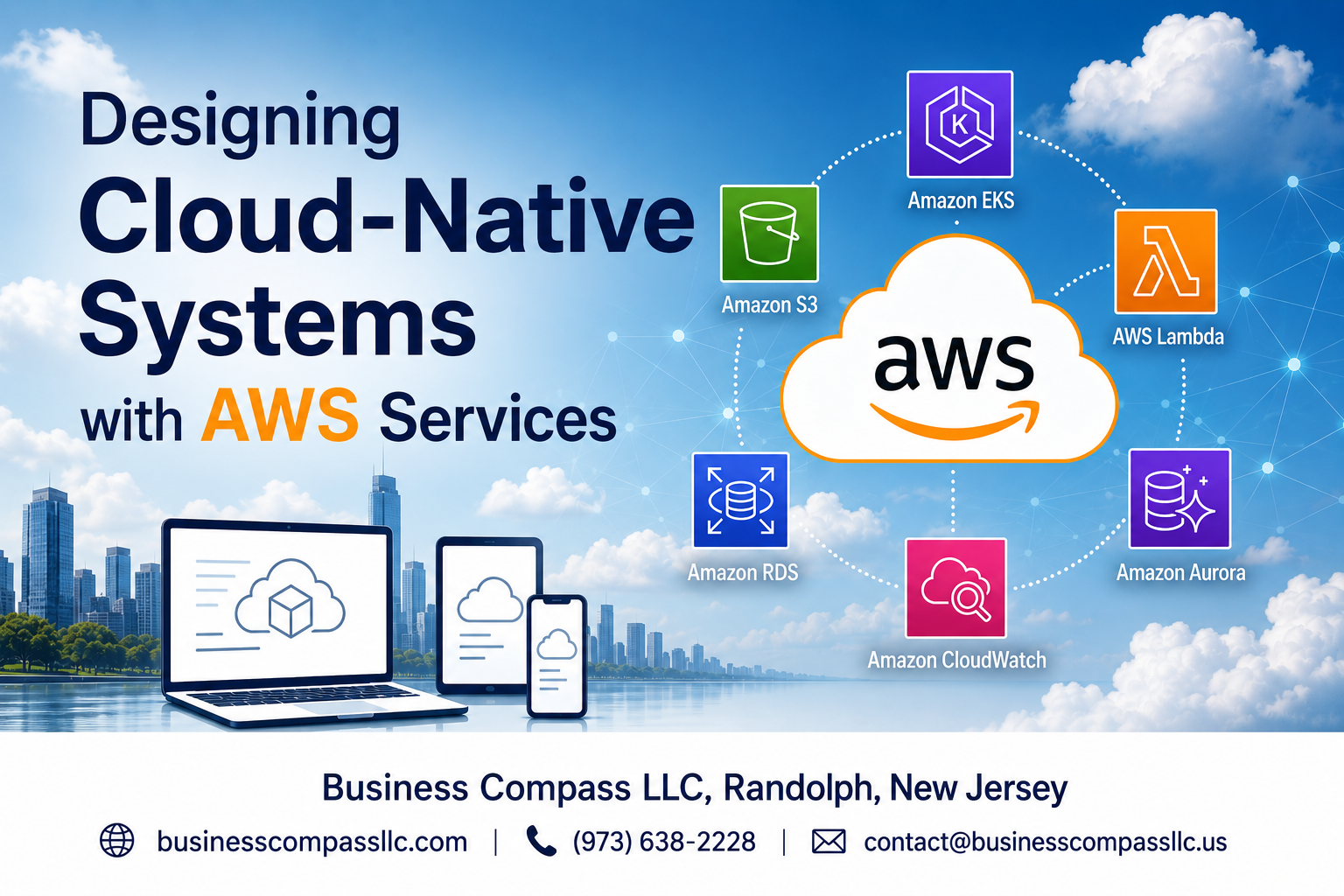
Building cloud-native systems with AWS services transforms how businesses scale, deploy, and manage applications in today’s fast-moving digital world. This guide targets developers, cloud architects, and DevOps engineers who want to master AWS cloud-native services and create robust, scalable solutions.
Cloud-native architecture AWS principles go beyond just moving apps to the cloud – they involve redesigning systems to take full advantage of cloud capabilities like auto-scaling, fault tolerance, and rapid deployment. AWS serverless architecture and container services provide the building blocks for these modern applications.
We’ll walk through the core principles that make cloud-native development best practices work, then dive deep into the essential AWS tools you need to build production-ready systems. You’ll discover how to design scalable infrastructure that grows with your business, implement rock-solid security and compliance measures, and set up monitoring that gives you real insight into your applications.
We’ll also cover practical cost optimization strategies that keep your AWS bills manageable while maintaining performance. By the end, you’ll have a clear roadmap for designing cloud-native systems that deliver reliability, security, and AWS infrastructure scalability your organization needs.
Core Principles of Cloud-Native Architecture

Leverage microservices for scalable application design
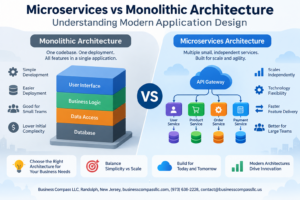
Breaking down large applications into smaller, independent services transforms how teams build and deploy software. Each microservice handles a specific business function and communicates through well-defined APIs. This approach lets teams scale individual components based on demand, deploy updates independently, and choose the best technology stack for each service. AWS supports this pattern through services like API Gateway for service communication, Lambda for serverless functions, and ECS or EKS for containerized microservices.
Implement containerization for consistent deployment environments
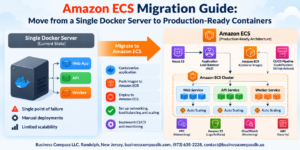
Containers package applications with their dependencies, creating consistent environments across development, testing, and production. Docker containers solve the “it works on my machine” problem by ensuring identical runtime conditions everywhere. AWS provides robust container orchestration through Elastic Container Service (ECS) and Elastic Kubernetes Service (EKS), while AWS Fargate removes server management overhead entirely. Container registries like Amazon ECR store and manage container images securely.
Adopt DevOps practices for continuous integration and delivery
DevOps bridges the gap between development and operations teams through automated pipelines and shared responsibilities. Continuous integration automatically builds and tests code changes, while continuous delivery ensures rapid, reliable releases. AWS CodePipeline orchestrates the entire workflow, CodeBuild compiles and tests applications, and CodeDeploy handles automated deployments. Infrastructure as Code tools like AWS CloudFormation and CDK version control your entire infrastructure alongside application code.
Design for failure and resilience from the ground up
Cloud-native systems expect failures and build defenses accordingly. Circuit breakers prevent cascading failures, retry logic handles temporary issues, and graceful degradation maintains core functionality during outages. AWS spans multiple Availability Zones and regions, enabling fault-tolerant architectures. Services like Application Load Balancer distribute traffic across healthy instances, Auto Scaling Groups replace failed servers automatically, and AWS Backup protects against data loss.
Essential AWS Services for Cloud-Native Development
Choose Amazon EKS or ECS for Container Orchestration
Amazon EKS provides fully managed Kubernetes with enterprise-grade security and multi-AZ availability, making it perfect for complex microservices architectures. ECS offers a simpler alternative with native AWS integration, supporting both EC2 and Fargate launch types. EKS excels when you need Kubernetes ecosystem tools and portability across cloud providers, while ECS delivers faster deployment with minimal operational overhead for AWS-centric applications.
Utilize AWS Lambda for Serverless Computing Capabilities
AWS Lambda transforms cloud-native development by executing code without managing servers, automatically scaling from zero to thousands of concurrent executions. This serverless architecture reduces operational complexity while enabling event-driven workflows that respond to API calls, database changes, or file uploads. Lambda integrates seamlessly with over 200 AWS services, supporting multiple programming languages and offering sub-second cold start times for modern application demands.
Implement Amazon API Gateway for Secure Service Communication
Amazon API Gateway acts as the front door for your cloud-native services, handling authentication, rate limiting, and request routing with built-in security features. It supports REST, HTTP, and WebSocket APIs while providing request transformation, caching, and detailed monitoring capabilities. The service automatically scales to handle millions of requests and integrates with AWS Cognito for user authentication and AWS WAF for application-level protection.
Deploy Amazon RDS and DynamoDB for Data Persistence Solutions
Amazon RDS simplifies relational database management with automated backups, patching, and multi-AZ deployments for high availability across MySQL, PostgreSQL, and Aurora engines. DynamoDB delivers single-digit millisecond performance at any scale with global tables and automatic scaling capabilities. Choose RDS for complex queries and ACID compliance, while DynamoDB excels in high-throughput applications requiring flexible schema design and global distribution for cloud-native systems.
Building Scalable Infrastructure with AWS
Configure auto-scaling groups for dynamic resource allocation
Auto-scaling groups automatically adjust your EC2 instance capacity based on demand patterns, ensuring optimal AWS infrastructure scalability. Configure scaling policies using CloudWatch metrics like CPU utilization and request count to trigger scale-out events during peak traffic and scale-in during low demand periods.
Set up Application Load Balancers for traffic distribution
Application Load Balancers distribute incoming requests across multiple EC2 instances, containers, or IP addresses within your cloud-native architecture AWS environment. Enable health checks to route traffic only to healthy targets, configure SSL termination for secure connections, and leverage path-based routing to direct specific requests to appropriate backend services based on URL patterns.
Implement Amazon CloudFront for global content delivery
CloudFront delivers your application content through a worldwide network of edge locations, reducing latency for global users. Cache static assets like images, CSS, and JavaScript files at edge locations while configuring dynamic content caching rules for API responses. Integrate with AWS WAF for security protection and use custom SSL certificates for branded domain names in your cloud-native development best practices implementation.
Implementing Security and Compliance Best Practices

Configure AWS IAM for Granular Access Control
Start by creating specific user groups and roles that match your team’s responsibilities. Assign the principle of least privilege by granting only the minimum permissions needed for each role. Use IAM policies to define precise access controls, and regularly audit permissions to ensure they remain appropriate. Multi-factor authentication adds an essential security layer for sensitive operations.
Encrypt Data Using AWS KMS and SSL/TLS Protocols
AWS KMS provides centralized key management for encrypting data at rest across your cloud-native architecture AWS infrastructure. Create customer-managed keys for sensitive workloads and enable automatic key rotation. Implement SSL/TLS certificates through AWS Certificate Manager for data in transit. Configure encryption for RDS databases, S3 buckets, and EBS volumes to meet cloud security compliance AWS requirements.
Monitor Security Events with AWS CloudTrail and GuardDuty
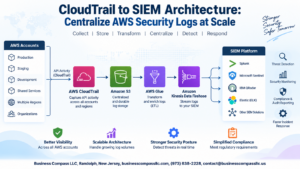
CloudTrail captures every API call made within your AWS environment, creating an audit trail for compliance tracking. GuardDuty uses machine learning to detect suspicious activities and potential threats in real-time. Set up automated alerts for critical security events and integrate these services with your incident response workflows. Regular log analysis helps identify patterns and strengthen your security posture.
Implement VPC Networking for Isolated Environments
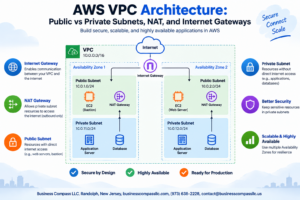
Design your VPC architecture with public and private subnets to segregate resources based on security requirements. Use security groups as virtual firewalls to control traffic at the instance level. Network ACLs provide an additional layer of subnet-level protection. Deploy NAT gateways for secure outbound internet access from private subnets while maintaining isolation from direct external connections.
Monitoring and Observability Solutions
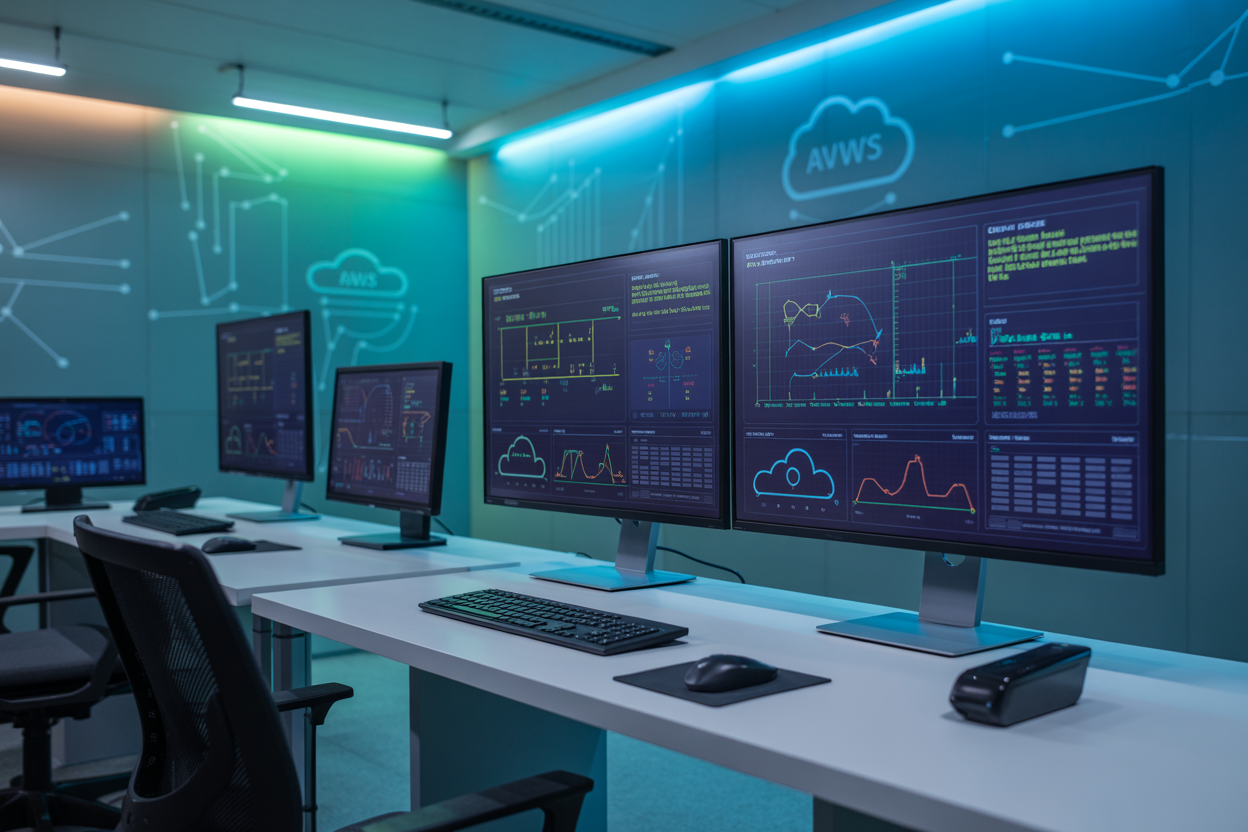
Track application performance with Amazon CloudWatch
CloudWatch serves as your central command center for monitoring AWS cloud-native services and applications. This powerful service collects metrics, logs, and events from your entire infrastructure, giving you real-time visibility into system performance. Set up custom dashboards to track key performance indicators like response times, error rates, and resource utilization across your serverless architecture. CloudWatch automatically monitors AWS services like Lambda, ECS, and API Gateway, while custom metrics let you track business-specific data points that matter most to your application’s success.
Implement distributed tracing using AWS X-Ray
X-Ray transforms the complex task of debugging distributed systems into a visual journey through your application’s request path. When requests flow through multiple microservices, Lambda functions, and databases, X-Ray creates detailed service maps showing exactly where bottlenecks occur. The service automatically instruments many AWS services and provides SDKs for custom applications, capturing timing data and metadata for each component. Performance anomalies become immediately visible through trace analysis, helping you pinpoint slow database queries, failed API calls, or inefficient code segments that impact user experience.
Set up centralized logging with Amazon CloudWatch Logs
CloudWatch Logs consolidates log data from all your cloud-native development components into searchable, filterable streams. Container logs from ECS and EKS automatically flow into CloudWatch, while Lambda functions seamlessly integrate without additional configuration. Use log groups to organize data by application or environment, and leverage metric filters to extract valuable insights from unstructured log data. The service scales automatically to handle massive log volumes while maintaining fast search capabilities, making troubleshooting and auditing straightforward across your distributed architecture.
Create automated alerting for proactive issue resolution
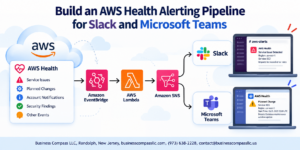
Smart alerting transforms reactive firefighting into proactive system management. CloudWatch Alarms monitor metrics against defined thresholds, triggering notifications through SNS when issues arise. Create composite alarms that consider multiple metrics before alerting, reducing noise while catching complex failure patterns. Integration with AWS Auto Scaling enables automatic remediation for common issues like high CPU usage or increased error rates. Set up escalation policies that notify different teams based on severity levels, and use Amazon EventBridge to trigger automated responses like scaling actions or incident management workflows.
Cost Optimization Strategies for Cloud-Native Systems
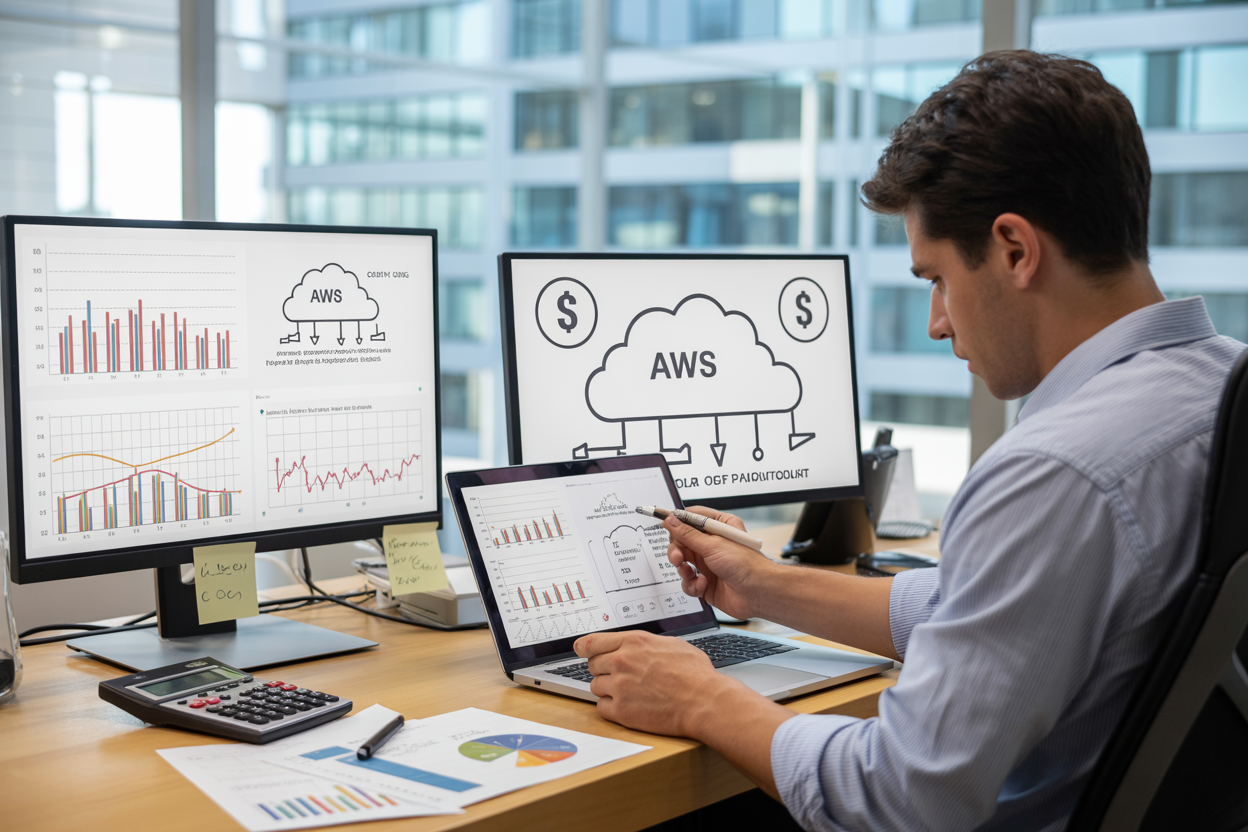
Right-size resources using AWS Cost Explorer insights
AWS Cost Explorer reveals spending patterns that help identify oversized resources eating your budget. The service shows which EC2 instances run at low utilization, storage volumes with minimal access, and databases consuming unnecessary resources. Smart teams use these insights to downsize instances, eliminate idle resources, and match capacity with actual demand for immediate cost savings.
Implement reserved instances and spot instances effectively
Reserved instances cut costs by up to 75% for predictable workloads running consistently for one to three years. Spot instances offer even deeper discounts for fault-tolerant applications that can handle interruptions. Mix both strategies by using reserved capacity for baseline loads and spot instances for variable demand, creating a cost-effective foundation for cloud-native development best practices.
Optimize storage costs with intelligent tiering
Amazon S3 Intelligent Tiering automatically moves data between access tiers based on usage patterns, reducing storage costs without performance impact. Combine this with lifecycle policies that archive infrequently accessed data to Glacier and delete unnecessary backups. EBS gp3 volumes provide better price-performance than older generations, while EFS Intelligent Tiering handles file system optimization automatically for maximum savings.

Building cloud-native systems with AWS isn’t just about moving your applications to the cloud—it’s about reimagining how you design, deploy, and manage your entire infrastructure. The core principles we’ve covered, from microservices architecture to containerization, work hand-in-hand with AWS services like EKS, Lambda, and RDS to create systems that can scale automatically, recover from failures, and adapt to changing business needs. When you combine these with proper security practices, comprehensive monitoring, and smart cost management, you’re setting yourself up for long-term success.
The real power of cloud-native design comes from treating your infrastructure as code and embracing the pay-as-you-go model that AWS offers. Start small with one service or application, apply these principles gradually, and watch how your system becomes more resilient and cost-effective over time. Don’t try to transform everything at once—pick your most critical workload, implement these best practices, and use that success to drive broader adoption across your organization. Your future self will thank you for building systems that can grow and evolve with your business.