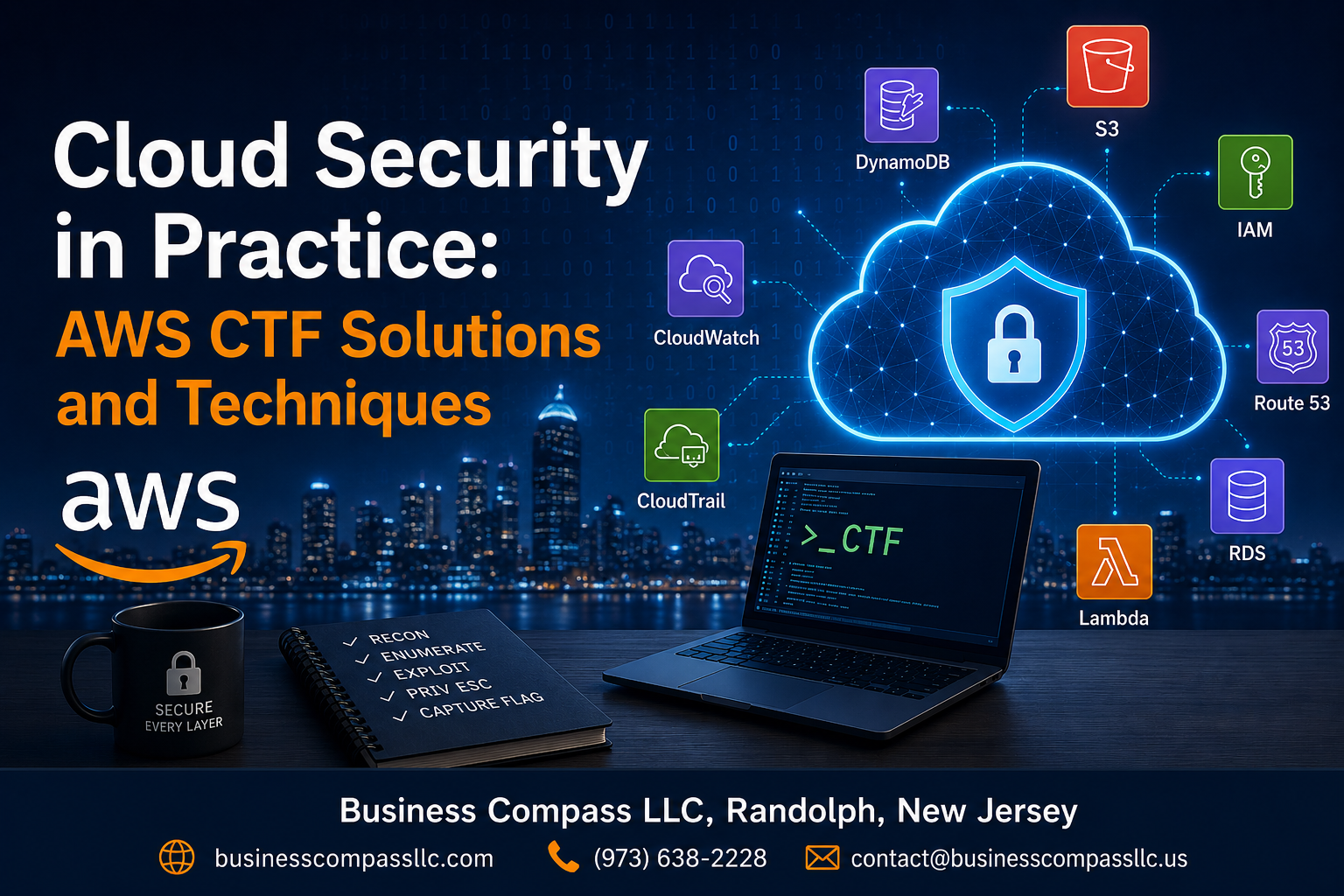
Cloud security has become a critical skill as organizations migrate their infrastructure to platforms like AWS, and hands-on experience through Capture The Flag (CTF) competitions offers the best way to master these concepts. This guide is designed for cybersecurity professionals, cloud engineers, and ethical hackers who want to sharpen their AWS security skills through practical challenges and real-world scenarios.
CTF competitions provide a safe environment to explore AWS security vulnerabilities, test cloud penetration testing techniques, and understand how attackers think. By working through these challenges, you’ll gain the practical experience needed to secure cloud environments and respond to threats effectively.
We’ll start by covering AWS cloud security fundamentals and CTF preparation, where you’ll learn the core concepts and skills needed to tackle cloud security challenges successfully. Next, we’ll dive into common AWS security vulnerabilities and exploitation techniques, exploring real attack scenarios involving AWS IAM security misconfigurations, overprivileged roles, and exposed services. Finally, we’ll walk through advanced attack vectors and defense strategies, including cloud security monitoring techniques and step-by-step solutions from actual CTF challenges that demonstrate cloud security best practices in action.
Understanding AWS Cloud Security Fundamentals

Core AWS Security Services and Their Functions
AWS security architecture relies on several foundational services that work together to protect cloud resources. AWS Identity and Access Management (IAM) serves as the cornerstone, controlling who can access what resources through policies, roles, and permissions. CloudTrail provides comprehensive audit logging, tracking every API call and user action across your AWS environment. GuardDuty offers intelligent threat detection using machine learning to identify suspicious activities and potential security breaches. AWS Config monitors resource configurations and compliance against security baselines. Security Hub centralizes security findings from multiple services, creating a unified dashboard for threat management. These services integrate seamlessly to create multiple layers of protection, enabling organizations to implement defense-in-depth strategies that address various attack vectors and compliance requirements.
Shared Responsibility Model Implementation
The AWS shared responsibility model divides security obligations between AWS and customers, creating clear boundaries for protection duties. AWS handles security “of” the cloud – physical infrastructure, host operating systems, network controls, and hypervisor patching. Customers own security “in” the cloud – guest operating systems, applications, data encryption, network traffic protection, and access management. This division means AWS secures data centers, hardware, and foundational services while customers configure security groups, manage IAM policies, encrypt sensitive data, and maintain application-level security. Understanding these boundaries prevents security gaps where each party assumes the other handles specific protections. Successful implementation requires customers to actively configure security controls, regularly update systems, and monitor their cloud environments rather than assuming AWS provides complete protection.
Identity and Access Management Best Practices
Effective IAM security starts with the principle of least privilege, granting users and services only the minimum permissions needed for their specific functions. Multi-factor authentication should be mandatory for all users, especially those with administrative privileges. Regular access reviews help identify and remove unnecessary permissions, preventing privilege creep over time. Service accounts and roles should replace long-term access keys whenever possible, reducing the risk of credential compromise. Password policies must enforce strong requirements while account lockout mechanisms protect against brute force attacks. Cross-account access should use roles instead of sharing credentials between different AWS accounts. Automated tools can scan for overprivileged users, unused access keys, and policy violations. These practices create robust identity controls that form the foundation of cloud security fundamentals.
Network Security Architecture Principles
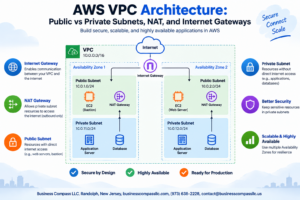
AWS network security builds on traditional networking concepts adapted for cloud environments, emphasizing microsegmentation and zero-trust principles. Virtual Private Clouds (VPCs) create isolated network environments where security groups act as stateful firewalls controlling traffic at the instance level. Network Access Control Lists (NACLs) provide subnet-level filtering as an additional security layer. Private subnets protect sensitive resources by preventing direct internet access while NAT gateways enable controlled outbound connectivity. VPC endpoints allow secure communication with AWS services without internet routing. Network monitoring through VPC Flow Logs captures traffic patterns for analysis and threat detection. Web Application Firewalls (WAF) protect applications from common attacks like SQL injection and cross-site scripting. These layered network controls create comprehensive protection that adapts to modern cloud security challenges.
Essential CTF Preparation and Skills Development

Building Your AWS Security Testing Environment
Setting up a proper AWS security testing environment requires careful planning to avoid production impacts while maximizing learning opportunities. Create isolated AWS accounts using AWS Organizations to establish clear boundaries between testing and production environments. Use AWS CloudFormation templates to deploy consistent, repeatable lab environments that include vulnerable services like misconfigured S3 buckets, overprivileged IAM roles, and exposed RDS instances.
Deploy popular vulnerable applications such as DVWA (Damn Vulnerable Web Application) on EC2 instances and configure intentionally weak security groups. Set up VPC Flow Logs, CloudTrail, and AWS Config to practice security monitoring while conducting tests. Consider using AWS Free Tier resources initially, but budget for additional services as your skills develop.
Document your environment configurations using Infrastructure as Code principles. This approach allows you to quickly rebuild environments after testing and share configurations with team members. Install AWS CLI, configure multiple profiles for different testing scenarios, and ensure proper access controls prevent accidental resource deletion.
Mastering Key Security Assessment Tools
AWS security assessment requires mastering both cloud-native tools and specialized security frameworks. Start with AWS native services like AWS Inspector for vulnerability assessments, AWS GuardDuty for threat detection, and AWS Security Hub for centralized security findings management. These tools provide foundational understanding of AWS security posture evaluation.
Essential third-party tools include Scout Suite for comprehensive AWS security audits, Prowler for CIS benchmark compliance checking, and CloudMapper for visualizing AWS environments. Practice with Pacu, an AWS exploitation framework designed for penetration testing, and WeirdAAL for attacking AWS environments through various vectors.
Command-line proficiency with AWS CLI remains critical for efficient cloud security assessment. Master tools like enumerate-iam for discovering IAM permissions, CloudBrute for subdomain enumeration, and various GitHub repositories containing AWS-specific security testing scripts. Regular practice with these tools builds muscle memory essential for CTF competitions.
Develop custom scripts using boto3 Python library to automate repetitive security assessment tasks. Understanding both manual techniques and automation helps identify unique vulnerabilities that automated tools might miss during comprehensive security evaluations.
Developing Reconnaissance and Enumeration Techniques
Effective AWS reconnaissance begins with passive information gathering using public sources before engaging target systems. Search GitHub repositories for accidentally committed AWS credentials, analyze DNS records for subdomain patterns indicating AWS service usage, and examine SSL certificates that might reveal additional infrastructure details.
Practice subdomain enumeration techniques specific to AWS services, looking for patterns like s3.amazonaws.com buckets, CloudFront distributions, and regional service endpoints. Use tools like Amass, Subfinder, and custom wordlists targeting AWS-specific naming conventions. Many organizations follow predictable naming schemes that reveal additional attack surfaces.
Master IAM enumeration techniques to understand permission boundaries within compromised accounts. Use tools like enumerate-iam and custom scripts to map available permissions without triggering excessive CloudTrail logs. Understanding IAM policy evaluation helps identify privilege escalation paths and lateral movement opportunities.
Develop skills in analyzing CloudTrail logs to understand normal user behavior patterns and identify anomalous activities. Practice extracting useful information from AWS metadata services, understanding regional differences in service availability, and recognizing common misconfigurations that lead to security vulnerabilities during cloud penetration testing engagements.
Common AWS Security Vulnerabilities and Exploitation Techniques
S3 Bucket Misconfigurations and Data Exposure
Misconfigured S3 buckets represent one of the most common AWS security vulnerabilities, often exposing sensitive data through overly permissive access policies. Public read permissions, weak bucket policies, and disabled encryption create attack vectors for data theft. Common exploitation techniques include bucket enumeration using tools like AWSBucketDump, analyzing bucket policies for privilege escalation opportunities, and leveraging misconfigured CORS settings. Attackers frequently target buckets with predictable naming conventions or those discovered through subdomain enumeration and DNS reconnaissance techniques.
IAM Policy Weaknesses and Privilege Escalation
IAM policy misconfigurations create pathways for privilege escalation attacks in AWS environments. Overly broad wildcard permissions, missing condition statements, and improper role trust policies enable attackers to escalate privileges systematically. Key exploitation methods include abusing AssumeRole permissions, leveraging PassRole vulnerabilities to attach powerful policies, and exploiting cross-account trust relationships. Attackers often enumerate IAM permissions using tools like enumerate-iam or Pacu to identify privilege escalation paths through attached policies and role relationships.
Lambda Function Security Flaws
Lambda functions introduce unique security challenges through code vulnerabilities, environment variable exposure, and excessive IAM permissions. Common attack vectors include exploiting injection flaws in function code, accessing hardcoded secrets in environment variables, and abusing over-privileged execution roles. Attackers target Lambda functions through API Gateway endpoints, event source mappings, and direct invocations. Environment variable enumeration, dependency confusion attacks, and layer poisoning represent advanced techniques for compromising serverless applications and gaining unauthorized access to AWS resources.
EC2 Instance Compromise Methods
EC2 instances become targets through various attack vectors including exposed services, weak authentication, and metadata service abuse. Instance metadata service (IMDS) exploitation allows attackers to extract IAM credentials and security tokens from compromised instances. Common techniques include SSRF attacks targeting the metadata endpoint, privilege escalation through user data scripts, and lateral movement using stolen instance credentials. Attackers leverage exposed services, vulnerable applications, and weak SSH configurations to establish initial access before pivoting to other AWS services.
CloudTrail Log Analysis and Evasion
CloudTrail logs provide audit trails for AWS API activity but can be manipulated or evaded by sophisticated attackers. Log analysis reveals attack patterns, privilege escalation attempts, and unauthorized resource access through API call examination. Evasion techniques include disabling CloudTrail logging, using service-linked roles to hide activity, and leveraging AWS services that don’t generate CloudTrail events. Attackers employ time-based attacks, API throttling abuse, and cross-region operations to complicate forensic analysis and detection efforts.
Advanced Attack Vectors and Defense Strategies

Cross-Account Resource Access Exploitation
AWS cross-account attacks target misconfigured trust relationships and overprivileged IAM roles. Attackers exploit weak assume-role policies, enabling unauthorized access to resources across different AWS accounts. Common attack vectors include role confusion attacks where malicious actors leverage predictable external IDs and weak trust policies. AWS security best practices require implementing least-privilege access, regular policy audits, and external ID randomization to prevent these AWS security vulnerabilities.
Serverless Application Security Challenges
Serverless environments introduce unique attack surfaces in AWS Lambda functions and API integrations. Code injection vulnerabilities, event data manipulation, and function privilege escalation represent critical AWS CTF challenges. Attackers exploit insecure direct object references, inadequate input validation, and over-permissive execution roles. Cloud security monitoring becomes complex due to ephemeral nature and limited visibility. Effective cloud penetration testing requires specialized tools for serverless runtime analysis and comprehensive IAM security assessment.
Container and Kubernetes Security in AWS
Container escape vulnerabilities and Kubernetes misconfigurations create significant security gaps in AWS EKS environments. Privilege escalation through misconfigured service accounts, exposed secrets in container images, and insecure network policies enable lateral movement. AWS security assessment must include container image scanning, runtime protection, and proper RBAC implementation. Pod security standards and network segmentation form essential cloud security best practices for containerized workloads running on Amazon EKS clusters.
API Gateway Vulnerabilities and Protection
API Gateway security flaws include authentication bypass, rate limiting failures, and improper request validation. Attackers exploit weak throttling configurations, inadequate input sanitization, and missing authorization checks to compromise backend services. Cloud security fundamentals require implementing proper API authentication, request validation, and comprehensive logging. AWS security vulnerabilities in API Gateway often stem from misconfigured resource policies and inadequate WAF integration, making regular security testing essential for robust cloud CTF solutions.
Real-World CTF Challenge Solutions and Walkthroughs

Step-by-Step Enumeration and Discovery Process
Start with basic reconnaissance using AWS CLI commands to enumerate IAM roles, S3 buckets, and EC2 instances. Focus on identifying misconfigured public resources through tools like Scout Suite and Prowler. Check for exposed metadata endpoints, overly permissive IAM policies, and publicly accessible storage buckets. Document every finding systematically to build a comprehensive attack surface map for AWS security assessment.
Exploitation Techniques with Practical Examples
Leverage privilege escalation through IAM role assumption chains and exploit misconfigured Lambda functions for code execution. Target vulnerable EC2 instances with exposed SSH keys or weak security groups. Use tools like Pacu and CloudGoat to practice real-world AWS CTF challenges scenarios. Focus on exploiting cloud-specific vulnerabilities like SSRF attacks against metadata services and unauthorized cross-account access through trust relationships.
Flag Capture Methods and Documentation
Locate flags within S3 bucket objects, environment variables, and Lambda function code. Extract sensitive data from CloudWatch logs, RDS snapshots, and EBS volumes. Document each discovery method with screenshots, commands used, and timestamps. Create detailed walkthroughs showing the complete exploitation chain from initial access to flag retrieval, ensuring reproducible cloud penetration testing methodologies for future reference.
Common Pitfalls and How to Avoid Them
Avoid triggering AWS GuardDuty alerts by limiting API call frequency and using legitimate-looking user agents. Don’t overlook regional resource distribution when hunting for assets. Prevent account lockouts by understanding rate limiting policies and session management. Always verify permissions before attempting privilege escalation to avoid detection by cloud security monitoring systems. Test exploitation techniques in isolated environments first.
Implementing Robust Security Monitoring and Response

CloudWatch and CloudTrail Configuration for Detection
Effective AWS cloud security monitoring starts with proper CloudWatch and CloudTrail setup. CloudTrail captures all API calls across your AWS infrastructure, creating an audit trail that reveals unauthorized access patterns and suspicious activities. Configure CloudWatch alarms to trigger when unusual login attempts occur, especially from unfamiliar IP addresses or during off-hours. Set up custom metrics to monitor failed authentication events, privilege escalation attempts, and resource modifications. Enable CloudTrail data events for S3 buckets containing sensitive information, and create CloudWatch dashboards that visualize security metrics in real-time. These cloud security best practices provide the foundation for detecting advanced persistent threats.
Automated Threat Response with AWS Security Services
AWS Security Hub centralizes security findings from multiple services, enabling automated threat response workflows. Configure AWS Lambda functions to automatically quarantine compromised EC2 instances when GuardDuty detects malicious activity. Use AWS Config rules to enforce security baselines and automatically remediate non-compliant resources. Inspector continuously scans for vulnerabilities, while Macie identifies sensitive data exposure. Set up EventBridge rules that trigger immediate responses to critical security events, such as disabling compromised IAM users or isolating affected subnets. These automated responses reduce mean time to containment and prevent attackers from establishing persistence in your environment.
Incident Response Planning and Execution
Successful incident response requires predefined playbooks that outline specific actions for different attack scenarios. Create IAM roles with appropriate permissions for incident response team members, ensuring they can access necessary resources without compromising security. Establish communication protocols that include stakeholder notifications and external reporting requirements. Practice tabletop exercises using real AWS CTF challenges to test your team’s response capabilities. Document all incident response activities in CloudTrail and maintain forensic copies of affected resources using EBS snapshots. Regular cloud security assessment exercises help identify gaps in your response procedures and improve overall security posture.

Cloud security isn’t just about knowing the theory – it’s about getting your hands dirty with real challenges and understanding how attackers actually think. From mastering the basics of AWS security fundamentals to diving deep into CTF challenges, you’ve now got a roadmap for building genuine expertise. The vulnerabilities we explored and the defense strategies we covered show that cloud security is an ongoing game of cat and mouse, where staying ahead means constantly learning and practicing.
Start applying these techniques in your own AWS environments, even if it’s just a sandbox account for testing. Set up those monitoring tools, practice the CTF scenarios, and don’t be afraid to break things – that’s how you learn what really works. The cloud security landscape changes fast, so make CTF participation and hands-on practice a regular part of your routine. Your future self will thank you when you’re confidently handling real security incidents instead of scrambling to figure things out on the fly.