What Actually Powers an AI Root Cause Analysis Platform?
When something breaks in production, every minute counts. Engineers need answers fast — not a pile of logs to dig through manually. That’s where an AI-powered root cause analysis platform comes in, and understanding what’s under the hood helps you make smarter decisions about building or buying one.
This breakdown is for engineering leaders, platform architects, and SRE teams who want to go beyond the marketing pitch and understand how these systems actually work.
Here’s what we’ll walk through:
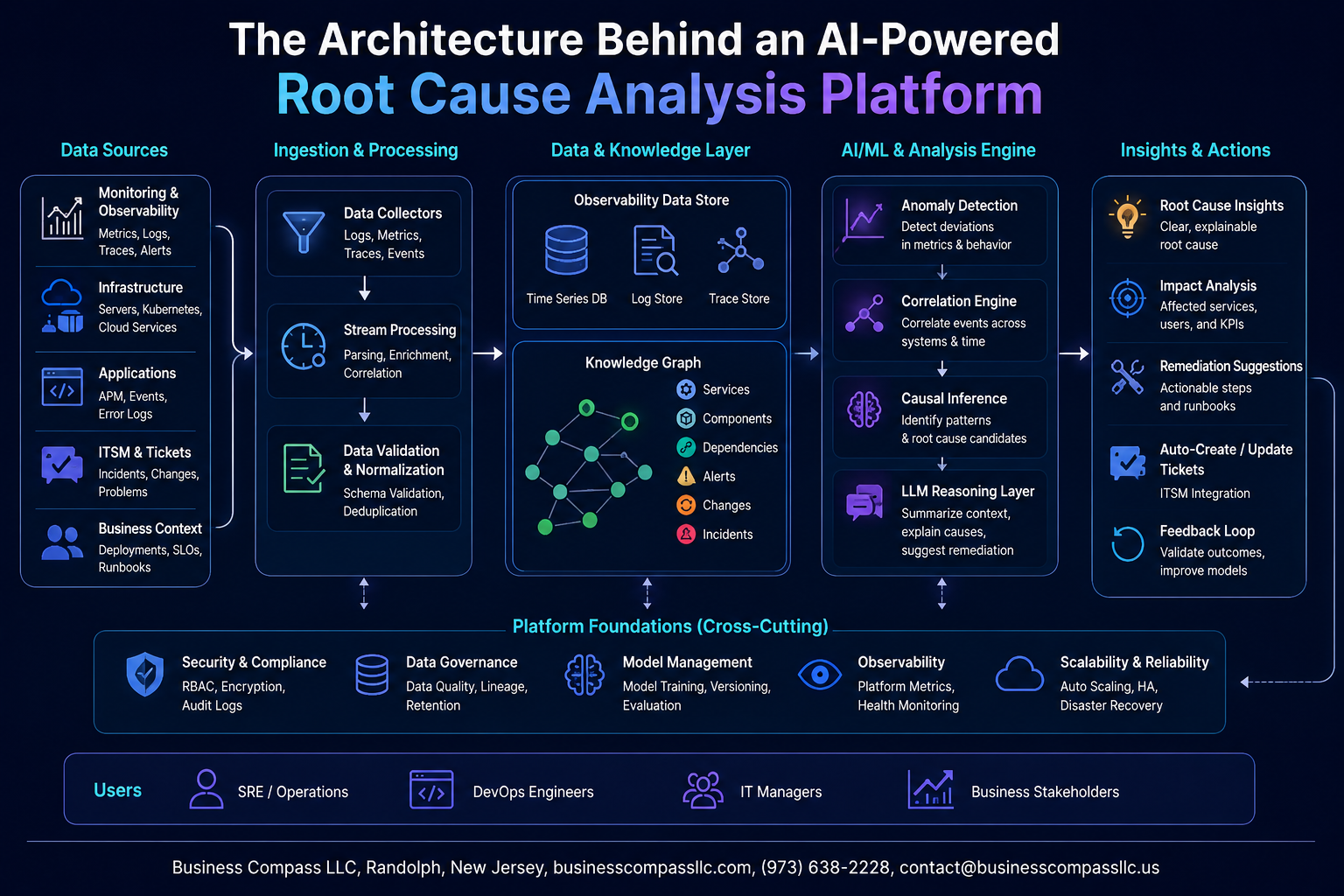
- How data gets collected and structured — from raw signals across your stack to something a machine can actually reason about
- The AI and machine learning engine that connects the dots between symptoms and root causes, including how knowledge graphs add the context that raw data misses
- What makes a scalable AI observability platform hold up under pressure — including integration, security, and governance layers that keep everything running cleanly in production
No fluff, no hand-waving. Just a clear look at the architecture that separates a capable automated root cause analysis tool from one that creates more noise than it clears.
Core Principles That Drive Effective Root Cause Analysis
Why Traditional Troubleshooting Falls Short at Scale
When systems were simpler, a seasoned engineer could trace a problem back to its source through intuition and experience. That approach breaks down fast when you’re dealing with hundreds of microservices, distributed cloud infrastructure, and thousands of alerts firing simultaneously. Manual troubleshooting at this scale means:
- Alert fatigue — teams drown in noise and miss the signals that actually matter
- Siloed visibility — each team sees only their slice of the system, making cross-service correlation nearly impossible
- Slow mean time to resolution (MTTR) — hours spent chasing symptoms instead of causes
- Inconsistent diagnosis — outcomes depend heavily on who’s on call and how much context they carry in their heads
The bigger your system grows, the wider this gap becomes.
How AI Transforms the Speed and Accuracy of Diagnosis
AI-powered root cause analysis changes the game by doing in seconds what would take a human team hours. Instead of reviewing logs manually or correlating metrics across dashboards, machine learning root cause analysis models can scan massive volumes of telemetry data, spot anomalous patterns, and trace fault propagation paths automatically.
The real advantage of an AI-driven fault detection approach is that it doesn’t just flag what broke — it builds a causal chain. By learning from historical incidents and continuously updating its understanding of system behavior, an AI-powered RCA platform gets smarter over time. It can differentiate between a symptom and a root cause, which is the distinction that cuts MTTR dramatically.
Key Design Goals That Shape Platform Architecture
Building a scalable AI observability platform that actually works in production means making deliberate architectural choices from day one. The core design goals that guide a solid RCA architecture include:
- End-to-end signal coverage — the platform must ingest logs, metrics, traces, and events without gaps
- Real-time processing — delayed analysis is just a post-mortem tool; effective AI incident management requires low-latency inference
- Causal explainability — engineers need to trust the output, which means the platform must show its reasoning, not just its conclusions
- Adaptability — systems change constantly, so the models and knowledge structures must evolve alongside them
- Seamless integration — the platform has to fit into existing workflows, not force teams to abandon their tools
Every decision in the platform’s architecture flows back to one goal: get the right answer to the right person as fast as possible.
Data Ingestion Layer That Captures Every Relevant Signal
Connecting Diverse Data Sources Without Disruption
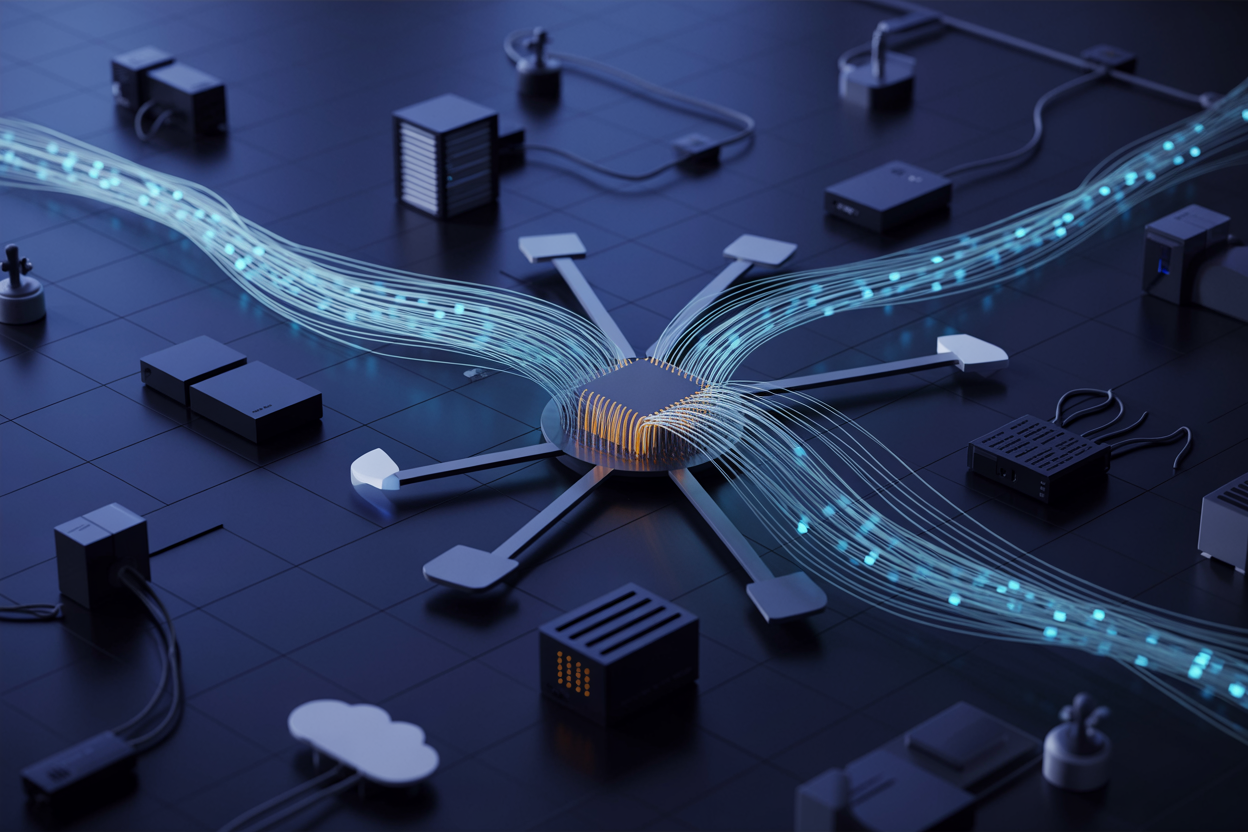
A solid AI root cause analysis platform needs to pull data from everywhere your infrastructure lives — cloud services, on-prem systems, containers, databases, and third-party tools — without forcing your teams to rip out existing setups. The best approaches lean on pre-built connectors, open standards like OpenTelemetry, and agent-based collection that slots into your environment quietly.
- Supports logs, metrics, traces, events, and topology data from a single pipeline
- Pre-built integrations with AWS, Azure, GCP, Kubernetes, Datadog, Splunk, and more
- Agent-based and agentless collection options depending on your environment
- Minimal configuration overhead so teams get value fast without a lengthy onboarding process
Real-Time Streaming vs. Batch Collection Trade-Offs
For AI-powered RCA to catch problems before they snowball, real-time streaming is non-negotiable for high-signal data like application traces and infrastructure metrics. Batch collection still makes sense for historical log archives, compliance data, or cost-sensitive sources where a few minutes of lag won’t break anything.
- Real-time streaming: Best for anomaly detection, live correlation, and instant fault detection
- Batch processing: Works well for trend analysis, cost optimization, and lower-priority telemetry
- Hybrid pipelines let you mix both approaches based on data criticality and business needs
Ensuring Data Quality Before Analysis Begins
Garbage in, garbage out is very real in machine learning root cause analysis. Raw telemetry is messy — duplicate events, missing fields, inconsistent timestamps, and noisy signals that have nothing to do with the actual problem. A well-designed ingestion layer cleans and normalizes data before it ever touches the AI engine.
- Deduplication removes redundant events that would skew correlation models
- Schema validation catches malformed data at the edge before it pollutes downstream analysis
- Timestamp normalization aligns data from different time zones and clock-skewed systems
- Noise filtering strips out low-value signals so the AI focuses on what actually matters
Handling High-Volume Telemetry at Enterprise Scale
Enterprise environments can throw billions of data points at your platform every single day. A scalable AI observability platform needs elastic ingestion capacity that grows with your workload without manual intervention or surprise bottlenecks during an incident — which is exactly when you need it most.
- Horizontal scaling across ingestion nodes handles traffic spikes automatically
- Backpressure mechanisms prevent data loss during sudden volume surges
- Prioritization queues ensure critical signals from production systems get processed first
- Compression and intelligent sampling cut storage costs without sacrificing analytical accuracy
AI and Machine Learning Engine at the Heart of the Platform

Anomaly Detection Models That Surface Hidden Patterns
A solid AI root cause analysis platform starts with anomaly detection that actually works in the real world — not just on clean benchmark datasets. The models running under the hood combine statistical baselines with unsupervised learning techniques like isolation forests, autoencoders, and LSTM-based time-series models to catch deviations that simple threshold alerts would completely miss.
Key capabilities include:
- Dynamic baselining that adjusts for time-of-day and seasonal patterns
- Multivariate anomaly detection that spots issues across correlated metrics simultaneously
- Noise filtering to reduce alert fatigue without hiding real problems
Correlation Engines That Link Events Across Systems
Raw anomalies only tell half the story. The correlation engine is where the machine learning root cause analysis platform starts connecting dots across services, infrastructure layers, and time windows. It groups related events into incident clusters by analyzing temporal proximity, topology relationships, and historical co-occurrence patterns.
- Events from unrelated systems get separated automatically
- Related signals get pulled into a single, coherent incident context
- Cross-team visibility improves without manual stitching
Causal Inference Techniques That Pinpoint True Root Causes
Correlation is not causation — and this is where most tools fall short. A well-designed AI-powered RCA engine applies causal inference methods like Granger causality testing, Bayesian networks, and structural causal models to trace the actual propagation path of a failure. Instead of giving you a list of suspicious events, it gives you a ranked causal chain showing exactly where the failure originated.
- Upstream causes get weighted higher than downstream symptoms
- Counterfactual reasoning helps validate the identified root cause
- Confidence scores are attached to every causal claim
Continuous Model Training to Stay Accurate Over Time
Production environments change constantly — new services get deployed, traffic patterns shift, infrastructure scales up and down. A static model trained once and never updated becomes less useful by the week. The automated root cause analysis engine needs a continuous training pipeline that ingests new labeled incidents, detects model drift, and retrains or fine-tunes models on a rolling schedule.
- Feedback loops from resolved incidents feed directly into retraining jobs
- Model performance gets monitored just like production services
- Champion-challenger testing ensures new models actually perform better before promotion
Balancing Automation With Human Oversight
Full automation sounds appealing, but in practice, AI-driven fault detection works best as a partnership between the machine and the engineer. The platform should automate the repetitive, time-consuming parts — data aggregation, pattern matching, initial hypothesis generation — while keeping humans in the loop for final decisions on high-stakes incidents.
- Engineers can accept, reject, or override AI-generated root cause suggestions
- Rejected suggestions feed back into model improvement pipelines
- Explainability features show engineers exactly why the model flagged a specific cause, building trust over time
Knowledge Graph That Gives Context to Raw Data

Mapping Dependencies Between Services and Infrastructure
A knowledge graph in an AI root cause analysis platform does something raw metrics alone can’t — it captures relationships. When service A calls service B, which writes to a database, which feeds a cache layer, those connections matter enormously during an incident. The graph models these dependencies explicitly, so when AI-driven fault detection fires an alert, the platform already knows what’s upstream and downstream.
- Service-to-service call chains are mapped using telemetry, service mesh data, and deployment metadata
- Infrastructure relationships — hosts, containers, cloud resources — are linked to the services they support
- Ownership and team boundaries are embedded directly into the graph, making escalation faster
Enriching Alerts With Historical Incident Intelligence
Raw alerts without context are just noise. The knowledge graph solves this by attaching historical incident intelligence directly to every signal the AI root cause analysis engine surfaces. If a similar pattern triggered a database timeout three months ago, that context rides along with the current alert — giving on-call engineers a head start instead of a blank page.
- Past incidents, resolutions, and contributing factors are stored as graph nodes
- Each new alert gets matched against similar historical events automatically
- Teams see what worked before, reducing mean time to resolution significantly
Keeping the Graph Updated as Environments Evolve
Cloud environments change constantly — new services get deployed, old ones get retired, and infrastructure shifts under your feet daily. A static graph becomes stale fast, making the entire AI-powered RCA platform less reliable. The graph needs continuous updates pulled from CI/CD pipelines, configuration management systems, and service discovery tools to stay accurate.
- Automated discovery detects new services and infrastructure changes in real time
- Deployment events trigger graph updates, keeping dependency maps current
- Drift detection flags when observed topology no longer matches expected state
Scalability and Reliability Built Into Every Layer

A. Distributed Architecture That Grows With Your Organization
A scalable AI root cause analysis platform runs on a distributed architecture that spreads workloads across multiple nodes, regions, and availability zones. As your organization grows and incident volume spikes, the system adds capacity automatically without manual intervention.
- Horizontal scaling lets compute resources expand on demand during high-traffic incidents
- Microservices design means each component — ingestion, ML inference, knowledge graph queries — scales independently
- Multi-region deployment keeps your AI-powered RCA running close to data sources, cutting latency and meeting data residency requirements
B. Fault Tolerance Strategies That Prevent Single Points of Failure
No single component going down should ever stop your incident response. The platform builds redundancy into every critical path so failures stay invisible to users.
- Replication across nodes keeps data and services available even when individual machines fail
- Circuit breakers automatically reroute traffic away from struggling services before they cascade into wider outages
- Graceful degradation ensures the AI-driven fault detection pipeline keeps running at reduced capacity rather than shutting down entirely
C. Latency Optimization for Time-Critical Incident Response
When systems are on fire, every second counts. The automated root cause analysis engine is tuned to deliver answers fast.
- In-memory caching stores frequently accessed knowledge graph relationships so repeated queries return instantly
- Stream processing analyzes incoming signals in real time rather than waiting for batch jobs to complete
- Pre-computed inference paths allow the ML models to skip redundant calculations during active incidents, shaving critical seconds off mean time to resolution
Integration and Workflow Capabilities That Accelerate Resolution
Connecting Seamlessly With Existing Observability Stacks
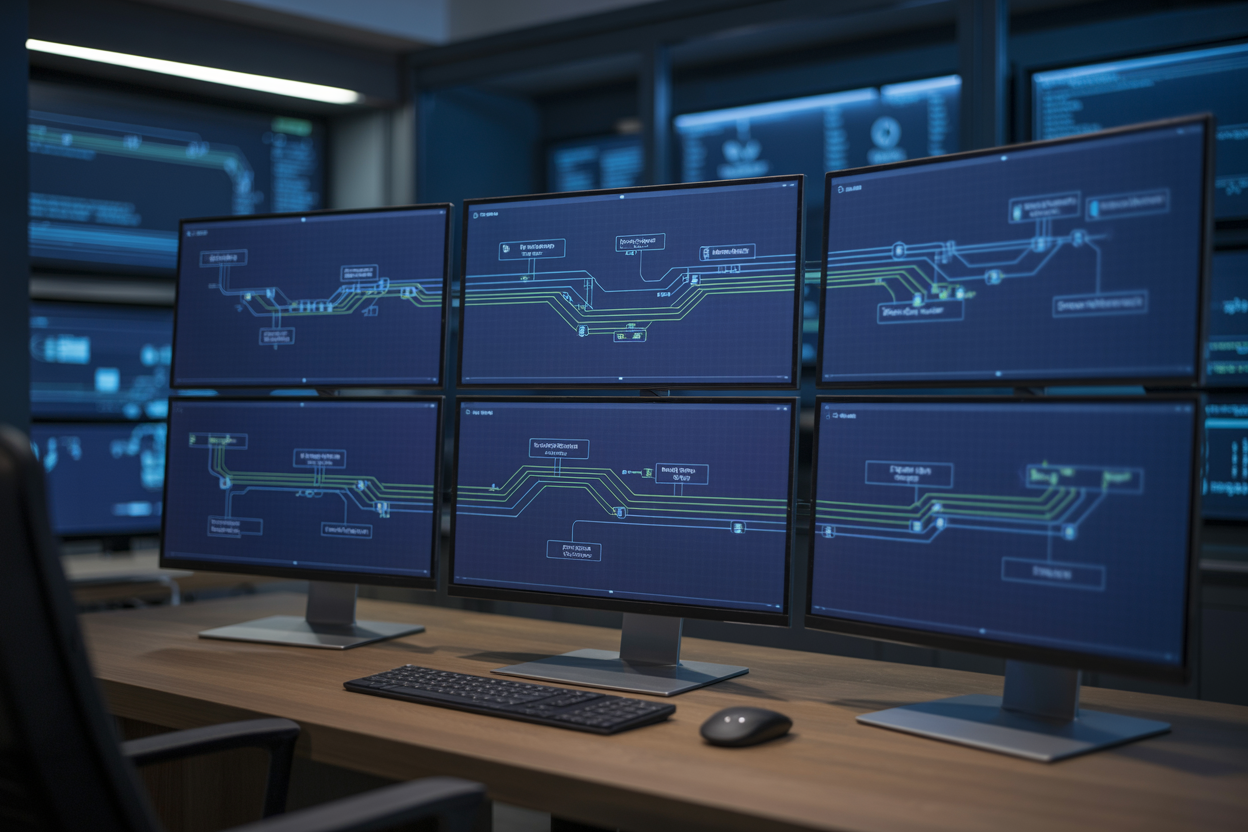
A solid AI root cause analysis platform doesn’t ask your team to rip out what’s already working. Instead, it plugs straight into your existing observability stack — think Prometheus, Datadog, Grafana, PagerDuty, and OpenTelemetry — pulling signals together without friction:
- Native connectors for popular monitoring and logging tools mean zero custom glue code
- Webhook and API support keeps data flowing in real time across heterogeneous environments
- Unified telemetry ingestion normalizes metrics, traces, and logs regardless of their origin
Delivering Actionable Insights Directly to Engineering Teams
Raw analysis sitting in a dashboard nobody checks is just noise. A well-designed AI-powered RCA platform pushes findings directly to where engineers already spend their time — Slack channels, Jira tickets, or PagerDuty incidents — with enough context to act immediately:
- Ranked probable causes with supporting evidence attached
- Clear timelines showing exactly when and where things started breaking
- Suggested next steps tailored to the specific failure pattern detected
Automating Remediation Steps to Cut Mean Time to Recover
Automated root cause analysis becomes genuinely powerful when it doesn’t stop at diagnosis. The platform can trigger predefined runbooks, scale services automatically, restart unhealthy pods, or roll back a bad deployment — all without waiting for a human to read an alert at 3 a.m. This tight loop between AI-driven fault detection and automated remediation is what actually moves the needle on mean time to recover.
Security and Governance Across the Entire Platform
Protecting Sensitive Operational Data End to End
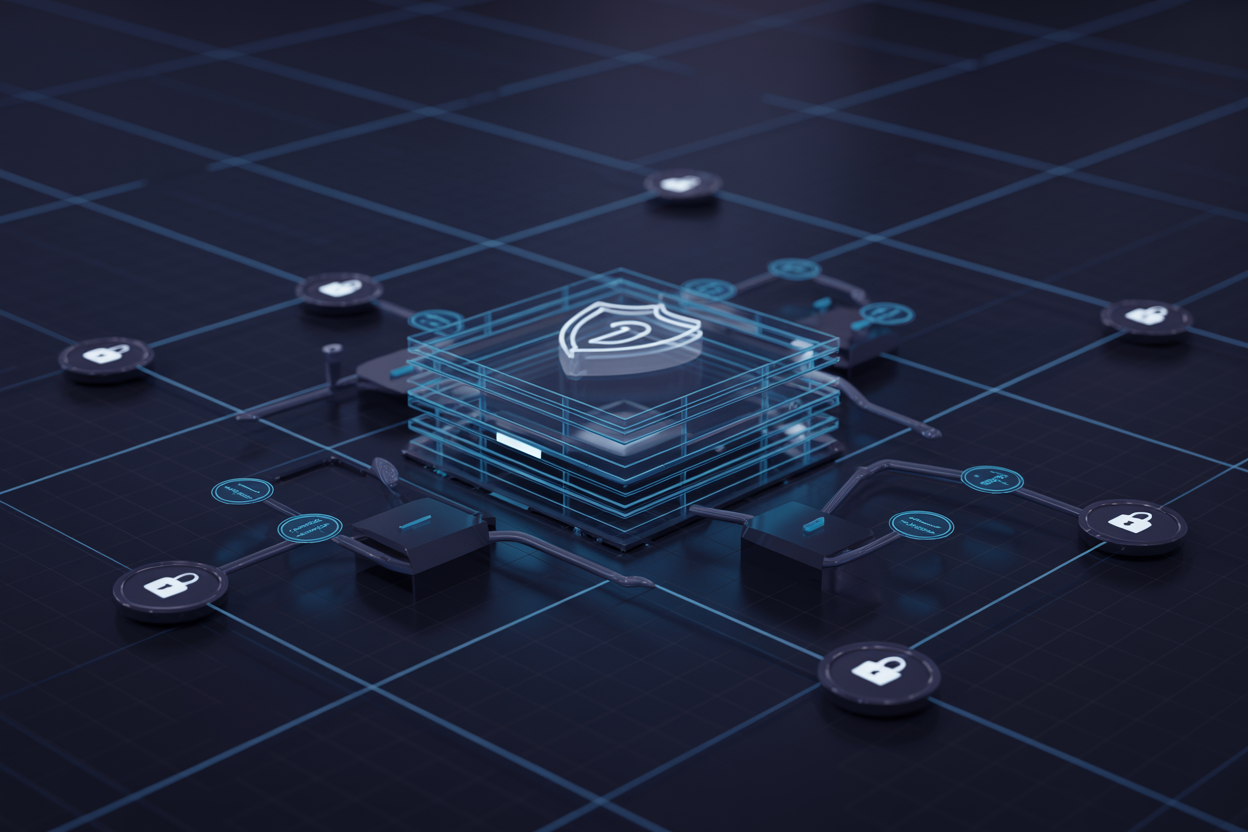
An AI root cause analysis platform touches some of the most sensitive parts of your infrastructure — logs, traces, metrics, configs, and deployment histories. All of that data needs protection at every stage:
- Encryption in transit and at rest using TLS 1.3 and AES-256
- Data masking and redaction for PII or secrets that appear in log payloads
- Tenant isolation in multi-tenant deployments to prevent data bleed across teams or customers
Role-Based Access Controls That Enforce Least Privilege
Not every engineer needs access to every system’s incident data. A well-designed AI-powered RCA platform enforces granular access policies:
- Team-scoped visibility so developers only see services they own
- Read vs. write permissions that separate analysts from responders
- Integration-level controls that restrict which tools can push or pull data from the platform
Audit Trails That Support Compliance Requirements
Every action taken inside the platform — running an automated root cause analysis, modifying a knowledge graph entry, exporting incident data — gets logged with timestamps, user IDs, and context. This gives compliance teams exactly what they need:
- Immutable audit logs that can’t be edited or deleted
- Exportable reports for SOC 2, ISO 27001, or internal reviews
- Alerting on anomalous access patterns to catch misuse early
Getting to the root of a problem fast — without drowning in noise or chasing the wrong signals — is what separates teams that recover quickly from those that don’t. A well-built AI-powered root cause analysis platform brings together smart data ingestion, a powerful ML engine, a context-rich knowledge graph, and rock-solid security, all working together to cut through complexity and get to answers faster. Every layer of the architecture plays a role, and when they all work in sync, the entire troubleshooting process becomes sharper, quicker, and a lot less painful.
If your team is still piecing together incidents manually or jumping between disconnected tools, it might be time to rethink the foundation you’re working with. The right platform doesn’t just find the cause — it learns from every incident, fits into your existing workflows, and scales as your environment grows. Start by taking a hard look at where your current setup falls short, and explore what a purpose-built AI-driven architecture could do for your response times, team confidence, and overall system reliability.