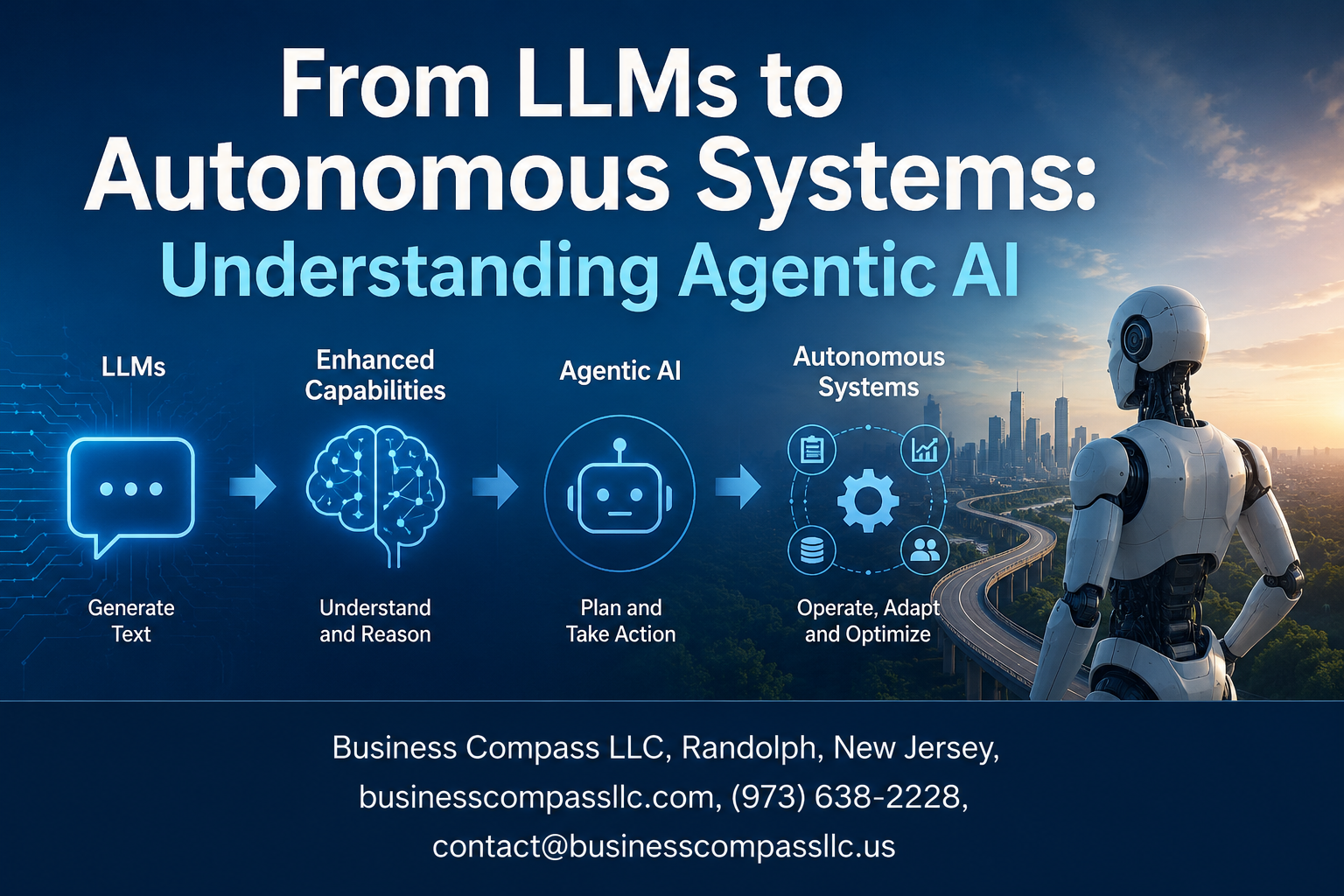
The world of artificial intelligence is shifting dramatically from simple language models to sophisticated agentic AI systems that can think, plan, and act independently. Large Language Models (LLMs) were just the beginning—now we’re entering an era where AI agents can make autonomous decisions, interact with external tools, and complete complex multi-step tasks without constant human oversight.
This guide is designed for AI professionals, developers, business leaders, and tech enthusiasts who want to understand how LLM to AI agents transformation works and why autonomous AI systems represent the next major leap in artificial intelligence capabilities.
You’ll discover how intelligent AI agents differ from traditional chatbots and learn about the essential agentic AI components that enable these systems to operate independently. We’ll explore proven autonomous systems applications across industries like healthcare, finance, and manufacturing, showing you real examples of AI agent implementation in action. Finally, we’ll address the biggest AI agent challenges organizations face today and examine the future of AI agents, including emerging trends that will shape how these technologies evolve over the next decade.
Decode the Evolution from Traditional LLMs to Intelligent Agents

Understand the limitations of static language models in real-world applications
Traditional LLMs excel at generating human-like text but struggle with dynamic, real-world scenarios requiring continuous learning and adaptation. These models operate as static systems, processing inputs and producing outputs without memory of previous interactions or ability to modify their behavior based on new experiences. They can’t execute actions beyond text generation, making them unsuitable for complex tasks requiring environmental interaction, decision-making across multiple steps, or autonomous problem-solving in changing conditions.
Discover how agentic AI bridges the gap between text generation and action execution
Agentic AI transforms passive language models into active intelligent agents capable of reasoning, planning, and executing real-world actions. Unlike traditional LLMs that simply respond to prompts, agentic AI systems incorporate memory systems, goal-oriented planning, and tool integration capabilities. These autonomous AI systems can break down complex objectives into actionable steps, interact with external APIs and databases, learn from environmental feedback, and adapt their strategies dynamically. This evolution enables AI to move beyond conversation into practical problem-solving across diverse domains.
Learn the key technological breakthroughs enabling autonomous decision-making
Several critical innovations enable the transition from LLM to AI agents. Multi-agent architectures allow specialized agents to collaborate on complex tasks, while reinforcement learning techniques help agents learn optimal strategies through trial and error. Advanced memory systems, including episodic and semantic memory, enable agents to retain and apply past experiences. Tool integration frameworks allow agents to interact with external systems, databases, and APIs. Planning algorithms enable intelligent AI agents to decompose goals into executable steps, while safety mechanisms ensure reliable autonomous operation in unpredictable environments.
Master the Core Components That Power Agentic AI Systems

Explore how memory systems enable continuous learning and context retention
Memory systems in agentic AI serve as the foundation for intelligent behavior, allowing AI agents to store, retrieve, and build upon past experiences. These systems operate through multiple layers: short-term memory for immediate context, episodic memory for specific experiences, and semantic memory for general knowledge. Advanced agentic AI components integrate vector databases and knowledge graphs to maintain persistent context across conversations and tasks. This memory architecture enables agents to learn from interactions, remember user preferences, and apply previous solutions to new problems, creating truly adaptive autonomous AI systems.
Understand planning and reasoning capabilities for multi-step problem solving
Planning and reasoning capabilities transform agentic AI from reactive systems into proactive problem-solvers. These intelligent AI agents break down complex objectives into manageable subtasks, evaluate multiple solution paths, and adapt strategies based on changing conditions. The planning module uses techniques like tree search, reinforcement learning, and causal reasoning to map out action sequences. When combined with reasoning engines, agents can handle uncertainty, make logical inferences, and adjust plans dynamically. This sophisticated decision-making process enables autonomous systems applications in robotics, finance, and healthcare where multi-step coordination is essential.
Discover tool integration mechanisms for real-world task execution
Tool integration mechanisms bridge the gap between AI reasoning and real-world action execution. Modern agentic AI systems connect to APIs, databases, web services, and physical devices through standardized interfaces and plugins. These mechanisms include function calling protocols, API orchestration layers, and safety validation systems that ensure reliable tool usage. Intelligent AI agents can dynamically select appropriate tools, chain multiple operations together, and handle errors gracefully. This integration capability transforms theoretical AI planning into practical outcomes, enabling agents to send emails, manipulate spreadsheets, control IoT devices, and interact with external software systems seamlessly.
Learn about perception modules for environmental awareness
Perception modules provide agentic AI systems with sensory awareness of their environment through multimodal data processing. These components integrate computer vision, natural language processing, audio analysis, and sensor fusion to create comprehensive situational awareness. Advanced perception systems use transformer architectures and neural networks to interpret visual scenes, understand speech patterns, and process structured data simultaneously. The perception layer feeds real-time environmental information to planning and reasoning modules, enabling autonomous AI systems to respond appropriately to changing conditions. This environmental awareness is crucial for applications ranging from autonomous vehicles to smart home assistants.
Unlock the Strategic Advantages of Implementing Agentic AI

Achieve 24/7 Autonomous Operations Without Human Intervention
Agentic AI systems transform business continuity by operating around the clock without supervision. These intelligent AI agents handle customer inquiries, process transactions, monitor systems, and respond to incidents while your team sleeps. Unlike traditional automation that follows rigid scripts, autonomous AI systems adapt to unexpected situations and make informed decisions based on real-time data analysis.
Scale Complex Workflows Beyond Traditional Automation Limits
Modern businesses face workflows that exceed simple rule-based automation capabilities. Agentic AI components handle multi-step processes involving document analysis, cross-platform data integration, and dynamic decision-making. These systems coordinate multiple tasks simultaneously, adapting workflows based on changing priorities and resource availability. The result? Complex operations that previously required entire teams now run efficiently through intelligent orchestration.
Reduce Operational Costs Through Intelligent Resource Optimization
Smart resource allocation becomes reality with agentic AI benefits driving cost reduction across organizations. These systems analyze usage patterns, predict demand fluctuations, and automatically adjust resource allocation to prevent waste. From cloud infrastructure scaling to workforce scheduling, autonomous AI systems optimize every aspect of operations. Companies report 30-50% cost savings through intelligent automation that learns and improves resource utilization continuously.
Enhance Decision Quality Through Data-Driven Reasoning Processes
Agentic AI implementation elevates decision-making by processing vast datasets and identifying patterns invisible to human analysis. These systems combine real-time information with historical trends, market conditions, and predictive models to generate actionable insights. The reasoning process remains transparent, providing clear explanations for recommendations. This data-driven approach eliminates emotional bias and ensures consistent, objective decision-making across all organizational levels.
Navigate Real-World Applications Transforming Industries Today
Revolutionize customer service with intelligent virtual assistants
Intelligent AI agents are transforming customer service by providing 24/7 support that learns from every interaction. These autonomous AI systems handle complex inquiries, escalate issues seamlessly, and personalize responses based on customer history. Companies like Shopify and Zendesk deploy agentic AI to reduce response times from hours to seconds while maintaining human-like conversation quality. The technology adapts to customer emotions, resolves multi-step problems independently, and continuously improves through machine learning.
Optimize supply chain management through predictive autonomous systems
Agentic AI revolutionizes supply chain operations by predicting disruptions before they occur and automatically adjusting logistics networks. These intelligent systems monitor global events, weather patterns, and market fluctuations to optimize inventory levels and routing decisions. Major retailers use autonomous AI systems to reduce waste by 30% and improve delivery times. The technology coordinates with suppliers, adjusts procurement schedules, and reroutes shipments without human intervention, creating resilient supply chains that adapt to changing conditions.
Transform financial services with automated trading and risk assessment
Financial institutions leverage agentic AI for high-frequency trading and real-time risk management that operates beyond human capabilities. These autonomous systems analyze market data, execute trades, and adjust portfolios within milliseconds while maintaining strict compliance protocols. Investment firms report 40% improved returns through AI agents that identify patterns across global markets. The technology continuously monitors credit risks, detects fraudulent transactions, and automatically implements protective measures, transforming how financial services operate in volatile markets.
Overcome Critical Implementation Challenges and Risk Mitigation

Address safety concerns in autonomous decision-making systems
Safety risks multiply when agentic AI systems make independent decisions without human oversight. Implement multi-layered safety protocols including kill switches, decision boundaries, and fail-safe mechanisms. Build robust testing environments that simulate edge cases and potential failure scenarios. Deploy gradual rollout strategies that limit initial system autonomy until proven reliability metrics are achieved. Establish clear decision trees that define when systems should escalate to human intervention.
Ensure ethical AI behavior through robust governance frameworks
Autonomous AI systems require comprehensive ethical guidelines that prevent bias, discrimination, and harmful outcomes. Create accountability structures with designated AI ethics officers and regular audit processes. Document all training data sources and decision-making algorithms to maintain transparency. Implement bias detection tools that continuously monitor system outputs across different demographic groups. Establish clear protocols for addressing ethical violations and system corrections when issues arise.
Manage computational resource requirements for enterprise deployment
AI agent implementation demands significant computational infrastructure that can strain existing enterprise systems. Plan for scalable cloud architectures that can handle peak processing loads during complex reasoning tasks. Optimize model efficiency through techniques like quantization and pruning to reduce resource consumption. Budget for specialized hardware including GPUs and TPUs that accelerate intelligent AI agents performance. Consider hybrid deployment models that balance on-premises control with cloud scalability requirements.
Establish monitoring systems for performance and reliability tracking
Continuous monitoring becomes critical when agentic AI systems operate with minimal human supervision. Deploy real-time dashboards that track key performance indicators including response accuracy, processing speed, and error rates. Create automated alerting systems that notify administrators when performance metrics fall below acceptable thresholds. Implement comprehensive logging that captures all system interactions for post-incident analysis. Establish regular performance reviews that assess system effectiveness against business objectives and user satisfaction metrics.
Prepare for the Future Landscape of Autonomous AI Systems

Anticipate emerging capabilities in multi-agent collaboration
Multi-agent systems represent the next evolution in autonomous AI systems, where specialized AI agents work together like a digital symphony orchestra. These collaborative networks will revolutionize how complex problems get solved, with each agent bringing unique capabilities to tackle different aspects of a challenge. Imagine AI agents that can negotiate, delegate tasks, and make collective decisions in real-time. Banking systems might deploy financial analysis agents, risk assessment agents, and customer service agents that share insights instantly to provide personalized investment advice. Healthcare networks could coordinate diagnostic agents, treatment planning agents, and monitoring agents to deliver comprehensive patient care. The breakthrough lies in emergent intelligence – when multiple agentic AI systems collaborate, they often discover solutions that individual agents couldn’t find alone. These multi-agent ecosystems will self-organize, adapt to changing conditions, and scale their problem-solving capacity by recruiting additional specialized agents as needed.
Understand the convergence with robotics and IoT ecosystems
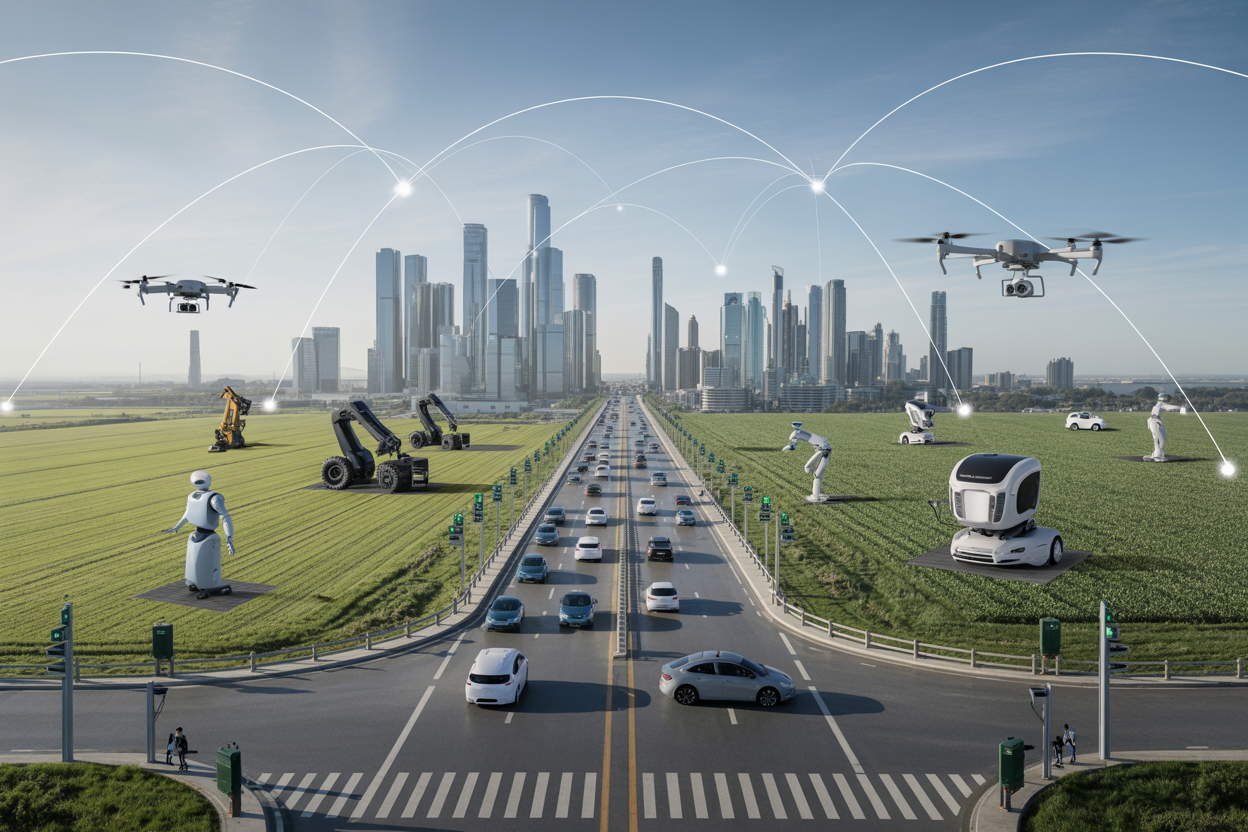
The fusion of agentic AI with robotics and Internet of Things (IoT) creates unprecedented opportunities for intelligent automation across physical and digital worlds. Smart factories will operate with AI agents controlling robotic assembly lines while simultaneously optimizing supply chains and predicting maintenance needs through connected sensors. Your home will become a living ecosystem where AI agents manage energy consumption, security systems, and appliance coordination through thousands of IoT touchpoints. Autonomous vehicles represent just the beginning – entire smart cities will run on interconnected AI agents managing traffic flow, emergency services, and resource distribution in real-time. The magic happens when digital intelligence meets physical capability. Manufacturing robots guided by AI agents will adapt their techniques based on material quality detected by IoT sensors, while delivery drones will navigate using real-time data from weather stations, traffic monitors, and GPS networks. This convergence transforms static automation into dynamic, learning systems that improve performance continuously.
Explore the potential for general-purpose autonomous agents
General-purpose autonomous agents mark the ultimate goal of agentic AI development – systems capable of tackling any task with human-level adaptability and reasoning. Unlike today’s specialized AI tools, these agents will seamlessly switch between writing code, analyzing financial markets, conducting scientific research, and managing personal schedules with equal proficiency. The journey toward artificial general intelligence becomes more tangible as these agents develop metacognitive abilities – they’ll understand their own thinking processes and adapt their strategies based on success patterns. Personal AI assistants will evolve beyond simple task completion to become true digital colleagues that understand context, anticipate needs, and make independent decisions aligned with your goals. Businesses will deploy general-purpose agents as virtual employees capable of learning any role, from customer support to strategic planning. The economic implications are staggering – organizations could scale their capabilities instantly by deploying agents trained on their specific workflows and knowledge bases. These autonomous systems will reshape the future of work, education, and innovation by democratizing access to expert-level intelligence across every industry and application domain.

Agentic AI represents a massive leap forward from the basic question-and-answer systems we’ve grown used to. These intelligent agents can plan, reason, and take action without constant human guidance, opening doors to applications we’re only beginning to explore. From customer service that actually understands context to research assistants that can dig deep into complex problems, the potential is genuinely exciting.
The road ahead isn’t without its bumps, though. Companies diving into agentic AI need to think carefully about data security, ethical considerations, and making sure these systems integrate smoothly with existing workflows. The organizations that start experimenting now – even with small pilot projects – will have a significant advantage as this technology matures. Don’t wait for the perfect moment to begin exploring what agentic AI can do for your business. Start small, learn fast, and position yourself at the forefront of this AI revolution.