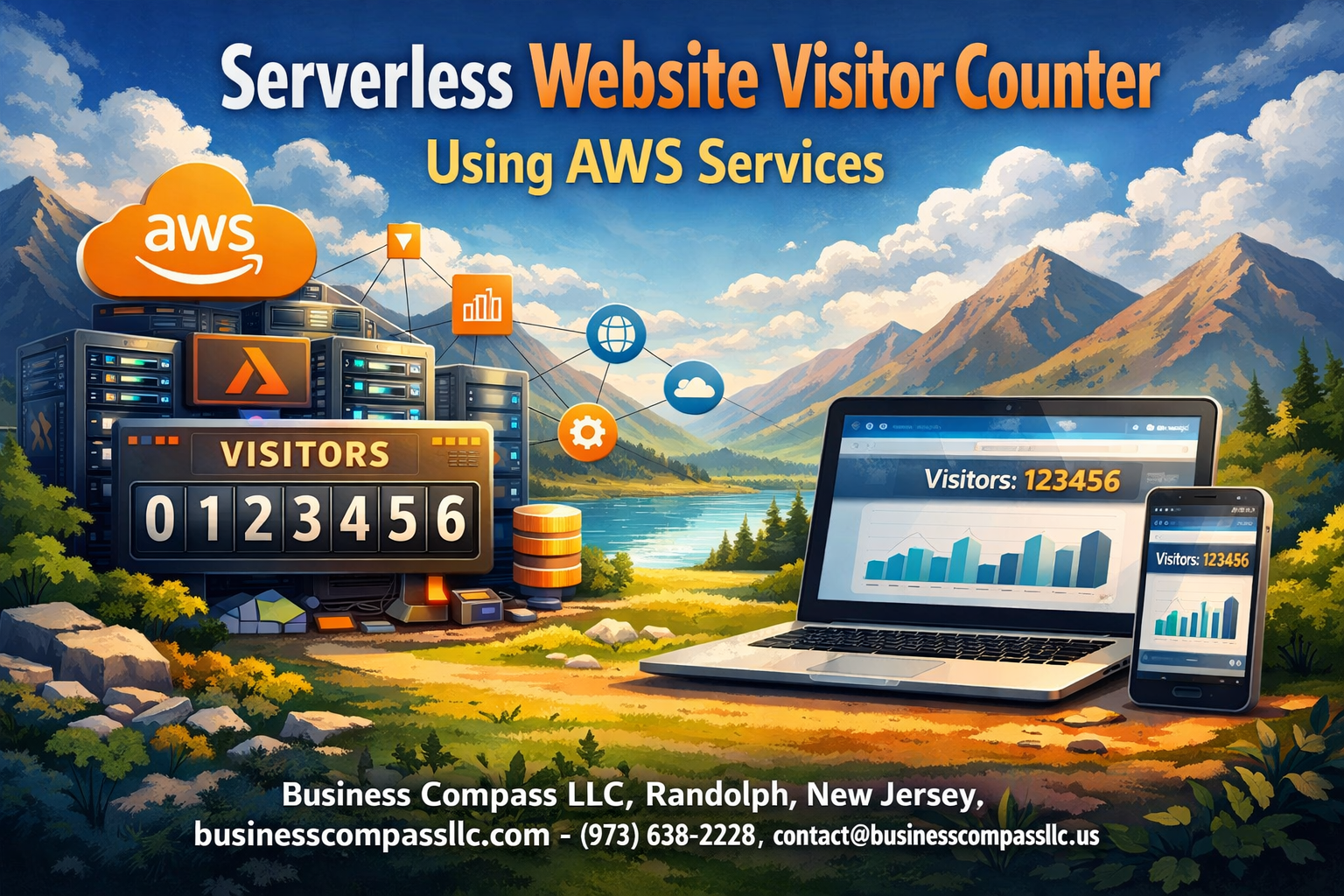
Building a serverless website visitor counter using AWS services lets you track web traffic without managing servers or worrying about scaling issues. This tutorial is perfect for web developers, startup founders, and anyone who wants to add visitor tracking to their website without the overhead of traditional analytics platforms.
You’ll learn how to create a complete AWS serverless architecture that automatically counts and stores visitor data. We’ll walk through building AWS Lambda functions for counter logic that process each visitor interaction, setting up DynamoDB for reliable data storage that scales with your traffic, and creating API Gateway for secure communication between your website and backend services.
By the end of this guide, you’ll have a fully functional serverless web analytics system that costs pennies to run and handles traffic spikes automatically. We’ll also cover deployment best practices and monitoring techniques to keep your AWS serverless monitoring dashboard running smoothly.
Understanding AWS Serverless Architecture for Web Analytics

Core Benefits of Serverless Solutions Over Traditional Hosting
Serverless website visitor counter systems eliminate server management headaches while delivering superior performance. Unlike traditional hosting where you provision servers regardless of traffic, serverless architecture automatically handles scaling based on demand. This means your visitor tracking system runs efficiently during traffic spikes without manual intervention, while AWS handles all infrastructure concerns behind the scenes.
Essential AWS Services for Building Visitor Counters
AWS Lambda visitor tracking forms the backbone of serverless counter systems, processing visitor data without dedicated servers. DynamoDB visitor storage provides lightning-fast NoSQL database capabilities that scale automatically with your traffic patterns. API Gateway serverless counter manages secure communication between your website and backend services, while CloudWatch monitors system performance in real-time.
Cost-Effective Scaling Without Infrastructure Management
Traditional hosting requires paying for constant server uptime, even during low-traffic periods. AWS serverless architecture charges only for actual usage – Lambda executions, DynamoDB reads/writes, and API calls. This pay-per-use model dramatically reduces costs for websites with variable traffic patterns. Small websites might operate for pennies monthly, while high-traffic sites benefit from automatic scaling without capacity planning.
Real-Time Data Processing Capabilities
Serverless web analytics systems process visitor data instantly as users browse your site. Lambda functions execute within milliseconds, updating DynamoDB records and triggering real-time dashboard updates. This immediate processing enables live visitor counts, geographic tracking, and instant analytics without traditional database performance bottlenecks. The serverless model ensures consistent response times regardless of concurrent visitor volume.
Setting Up Your AWS Environment and Prerequisites
Creating and Configuring Your AWS Account
Getting started with your serverless website visitor counter begins with setting up a robust AWS foundation. Sign up for an AWS account if you don’t already have one, and take advantage of the AWS Free Tier to experiment with services like Lambda, DynamoDB, and API Gateway without incurring costs during development.
Once your account is active, enable billing alerts and set up cost monitoring to track your AWS serverless architecture expenses. Configure your account settings, verify your email, and add a payment method. Consider creating separate AWS accounts for development, staging, and production environments to maintain proper isolation and security boundaries for your visitor tracking system.
Understanding IAM Roles and Permissions Required
Your AWS Lambda visitor tracking system needs specific IAM permissions to function properly. Create dedicated IAM roles for your Lambda functions with policies that allow reading and writing to DynamoDB tables, along with CloudWatch logging permissions for monitoring and debugging purposes.
Set up least-privilege access by creating custom policies that grant only the necessary permissions for each service component. Your Lambda execution role should include AmazonDynamoDBFullAccess for database operations and AWSLambdaBasicExecutionRole for CloudWatch integration. Additionally, configure API Gateway permissions to invoke your Lambda functions and establish secure communication channels for your serverless counter deployment.
Installing AWS CLI and Development Tools
Installing the AWS Command Line Interface streamlines your serverless web analytics tutorial development workflow significantly. Download and install the latest AWS CLI version from the official AWS website, then configure it using aws configure with your access keys, default region, and output format preferences.
Complement your setup with essential development tools including Node.js for Lambda function development, AWS SAM CLI for local testing and deployment, and your preferred code editor with AWS extensions. Install the AWS SDK for your chosen programming language and configure your development environment with proper credential management to ensure smooth deployment of your visitor counter system components.
Building the Frontend Integration for Visitor Tracking

Implementing JavaScript Code for Counter Triggers
The frontend implementation starts with creating a simple JavaScript function that fires when your page loads. Your code needs to make an asynchronous call to your API Gateway endpoint, sending visitor data without blocking the page rendering. Use fetch() or XMLHttpRequest to trigger the serverless website visitor counter immediately after the DOM loads.
Handling Cross-Origin Resource Sharing (CORS) Configuration
CORS settings in your API Gateway serverless counter determine which domains can access your tracking endpoint. Configure your API Gateway to accept requests from your website’s domain while blocking unauthorized access. Set proper headers including Access-Control-Allow-Origin, Access-Control-Allow-Methods, and Access-Control-Allow-Headers to ensure smooth communication between your frontend and AWS Lambda visitor tracking function.
Creating Seamless User Experience Without Page Delays
Your visitor counter should operate invisibly in the background without affecting page load speed. Implement the tracking call as a non-blocking operation that runs after critical page elements finish loading. Consider using setTimeout() or requestIdleCallback() to defer the counter trigger, ensuring your serverless web analytics don’t impact user experience or SEO performance metrics.
Testing Frontend Counter Functionality
Test your implementation across different browsers and devices to verify consistent behavior. Use browser developer tools to monitor network requests and confirm your DynamoDB web analytics calls complete successfully. Set up error handling to catch failed requests and implement retry logic for temporary network issues, ensuring reliable data collection for your serverless counter system.
Developing AWS Lambda Functions for Counter Logic

Writing Efficient Python or Node.js Counter Code
Your AWS Lambda visitor tracking function needs clean, focused code that handles database operations efficiently. Python offers straightforward boto3 integration with DynamoDB, while Node.js provides excellent async/await support for handling multiple concurrent requests. The core logic should increment a counter value, handle new visitor entries, and return the current count in a single atomic operation.
Implementing Error Handling and Retry Mechanisms
Robust error handling prevents your serverless website visitor counter from failing silently when DynamoDB throttling or network issues occur. Implement exponential backoff for retry logic and catch specific AWS exceptions like ProvisionedThroughputExceededException. Your Lambda function visitor counter should gracefully degrade by returning cached values or default responses when database operations fail completely.
Optimizing Function Performance and Cold Start Times
Cold start optimization directly impacts your serverless counter’s response time and user experience. Keep your deployment package lightweight by excluding unnecessary dependencies, initialize DynamoDB connections outside the handler function, and consider provisioned concurrency for high-traffic scenarios. Memory allocation between 512MB-1024MB typically provides the best price-performance ratio for database-intensive AWS Lambda visitor tracking operations.
Configuring DynamoDB for Reliable Data Storage

Designing Optimal Table Structure for Visitor Data
Creating an effective DynamoDB table for your serverless website visitor counter requires careful consideration of access patterns. Design a simple table with a partition key representing your website domain and a sort key for timestamp or page path. Include attributes for visitor count, session data, and metadata like user agent or geographic location.
Keep your schema flexible to accommodate future analytics needs while maintaining query efficiency. Use composite keys when tracking multiple pages or time periods, ensuring your DynamoDB visitor storage can scale seamlessly with traffic growth.
Setting Up Read and Write Capacity for Cost Control
Configure DynamoDB with on-demand billing for unpredictable traffic patterns or provisioned capacity for consistent workloads. Start with minimal read/write units and enable auto-scaling to handle traffic spikes automatically. Monitor CloudWatch metrics to optimize capacity settings and reduce costs.
Set up burst capacity reserves for sudden visitor increases while maintaining cost efficiency. Use DynamoDB’s adaptive capacity feature to distribute load evenly across partitions, preventing hot partition issues that could impact your AWS serverless architecture performance.
Implementing Data Consistency and Backup Strategies
Enable point-in-time recovery for your visitor counter data to protect against accidental deletions or corruption. Configure automated backups with appropriate retention periods based on your analytics requirements. Choose eventually consistent reads for real-time visitor displays and strongly consistent reads for administrative dashboards.
Implement cross-region replication if global availability is critical for your serverless web analytics. Set up DynamoDB Streams to trigger Lambda functions for real-time processing or backup operations, creating a robust data protection strategy.
Managing Time-Based Data Partitioning
Structure your partition keys to distribute visitor data evenly across time periods, preventing hot partitions during peak traffic. Use date-based prefixes or hash keys to spread writes across multiple partitions. Implement Time-to-Live (TTL) attributes to automatically expire old visitor records and control storage costs.
Consider creating separate tables for different time granularities – daily, monthly, and yearly aggregations. This approach optimizes query performance for various reporting needs while maintaining efficient storage utilization in your DynamoDB web analytics setup.
Creating API Gateway for Secure Communication

Setting Up RESTful Endpoints for Counter Operations
API Gateway serves as the communication bridge between your frontend and the serverless website visitor counter backend. Create a new REST API and define resource endpoints like /visitors/increment for tracking page views and /visitors/count for retrieving current visitor statistics. Configure POST and GET methods respectively, linking each endpoint to your corresponding AWS Lambda visitor tracking functions through proxy integration.
Implementing Rate Limiting and Security Measures
Protect your API Gateway serverless counter from abuse by enabling throttling limits and usage plans. Set request quotas to prevent excessive calls that could inflate visitor counts or overwhelm your DynamoDB visitor storage. Configure CORS headers to allow requests only from your domain, and consider implementing API key authentication for additional security layers in your AWS serverless architecture.
Configuring Request Validation and Response Formatting
Set up request validation models to ensure incoming data meets expected formats before reaching your Lambda functions. Define response templates that return consistent JSON structures containing visitor count data and status messages. Enable CloudWatch logging to monitor API performance and troubleshoot issues in your serverless web analytics system, ensuring reliable operation of your visitor tracking implementation.
Deploying and Monitoring Your Serverless Counter System

Automated Deployment Using AWS CloudFormation or SAM
Infrastructure as Code transforms your serverless counter deployment from manual setup into repeatable, version-controlled automation. AWS SAM templates define your Lambda functions, API Gateway endpoints, and DynamoDB tables in a single YAML file, enabling one-command deployments across multiple environments. CloudFormation stacks provide rollback capabilities and dependency management, ensuring your visitor tracking system deploys consistently every time.
Setting Up CloudWatch Logging and Monitoring
CloudWatch automatically captures Lambda execution logs and DynamoDB metrics for your visitor counter system. Enable detailed monitoring on your API Gateway endpoints to track request latency and error rates. Custom CloudWatch dashboards visualize real-time performance data, while log aggregation helps debug failed visitor count updates and identify performance bottlenecks.
Implementing Real-Time Alerts for System Health
SNS notifications paired with CloudWatch alarms create proactive monitoring for your serverless website visitor counter. Configure alerts for Lambda function errors, DynamoDB throttling events, and API Gateway 5xx responses. Email or Slack integrations ensure immediate notification when visitor tracking fails, maintaining system reliability for your web analytics.
Performance Optimization and Troubleshooting Techniques
DynamoDB on-demand billing and Lambda provisioned concurrency optimize costs while maintaining performance for high-traffic websites. X-Ray tracing identifies bottlenecks in your visitor counting pipeline, revealing slow database queries or cold start issues. Connection pooling and efficient error handling reduce latency, ensuring your serverless counter responds quickly to visitor requests.

Building a serverless visitor counter with AWS gives you a powerful, cost-effective way to track website analytics without managing servers. You’ve learned how to combine Lambda functions, DynamoDB, and API Gateway to create a system that scales automatically and only charges you for what you use. The beauty of this setup is that it handles traffic spikes seamlessly while keeping your costs predictable.
Now it’s time to put these pieces together and launch your own serverless counter. Start with the basic setup, test each component thoroughly, and don’t forget to monitor your system once it’s live. The skills you’ve gained here open doors to building more complex serverless applications – this counter is just the beginning of what you can create with AWS’s serverless ecosystem.