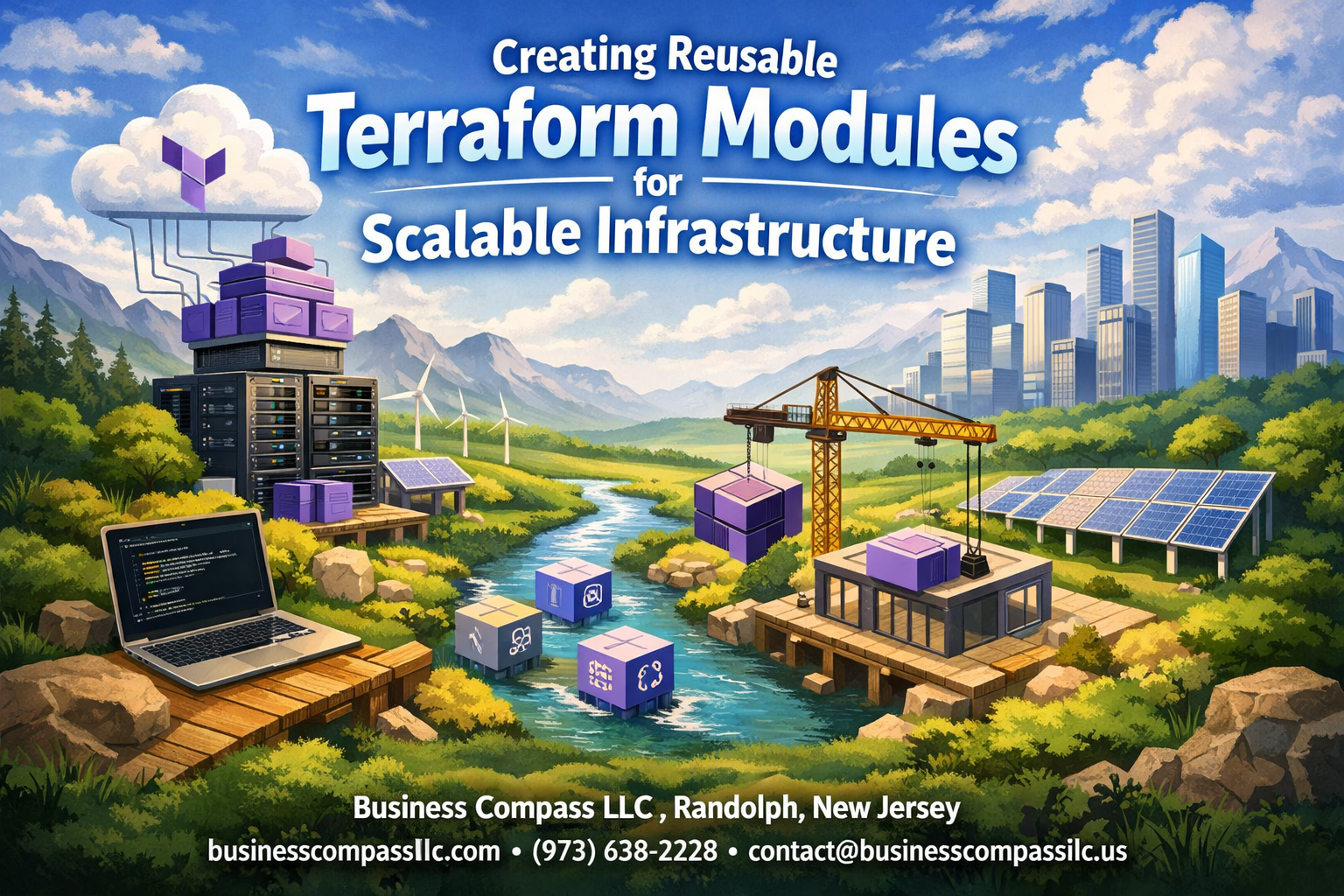
Managing infrastructure across multiple environments gets messy fast. Creating reusable Terraform modules solves this problem by letting you build once and deploy everywhere, turning repetitive infrastructure tasks into simple, standardized building blocks.
This guide is for DevOps engineers, infrastructure architects, and platform teams who want to stop copying and pasting Terraform code and start building scalable infrastructure terraform solutions that work across their entire organization.
You’ll learn how to design terraform module architecture that actually gets reused, not just written once and forgotten. We’ll walk through terraform module development from your first simple module to advanced terraform enterprise modules that handle complex scenarios. You’ll also discover terraform module testing strategies that catch problems before they hit production, plus terraform best practices for publishing and sharing infrastructure as code modules across your team.
By the end, you’ll have the skills to build terraform modules that scale with your infrastructure needs and make your entire team more productive.
Understanding Terraform Modules and Their Strategic Value

Define reusable infrastructure components that reduce code duplication
Terraform modules transform repetitive infrastructure patterns into self-contained, reusable components that eliminate the need to write the same configuration code multiple times. Instead of copying and pasting resource definitions across projects, teams can create standardized modules for common infrastructure patterns like VPC setups, database clusters, or load balancer configurations. These modules encapsulate best practices and proven architectures, allowing developers to deploy complex infrastructure with simple module calls rather than managing hundreds of individual resource blocks.
Accelerate deployment timelines with pre-built infrastructure patterns
Pre-built terraform modules dramatically reduce the time required to provision new environments from weeks to hours. Development teams can leverage battle-tested infrastructure patterns without reinventing the wheel for each project. When launching a new application, engineers simply reference existing modules for networking, security groups, and compute resources rather than architecting these components from scratch. This approach enables rapid scaling of infrastructure while maintaining consistency across deployments.
Ensure consistent configuration standards across multiple environments
Terraform module architecture enforces standardized configurations across development, staging, and production environments by centralizing infrastructure definitions. Teams avoid configuration drift and environment-specific bugs by using the same underlying module code with different input variables. Security policies, naming conventions, and resource tagging become consistent when embedded within reusable terraform modules. This standardization reduces debugging time and improves compliance across enterprise infrastructure deployments.
Lower maintenance overhead through centralized module updates
Centralized terraform module management reduces maintenance burden by allowing infrastructure updates to propagate across all consuming projects simultaneously. When security patches or configuration improvements are needed, teams update the module once rather than modifying dozens of individual terraform configurations. Version-controlled modules enable gradual rollouts and rollbacks, giving teams confidence when deploying infrastructure changes. This centralized approach scales maintenance efforts efficiently as infrastructure footprints grow across organizations.
Planning Your Module Architecture for Maximum Reusability

Identify Common Infrastructure Patterns Worth Modularizing
Start by mapping out the infrastructure components your organization deploys repeatedly across projects. Look for patterns like web application stacks, database clusters, networking configurations, and security groups that share similar requirements but vary slightly in scale or configuration. Virtual machine provisioning, load balancer setups, and storage configurations make excellent candidates for terraform modules since they follow predictable patterns while requiring customization for specific environments.
Focus on components that save significant development time when abstracted into reusable terraform modules. Auto-scaling groups, VPC configurations, and monitoring setups typically involve complex resource relationships that benefit from encapsulation. Document these patterns with their common variations to understand which parameters need flexibility and which can remain static across deployments.
Design Flexible Input Variables That Accommodate Different Use Cases
Create input variables that balance flexibility with simplicity, avoiding both overly rigid configurations and overwhelming complexity. Use variable validation rules to ensure inputs meet requirements while providing clear error messages when validation fails. Design default values that work for common scenarios while allowing overrides for edge cases.
Structure variables hierarchically using object types for related configurations, making terraform module interfaces cleaner and more intuitive. Group related settings like networking parameters or security configurations into single variable blocks rather than exposing numerous individual variables that users must coordinate manually.
Structure Module Directories for Optimal Organization and Discoverability
Organize terraform modules using consistent directory structures that make finding and understanding components effortless. Create separate directories for different resource types while maintaining clear naming conventions that indicate module purpose and scope. Include comprehensive README files with usage examples and parameter documentation.
Implement standardized file organization with main.tf for primary resources, variables.tf for inputs, outputs.tf for return values, and versions.tf for provider requirements. This predictable structure helps team members navigate any terraform module quickly while establishing patterns that scale across your entire infrastructure as code library.
Building Your First Production-Ready Terraform Module

Implement essential input validation to prevent configuration errors
Robust input validation forms the backbone of production-ready terraform modules. Use variable validation blocks to enforce naming conventions, check resource limits, and verify configuration parameters before deployment. Common validation patterns include regex checks for naming standards, conditional expressions for mutually exclusive options, and range validations for numerical inputs. This proactive approach prevents costly deployment failures and ensures consistent infrastructure provisioning across environments.
Create comprehensive output values for seamless module integration
Well-designed outputs enable seamless integration between terraform modules and downstream resources. Export essential resource identifiers, connection strings, and configuration details that other modules need for dependency management. Structure outputs logically using descriptive names and include sensitive data handling where appropriate. Consider creating output maps for complex resources and provide both individual attributes and consolidated objects to maximize flexibility for consuming modules.
Add conditional resource provisioning for environment-specific needs
Smart conditional logic transforms rigid terraform modules into flexible infrastructure components. Leverage count and for_each meta-arguments combined with conditional expressions to provision resources based on environment variables, feature flags, or configuration parameters. This approach enables single modules to handle development, staging, and production requirements without code duplication. Design conditionals around common scenarios like enabling monitoring, scaling configurations, and security features based on deployment context.
Document variable requirements and usage examples thoroughly
Clear documentation accelerates module adoption and reduces support overhead. Create comprehensive README files that include variable descriptions, example configurations, and common use cases. Use terraform-docs or similar tools to auto-generate variable references and maintain consistency. Include working examples for different deployment scenarios, prerequisite resources, and integration patterns. Well-documented modules become self-service infrastructure components that development teams can confidently implement without extensive consultation.
Advanced Module Development Techniques for Enterprise Scale

Leverage data sources to make modules environment-aware
Data sources transform static terraform modules into intelligent, environment-aware components that adapt to existing infrastructure. Instead of hardcoding AMI IDs or VPC configurations, your modules can query AWS for the latest Ubuntu image or discover existing network resources dynamically. This approach eliminates manual updates and ensures modules work seamlessly across development, staging, and production environments.
Smart modules use data sources to fetch region-specific information, existing resource tags, or organizational naming conventions. Your module becomes self-configuring, reducing deployment errors and maintenance overhead while maintaining consistency across different environments and AWS regions.
Implement version constraints to ensure compatibility and stability
Version constraints protect your terraform enterprise modules from breaking changes by specifying exact provider and module versions. Pin your AWS provider to ~> 4.0 to allow patch updates while preventing major version conflicts that could disrupt production deployments. This practice ensures your reusable terraform modules maintain stability across team deployments.
Terraform module development requires careful version management for both required providers and child modules. Use semantic versioning constraints like >= 1.2.0, < 2.0.0 to balance security updates with compatibility, preventing unexpected infrastructure changes during routine deployments.
Create nested modules for complex multi-tier architectures
Nested modules break complex infrastructure as code modules into manageable, specialized components that work together seamlessly. Your web application module might call separate database, networking, and security modules internally, each handling specific concerns while maintaining clean interfaces between layers. This modular approach simplifies debugging and enables team specialization.
Complex enterprise architectures benefit from nested module patterns where parent modules orchestrate child modules for different tiers. Your application module can compose VPC, RDS, and EC2 modules internally, exposing only essential parameters to consumers while maintaining sophisticated internal logic.
Build dynamic resource configurations using for_each and count
Dynamic resource creation using for_each and count enables terraform modules to scale resources based on input variables rather than static configurations. Create multiple subnets across availability zones, provision variable numbers of worker nodes, or deploy resources for different environments using the same module code. This flexibility eliminates code duplication and makes modules truly reusable.
Advanced terraform module architecture leverages for_each with maps to create named resources and count for simple repetition. Your security group module can dynamically create rules based on input lists, while your EKS module can provision worker groups across multiple instance types and availability zones.
Handle sensitive data securely within module boundaries
Sensitive data handling in scalable infrastructure terraform requires careful variable marking and output management to prevent credential exposure in logs and state files. Mark database passwords, API keys, and certificates as sensitive variables, ensuring they don’t appear in Terraform output or CI/CD logs. Your modules should never expose sensitive values through outputs unless absolutely necessary.
Terraform best practices include using AWS Secrets Manager or Parameter Store for sensitive data rather than passing secrets through variables. Your RDS module can generate random passwords internally and store them securely, while your application modules reference these secrets through data sources, maintaining security boundaries across your infrastructure.
Testing and Validating Terraform Modules Before Deployment

Set up automated testing pipelines for continuous module validation
Building robust CI/CD pipelines for terraform modules ensures code quality and prevents production issues. Modern testing frameworks like Terratest, Kitchen-Terraform, and native GitHub Actions provide comprehensive validation workflows. Configure automated tests to run on every pull request, checking syntax validation, security compliance, and resource provisioning across multiple environments and cloud providers.
Create comprehensive test scenarios covering edge cases
Effective terraform module testing requires scenarios that simulate real-world deployment conditions and failure modes. Design test cases covering resource dependencies, variable combinations, and provider version compatibility. Include boundary testing for resource limits, networking configurations, and permission scenarios. Your test suite should validate both successful deployments and graceful handling of constraint violations, ensuring modules behave predictably under diverse conditions.
Implement integration tests with real cloud resources
Integration testing validates terraform modules against actual cloud infrastructure, confirming resource creation, configuration accuracy, and cleanup processes. Deploy test environments using temporary resources, verify expected outputs, and validate cross-service connectivity. Implement proper teardown procedures to avoid cost accumulation while maintaining test data integrity. This approach catches provider-specific issues and API changes that static analysis cannot detect.
Publishing and Sharing Modules Across Your Organization

Establish Private Module Registries for Secure Internal Distribution
Setting up a private Terraform registry gives your organization complete control over module distribution while maintaining security standards. Popular solutions include HashiCorp’s Terraform Enterprise, GitLab’s package registry, or AWS CodeArtifact for hosting your reusable terraform modules internally. Private registries enable teams to discover, version, and consume terraform modules seamlessly across different projects without exposing proprietary infrastructure patterns to external repositories.
Implement Semantic Versioning Strategies for Reliable Module Updates
Semantic versioning (SemVer) provides a structured approach to terraform module development by clearly communicating the impact of changes through version numbers. Major versions indicate breaking changes that require code updates, minor versions introduce new features while maintaining backward compatibility, and patch versions address bug fixes. This strategy allows teams to confidently upgrade modules while understanding potential risks, making scalable infrastructure terraform management more predictable and reducing deployment failures.
Create Standardized Documentation Templates for Consistent Module Descriptions
Documentation templates ensure every module follows the same structure, making it easier for teams to understand and implement terraform best practices. Include sections for module purpose, input variables with examples, output descriptions, usage patterns, and dependency requirements. Standardized documentation accelerates module adoption across teams and reduces support overhead by providing clear guidance on proper implementation of infrastructure as code modules.
Set Up Automated Module Publishing Workflows
Automated publishing workflows streamline the release process for terraform enterprise modules through CI/CD pipelines that validate, test, and publish modules automatically. Configure workflows to trigger on git tags, run terraform module testing suites, generate documentation, and push approved versions to your private registry. This automation reduces human error, ensures consistent quality checks, and enables rapid iteration cycles for your terraform module publishing process.

Terraform modules transform how teams manage infrastructure by turning repetitive code into reusable, tested components. By planning your module architecture thoughtfully and following production-ready practices, you can eliminate configuration drift, reduce deployment times, and create a consistent infrastructure foundation across your entire organization. The investment in building well-structured modules pays dividends as your infrastructure grows and evolves.
Start small with a single module for your most common infrastructure pattern, then expand your library as you identify more opportunities for reuse. Remember that testing and validation aren’t optional steps – they’re what separate reliable, production-ready modules from quick scripts that break under pressure. Share your modules with your team, establish clear versioning practices, and watch as your infrastructure becomes more predictable, scalable, and maintainable than ever before.