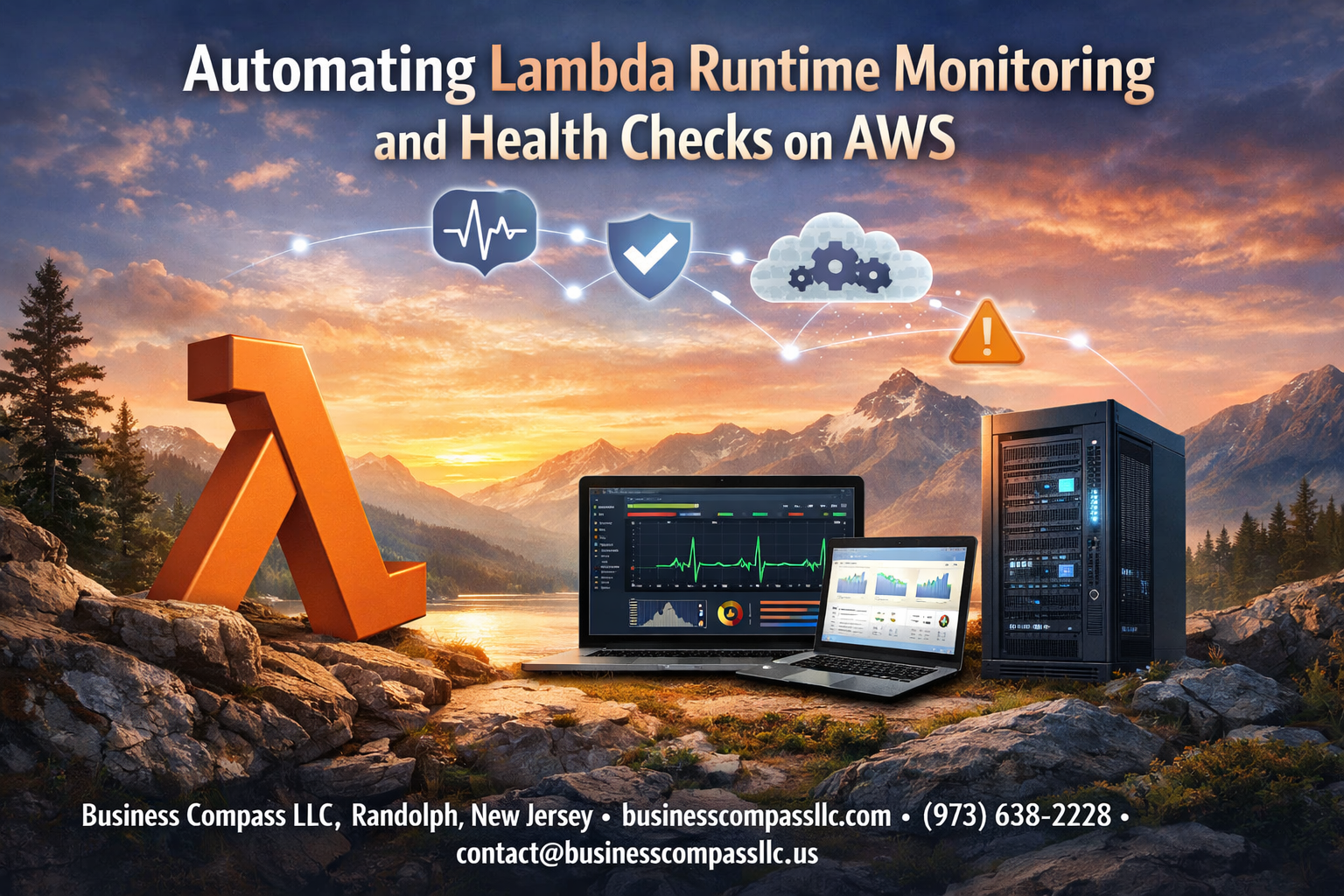
AWS Lambda functions power countless serverless applications, but keeping them healthy and performant at scale requires more than just hoping for the best. Without proper AWS Lambda monitoring and automated health checks in place, you’re flying blind – missing critical performance issues, runtime errors, and bottlenecks that can tank your user experience.
This guide is for DevOps engineers, cloud architects, and developers who want to move beyond basic logging and build robust serverless monitoring automation systems. You’ll learn practical strategies to catch problems before your users do and keep your Lambda functions running smoothly.
We’ll walk through setting up AWS CloudWatch Lambda monitoring with custom metrics and alarms, then show you how to build automated Lambda monitoring systems that actively test your functions and alert you to issues. You’ll also discover advanced monitoring automation strategies that give you deeper Lambda observability and help you optimize performance across your entire serverless stack.
Understanding Lambda Runtime Performance Challenges
Identifying Common Performance Bottlenecks in Lambda Functions
Lambda performance issues often stem from memory allocation problems, inefficient code execution, and database connection overhead. Functions may struggle with excessive memory usage, blocking synchronous operations, or poorly optimized algorithms. Network latency from external API calls creates significant delays. Resource contention occurs when functions compete for CPU cycles, while dependency initialization overhead slows execution times.
Recognizing Signs of Function Degradation and Timeout Issues
Key indicators include increasing execution duration beyond baseline metrics, timeout errors appearing in CloudWatch logs, and elevated error rates during peak traffic. Memory utilization spikes, failed invocations, and throttling events signal performance degradation. Monitor duration percentiles and error patterns to identify declining function health before customer impact occurs.
Analyzing Cold Start Impact on Application Responsiveness
Cold starts dramatically affect user experience, particularly for synchronous workloads like API Gateway integrations. Runtime initialization, package imports, and connection establishment contribute to startup latency. Java and .NET functions experience longer cold starts than Node.js or Python. Provisioned concurrency and connection pooling strategies help minimize cold start frequency and duration for critical application paths.
Essential AWS Native Monitoring Tools for Lambda Functions
Leveraging CloudWatch Metrics for Real-Time Performance Insights
CloudWatch Metrics provides automatic monitoring for AWS Lambda functions through pre-configured metrics like duration, error rate, and throttles. These metrics offer immediate visibility into Lambda runtime monitoring performance, enabling proactive identification of bottlenecks and resource constraints. Custom metrics can extend monitoring capabilities by tracking business-specific KPIs and application-level performance indicators.
Setting up CloudWatch dashboards transforms raw metric data into actionable insights for serverless monitoring automation. Real-time alerts trigger when Lambda performance monitoring thresholds are breached, ensuring rapid response to critical issues before they impact end users.
Setting Up CloudWatch Logs for Comprehensive Error Tracking
CloudWatch Logs automatically captures Lambda function output, including custom log statements and runtime errors. Structured logging practices enhance AWS Lambda monitoring by providing searchable, filterable log data that simplifies debugging complex serverless applications. Log groups organize output by function, while retention policies manage storage costs effectively.
Advanced log analysis uses CloudWatch Insights queries to identify patterns across multiple function invocations. Automated log parsing extracts key metrics from application logs, creating custom dashboards that complement standard Lambda function monitoring tools for comprehensive AWS Lambda observability.
Implementing AWS X-Ray for Distributed Tracing and Debugging
AWS X-Ray provides end-to-end tracing for Lambda functions, mapping request flows across distributed serverless architectures. Service maps visualize dependencies between Lambda functions, databases, and external APIs, making it easier to identify performance bottlenecks in complex workflows. X-Ray automatically instruments AWS SDK calls while supporting custom subsegments for detailed application-level tracing.
Trace analysis reveals cold start impacts, downstream service latency, and error propagation patterns across your serverless health check systems. Integration with CloudWatch creates unified monitoring experiences where X-Ray traces provide context for CloudWatch alarms, enabling faster root cause analysis during automated Lambda monitoring workflows.
Utilizing AWS Config for Configuration Compliance Monitoring
AWS Config tracks Lambda function configuration changes, ensuring compliance with organizational policies and security standards. Configuration history provides audit trails for runtime settings, environment variables, and IAM permissions that affect Lambda performance monitoring. Automated compliance rules detect misconfigurations that could impact function reliability or security posture.
Config rules integrate with CloudWatch Events to trigger remediation workflows when Lambda configurations drift from approved baselines. This proactive approach prevents configuration-related issues from affecting AWS Lambda health checks while maintaining consistent deployment standards across serverless monitoring automation systems.
Building Automated Health Check Systems
Creating Custom CloudWatch Alarms for Proactive Issue Detection
Setting up CloudWatch alarms acts as your first line of defense against Lambda runtime issues. Configure threshold-based alerts for critical metrics like error rates exceeding 2%, invocation duration surpassing expected baselines, and memory utilization hitting dangerous levels. Create composite alarms that combine multiple metrics to reduce false positives and ensure alerts trigger only when genuine problems occur.
Advanced alarm strategies include setting up anomaly detection models that learn your function’s normal behavior patterns and alert when deviations occur. Use CloudWatch Insights queries to create custom metrics from log data, enabling alerts on business-specific conditions like failed API calls or database connection timeouts that standard metrics might miss.
Implementing Lambda Function Self-Testing Mechanisms
Build self-diagnostic capabilities directly into your Lambda functions using health check endpoints and internal validation routines. Create lightweight test functions that periodically invoke your production functions with synthetic payloads to verify core functionality. These self-tests should validate dependencies like database connections, external API availability, and configuration settings without affecting real user data.
Implement circuit breaker patterns within your functions to automatically detect and respond to downstream service failures. Use environment variables and feature flags to enable or disable self-testing modes, allowing you to run comprehensive health checks during deployment phases while maintaining minimal overhead in production environments.
Designing Synthetic Transaction Monitoring for End-to-End Validation
Synthetic monitoring simulates real user interactions by executing predefined workflows against your serverless applications. Create CloudWatch Synthetics canaries that run automated scripts mimicking critical user journeys, from API authentication through data processing and response validation. These canaries provide continuous validation of your entire application stack beyond individual Lambda function performance.
Deploy multiple synthetic tests with varying complexity levels – from simple ping tests verifying function availability to complex multi-step workflows that exercise your complete business logic. Schedule these tests at different intervals based on criticality, running high-priority health checks every few minutes while comprehensive integration tests run hourly or daily.
Setting Up Dead Letter Queues for Failed Execution Tracking
Dead Letter Queues capture and preserve failed Lambda invocations that exceed retry attempts, providing valuable debugging information for automated health check systems. Configure DLQs for both synchronous and asynchronous Lambda invocations, ensuring failed executions don’t disappear without proper analysis. Set up CloudWatch alarms on DLQ message counts to detect spikes in failure rates immediately.
Process DLQ messages systematically by creating dedicated Lambda functions that analyze failure patterns, extract error details, and trigger appropriate remediation workflows. Implement automatic retry mechanisms for transient failures while flagging persistent issues for manual investigation. Use DLQ message attributes to categorize failures by type, enabling targeted responses and preventing the same issues from recurring.
Advanced Monitoring Automation Strategies

Deploying Infrastructure as Code for Consistent Monitoring Setup
Infrastructure as Code transforms AWS Lambda monitoring automation by ensuring standardized deployments across environments. CloudFormation templates and Terraform configurations create reproducible monitoring stacks that include CloudWatch alarms, dashboards, and custom metrics automatically. Teams can version-control their monitoring infrastructure alongside application code, enabling rapid deployment of consistent observability patterns. This approach eliminates manual configuration drift and accelerates environment provisioning while maintaining monitoring best practices.
Implementing Auto-Scaling Based on Performance Metrics
AWS Lambda monitoring automation extends beyond basic metrics to drive intelligent scaling decisions for downstream resources. CloudWatch metrics trigger Auto Scaling groups, RDS instances, and DynamoDB tables based on Lambda function performance patterns. Custom metrics from Lambda functions feed into scaling policies, creating responsive architectures that adapt to workload changes. Performance-driven scaling reduces costs during low-traffic periods while maintaining optimal response times during peak usage.
Creating Automated Remediation Workflows Using Step Functions
Step Functions orchestrate sophisticated automated Lambda monitoring remediation workflows that respond to performance degradation without manual intervention. These workflows analyze CloudWatch alarms, execute diagnostic functions, and implement corrective actions like restarting problematic services or switching to backup resources. Automated remediation reduces mean time to recovery and ensures consistent response to common Lambda runtime issues, creating self-healing serverless architectures.
Third-Party Integration and Enhanced Visibility

Connecting Application Performance Monitoring Tools with Lambda
Popular APM tools like New Relic, Datadog, and Dynatrace offer specialized Lambda integrations that capture detailed runtime metrics beyond basic CloudWatch data. These platforms provide end-to-end tracing across distributed serverless architectures, tracking cold starts, memory usage patterns, and function dependencies. Setting up these integrations typically involves adding monitoring layers or SDK libraries to your Lambda functions, enabling deep visibility into AWS Lambda performance monitoring and serverless monitoring automation workflows.
Implementing Custom Dashboards for Stakeholder Reporting
Executive dashboards require different metrics than operational ones – focus on business-critical KPIs like error rates, response times, and cost optimization opportunities. Tools like Grafana and AWS QuickSight can aggregate Lambda runtime monitoring data from multiple sources into stakeholder-friendly visualizations. Create role-based dashboard access that surfaces relevant AWS Lambda observability metrics without overwhelming non-technical teams with unnecessary technical details.
Setting Up Multi-Channel Alert Distribution Systems
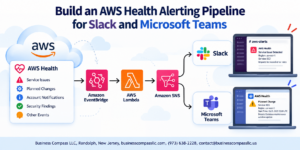
Modern alert systems go beyond email notifications by integrating with Slack, Microsoft Teams, PagerDuty, and mobile push services for immediate incident awareness. Configure alert routing rules based on severity levels and team responsibilities – critical Lambda function monitoring alerts should trigger immediate escalation while warning-level events can use less intrusive channels. Smart routing prevents alert fatigue by ensuring the right people receive relevant notifications at appropriate times.
Integrating with Incident Management Platforms for Faster Response
ITSM platforms like ServiceNow, Jira Service Management, and PagerDuty can automatically create incidents from Lambda health check failures, complete with context about affected functions and potential impact. These integrations streamline automated Lambda monitoring workflows by pre-populating ticket fields with relevant diagnostic information, reducing mean time to resolution. Automated escalation policies ensure critical serverless health check systems failures receive immediate attention from appropriate response teams.
Managing Lambda functions at scale requires a solid monitoring strategy that goes beyond basic metrics. The challenges of serverless runtime performance, combined with the complexity of distributed systems, make automated health checks and comprehensive monitoring essential for maintaining reliable applications.
AWS provides powerful native tools like CloudWatch, X-Ray, and EventBridge that form the foundation of effective Lambda monitoring. When you combine these with automated health check systems and advanced monitoring strategies, you create a robust safety net that catches issues before they impact users. Adding third-party integrations can give you even deeper visibility into your serverless ecosystem, helping you spot patterns and trends that might otherwise go unnoticed. Start by implementing basic automated health checks for your most critical Lambda functions, then gradually expand your monitoring coverage as your serverless architecture grows.