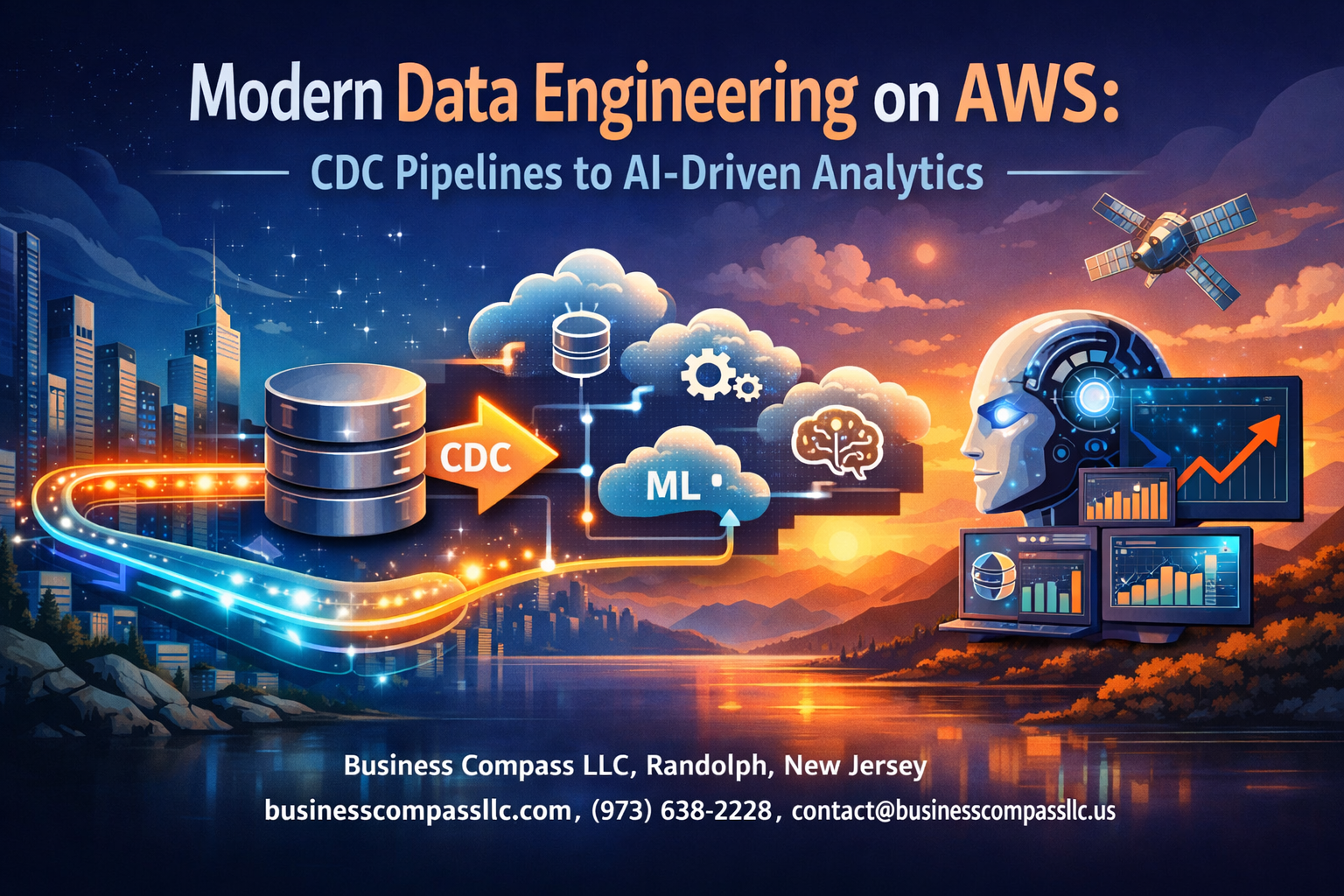
Building real-time data systems that can capture changes, transform raw information, and power AI insights has become essential for competitive businesses. This comprehensive guide breaks down modern data architecture principles and shows you how to implement AWS data engineering solutions that scale.
Who this is for: Data engineers, cloud architects, and technical leaders who need to design robust change data capture AWS systems and want to move beyond basic ETL processes to create intelligent, cost-effective data platforms.
We’ll walk through three core areas that form the backbone of successful AWS analytics solutions. First, you’ll learn how to design and build CDC pipelines that capture data changes in real-time without overwhelming your source systems. Second, we’ll cover data pipeline optimization techniques that transform messy data into clean, analysis-ready formats using AWS-native services. Finally, you’ll discover how to implement AI-driven analytics that turn your processed data into actionable business insights while keeping costs under control.
Whether you’re dealing with legacy databases, microservices, or hybrid cloud environments, these cloud data engineering best practices will help you create real-time data streaming architectures that actually work in production.
Understanding Change Data Capture in Modern Data Architectures

Real-time data synchronization benefits for business agility
Change data capture AWS implementations enable organizations to respond instantly to market changes and customer behavior. Unlike traditional approaches, CDC pipelines capture database modifications as they happen, streaming updates to downstream systems without delay. This real-time capability transforms how businesses operate, allowing immediate inventory updates, fraud detection alerts, and personalized customer experiences that drive competitive advantage.
Traditional batch processing limitations and performance bottlenecks
Batch processing creates significant delays between data generation and availability for analysis. Organizations often wait hours or days for scheduled ETL jobs to complete, missing critical business opportunities. These systems struggle with large data volumes, causing resource contention and extended processing windows. Modern data architecture demands continuous data flow rather than periodic bulk transfers that consume excessive compute resources and storage capacity.
CDC implementation patterns for distributed systems
Successful CDC deployment on AWS follows established patterns that ensure reliability and scalability. Log-based CDC captures transaction logs directly from source databases, while trigger-based approaches use database events to track changes. Timestamp-based patterns compare modification dates, though they miss deleted records. Each pattern serves specific use cases, with log-based CDC offering the most comprehensive change tracking for modern data engineering workflows.
Cost reduction through efficient data movement strategies
Smart data movement strategies significantly reduce AWS infrastructure costs while improving performance. Instead of full table synchronization, CDC pipelines transfer only changed records, minimizing network bandwidth and storage requirements. This selective approach reduces compute costs by avoiding unnecessary processing of unchanged data. Organizations achieve 60-80% cost savings compared to traditional ETL processes while maintaining data freshness across their analytics platforms.
Building Robust CDC Pipelines on AWS Infrastructure
Amazon DMS for Seamless Database Migration and Replication
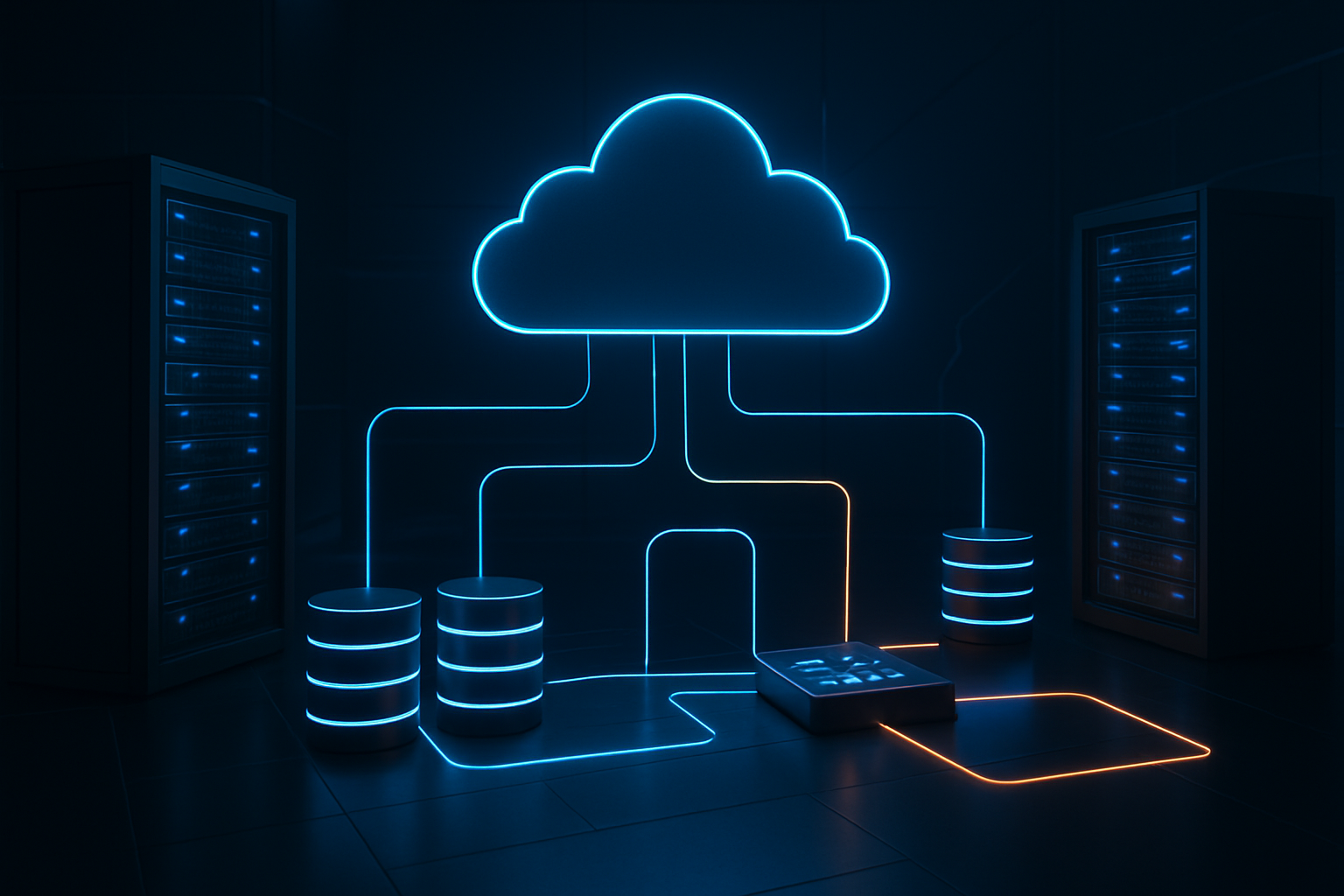
Amazon Database Migration Service transforms how organizations handle CDC pipelines by automatically capturing changes from source databases and delivering them to target systems with minimal downtime. DMS supports heterogeneous migrations across different database engines while maintaining data consistency and providing real-time replication capabilities that form the backbone of modern data architectures.
Kinesis Data Streams for High-Throughput Event Processing
Kinesis Data Streams excels at handling massive volumes of streaming data, making it perfect for CDC pipelines that need to process thousands of database changes per second. The service automatically scales to match throughput demands while providing millisecond latency for real-time analytics workloads. Its integration with AWS Lambda and analytics services creates powerful event-driven architectures that respond instantly to data changes across your entire ecosystem.
MSK and Kafka Connect for Scalable Message Streaming
Amazon Managed Streaming for Apache Kafka (MSK) delivers enterprise-grade message streaming with built-in CDC capabilities through Kafka Connect. This combination handles complex data transformations and routing while maintaining message ordering and exactly-once delivery semantics. MSK’s managed infrastructure reduces operational overhead while Kafka Connect’s extensive connector ecosystem enables seamless integration with diverse data sources and destinations across your AWS data engineering pipeline.
Transforming Raw Data into Analytics-Ready Formats
AWS Glue ETL Jobs for Automated Data Transformation
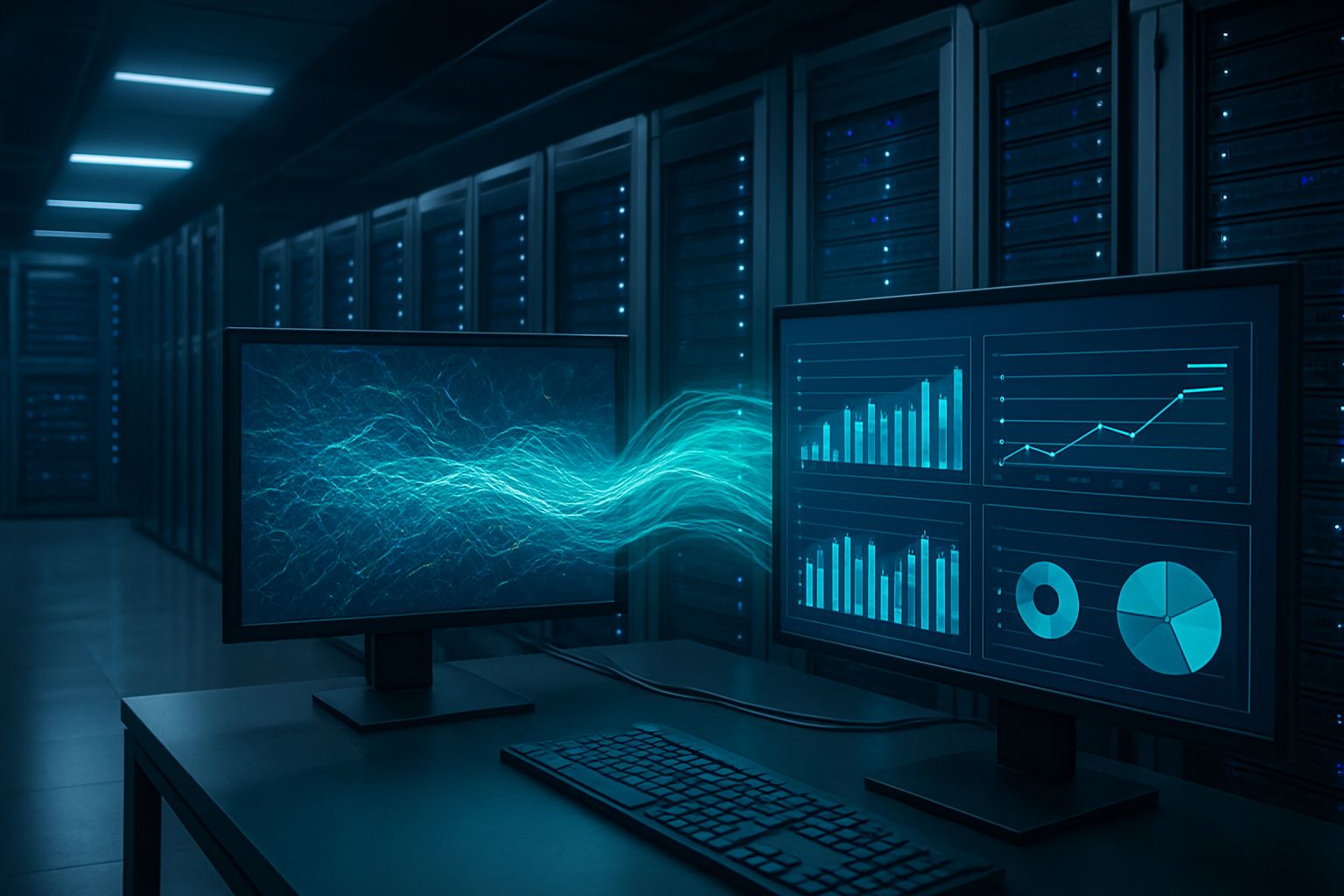
AWS Glue streamlines the process of converting raw CDC data into analytics-ready formats through serverless ETL jobs. These jobs automatically discover data schemas, generate transformation code, and handle complex data type conversions without infrastructure management. Built-in connectors work seamlessly with various data sources, while custom transformations can be written in Python or Scala for specific business logic requirements.
Lake Formation for Unified Data Governance and Security
Lake Formation provides centralized access control and governance across your entire data lake ecosystem. It simplifies permission management by allowing fine-grained access policies at the database, table, and column levels. The service automatically catalogs metadata and enforces security policies consistently across AWS analytics services, ensuring compliance while enabling self-service analytics for authorized users.
Delta Lake Implementation for ACID Transactions
Delta Lake brings database-like reliability to your data lake with ACID transaction support and schema enforcement. This open-source storage layer prevents data corruption during concurrent writes and provides time travel capabilities for data versioning. When integrated with AWS data transformation workflows, Delta Lake ensures data consistency and enables reliable incremental processing of CDC streams.
Schema Evolution Strategies for Changing Data Structures
Modern data engineering requires flexible approaches to handle evolving schemas without breaking downstream processes. Backward and forward compatibility strategies include nullable column additions, default value assignments, and graceful handling of missing fields. AWS Glue’s schema registry tracks evolution history while automatic schema inference adapts to structural changes, maintaining pipeline stability as source systems evolve.
Implementing AI-Driven Analytics Solutions

SageMaker integration for machine learning model deployment
SageMaker transforms your CDC pipeline data into production-ready machine learning models with automated model training, versioning, and deployment capabilities. Connect your processed data streams directly to SageMaker training jobs, enabling continuous model improvement as new data flows through your pipeline. The platform handles infrastructure scaling automatically, reducing operational overhead while maintaining model performance across different workloads.
Real-time inference pipelines with Lambda and API Gateway
Lambda functions process incoming data requests and trigger SageMaker endpoints for instant predictions, creating serverless inference architectures that scale with demand. API Gateway provides secure, throttled access to your AI models while maintaining low latency for real-time applications. This combination delivers cost-effective inference pipelines that respond to business needs without maintaining dedicated infrastructure.
QuickSight dashboards for intelligent business insights
QuickSight connects directly to your transformed datasets, automatically generating interactive visualizations that reveal hidden patterns in your data. Built-in machine learning capabilities detect anomalies and forecast trends without requiring data science expertise. Teams can explore data through natural language queries, making AI-driven analytics accessible across the organization while reducing time to insight.
Automated anomaly detection using AI services
AWS AI services like GuardDuty and CloudWatch Anomaly Detection monitor your data pipelines for unusual patterns, security threats, and performance deviations. These managed services learn normal behavior patterns from your CDC streams and alert teams when significant changes occur. Integration with SNS and Lambda enables automated responses to detected anomalies, maintaining data quality and system reliability without manual intervention.
Optimizing Performance and Managing Costs at Scale
Auto-scaling strategies for variable workload demands
AWS auto-scaling transforms how data engineering teams handle unpredictable traffic spikes in CDC pipelines. Amazon Kinesis Data Streams automatically adjusts shard counts based on incoming data volume, while EMR clusters can scale compute resources up or down depending on processing demands. Setting up Application Auto Scaling policies for your data pipeline components ensures you’re not paying for idle resources during quiet periods.
Configure CloudWatch metrics like CPU utilization, memory consumption, and queue depth to trigger scaling actions. For batch processing workloads, consider using Spot Instances with EMR to reduce costs by up to 90% while maintaining processing speed through intelligent instance mix strategies.
Data partitioning techniques for query optimization
Smart partitioning dramatically improves query performance and reduces costs in your AWS analytics solutions. Time-based partitioning works best for CDC data, organizing records by date or hour to enable efficient range queries. Amazon S3 supports Hive-style partitioning that Athena and Redshift Spectrum can leverage for faster data retrieval.
Implement multi-level partitioning combining date and geographical regions for complex datasets. This approach helps analytical queries scan only relevant data partitions, reducing query execution time and lowering compute costs significantly.
Monitoring and alerting with CloudWatch and custom metrics
Real-time monitoring keeps your data pipeline optimization efforts on track through comprehensive visibility into system performance. CloudWatch provides built-in metrics for AWS services, but custom metrics give deeper insights into business-specific KPIs like data freshness, processing latency, and error rates across your CDC pipelines.
Set up intelligent alerting thresholds that account for normal business cycles and seasonal patterns. Lambda functions can push custom metrics to CloudWatch, enabling proactive notifications when data quality issues or performance bottlenecks emerge before they impact downstream analytics workflows.

Change Data Capture has become the backbone of modern data architectures, and AWS provides all the tools you need to build reliable, scalable pipelines. From setting up robust CDC systems that track every database change to transforming that raw data into formats your analytics teams can actually use, the cloud gives you flexibility that on-premises solutions simply can’t match. The key is choosing the right combination of services like DMS, Kinesis, and Lambda to create pipelines that handle real-time data flows without breaking your budget.
The real game-changer comes when you layer AI-driven analytics on top of your CDC foundation. Tools like SageMaker and QuickSight can turn your streaming data into insights that actually drive business decisions, not just pretty dashboards. Start small with one critical data source, get your CDC pipeline running smoothly, and then expand from there. Focus on optimizing costs early by right-sizing your resources and using spot instances where possible. Your future self will thank you when you’re processing terabytes of data without the massive cloud bills.