Deploying web applications can feel like a juggling act, especially when you’re managing Node.js and PHP projects across different environments. Docker deployment on AWS Elastic Beanstalk changes the game by packaging your applications into portable containers that run consistently anywhere.
This guide is designed for developers and DevOps engineers who want to streamline their containerized deployment AWS workflows. If you’re tired of “it works on my machine” problems or spending hours configuring servers, you’ll find practical solutions here.
We’ll walk you through setting up your development environment for seamless Docker integration and show you exactly how to configure Elastic Beanstalk for Docker deployments. You’ll also learn proven strategies for Docker application monitoring to keep your Node.js and PHP applications running smoothly in production.
By the end, you’ll have the skills to deploy both Node.js Docker Elastic Beanstalk and PHP Docker deployment setups with confidence.
Understanding Docker’s Role in Modern Application Deployment
Containerization benefits for Node.js and PHP applications
Docker transforms how developers package and deploy Node.js and PHP applications by creating lightweight, portable containers. These containers bundle your application code, runtime dependencies, and system libraries into a single unit that runs identically across different environments. For Node.js applications, Docker eliminates the common “it works on my machine” problem by ensuring consistent npm package versions and Node runtime configurations. PHP applications benefit from standardized web server configurations and PHP extension management, making deployments predictable and reliable.
Consistency across development and production environments
Docker containers guarantee that your Node.js Docker Elastic Beanstalk deployments behave exactly like your local development setup. When you containerize PHP applications, the same Apache or Nginx configuration, PHP version, and extensions run everywhere – from your laptop to AWS Elastic Beanstalk Docker production environments. This consistency reduces deployment surprises and debugging headaches that typically arise from environment differences.
Simplified dependency management and version control
Managing dependencies becomes straightforward with Docker container deployment strategies. Your Dockerfile explicitly defines which Node.js version, npm packages, PHP extensions, and system libraries your application needs. This approach eliminates dependency conflicts and makes rollbacks simple – just deploy the previous container image. Docker images serve as immutable snapshots of your application stack, making version control comprehensive and deployment history transparent.
Setting Up Your Development Environment for Docker Integration
Installing Docker and essential tools
Setting up Docker deployment for AWS Elastic Beanstalk starts with installing Docker Desktop on your local machine. Download the appropriate version for your operating system and ensure you have the latest AWS CLI and EB CLI tools installed. These foundational components enable seamless containerized deployment AWS workflows and provide the necessary interface for managing your Elastic Beanstalk configuration.
Creating optimized Dockerfiles for Node.js applications
Node.js Docker containers require careful optimization to minimize image size and maximize performance. Start with a lightweight base image like node:18-alpine and implement multi-stage builds to separate development dependencies from production code. Copy your package.json first, run npm install, then copy application files to leverage Docker’s layer caching effectively for faster Node.js AWS deployment cycles.
Building efficient PHP Docker containers
PHP Docker deployment benefits from using official PHP-FPM images combined with nginx for optimal performance. Structure your Dockerfile to install only required PHP extensions and configure proper file permissions. Use composer for dependency management and implement health checks to ensure your PHP Elastic Beanstalk deployments maintain reliability across different environments and scaling scenarios.
Local testing and debugging strategies
Docker container deployment requires robust local testing before pushing to Elastic Beanstalk. Use docker-compose to replicate production environments locally, including databases and external services. Implement logging strategies that work both locally and in AWS environments, and use Docker’s built-in debugging capabilities to troubleshoot issues before they reach your production Node.js Docker Elastic Beanstalk or PHP deployments.
Configuring AWS Elastic Beanstalk for Docker Deployments

Creating and Configuring Elastic Beanstalk Applications
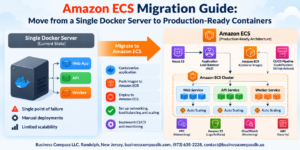
Starting your Elastic Beanstalk Docker deployment journey requires setting up a new application through the AWS console. Navigate to the Elastic Beanstalk service and create an application, selecting Docker as your platform. The configuration wizard walks you through essential settings like region selection, application name, and environment type. Choose between single-instance or load-balanced environments based on your scaling needs. The Docker platform automatically handles container orchestration, making deployment straightforward for both Node.js and PHP applications.
Understanding Docker Platform Versions and Compatibility
AWS regularly updates Docker platform versions to support latest container technologies and security patches. Each platform version includes specific Docker engine versions, Amazon Linux distributions, and runtime environments. Check compatibility matrices before deployment to ensure your Dockerfiles work with the selected platform version. Legacy applications might require older platform versions, while newer deployments benefit from latest features. Platform version selection directly impacts available Docker commands, environment configurations, and supported container specifications for your Node.js Docker Elastic Beanstalk or PHP Docker deployment projects.
Setting up Environment Variables and Configuration Files
Environment variables in Elastic Beanstalk provide secure configuration management without hardcoding sensitive data into Docker images. Access the Configuration section of your environment to set variables like database URLs, API keys, and feature flags. Create .ebextensions configuration files to customize deployment behavior, install additional packages, or modify container settings. These YAML files execute during deployment, allowing advanced Docker container deployment customization. Environment-specific configurations enable seamless transitions between development, staging, and production environments while maintaining consistent application behavior.
Managing Application Versions and Rollback Strategies
Elastic Beanstalk automatically creates application versions for each deployment, maintaining a complete deployment history. Each version contains your Docker image configuration, environment settings, and source code bundle. The platform stores up to 1,000 versions per application, though you can configure retention policies to manage storage costs. Rollback capabilities allow instant reversion to previous versions when issues arise. Blue-green deployments minimize downtime by creating new environments before switching traffic. This approach works exceptionally well for Elastic Beanstalk configuration scenarios requiring zero-downtime updates for mission-critical applications.
Streamlining Node.js Deployments with Docker on Elastic Beanstalk
Optimizing Node.js Docker images for production
Production-ready Node.js Docker images require careful attention to security and performance. Start by using the official Node.js Alpine image as your base, which provides a minimal footprint while maintaining essential functionality. Remove development dependencies by running npm ci --only=production and create a non-root user to run your application securely.
Consider implementing layer caching strategies by copying your package.json and package-lock.json files first, installing dependencies, then copying your application code. This approach ensures Docker can cache the dependency installation layer, significantly reducing build times for subsequent deployments on AWS Elastic Beanstalk.
Implementing multi-stage builds for smaller container sizes
Multi-stage builds dramatically reduce your final Docker image size by separating build and runtime environments. Create a build stage that includes development tools and compilers, then copy only the compiled artifacts to your production stage. This technique can reduce Node.js container sizes by 60-80%.
Your Dockerfile should define a build stage with full Node.js tooling, compile TypeScript or bundle assets, then copy the production-ready files to a minimal runtime image. This containerized deployment AWS approach ensures faster deployments and reduced bandwidth costs while maintaining application performance on Elastic Beanstalk.
Automating deployment pipelines with CI/CD integration
Modern Docker deployment workflows integrate seamlessly with CI/CD platforms like GitHub Actions, GitLab CI, or AWS CodePipeline. Configure your pipeline to build Docker images, run automated tests, and push successful builds directly to Elastic Beanstalk environments. This automation eliminates manual deployment errors and ensures consistent releases.
Set up environment-specific deployment stages that automatically promote code from development to staging to production. Your CI/CD pipeline should handle Docker image tagging, environment variable management, and rollback capabilities, creating a robust Node.js AWS deployment strategy that scales with your team’s development velocity.
Deploying PHP Applications Using Docker Containers
Creating production-ready PHP Docker configurations
Building robust PHP Docker containers starts with selecting the right base image and configuring essential components. Use official PHP images like php:8.2-fpm-alpine for production environments, as they provide security updates and optimized performance. Your Dockerfile should include proper user permissions, security hardening, and multi-stage builds to reduce image size while maintaining functionality.
Managing PHP extensions and dependencies efficiently
Composer dependency management becomes streamlined within Docker containers by leveraging build caches and optimized installation processes. Install PHP extensions using docker-php-ext-install for core extensions and PECL for additional packages. Copy your composer.json and composer.lock files early in the build process to take advantage of Docker’s layer caching, significantly reducing build times during development iterations.
Implementing database connections and external services
PHP Docker deployment on AWS Elastic Beanstalk requires careful configuration of database connections and external service integrations. Use environment variables for database credentials and service endpoints, ensuring your application connects properly to RDS instances or external APIs. Configure connection pooling and retry logic within your PHP application to handle network fluctuations common in cloud environments.
Performance optimization techniques for PHP containers
Optimize PHP container performance by configuring OPcache settings, adjusting PHP-FPM worker processes, and implementing proper memory limits. Use Alpine Linux base images to minimize container size and startup time. Enable OPcache with appropriate memory allocation and file validation settings. Configure PHP-FPM pools based on your application’s traffic patterns and available system resources to maximize throughput while maintaining stability.
Monitoring and Troubleshooting Deployed Applications

Setting up CloudWatch logs and monitoring dashboards
AWS CloudWatch automatically integrates with Elastic Beanstalk to provide comprehensive monitoring for your Docker applications. Enable log streaming in your Elastic Beanstalk environment configuration to capture both application logs and Docker container metrics. Create custom dashboards that track CPU usage, memory consumption, and request latency for both Node.js and PHP applications.
Set up CloudWatch alarms for critical metrics like application response times and error rates. Configure log groups to separate container logs from application logs, making troubleshooting more efficient when issues arise.
Debugging container issues and performance bottlenecks
Docker container monitoring requires specific attention to memory limits and resource allocation within your Elastic Beanstalk environment. Use CloudWatch Container Insights to identify performance bottlenecks in your Node.js or PHP applications. Monitor container restart patterns and memory usage spikes that could indicate application leaks or configuration problems.
Enable detailed monitoring for your load balancer and EC2 instances to pinpoint whether performance issues stem from the container, application code, or infrastructure layer.
Implementing health checks and automated scaling
Configure application load balancer health checks to monitor your containerized endpoints beyond basic HTTP responses. Implement custom health check routes in your Node.js and PHP applications that verify database connections and external service availability. Set up Elastic Beanstalk’s auto-scaling policies based on CloudWatch metrics like CPU utilization and request count.
Define scaling triggers that account for container startup time, ensuring new instances are ready before traffic increases. Configure health check grace periods to prevent premature termination during deployments.
Managing application updates and zero-downtime deployments
Elastic Beanstalk’s rolling deployments work seamlessly with Docker containers to achieve zero-downtime updates for both Node.js and PHP applications. Configure deployment policies to update a percentage of instances at a time while maintaining minimum healthy capacity. Use immutable deployments for critical production environments where you need guaranteed rollback capabilities.
Implement blue-green deployment strategies by creating separate environments and swapping URLs after successful health checks. This approach provides the safest update mechanism for mission-critical Docker applications.
Docker transforms the way you deploy Node.js and PHP applications on AWS Elastic Beanstalk by wrapping your code in consistent, portable containers. This approach eliminates the “it works on my machine” problem and makes scaling your applications much more predictable. Setting up your development environment with Docker integration creates a smooth pipeline from local development to production deployment, while Elastic Beanstalk handles the infrastructure complexity behind the scenes.
The combination of Docker containers and Elastic Beanstalk gives you the best of both worlds – reliable deployments and managed infrastructure. Once you’ve configured your environment and mastered the deployment process for both Node.js and PHP applications, you’ll spend less time fighting deployment issues and more time building features. Start with a simple application, get comfortable with the Docker workflow, and gradually add monitoring and troubleshooting practices to your deployment strategy. Your future self will thank you for making deployments this straightforward.