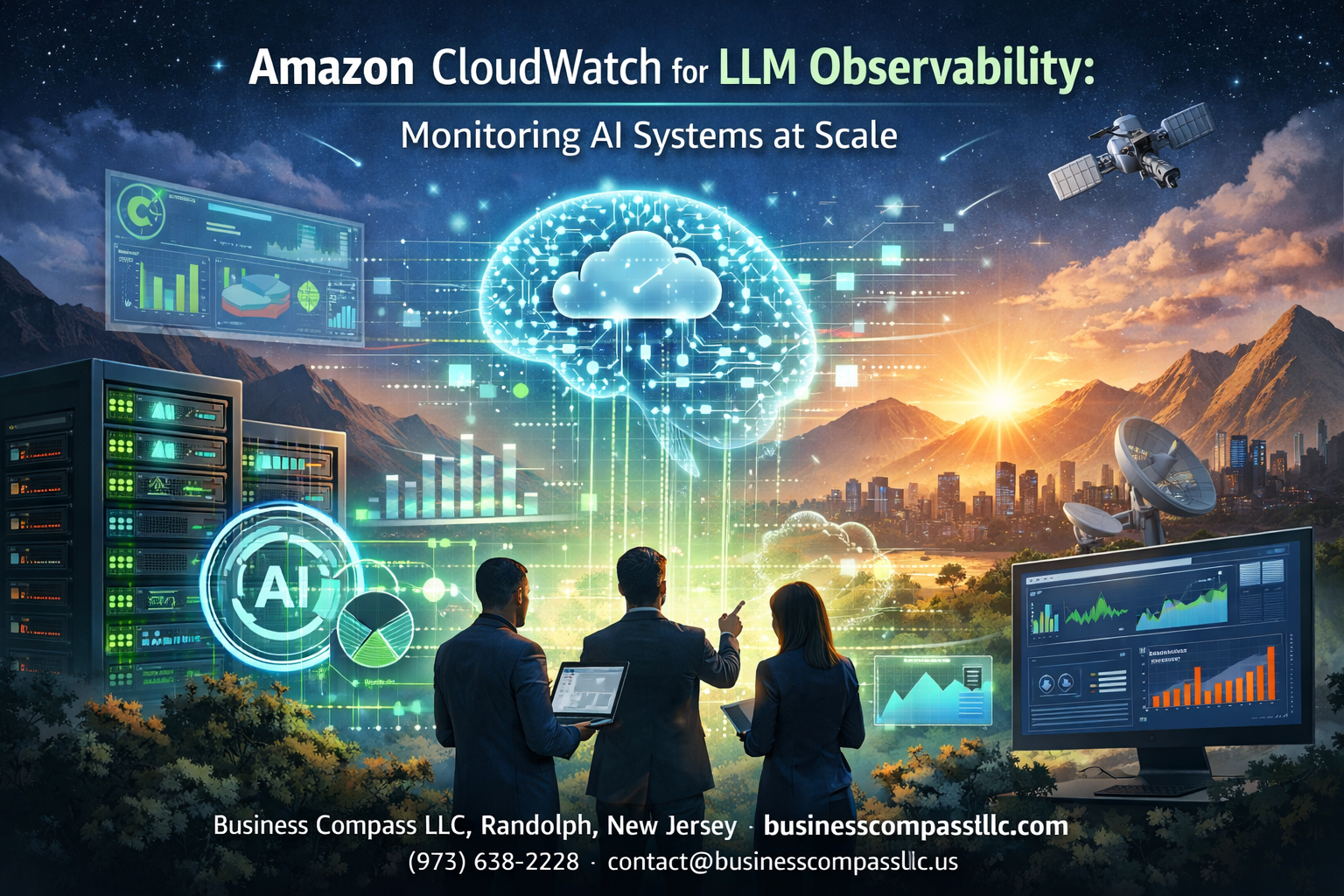
Running large language models in production brings new monitoring challenges that traditional application observability tools weren’t built to handle. AI engineers, DevOps teams, and platform architects need robust Amazon CloudWatch LLM monitoring solutions to track model performance, catch issues before they impact users, and maintain reliable AI system observability at enterprise scale.
LLMs generate massive amounts of data, from token-level metrics to complex inference patterns, making machine learning model monitoring far more complex than standard web applications. CloudWatch for AI provides the foundation for tracking these unique requirements, but knowing how to set up effective LLM observability patterns takes specific expertise.
This guide covers everything you need to build production-ready AI infrastructure monitoring. We’ll walk through setting up comprehensive LLM monitoring infrastructure that captures the metrics that actually matter, explore advanced observability patterns for production LLMs that help you spot performance degradation and model drift, and show you how to scale monitoring solutions for high-volume AI workloads without breaking your budget or overwhelming your team with noise.
Understanding LLM Observability Requirements for Enterprise AI

Key Performance Metrics That Matter for Large Language Models
Model Performance and Response Quality
- Token throughput and generation speed – Requests per second, tokens processed per minute, and end-to-end response latency
- Model accuracy metrics – Semantic similarity scores, factual correctness rates, and hallucination detection percentages
- Resource consumption patterns – GPU utilization, memory allocation efficiency, and compute cost per inference
User Experience and System Health
- Response relevance scoring – User satisfaction ratings, conversation completion rates, and query resolution success
- System availability metrics – API uptime, error rates, and failover response times during peak traffic periods
Common Challenges in Monitoring AI Systems at Production Scale
Data Volume and Complexity Management
Enterprise LLM monitoring generates massive amounts of unstructured data that traditional monitoring tools struggle to process effectively. Amazon CloudWatch LLM monitoring requires specialized approaches to handle conversational logs, embedding vectors, and real-time inference telemetry across distributed AI infrastructure.
Dynamic Performance Characteristics
Unlike static applications, large language model monitoring involves tracking constantly shifting performance patterns based on prompt complexity, model temperature settings, and contextual dependencies. AI system observability demands adaptive thresholds and intelligent alerting mechanisms that account for natural variance in model behavior.
Critical Difference Between Traditional and AI System Monitoring
Context-Aware Observability Requirements
Traditional application monitoring focuses on binary success/failure states, while LLM performance monitoring requires nuanced quality assessment across multiple dimensions. Enterprise AI monitoring must evaluate response coherence, factual accuracy, and contextual appropriateness rather than simple HTTP status codes.
Predictive vs Reactive Monitoring Approaches
CloudWatch for AI systems needs predictive capabilities to identify model drift, performance degradation, and potential hallucination patterns before they impact users. LLM observability patterns emphasize continuous model validation and automated quality gates that traditional infrastructure monitoring doesn’t address.
CloudWatch Core Features for AI System Monitoring

Custom Metrics Creation for LLM Performance Tracking
Creating custom metrics for LLM performance tracking in Amazon CloudWatch involves defining specific KPIs that matter most for your AI systems. You can track token generation rates, response latency, model accuracy scores, and resource consumption patterns through CloudWatch’s PutMetricData API. These custom metrics enable granular monitoring of model behavior across different prompts, user segments, and deployment environments.
Setting up dimensional metrics allows you to slice and dice performance data by model version, geographic region, or user type. CloudWatch supports up to 10 dimensions per metric, giving you the flexibility to create highly specific monitoring scenarios for your LLM observability needs.
Real-Time Dashboards for AI Model Health Visualization
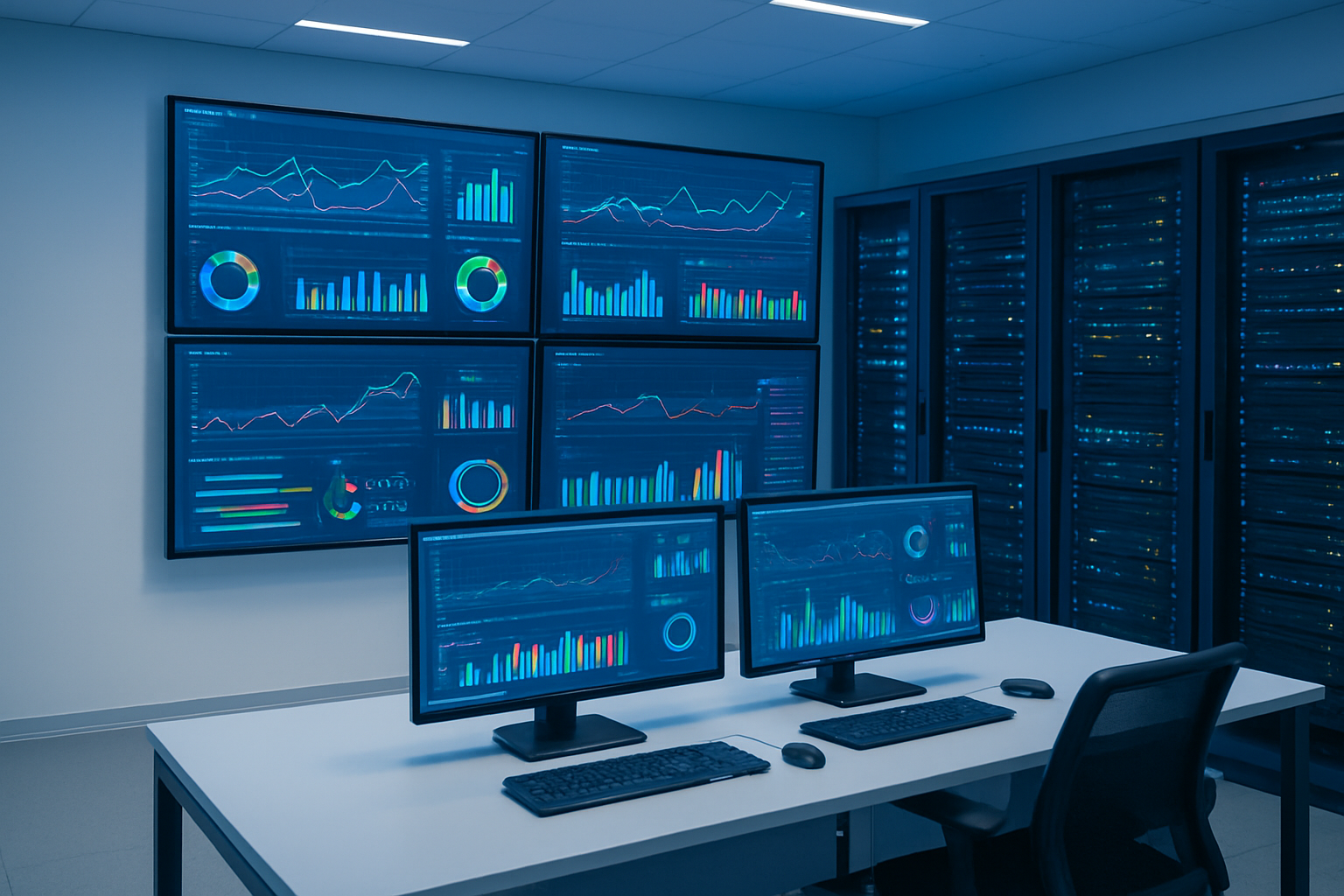
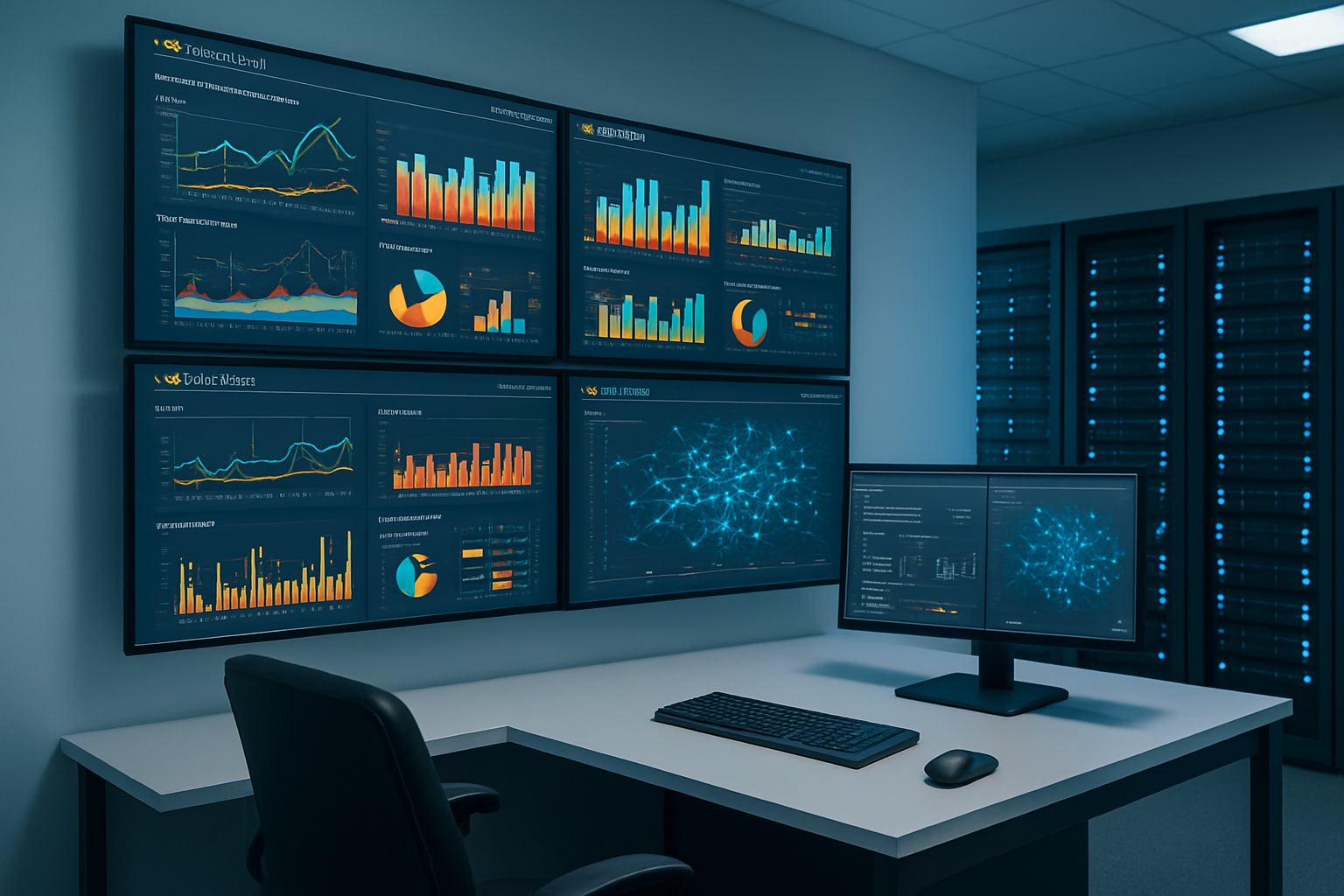
Real-time dashboards transform raw CloudWatch metrics into actionable visual insights for AI system observability. Build comprehensive dashboards that display token throughput, error rates, and response time distributions using CloudWatch’s widget library. These dashboards can combine custom LLM metrics with infrastructure metrics like CPU utilization and memory consumption.
Interactive features like drill-down capabilities and time range selection help teams quickly identify performance bottlenecks and correlate AI model behavior with underlying infrastructure health. Dashboard templates can be shared across teams to standardize monitoring practices.
Automated Alerting Systems for Anomaly Detection
CloudWatch alarms provide automated anomaly detection for production AI monitoring by setting thresholds on critical LLM performance metrics. Configure alarms to trigger when response latency exceeds acceptable limits, token generation rates drop below expected levels, or error rates spike unexpectedly. Multi-threshold alarms can differentiate between warning and critical states.
Anomaly detection models in CloudWatch automatically learn normal patterns for your LLM workloads and alert when behavior deviates significantly. This machine learning-powered approach reduces false positives while catching subtle performance degradations that fixed thresholds might miss.
Log Aggregation and Analysis for Model Behavior Insights
CloudWatch Logs centralizes all LLM-related log data, from request traces to model inference details, enabling comprehensive analysis of AI system behavior. Structured logging with JSON format makes it easier to query and analyze model decisions, input preprocessing steps, and output generation patterns using CloudWatch Logs Insights.
Log metric filters automatically extract numerical values from log entries, converting qualitative observations into quantifiable metrics. This approach bridges the gap between detailed model behavior logs and high-level performance dashboards, providing deeper context for scalable AI observability initiatives.
Setting Up Comprehensive LLM Monitoring Infrastructure
Essential Metrics Configuration for Response Time and Accuracy
Setting up Amazon CloudWatch LLM monitoring starts with configuring core performance metrics that directly impact user experience. Response time tracking captures the full request lifecycle, from API call initiation to final token generation, while accuracy metrics measure model output quality through custom dimensions like relevance scores and error rates. CloudWatch custom metrics enable real-time monitoring of token throughput, context window utilization, and inference latency across different model variants.
Token-level performance monitoring provides granular insights into LLM behavior patterns. Track metrics like tokens per second, prompt processing time, and completion generation speed to identify bottlenecks in your AI system observability pipeline. Configure CloudWatch alarms for AI systems when response times exceed acceptable thresholds or when accuracy scores drop below baseline performance levels.
Cost Tracking and Resource Utilization Monitoring
Enterprise AI monitoring requires sophisticated cost tracking mechanisms to manage LLM operational expenses effectively. CloudWatch billing metrics integrate seamlessly with AWS AI services, providing detailed breakdowns of compute costs, token usage charges, and infrastructure overhead across different model deployments. Set up cost allocation tags to track expenses by project, team, or application tier while monitoring GPU utilization rates and memory consumption patterns.
Resource optimization becomes critical when scaling machine learning model monitoring across production environments. Monitor CPU and memory utilization alongside network bandwidth consumption to identify cost-saving opportunities. CloudWatch dashboards can visualize cost trends against performance metrics, helping teams balance budget constraints with service quality requirements for large language model monitoring implementations.
Integration with AWS AI Services and Third-Party LLM Providers
CloudWatch for AI seamlessly connects with Amazon Bedrock, SageMaker, and other AWS services through native integrations that automatically capture service-specific metrics. Custom CloudWatch logs for LLMs aggregate data from multiple sources, including OpenAI APIs, Anthropic Claude, and on-premises model deployments. Configure log streams to capture request payloads, response metadata, and error conditions across diverse LLM providers while maintaining consistent monitoring standards.
Production AI monitoring requires unified observability across hybrid cloud environments. CloudWatch agents can collect metrics from containerized LLM deployments, Kubernetes clusters, and serverless inference endpoints. Establish centralized logging patterns that normalize data formats from different providers, enabling comprehensive analysis of scalable AI observability patterns across your entire machine learning infrastructure stack.
Advanced Observability Patterns for Production LLMs

Multi-Model Performance Comparison and A/B Testing
Amazon CloudWatch enables sophisticated multi-model performance comparison through custom metrics and dimensional data. Create separate metric namespaces for each LLM variant, tracking response times, token generation rates, and accuracy scores across identical test datasets. CloudWatch dashboards visualize side-by-side performance comparisons, while custom alarms trigger when performance deltas exceed acceptable thresholds.
A/B testing frameworks benefit from CloudWatch’s statistical functions and percentile calculations. Configure metric filters to segment traffic between model versions, tracking conversion rates and user satisfaction scores. Real-time monitoring helps teams make data-driven decisions about model deployments while maintaining production stability.
User Experience Monitoring Through Request Tracing
Request tracing through CloudWatch X-Ray provides end-to-end visibility into LLM interactions across distributed AI systems. Trace maps reveal bottlenecks in prompt processing pipelines, from authentication layers through tokenization, inference, and response formatting. Custom annotations capture business-specific metrics like prompt complexity scores and content moderation results.
CloudWatch Insights queries analyze request patterns, identifying slow queries and resource-intensive operations that impact user experience. Correlation analysis between trace data and user feedback metrics helps optimize model serving infrastructure and improve overall system responsiveness.
Error Rate Analysis and Failure Pattern Detection
CloudWatch anomaly detection automatically identifies unusual error patterns in LLM observability data without manual threshold configuration. Machine learning algorithms establish baseline error rates and flag deviations that could indicate model degradation, infrastructure issues, or adversarial inputs. Custom metric filters categorize errors by type, severity, and upstream dependencies.
Error pattern analysis combines CloudWatch logs with metric streams to correlate failure modes with specific input characteristics. Teams can identify problematic prompt patterns, resource exhaustion scenarios, and model hallucination triggers. This proactive approach prevents cascading failures across enterprise AI monitoring systems.
Capacity Planning Through Historical Trend Analysis
Historical trend analysis in CloudWatch supports strategic capacity planning for production AI monitoring at scale. Long-term metric retention enables seasonality detection in LLM usage patterns, helping teams predict resource requirements during peak demand periods. Cost optimization emerges from understanding usage correlations between different model sizes and inference configurations.
CloudWatch metric math functions calculate growth rates and forecast future resource needs based on historical consumption patterns. Integration with AWS Auto Scaling ensures LLM infrastructure scales automatically based on predicted demand, maintaining performance while optimizing costs across large language model monitoring deployments.
Scaling Monitoring Solutions for High-Volume AI Workloads

Cost-Effective Metric Storage and Retention Strategies
Managing CloudWatch costs becomes critical when monitoring high-volume AI workloads at enterprise scale. Smart metric aggregation reduces storage expenses by combining related LLM performance metrics into composite indicators, while custom retention policies automatically archive older data to cheaper storage tiers. Amazon CloudWatch LLM monitoring costs can be optimized through selective metric collection – focus on business-critical AI system metrics rather than capturing every possible data point from your machine learning model monitoring setup.
Performance Optimization for Large-Scale Data Collection
High-throughput LLM observability requires careful tuning of CloudWatch agent configurations and batching strategies. Implementing asynchronous metric publishing prevents monitoring overhead from impacting AI inference performance, while regional data collection points reduce latency. CloudWatch for AI systems benefits from custom namespaces that separate different model types and environments, enabling targeted performance optimization without compromising scalable AI observability across your production infrastructure.
Automated Scaling of Monitoring Infrastructure
Production AI monitoring infrastructure must adapt dynamically to fluctuating workloads without manual intervention. CloudWatch alarms for AI can trigger auto-scaling policies that adjust monitoring capacity based on inference volume and model complexity. Serverless architectures using Lambda functions process LLM performance monitoring data efficiently, automatically scaling from hundreds to millions of requests while maintaining consistent enterprise AI monitoring coverage across distributed AI system deployments.
Amazon CloudWatch gives you the tools to keep your LLM systems running smoothly, no matter how big they get. From tracking basic metrics to setting up complex monitoring patterns, you can catch issues before they impact your users. The key is building your monitoring infrastructure step by step, starting with the basics and adding more sophisticated observability as your AI systems mature.
Don’t wait until you have problems to start monitoring. Set up your CloudWatch dashboards and alerts now, even if your LLM workload seems manageable today. As your AI applications grow and handle more traffic, you’ll be grateful you have the visibility to spot bottlenecks, track performance trends, and keep everything running at peak efficiency. Your future self will thank you for taking the time to build solid monitoring foundations.