

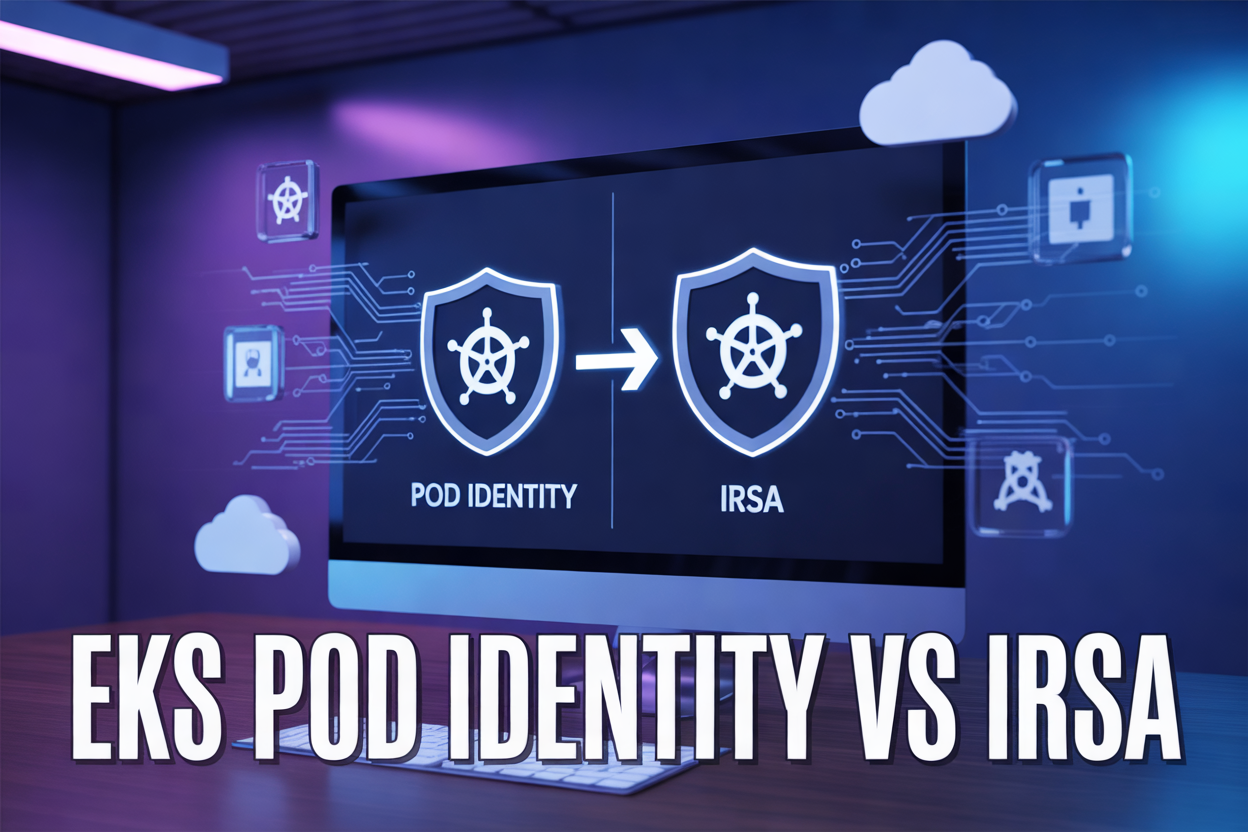
EKS Pod Identity vs IRSA: Which One Should You Actually Use?
If you’re running workloads on Amazon EKS and trying to figure out the right way to give your pods access to AWS services, you’ve probably run into two options: EKS Pod Identity and IRSA (IAM Roles for Service Accounts). Both handle Kubernetes pod authentication and AWS IAM integration, but they work differently — and picking the wrong one can create security gaps or unnecessary operational headaches.
This guide is for DevOps engineers, platform teams, and cloud architects who are setting up or rethinking their AWS EKS identity management strategy.
Here’s what we’ll cover:
- How each approach works — what IRSA and EKS Pod Identity are doing under the hood and why it matters
- Security and performance trade-offs — a straight comparison of how they hold up in real production environments
- Best practices for choosing between them — including a setup walkthrough so you can move fast without guessing
No fluff. By the end, you’ll know exactly which approach fits your setup and how to get it configured right.
Understanding IAM Roles for Service Accounts (IRSA)

How IRSA Uses OIDC Federation to Grant Pod-Level AWS Access
IRSA connects Kubernetes service accounts to IAM roles through OIDC federation, letting pods assume AWS permissions directly — no shared node credentials needed.
Key Limitations That Sparked Change
- Cross-account setups are complex
- OIDC endpoint management adds overhead
- Token refresh handling can break workloads
Understanding EKS Pod Identity

What EKS Pod Identity Is and How It Differs Architecturally From IRSA
EKS Pod Identity skips the OIDC handshake entirely. Instead of token projection and external validation, a lightweight agent running on each node intercepts credential requests directly, delivering temporary AWS credentials to pods without the multi-step IRSA flow — making AWS EKS IAM integration faster and simpler to manage.
Security Comparison Between EKS Pod Identity and IRSA
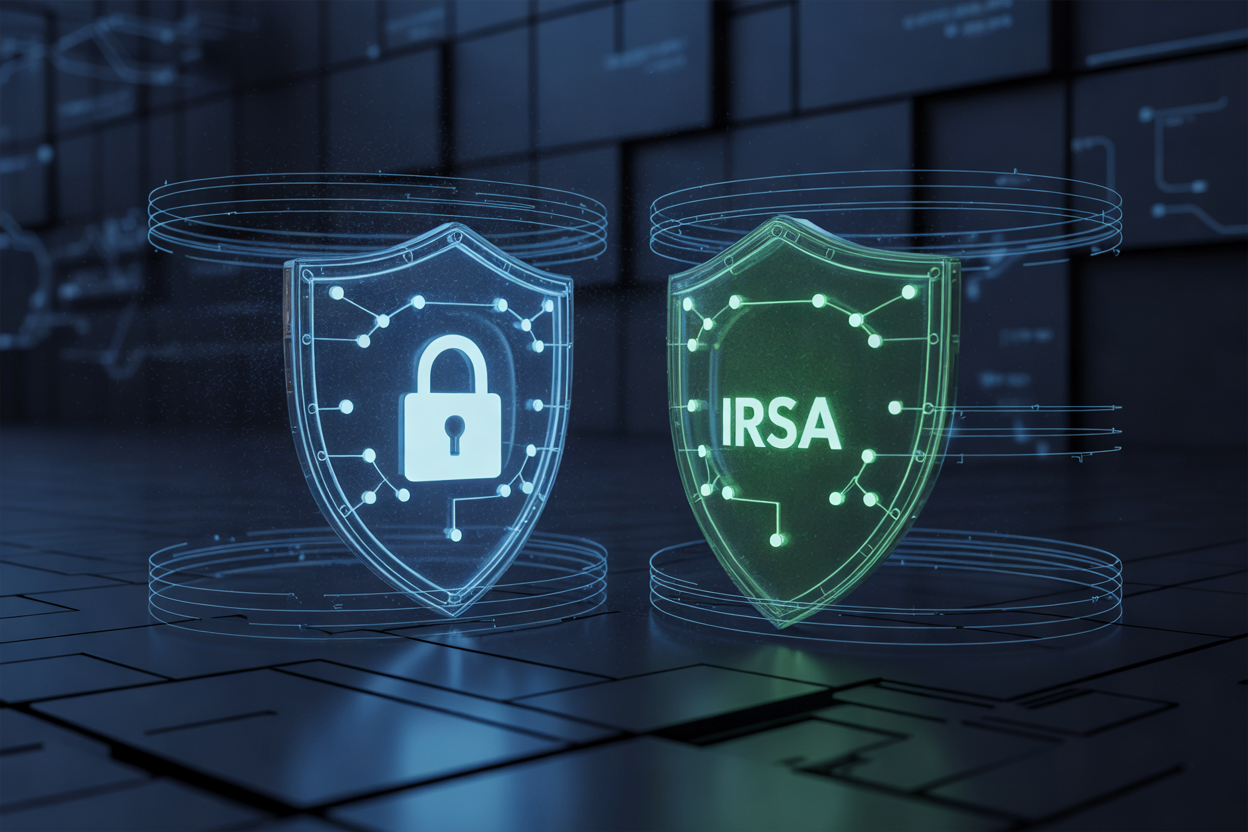
How IRSA and EKS Pod Identity Handle Security
Both EKS Pod Identity and IRSA bind IAM roles to Kubernetes service accounts, but Pod Identity simplifies credential scoping without OIDC overhead. Pod Identity reduces exposure risks through short-lived tokens, while IRSA relies on trust policies. Both log activity via CloudTrail, supporting auditability. Cross-account access works with either approach.
Performance and Operational Efficiency Compared

Credential Retrieval Latency and Its Impact on Pod Startup Times
EKS Pod Identity fetches credentials through a local agent, cutting latency significantly compared to IRSA’s external OIDC calls. Faster credential retrieval means quicker pod startups—critical for auto-scaling workloads. IRSA depends on token validation against a public endpoint, adding network round-trips that slow things down under heavy load.
Setup and Configuration Walkthrough

Prerequisites and Cluster Requirements
- IRSA: EKS cluster with OIDC provider enabled, IAM permissions to create roles
- Pod Identity: EKS cluster v1.24+, Pod Identity Agent add-on installed
Common Configuration Mistakes to Avoid
- Skipping OIDC provider setup for IRSA
- Forgetting trust policy conditions
- Mismatching namespace/service account names
Best Practices for Choosing and Using the Right Approach

When to Choose EKS Pod Identity Over IRSA
Pick EKS Pod Identity for new workloads—it’s simpler, skips OIDC provider setup, and supports cross-account roles cleanly. Stick with IRSA only on older clusters. Always scope IAM policies tightly, audit with CloudTrail, and isolate service accounts per namespace in multi-tenant environments.
Choosing between EKS Pod Identity and IRSA really comes down to what your team needs right now and where you’re headed. IRSA has been the go-to solution for a while, and it works well, but it comes with some overhead around OIDC configuration and token management. EKS Pod Identity simplifies a lot of that, making it easier to manage credentials at scale without the extra setup complexity. From a security standpoint, both options are solid when configured correctly, but Pod Identity’s approach to credential handling gives it a slight edge in reducing the risk of token misuse.
If you’re starting a fresh cluster or looking to cut down on operational headaches, EKS Pod Identity is worth serious consideration. For teams already deep into IRSA with existing workloads, a gradual migration makes more sense than a sudden switch. Either way, the most important thing is to follow least-privilege principles, audit your IAM policies regularly, and make sure your team understands how credentials flow through your pods. Pick the approach that fits your setup, keep it clean, and your Kubernetes workloads will be in good shape.