

AWS Disaster Recovery for SaaS: Why Aurora, Kafka, and S3 Replication Isn’t Enough
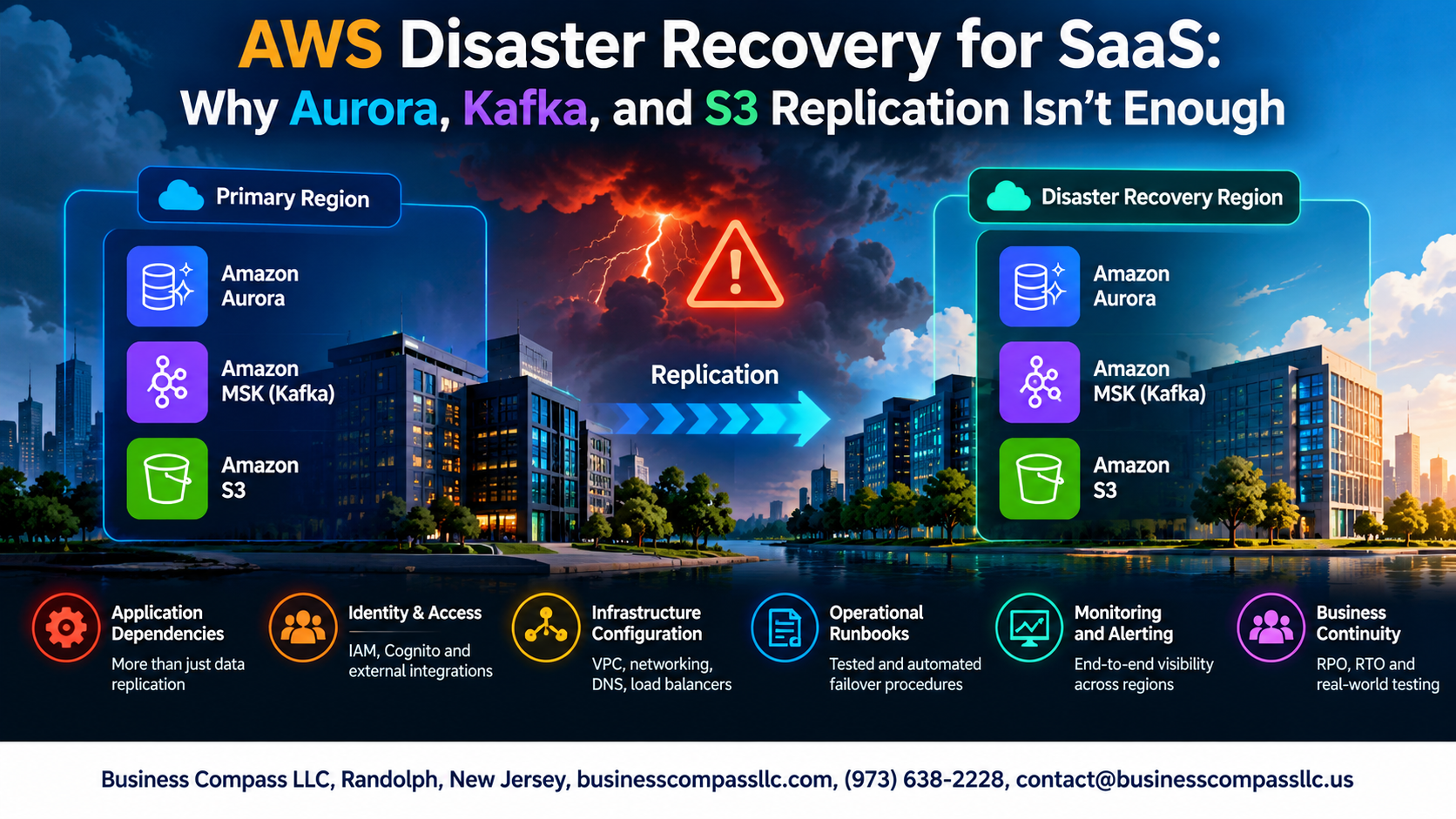
You’ve set up Aurora replication, got Kafka running across availability zones, and configured S3 replication rules. On paper, your AWS disaster recovery for SaaS looks solid. But here’s the thing — replication and recovery are not the same thing, and that gap can cost you everything when something actually breaks.
This post is for SaaS engineering leads, platform architects, and CTOs who are responsible for keeping multi-tenant systems alive when things go sideways. If your team has built replication into your stack but hasn’t stress-tested what happens when a tenant’s data needs to be restored independently, or when Kafka offsets drift during a regional failover, this is worth your time.
We’ll dig into three areas that most SaaS teams underestimate:
- Where Aurora, Kafka, and S3 replication actually fall short — what these tools protect against, and what they quietly leave exposed
- The unique complexity of multi-tenant disaster recovery — why recovering one tenant without impacting others is harder than most DR plans account for
- How to build and actually test a SaaS business continuity strategy — not just document it, but validate it continuously so you’re not finding out it’s broken during an incident
Let’s get into it.
Understanding the Stakes of Disaster Recovery for SaaS Businesses

Why Downtime Hits SaaS Harder
Every minute offline means lost revenue, churned customers, and damaged reputation—simultaneously across all tenants. Unlike traditional software, SaaS businesses carry continuous uptime obligations. Without a true SaaS disaster recovery strategy, even AWS-native replication leaves dangerous gaps your SLAs simply can’t absorb.
What Aurora, Kafka, and S3 Replication Actually Protect Against
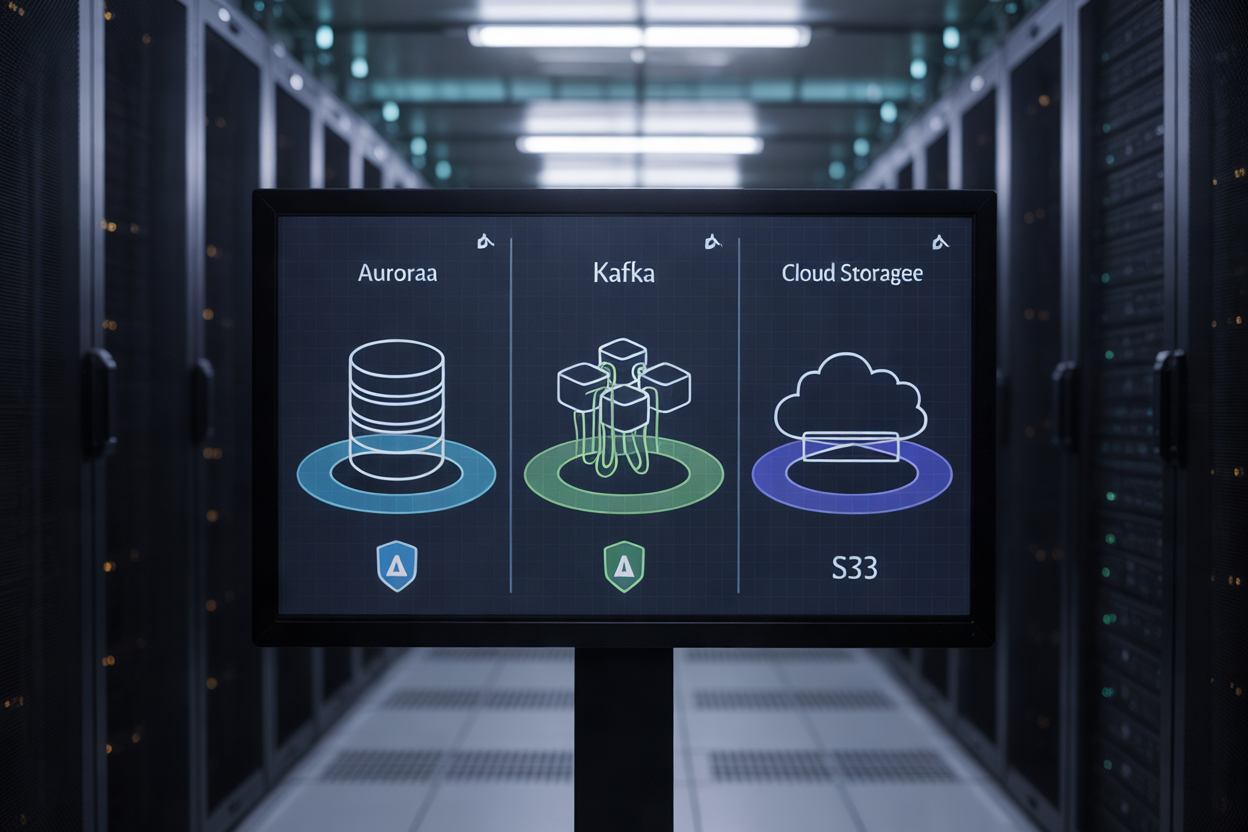
Aurora Global Database Replication
Aurora replicates data across regions with sub-second lag, but failover still takes minutes and requires manual promotion in many setups.
Kafka Replication
Kafka mirrors messages across brokers, protecting against node failures—but cross-region replication adds latency and doesn’t guarantee zero message loss.
S3 Cross-Region Replication
S3 replicates objects reliably, but existing objects aren’t copied automatically, and replication delays can leave gaps during active incidents.
The Hidden Gaps That Put Your SaaS at Risk

Replication lag and data inconsistency during failover
Even with Aurora, Kafka, and S3 replication running, your SaaS disaster recovery strategy has real blind spots:
- Replication lag creates data loss windows
- App-layer dependencies, DNS failures, stateful sessions, and uneven microservice recovery speeds can all silently break your failover — leaving customers locked out even when data looks fine
The Complexity of Multi-Tenant Recovery at Scale

Why Recovering One Tenant Can Disrupt Others
In shared infrastructure, restoring a single tenant’s data can spike resource consumption, triggering slowdowns for neighbors.
Prioritizing Tenant Failover
- Honor SLA tiers first
- Enterprise contracts get priority failover slots
Isolating Blast Radius
Namespace-level isolation prevents cascading failures across tenant boundaries during multi-tenant disaster recovery.
Building a Resilient DR Strategy That Goes Beyond Replication

A. Multi-Region Active-Active Architecture
Zero RPO demands traffic running simultaneously across regions—not waiting for failover triggers.
B. Automated Runbooks
Manual steps during outages kill your RTO. Automate everything.
C. Chaos Engineering
Break things deliberately before disasters do it for you.
D. Align RTO/RPO With Business Reality
Match recovery targets to actual revenue impact, not guesswork.
Testing and Validating Your Disaster Recovery Plan Continuously

Why Untested DR Plans Fail When They Matter Most
Most DR plans look great on paper but fall apart under real pressure. Without regular AWS DR testing and validation, hidden gaps surface at the worst possible time.
- Schedule chaos engineering sessions quarterly
- Simulate tenant-specific failures, not just full outages
- Track RTO/RPO actuals against targets and fix drift fast

Replication is a solid foundation, but it was never meant to be your entire disaster recovery plan. Aurora, Kafka, and S3 do a great job protecting your data at the infrastructure level, yet they leave real gaps when it comes to multi-tenant complexity, application-layer dependencies, and the kind of chaos that only shows up when an actual disaster hits. Those gaps can quietly sit unnoticed until the moment you need everything to work perfectly.
A truly resilient DR strategy means going deeper — thinking through tenant isolation, recovery sequencing, runbook clarity, and regular testing that actually simulates failure. The SaaS businesses that recover fastest aren’t the ones with the most replication layers; they’re the ones who’ve already practiced the recovery and know exactly what to do. Start auditing your current DR setup today, identify where the hidden risks live, and close those gaps before your next incident does it for you.