

Stop Guessing. Start Building Cloud Architecture That Actually Works.
If you’ve ever pushed a workload to AWS and wondered “did I do that right?”—this guide is for you.
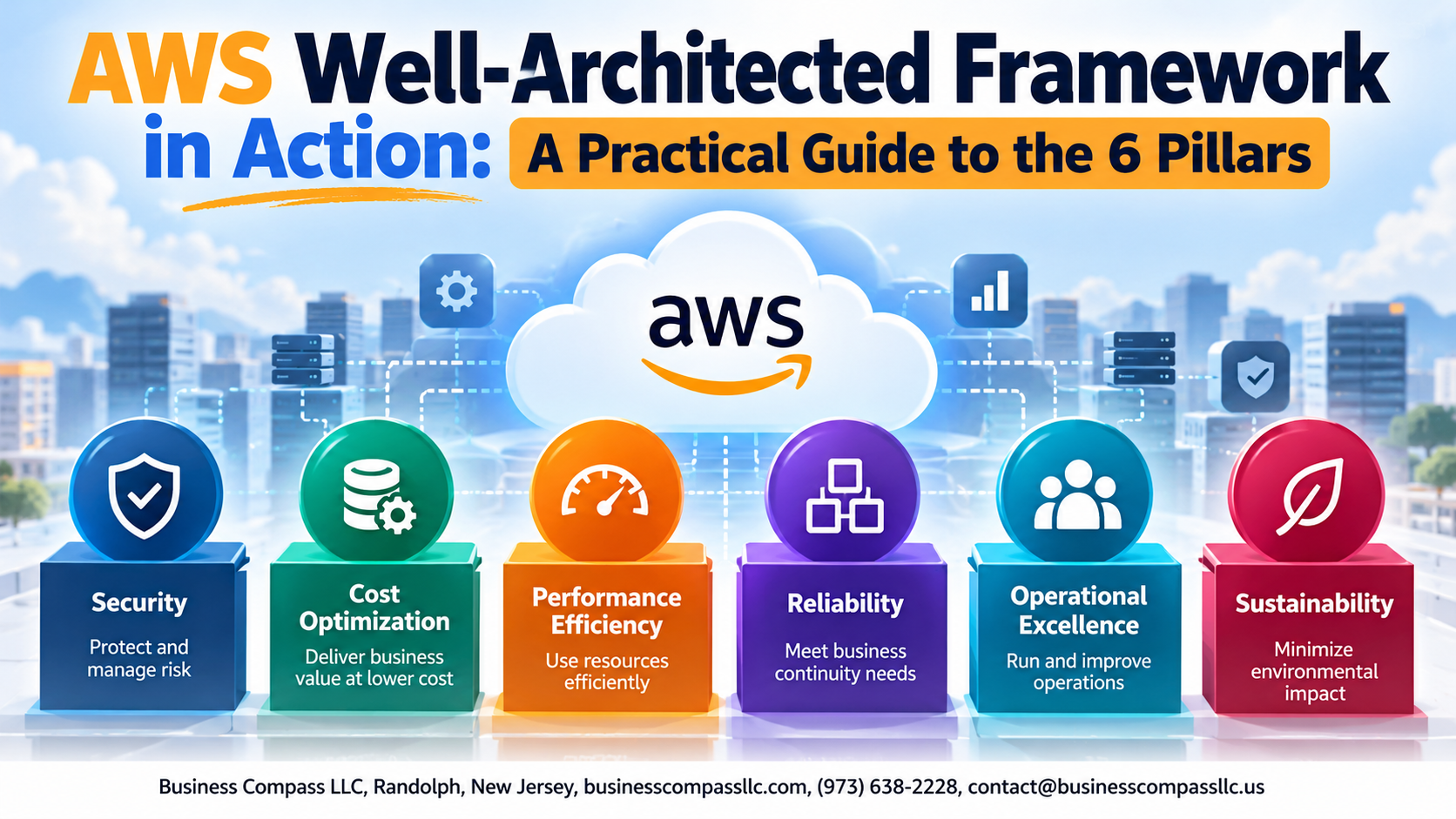
The AWS Well-Architected Framework gives cloud architects, DevOps engineers, and engineering teams a clear, proven way to evaluate and improve their cloud setups. Whether you’re building from scratch or auditing something that’s already live, the AWS 6 pillars—Operational Excellence, Security, Reliability, Performance Efficiency, Cost Optimization, and Sustainability—act as your north star.
Here’s what we’ll walk through together:
- What the framework actually is and why it matters more than most teams realize
- Each of the six pillars broken down into plain-English takeaways you can act on today—covering everything from the AWS security pillar to AWS cost optimization
- How to run a real review using the AWS Well-Architected Tool so you’re not just reading theory, you’re applying it
This isn’t a surface-level overview. By the end, you’ll know exactly where your architecture stands and what to fix first.
Let’s get into it.
Understanding the AWS Well-Architected Framework

What the Framework Is and Why It Matters for Your Cloud Strategy
The AWS Well-Architected Framework gives teams a proven way to build reliable, secure, and cost-efficient cloud systems using AWS best practices across six pillars: operational excellence, security, reliability, performance efficiency, cost optimization, and sustainability — helping architects catch problems before they become expensive mistakes.
Pillar 1: Operational Excellence

Automating Operations to Reduce Human Error
Automate repetitive tasks using AWS Systems Manager and CloudFormation to minimize mistakes.
Defining and Measuring Key Operational Metrics
Track deployments, incidents, and recovery times through CloudWatch dashboards.
Building a Culture of Continuous Improvement
Run frequent post-mortems, refine runbooks, and treat every failure as a learning opportunity.
Pillar 2: Security

Protecting Data at Rest and in Transit
Encrypt sensitive data using AWS KMS and enforce TLS for all communications.
Implementing Strong Identity and Access Management
Apply least-privilege access through IAM roles and policies.
Detecting and Responding to Security Threats Proactively
Use AWS GuardDuty and Security Hub for real-time threat detection.
Automating Security Compliance
Run AWS Config rules to continuously audit your environment.
Pillar 3: Reliability

Designing Systems That Automatically Recover from Failure
Use multi-AZ deployments, auto-scaling, and health checks so your app self-heals without manual intervention.
Managing Change Safely to Prevent Disruptions
Deploy via blue/green or canary releases to catch issues early.
Testing Recovery Procedures Before Disasters Strike
Run chaos engineering drills regularly to validate your backups actually work.
Pillar 4: Performance Efficiency

Selecting the Right AWS Services for Your Workload
Match compute, storage, and database services to your specific needs — don’t just default to EC2 when Lambda or Fargate fits better.
Scaling Resources Dynamically
Use Auto Scaling and load balancers to handle traffic spikes without over-provisioning.
Monitoring Performance
CloudWatch and X-Ray pinpoint bottlenecks fast.
Pillar 5: Cost Optimization

Eliminating Waste by Right-Sizing Your Resources
Match compute, storage, and database resources to actual workload needs—not guesses.
Leveraging Reserved and Spot Instances to Cut Costs
- Reserved Instances: save up to 72%
- Spot Instances: ideal for fault-tolerant workloads
Building a Culture of Cost Awareness Across Teams
Tag resources, set budgets, and share AWS Cost Explorer dashboards across teams.
Pillar 6: Sustainability

Reducing Your Cloud Workload’s Carbon Footprint
Cloud sustainability on AWS means choosing energy-efficient regions, right-sizing workloads, and eliminating waste.
Maximizing Resource Utilization to Minimize Environmental Impact
- Use managed services like AWS Lambda
- Schedule workloads during off-peak hours
- Monitor with AWS Customer Carbon Footprint Tool
Applying the Framework with the AWS Well-Architected Tool

Running a Well-Architected Review to Spot Risks Early
Use the AWS Well-Architected Tool to run reviews across all six pillars, flagging high-risk areas before they become costly problems.
Prioritizing Improvements Based on Business Impact
Focus fixes where failure hurts most—security gaps and reliability issues first.
Tracking Progress Over Time
Schedule quarterly reviews and track improvement milestones consistently.

The AWS Well-Architected Framework gives you a clear, practical way to build cloud workloads that actually hold up in the real world. From keeping operations running smoothly to cutting unnecessary costs, each of the six pillars tackles a different piece of the puzzle. Security keeps your data safe, reliability makes sure things don’t fall apart when you need them most, and sustainability pushes you to think about the bigger picture. Together, they form a solid foundation for any cloud architecture worth building.
The best part? You don’t have to figure it all out on your own. The AWS Well-Architected Tool walks you through the process, helping you spot gaps and prioritize improvements without guessing. If you haven’t already run your workloads through it, that’s a great place to start. Small, consistent improvements across these six pillars can make a huge difference in how your cloud environment performs, scales, and costs over time.