

Stop Fighting AWS Incidents the Hard Way
If you manage AWS infrastructure at any scale, you already know the drill: an alert fires at 2 AM, your team scrambles through CloudWatch logs, cross-references metrics, digs through deployment history, and spends the next two hours trying to piece together what actually happened. It’s exhausting, slow, and honestly, it doesn’t have to be this way anymore.
This post is for DevOps engineers, cloud architects, and engineering leaders who are tired of reactive firefighting and want to see what AWS incident management automation actually looks like in practice.
We’ll walk through three things you’ll want to know right away:
- Why traditional AWS operations methods are cracking under the pressure of modern cloud complexity
- What the AI-powered DevOps agent does differently — and how AWS CloudWatch AI insights fit into a smarter, faster troubleshooting workflow
- Real examples of AI-driven cloud operations cutting resolution time and what that means for your bottom line
Automated incident investigation on AWS isn’t a distant concept anymore. It’s shipping now, and teams adopting it are resolving incidents faster, with less manual digging and fewer late-night war rooms. Let’s get into it.
The Growing Complexity of AWS Operations and Why Traditional Methods Fall Short

The Rising Volume of Cloud Incidents Overwhelming Human Teams
Modern AWS environments generate thousands of alerts daily across microservices, containers, and serverless functions. Human teams simply can’t keep up.
Costly Delays Caused by Manual Root Cause Analysis
Manual AWS incident management automation gaps mean engineers spend hours correlating logs instead of fixing problems.
The Gap Between Alert Detection and Effective Resolution
Detection happens fast. Resolution doesn’t.
What the DevOps Agent Brings to AWS Incident Management

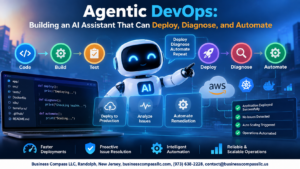
AI-Driven Investigation That Thinks Like a Senior Engineer
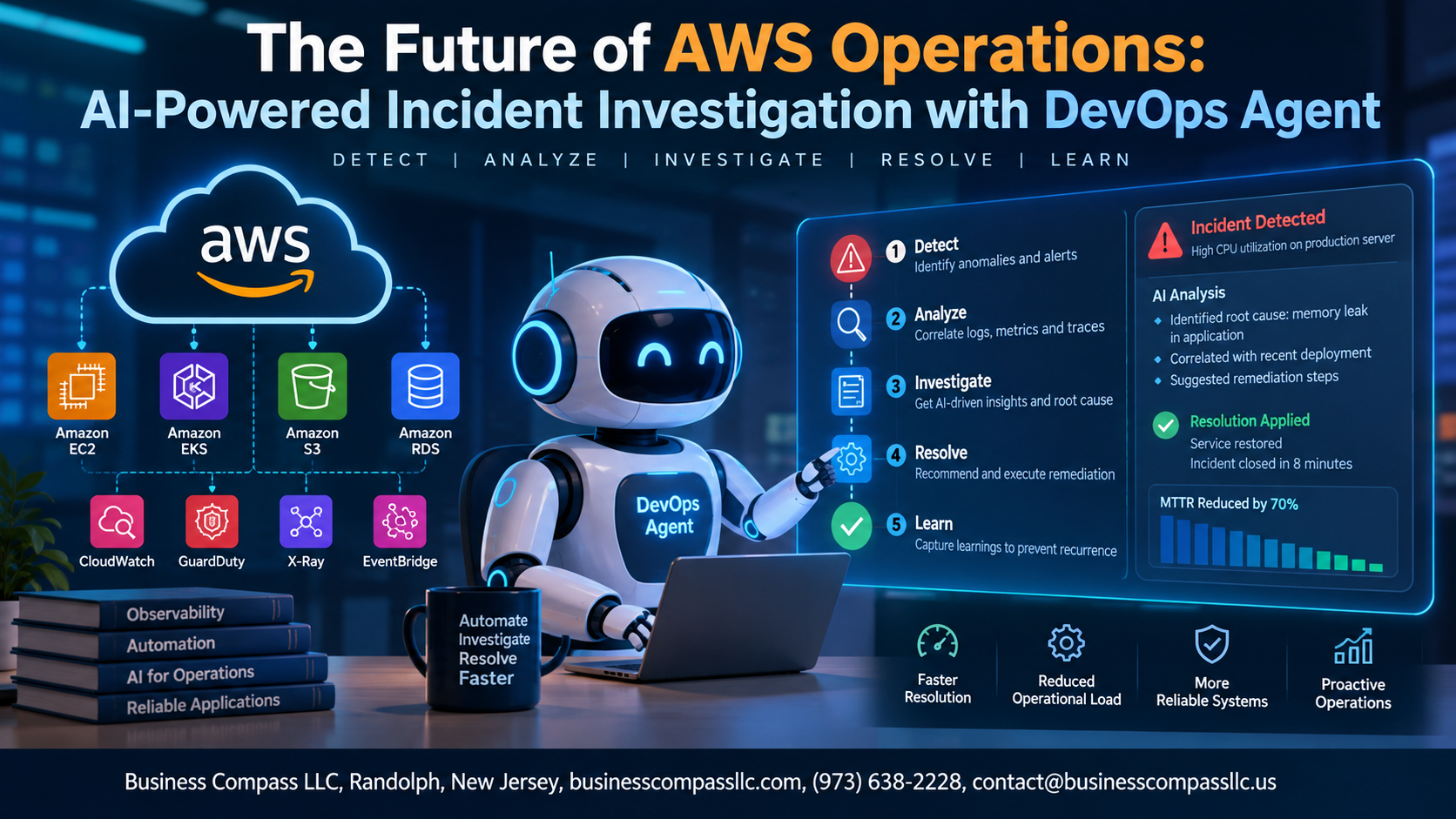
The AWS DevOps Agent handles automated incident investigation by cross-referencing CloudWatch metrics, logs, and events simultaneously — something that usually takes your best engineer hours to untangle manually.
- Pinpoints root causes fast
- Suggests fixes with context
- Learns from past incidents
Key Capabilities That Accelerate Incident Resolution

Automated Root Cause Identification Across Distributed Systems
AWS incident management automation cuts through alert noise by correlating signals across services instantly.
Natural Language Querying for Faster Diagnostic Insights
Ask plain-English questions against AWS CloudWatch AI insights—no query syntax needed.
Intelligent Runbook Execution to Reduce Mean Time to Recovery
The AI-powered DevOps agent runs playbooks automatically, slashing recovery time dramatically.
Real-World Use Cases That Demonstrate Measurable Impact

A. Diagnosing Performance Degradation in Microservices Environments
AWS incident management automation catches latency spikes across distributed services instantly.
B. Detecting Security Anomalies at Scale
AI-powered DevOps agent flags unusual access patterns before breaches escalate.
C. Managing Database Failures
Automated incident investigation AWS handles failovers without paging anyone at 3 AM.
D. Reducing Alert Fatigue
Intelligent incident response AWS groups noisy alerts into actionable clusters.
E. Post-Incident Reviews
AI-generated summaries cut review time dramatically.
How to Successfully Adopt the DevOps Agent in Your Organization

Assessing Your Current AWS Environment for AI Readiness
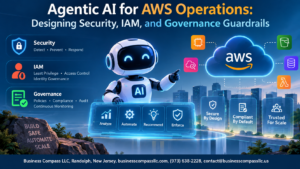
- Audit CloudWatch log coverage and tagging consistency before onboarding the AI-powered DevOps agent.
Defining Clear Escalation Policies Between Agent and Human Teams
- Set explicit thresholds for automated incident investigation versus human review.
Building Trust in AI Recommendations Through Gradual Rollout
- Start with read-only AWS operations AI modes, then expand permissions incrementally.
The Strategic Business Value of AI-Powered AWS Operations

Lowering Operational Costs While Improving System Reliability
AI-powered AWS incident management automation slashes mean-time-to-resolution, directly cutting infrastructure costs. Teams handling fewer outages spend less on emergency fixes and overtime. Faster recovery protects revenue and customer trust simultaneously, turning reliability into a genuine competitive edge rather than just an operational checkbox.

AWS operations aren’t getting any simpler, and waiting hours to diagnose an incident while your team scrambles through logs and dashboards is a cost no business can afford. The DevOps Agent changes that equation by bringing AI-powered investigation directly into your incident response workflow — cutting resolution times, reducing manual effort, and giving your team the clarity they need to act fast.
The shift to AI-assisted operations isn’t just a tech upgrade — it’s a smarter way to run your business. Teams that adopt the DevOps Agent are better positioned to catch problems early, handle complexity at scale, and free up their engineers to focus on building rather than firefighting. If your organization runs on AWS and wants to stay ahead, exploring what the DevOps Agent can do for your incident management process is a solid next step.