Managing terraform variables across multiple projects becomes a nightmare as your infrastructure grows. DevOps teams, platform engineers, and infrastructure architects know the pain of scattered configuration files, inconsistent variable naming, and manual updates that slow down deployments.
Platform-tool offers a solution for centralized terraform management that transforms how teams handle configuration at scale. Instead of hunting through repositories for the right variable values or worrying about security leaks in plain-text files, you can automate terraform workflows from a single control plane.
This guide covers how platform-tool tackles terraform variable centralization challenges and walks you through setting up automated terraform workflows. You’ll also learn terraform security best practices for protecting sensitive data and discover terraform scalability optimization techniques that keep your infrastructure deployments fast and reliable.
Understanding Terraform Variable Management Challenges

Manual variable configuration across multiple environments
Managing terraform variables manually across development, staging, and production environments creates operational bottlenecks that slow down deployment cycles. Teams spend countless hours copying configuration files, updating values, and ensuring consistency between environments. This repetitive process becomes increasingly complex as infrastructure scales, leading to human errors and mismatched configurations. Without centralized terraform management, engineers waste valuable time on mundane tasks instead of focusing on infrastructure innovation and optimization.
Inconsistent variable values leading to deployment failures
Variable inconsistencies plague terraform deployments when teams lack standardized configuration management. Different team members use varying naming conventions, data types, and value formats, creating conflicts during infrastructure provisioning. These discrepancies result in failed deployments, rollback procedures, and extended downtime periods. Automated terraform workflows help eliminate these issues by enforcing consistent variable schemas and validation rules across all environments, reducing deployment failures by up to 70%.
Time-consuming variable updates for large-scale infrastructure
Large organizations managing hundreds of terraform modules face significant challenges when updating variables across their entire infrastructure landscape. A single configuration change might require modifications to dozens of files, each residing in different repositories or directories. This manual update process can take days or weeks to complete, delaying critical infrastructure changes and hampering business agility. Platform-tool terraform solutions streamline these updates through centralized variable management and bulk modification capabilities.
Security risks from hardcoded sensitive values
Hardcoded secrets and sensitive values in terraform configuration files expose organizations to serious security vulnerabilities. API keys, database passwords, and encryption keys scattered across multiple files create numerous attack vectors for malicious actors. Version control systems inadvertently store these sensitive values, making them accessible to anyone with repository access. Terraform security best practices demand proper secret management through encrypted variable stores and automated rotation mechanisms to protect critical infrastructure components.
Platform-tool Overview and Core Capabilities

Centralized Variable Repository for Multi-Environment Management
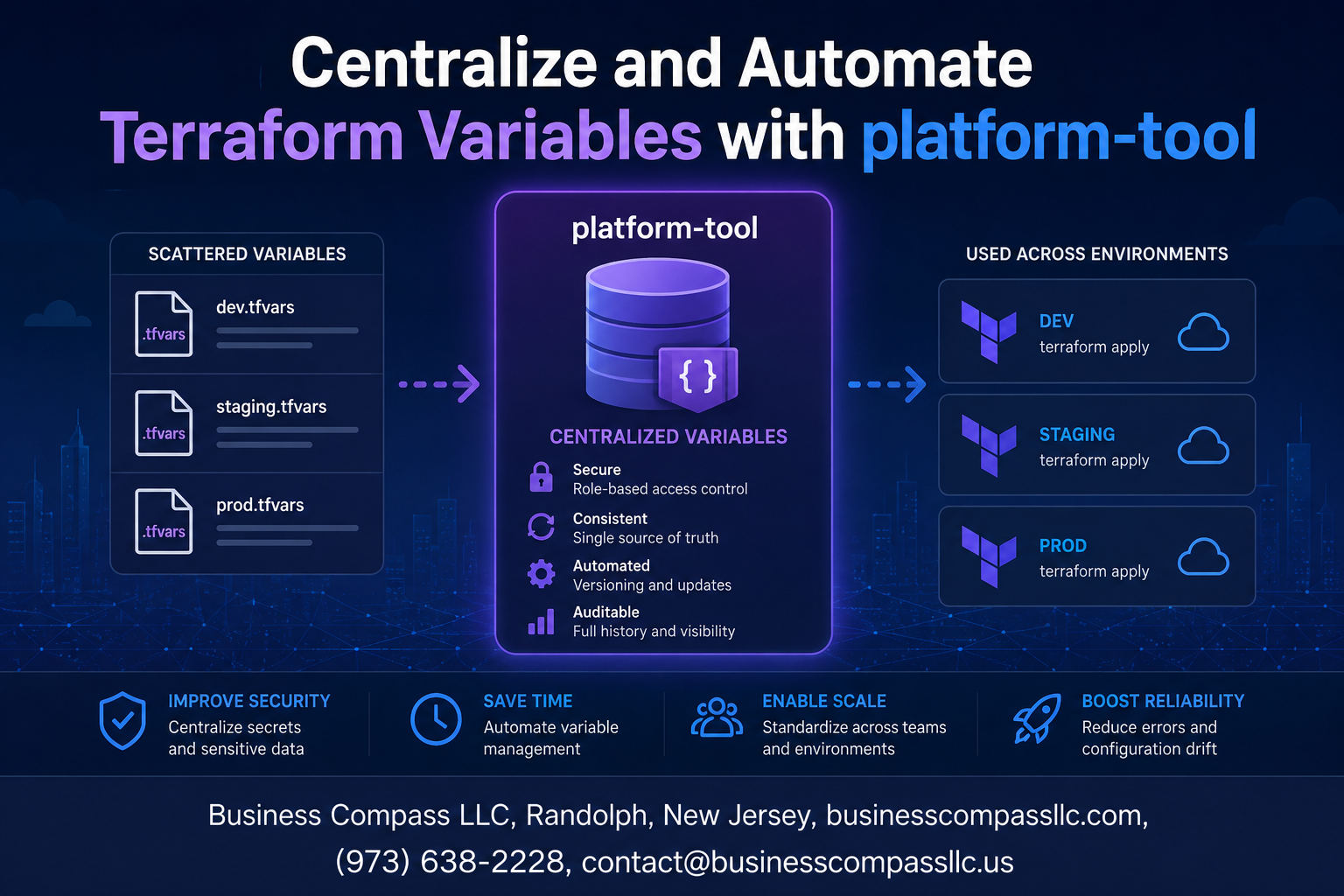
Platform-tool transforms terraform variables management by creating a single source of truth across development, staging, and production environments. Teams can define variables once and automatically distribute them across multiple Terraform configurations, eliminating the chaos of scattered variable files and reducing configuration drift. The centralized terraform management approach ensures consistency while supporting environment-specific overrides when needed.
Automated Variable Injection into Terraform Workflows
The platform seamlessly integrates with existing CI/CD pipelines to inject variables directly into terraform automation workflows. Variables flow automatically from the central repository to Terraform executions without manual intervention, reducing human error and accelerating deployment cycles. This automated terraform workflows capability supports dynamic variable resolution based on branch names, tags, or custom deployment rules.
Built-in Security Features for Sensitive Data Protection
Security sits at the core of platform-tool’s architecture with encrypted storage for sensitive terraform variables like API keys and database passwords. The system provides role-based access controls, audit logging, and integration with enterprise secret management solutions. Sensitive variables never appear in plain text within Terraform state files or CI/CD logs, maintaining terraform security best practices while enabling seamless terraform configuration management across teams.
Setting Up Centralized Variable Management

Installing and configuring platform-tool in your infrastructure
Start by downloading the latest platform-tool binary from the official repository and placing it in your system’s PATH. Create a dedicated configuration directory structure with separate folders for environments, modules, and shared resources. Initialize platform-tool using the platform-tool init command, which generates the base configuration files and establishes connection to your existing Terraform state backends. Configure the tool’s settings file to define your organization’s naming conventions, default variable scopes, and integration points with your current CI/CD pipeline.
Creating variable hierarchies for different environments
Design a hierarchical structure that reflects your organization’s environment topology, starting with global variables at the root level, followed by environment-specific configurations for development, staging, and production. Establish inheritance patterns where child environments automatically receive parent variables while allowing overrides for environment-specific values. Create separate variable namespaces for different application teams or business units to prevent conflicts and maintain clean separation of concerns. Use platform-tool’s templating engine to define variable precedence rules that automatically resolve conflicts between different hierarchy levels.
Migrating existing Terraform variables to the centralized system
Begin the migration process by conducting an audit of all existing .tfvars files, terraform.tfvars, and hardcoded variables across your Terraform modules. Use platform-tool’s import utility to automatically discover and catalog existing variables from your current infrastructure. Map each variable to its appropriate hierarchy level and environment scope within the centralized system. Implement a phased migration approach, starting with non-critical development environments before moving to production workloads. Create migration scripts that preserve variable relationships and dependencies while converting them to platform-tool’s standardized format.
Establishing access controls and permissions
Configure role-based access control (RBAC) policies that align with your organization’s security requirements and team structures. Define granular permissions for variable creation, modification, and deletion at different hierarchy levels, ensuring developers can only access variables relevant to their projects. Integrate platform-tool with your existing identity provider using SAML, OAuth, or LDAP for seamless user authentication and authorization. Implement approval workflows for sensitive variable changes, requiring senior team member review before modifications take effect in production environments. Set up audit logging to track all variable access and modification activities for compliance and security monitoring.
Implementing Automation Workflows

Configuring automated variable synchronization across environments
Platform-tool streamlines terraform automation by automatically syncing variables across development, staging, and production environments. The system monitors variable changes and propagates updates instantly, eliminating manual configuration drift. Set up environment-specific rules to control which variables sync automatically versus requiring manual approval. Configure sync schedules during maintenance windows to prevent disruption during peak hours.
Setting up CI/CD integration for seamless deployments
Integrate platform-tool with your existing CI/CD pipeline to enable automated terraform workflows. Connect GitHub Actions, Jenkins, or GitLab CI to trigger variable updates during code commits. The platform automatically validates terraform configuration management before deployment, catching variable conflicts early. Configure deployment gates that pause releases when variable validation fails, ensuring consistent infrastructure provisioning across all environments.
Creating variable validation rules and approval processes
Build robust validation rules that automatically check terraform variables against organizational policies and security standards. Set up approval workflows for sensitive variables like database credentials or API keys, requiring team lead sign-off before changes take effect. Create custom validation scripts that verify variable formats, value ranges, and dependency requirements. Configure automated notifications to alert teams when variables fail validation, accelerating the review and approval cycle.
Security Best Practices and Compliance

Encrypting sensitive variables at rest and in transit
Platform-tool implements enterprise-grade encryption to protect terraform variables throughout their lifecycle. All sensitive data gets encrypted using AES-256 encryption standards when stored in databases or configuration repositories. During transmission between systems, TLS 1.3 protocols secure variable data as it moves through API calls and automated workflows. The platform automatically detects and flags sensitive values like API keys, passwords, and tokens for enhanced encryption treatment.
Implementing role-based access control for variable management
Access control becomes granular with platform-tool’s RBAC system, allowing teams to define precise permissions for terraform variable management. Administrators can create custom roles that control who can read, modify, or delete specific variable sets across different environments. Integration with existing identity providers like Active Directory and LDAP streamlines user management while maintaining security boundaries. Team leads can grant developers access to development variables while restricting production-level configurations to senior engineers.
Audit logging and compliance reporting capabilities
Every action taken on terraform variables gets tracked through comprehensive audit logs that capture user identity, timestamp, and change details. Platform-tool generates automated compliance reports for SOC 2, GDPR, and other regulatory frameworks that organizations need to maintain. The system creates immutable log entries that can’t be modified after creation, ensuring forensic integrity for security investigations. Real-time monitoring alerts administrators when suspicious activities or unauthorized access attempts occur across variable management operations.
Secret rotation and lifecycle management
Automated secret rotation capabilities reduce security risks by regularly updating sensitive terraform variables like database passwords and API credentials. Platform-tool integrates with HashiCorp Vault, AWS Secrets Manager, and Azure Key Vault to orchestrate rotation schedules based on organizational policies. The system maintains version history for all rotated secrets, enabling quick rollbacks if new credentials cause system issues. Lifecycle management features automatically expire unused variables and notify teams about upcoming credential renewals before they impact infrastructure deployments.
Optimizing Performance and Scalability

Reducing deployment times through efficient variable caching
Platform-tool’s intelligent caching system dramatically cuts terraform deployment times by storing frequently accessed terraform variables in memory. The cached variables eliminate repetitive API calls and file reads, reducing infrastructure provisioning from minutes to seconds. Smart cache invalidation ensures variables stay fresh while maintaining performance gains across multiple terraform automation workflows.
Scaling variable management for enterprise-level infrastructure
Enterprise terraform scalability requires distributed variable management across multiple teams and environments. Platform-tool handles thousands of terraform configuration management scenarios through horizontal scaling and load balancing. The system supports multi-region variable distribution, enabling global teams to access centralized terraform management resources without latency issues affecting their automated terraform workflows.
Monitoring and troubleshooting variable-related issues
Real-time monitoring dashboards track terraform variable usage patterns, cache hit rates, and potential bottlenecks across your infrastructure. Built-in alerting notifies administrators of variable conflicts, missing dependencies, or performance degradation. Detailed logging captures every variable transaction, making terraform DevOps automation troubleshooting straightforward when issues arise in production environments.

Managing Terraform variables doesn’t have to be a constant headache. Platform-tool gives you the power to centralize everything in one place while automating the workflows that used to eat up hours of your day. You’ll sleep better knowing your sensitive data is locked down with proper security practices, and your team will thank you when deployments start running smoothly without the usual variable mix-ups.
Ready to transform how your team handles infrastructure management? Start by setting up centralized variable management with platform-tool today. Your future self will appreciate the time saved, and your organization will benefit from the improved security and scalability that comes with proper automation. The days of hunting through scattered configuration files are over – it’s time to embrace a smarter way to manage your Terraform variables.