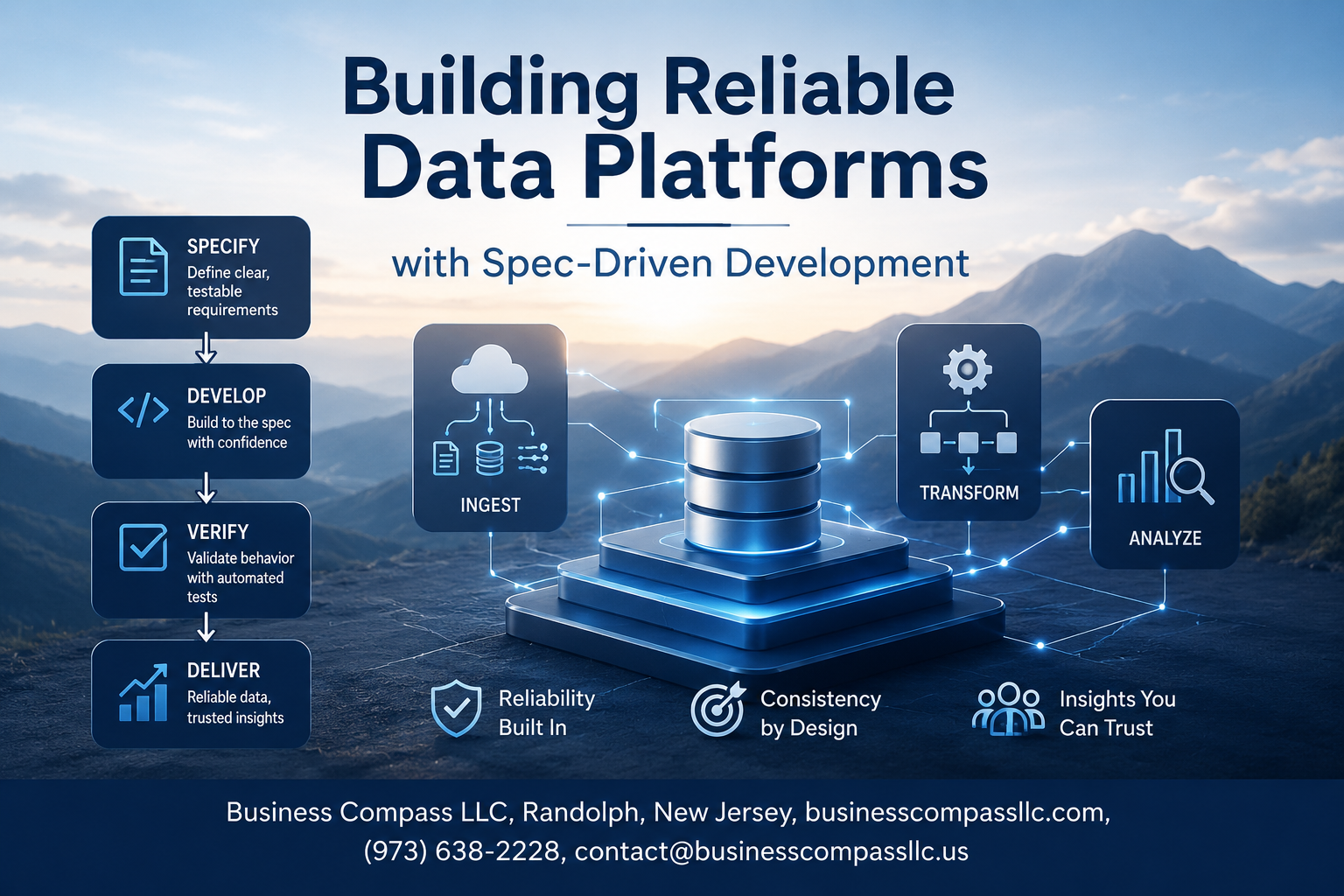
Data engineers and platform architects often struggle with building systems that break under pressure, fail during critical moments, or become impossible to maintain as teams grow. Spec-driven development offers a solution by defining clear contracts and expectations before writing a single line of code, creating reliable data systems that teams can trust.
This approach works for data engineers looking to reduce production incidents, engineering managers wanting predictable delivery timelines, and platform teams building infrastructure that multiple teams depend on. Data platform specifications act as blueprints that prevent miscommunication and catch problems early.
We’ll explore the essential components that make up robust data platform architecture specifications, from API contracts to data quality rules. You’ll learn proven strategies for implementing specification standards for data that actually stick in your organization. Finally, we’ll tackle the most common roadblocks teams face when adopting these practices and how to overcome them without derailing your current projects.
Understanding Spec-Driven Development for Data Platforms

Define specification-first approach in data engineering
Spec-driven development in data engineering prioritizes creating detailed technical specifications before writing code, establishing clear contracts for data schemas, APIs, and processing pipelines. This approach defines data structures, validation rules, and interface requirements upfront, enabling teams to build data platform architecture with predictable behavior and consistent quality standards.
Contrast with traditional code-first development methods
Traditional code-first development often leads to data platforms that grow organically without standardized documentation or clear interfaces between components. Teams build features reactively, creating technical debt and integration challenges. Specification-driven design flips this model by requiring teams to document expected inputs, outputs, and transformations before implementation, reducing miscommunication and ensuring reliable data systems meet business requirements from day one.
Identify key benefits for data platform reliability
Data platform specifications create several reliability advantages that transform how teams deliver data solutions:
- Reduced integration failures through pre-defined contracts between data services
- Faster debugging when issues arise, since expected behavior is documented
- Improved team collaboration as specifications serve as shared understanding
- Automated testing capabilities built directly from specification requirements
- Consistent data quality through enforced validation rules and schema definitions
- Simplified onboarding for new team members who can reference comprehensive documentation
Examine real-world implementation scenarios
Companies implementing data specs typically start with critical data pipelines that feed customer-facing analytics or financial reporting systems. E-commerce platforms define product catalog schemas before building recommendation engines, while fintech companies specify transaction data formats before creating fraud detection systems. Healthcare organizations establish patient data specifications before implementing clinical analytics platforms. These real-world applications demonstrate how data engineering best practices around specification standards create more maintainable and trustworthy data infrastructure.
Essential Components of Data Platform Specifications

Data Schema Definitions and Validation Rules
Strong data platform specifications start with clearly defined schemas that outline data structure, types, and relationships across your entire ecosystem. These schemas act as contracts between systems, ensuring consistency and preventing data corruption. Validation rules enforce data quality at ingestion points, catching errors before they propagate downstream. Modern data platforms benefit from schema evolution capabilities, allowing controlled changes while maintaining backward compatibility. Implementing automated schema validation reduces debugging time and improves overall data platform reliability significantly.
API Contracts and Service Interfaces
Well-defined API contracts form the backbone of reliable data systems, establishing clear expectations between data producers and consumers. These contracts specify endpoint behaviors, data formats, error handling, and response structures that teams can depend on during development. Service interfaces should include versioning strategies to handle updates without breaking existing integrations. Documentation becomes living specifications that guide implementation and testing processes. Strong API contracts enable independent team development while maintaining system coherence and reducing integration friction across data platform components.
Data Quality and Governance Requirements
Data platform specifications must explicitly define quality thresholds, governance policies, and compliance requirements that align with business objectives. Quality specifications include completeness checks, accuracy validations, and freshness requirements for different data assets. Governance requirements cover data lineage tracking, access controls, and retention policies that support regulatory compliance. These specifications should define clear ownership models and escalation procedures when quality issues arise. Automated monitoring against these specifications helps teams maintain high data standards while scaling operations effectively.
Performance and Scalability Specifications
Performance specifications establish clear expectations for data processing latency, throughput, and resource utilization across different workload patterns. These specifications guide architecture decisions and help teams choose appropriate technologies for specific use cases. Scalability requirements define how systems should handle growing data volumes and user demands over time. Load testing specifications ensure platforms can handle peak usage scenarios while maintaining acceptable performance levels. Clear performance specifications enable proactive capacity planning and help teams identify bottlenecks before they impact end users significantly.
Implementing Specification Standards for Maximum Reliability

Choose appropriate specification formats and tools
OpenAPI specifications work best for data platform APIs, while Apache Avro handles schema evolution gracefully in streaming environments. JSON Schema provides lightweight validation for configuration files, and Protocol Buffers offer type safety for service communication. Great Plains Database uses AsyncAPI for event-driven architectures. Tool selection depends on your team’s expertise and existing infrastructure – don’t force a complex format if simpler alternatives meet your reliability requirements.
Establish version control workflows for specifications
Treat data platform specifications as critical code assets requiring strict version control. Create dedicated repositories for schema definitions, separate from application code to enable independent versioning. Implement semantic versioning for breaking changes, and use branching strategies that mirror your data pipeline deployment stages. Tag releases clearly and maintain changelog documentation. Review processes should involve both data engineers and platform stakeholders to catch compatibility issues before they reach production systems.
Create automated validation and testing frameworks
Build comprehensive testing suites that validate specifications against real data samples and mock datasets. Implement schema compatibility checks that prevent backward-breaking changes from reaching production. Create contract testing between data producers and consumers using your specification standards. Set up automated regression tests that run whenever specifications change. Include performance benchmarks to ensure specification complexity doesn’t impact runtime performance. Testing frameworks should integrate seamlessly with your existing data platform infrastructure.
Build continuous integration pipelines with spec validation
Integrate specification validation into your CI/CD workflows as mandatory gates before deployment. Configure pipelines to automatically test schema changes against downstream dependencies and validate data quality rules. Implement multi-stage validation that checks syntax, semantic correctness, and compatibility with existing systems. Use preview environments to test specification changes with real traffic patterns. Set up notification systems that alert relevant teams when specification changes affect their services or data products.
Design rollback and migration strategies
Plan specification rollback procedures before implementing changes to avoid emergency situations. Create migration scripts that handle data transformation when schemas evolve. Implement blue-green deployment strategies for major specification changes. Maintain multiple specification versions simultaneously during transition periods. Design graceful degradation patterns when new specifications can’t be applied immediately. Document clear escalation procedures and assign responsibility for rollback decisions. Test migration and rollback procedures regularly in non-production environments.
Overcoming Common Implementation Challenges

Managing specification complexity across teams
Large data engineering teams often struggle with sprawling specification documents that become unwieldy and hard to maintain. Break complex specs into modular components that different teams can own independently. Create clear ownership boundaries where each team manages specific domains like ingestion, transformation, or storage layers. Use standardized templates and naming conventions so teams can easily understand each other’s specs. Regular cross-team reviews help catch inconsistencies early and ensure specifications remain aligned with overall data platform architecture goals.
Handling legacy system integration requirements
Legacy systems rarely follow modern specification-driven design principles, creating integration headaches for new data platforms. Build adapter layers that translate between legacy formats and your spec-driven components rather than forcing old systems to conform. Document legacy constraints explicitly in your specifications so teams understand limitations and workarounds. Implement gradual migration strategies where legacy components can be replaced incrementally without breaking existing workflows. Version your specifications carefully to maintain backward compatibility while enabling forward progress.
Balancing flexibility with strict adherence to specs
Rigid specification standards can stifle innovation while too much flexibility leads to inconsistent implementations across your data platform. Establish core non-negotiable standards for security, data quality, and performance while allowing teams flexibility in implementation details. Create extension points in your specifications where teams can add custom functionality without breaking compatibility. Use automated validation tools to enforce critical requirements while providing clear escalation paths for justified exceptions. Regular specification reviews help identify when standards need updates versus when teams need better guidance on existing rules.
Measuring Success and Continuous Improvement

Track data quality metrics and system reliability
Start by establishing baseline metrics for your data platform’s performance. Monitor data freshness, accuracy, and completeness rates across all pipelines. Track system uptime, processing latency, and error rates to identify patterns before they become critical issues. Dashboard visualizations help teams spot trends and respond quickly to degradation. Set automated alerts when quality thresholds drop below acceptable levels.
Monitor specification compliance across deployments
Regular audits ensure your teams follow established specification standards for data platforms. Build automated checks into your CI/CD pipelines that validate schema compliance, data lineage documentation, and API contracts. Create compliance scorecards showing which services meet spec-driven development requirements. Run weekly reviews with engineering teams to address gaps and maintain consistency across environments.
Gather team feedback and iterate on processes
Schedule monthly retrospectives with data engineers, analysts, and platform users to discuss what’s working and what needs improvement. Collect feedback through surveys and one-on-one conversations about specification pain points. Create feedback loops that turn user suggestions into actionable improvements. Document common issues and successful patterns to guide future specification updates. Keep processes flexible enough to adapt as your platform evolves.
Scale specification practices across growing organizations
Start with pilot teams before rolling out spec-driven development practices company-wide. Create standardized templates and documentation that new teams can easily adopt. Establish centers of excellence to mentor teams transitioning to specification-driven design approaches. Build self-service tools that make creating and maintaining data platform specifications straightforward. Invest in training programs that help engineers understand the value of reliable data systems and how specifications support long-term success.

Spec-driven development transforms how teams build data platforms by putting clear specifications at the center of everything. When you define your data contracts, API standards, and system requirements upfront, you create a solid foundation that prevents costly mistakes and reduces debugging time. The key components – from data schemas to interface definitions – work together to ensure everyone on your team speaks the same language and builds toward the same goals.
Getting started means choosing the right tools for your specifications, setting up validation processes, and training your team to think specification-first. Yes, you’ll face challenges like getting buy-in from stakeholders or managing complex dependencies, but these hurdles become manageable when you track the right metrics and stay committed to continuous improvement. Start small with one critical data pipeline, prove the value, then expand across your platform. Your future self will thank you for the reliability and maintainability that spec-driven development brings to your data infrastructure.