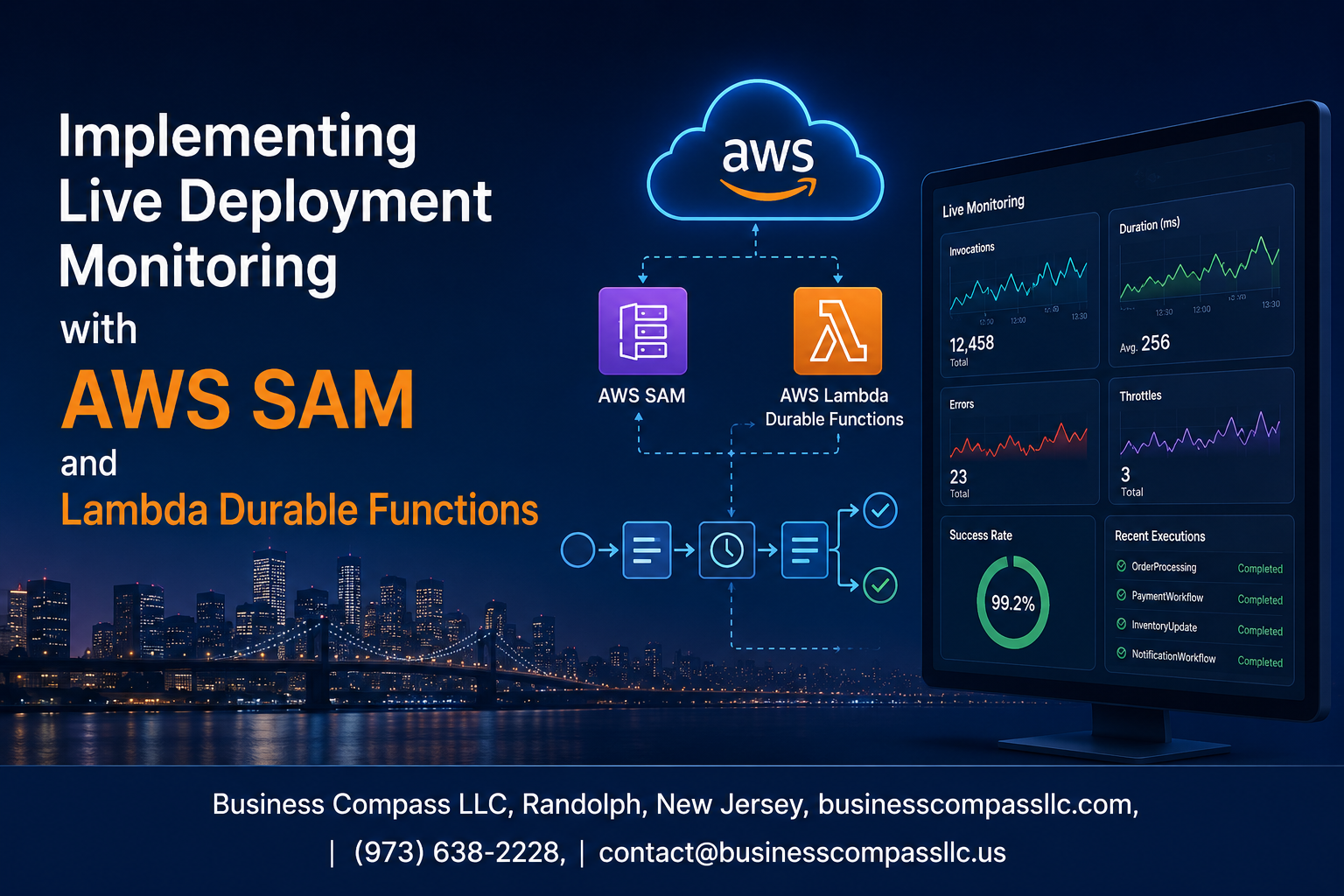
Live deployment monitoring keeps your serverless applications running smoothly and catches issues before they impact users. This guide is designed for DevOps engineers, cloud architects, and developers who want to build robust AWS SAM monitoring systems using Lambda durable functions for their production workloads.
You’ll learn how to create a comprehensive serverless deployment monitoring solution that tracks your deployments in real-time and responds automatically when things go wrong. We’ll start by exploring how AWS SAM architecture supports monitoring solutions and walk through setting up durable functions for continuous deployment tracking. Then we’ll dive into building real-time deployment health dashboards that give you instant visibility into your system’s status and show you how to implement automated rollback mechanisms that protect your applications from failed deployments.
By the end, you’ll have a complete live deployment monitoring system that combines AWS serverless monitoring best practices with practical automation that saves time and reduces downtime.
Understanding AWS SAM Architecture for Monitoring Solutions

Core components of AWS SAM framework
AWS SAM provides a powerful foundation for building monitoring solutions through its declarative template structure, CloudFormation integration, and built-in development tools. The framework simplifies Lambda function deployment while maintaining full control over resource configuration. SAM CLI enables local testing and debugging of serverless applications, making it ideal for developing robust AWS SAM monitoring systems. Template-based infrastructure management ensures consistent deployments across environments while supporting complex monitoring architectures.
Lambda function lifecycle management capabilities
Lambda durable functions within SAM templates offer sophisticated lifecycle management through automated versioning, alias routing, and deployment configurations. SAM automatically handles function packaging, dependency resolution, and environment variable management. Built-in deployment preferences enable gradual rollouts with traffic shifting capabilities, essential for live deployment monitoring scenarios. Function-level configuration options include memory allocation, timeout settings, and execution role assignments that directly impact monitoring performance and reliability.
Built-in monitoring and observability features
AWS SAM includes native CloudWatch integration, X-Ray tracing enablement, and structured logging capabilities that form the backbone of serverless monitoring solutions. Dead letter queues, error handling patterns, and retry mechanisms provide built-in resilience for monitoring workloads. SAM templates support environment-specific configuration through parameters and conditions, enabling tailored monitoring strategies. Application-level metrics collection happens automatically through CloudWatch integration, providing immediate visibility into function performance and error rates.
Integration points with AWS monitoring services
SAM seamlessly connects with CloudWatch, X-Ray, EventBridge, and Systems Manager to create comprehensive monitoring ecosystems. Event-driven architectures leverage EventBridge integration for real-time deployment tracking and automated response systems. CloudWatch Logs integration provides centralized log aggregation while X-Ray offers distributed tracing across microservices. API Gateway integration enables monitoring of external-facing endpoints, while SNS and SQS connections facilitate alert distribution and asynchronous processing patterns essential for continuous deployment tracking workflows.
Setting Up Durable Functions for Continuous Deployment Tracking

Configuring State Persistence for Long-Running Monitoring Processes
AWS SAM monitoring requires robust state management to track deployment progress across extended timeframes. Lambda durable functions maintain execution state through DynamoDB tables or Step Functions, ensuring monitoring processes survive function timeouts. Configure state persistence by defining checkpoint intervals, storing deployment metrics, and maintaining process continuity even during AWS service interruptions for reliable continuous deployment tracking.
Creating Checkpoint Mechanisms for Deployment Status Tracking
Checkpoint systems capture deployment milestones at critical stages, enabling precise progress monitoring and quick recovery points. Implement checkpoint triggers at infrastructure provisioning, application deployment, and health validation phases. Store checkpoint data with timestamps, deployment identifiers, and status codes in persistent storage. This approach provides granular visibility into deployment progression and supports efficient debugging when issues arise.
Implementing Retry Logic for Failed Monitoring Attempts
Retry mechanisms handle transient failures in AWS serverless monitoring environments through exponential backoff strategies and circuit breaker patterns. Configure retry attempts with increasing delays, maximum retry limits, and dead letter queues for persistent failures. Lambda durable functions automatically restart monitoring processes from the last successful checkpoint, preventing data loss and maintaining deployment visibility during network issues or service disruptions.
Establishing Event-Driven Triggers for Deployment Events
Event-driven architecture connects deployment activities to monitoring workflows through CloudWatch Events, SNS topics, and API Gateway webhooks. Configure triggers for CodeDeploy status changes, CloudFormation stack updates, and application health checks. Real-time deployment monitoring activates automatically when deployment events occur, ensuring immediate visibility into system changes and enabling rapid response to deployment issues through automated rollback mechanisms.
Building Real-Time Deployment Health Dashboards
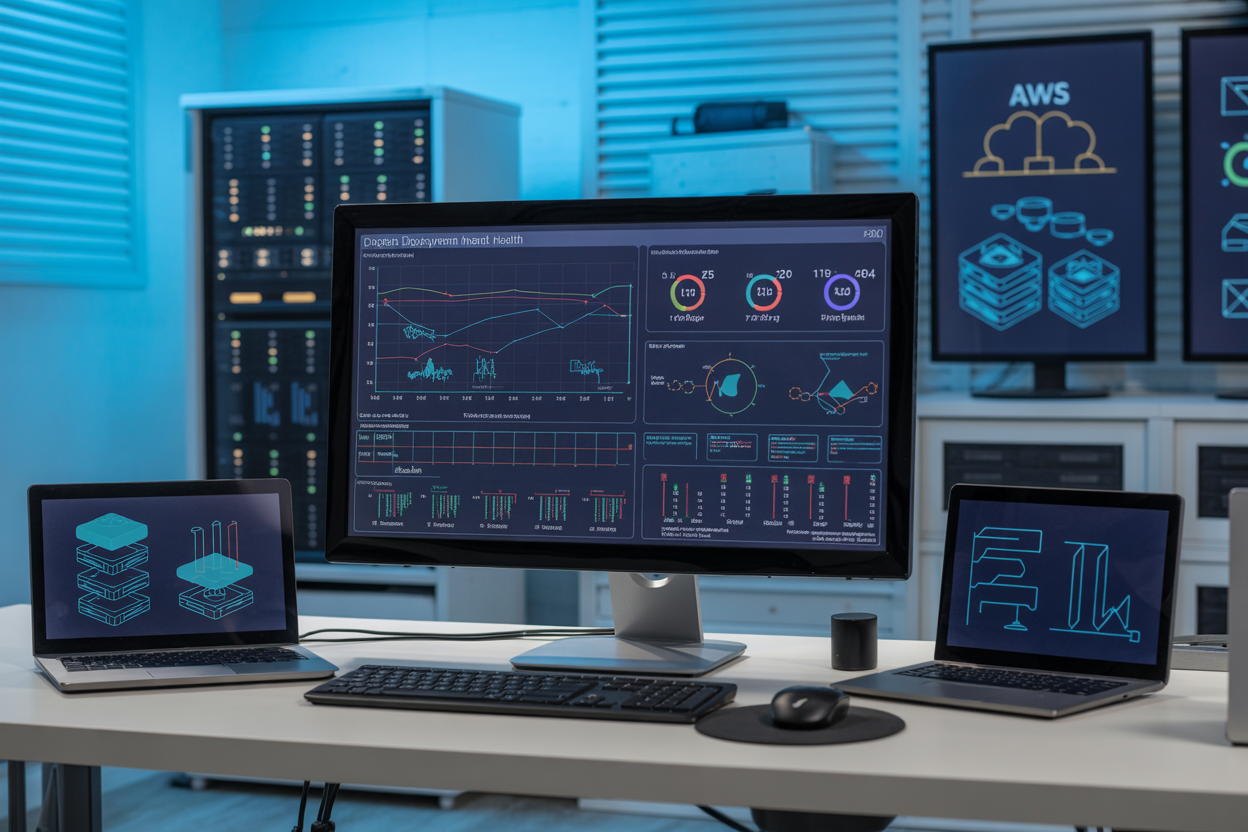
Connecting CloudWatch metrics to Lambda monitoring functions
CloudWatch provides the foundational metrics pipeline for AWS SAM monitoring systems. Your Lambda durable functions can subscribe to CloudWatch Events and Logs to capture deployment activities in real-time. Set up custom CloudWatch metric filters to extract deployment timestamps, error rates, and performance indicators from your Lambda execution logs. Use CloudWatch Streams API to push metrics directly from your monitoring functions, enabling seamless integration between your serverless deployment monitoring infrastructure and AWS native observability tools.
Creating custom metrics for deployment success rates
Custom deployment metrics give you granular visibility into your continuous deployment tracking processes. Design CloudWatch custom metrics that track deployment success percentages, rollback frequencies, and time-to-deployment across different environments. Your Lambda functions should emit these metrics using the CloudWatch PutMetricData API, categorizing deployments by service name, environment, and deployment strategy. Create composite metrics that calculate rolling averages and trend analysis, providing actionable insights for your deployment health dashboard and enabling proactive optimization of your AWS serverless monitoring workflows.
Implementing alerting mechanisms for critical deployment failures
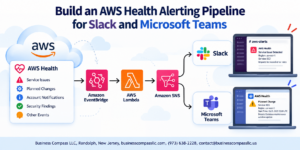
Automated alerting transforms your real-time deployment monitoring from reactive to proactive. Configure CloudWatch Alarms that trigger when deployment success rates drop below acceptable thresholds or when critical services experience consecutive failures. Your Lambda monitoring functions should integrate with SNS topics to send immediate notifications to development teams via email, Slack, or PagerDuty. Set up multi-level alerting with escalation policies – warning alerts for minor issues and critical alerts that trigger automated rollback mechanisms, ensuring your live deployment monitoring system maintains high availability and rapid incident response capabilities.
Implementing Automated Rollback Mechanisms

Detecting deployment anomalies through monitoring data
Real-time anomaly detection forms the backbone of effective automated rollback mechanisms. CloudWatch metrics, combined with AWS X-Ray tracing, provide comprehensive visibility into application performance patterns. Custom Lambda functions analyze deployment metrics against established baselines, flagging deviations in response times, error rates, and resource consumption. Machine learning-powered anomaly detection services like CloudWatch Anomaly Detection enhance pattern recognition, automatically adapting thresholds based on historical data trends and seasonal variations.
Triggering automatic rollback procedures based on predefined thresholds
Threshold-based triggers activate rollback procedures when critical metrics exceed acceptable limits. AWS SAM configurations define specific parameters such as error rate percentages, latency boundaries, and failed health check counts. EventBridge rules orchestrate immediate responses when thresholds breach, invoking Lambda durable functions that execute rollback workflows. These functions coordinate with AWS CodeDeploy to initiate blue-green deployments, reverting traffic to previous stable versions while maintaining service availability throughout the recovery process.
Maintaining deployment history for quick recovery options
Comprehensive deployment versioning enables rapid recovery scenarios across complex serverless architectures. S3 buckets store deployment artifacts with immutable versioning, while DynamoDB tables maintain detailed deployment metadata including configuration snapshots and performance baselines. Lambda layers preserve function dependencies, ensuring consistent rollback environments. AWS Systems Manager Parameter Store retains configuration histories, enabling point-in-time recovery options. This historical data empowers teams to select optimal rollback targets based on specific failure scenarios and business requirements.
Coordinating rollback activities across multiple services
Multi-service rollback coordination requires sophisticated orchestration mechanisms to maintain system integrity. AWS Step Functions manage complex rollback workflows, coordinating Lambda functions, API Gateway deployments, and database schema changes. Service mesh configurations update automatically through AWS App Mesh, ensuring proper traffic routing during rollback operations. Cross-service dependency mapping prevents cascading failures by rolling back dependent services in proper sequence. SNS notifications keep stakeholders informed throughout rollback processes, while CloudFormation stack updates ensure infrastructure consistency across all affected components.
Optimizing Performance and Cost Management
Fine-tuning Lambda function execution times for monitoring efficiency
Optimize your AWS SAM monitoring by setting appropriate memory allocations and timeout values for Lambda functions. Start with 256MB memory for basic monitoring tasks and scale up to 512MB for complex dashboard aggregations. Keep timeout values between 30-60 seconds for health checks and 5-15 minutes for rollback operations. Monitor CloudWatch metrics to identify functions exceeding allocated resources and adjust accordingly. Use provisioned concurrency for critical monitoring functions that require sub-second response times.
Implementing smart polling intervals to reduce unnecessary invocations
Design adaptive polling strategies that adjust based on deployment activity and system health. During active deployments, poll every 15-30 seconds for real-time updates. Scale back to 5-10 minute intervals during stable periods. Implement exponential backoff when services are healthy and increase frequency when anomalies are detected. Use EventBridge rules to trigger monitoring functions based on deployment events rather than constant polling. This approach reduces Lambda invocations by up to 70% while maintaining monitoring effectiveness.
Leveraging AWS cost optimization features for monitoring infrastructure
Take advantage of AWS Lambda’s millisecond billing and right-size your monitoring functions. Use AWS Cost Explorer to track spending patterns and identify optimization opportunities. Implement Reserved Capacity for predictable workloads and Savings Plans for flexible usage. Configure CloudWatch log retention periods based on compliance requirements – 7 days for development environments and 30-90 days for production. Bundle multiple monitoring tasks into single Lambda invocations where possible to reduce cold starts and improve cost efficiency across your serverless deployment monitoring infrastructure.
Setting up live deployment monitoring with AWS SAM and Lambda Durable Functions gives you the power to catch issues before they become major problems. You can track your deployments in real-time, build dashboards that actually tell you what’s happening, and set up automated rollbacks that save you from those 3 AM emergency calls. The combination of these tools creates a monitoring system that works around the clock, keeping your applications healthy and your users happy.
The best part is that you don’t have to choose between good monitoring and staying within budget. With the right setup, you can optimize both performance and costs while maintaining the reliability your business needs. Start with the basics – get your SAM architecture solid and your durable functions running smoothly. Then build out your dashboards and automated responses. Your future self will thank you when everything just works, and you can focus on building great features instead of fighting fires.