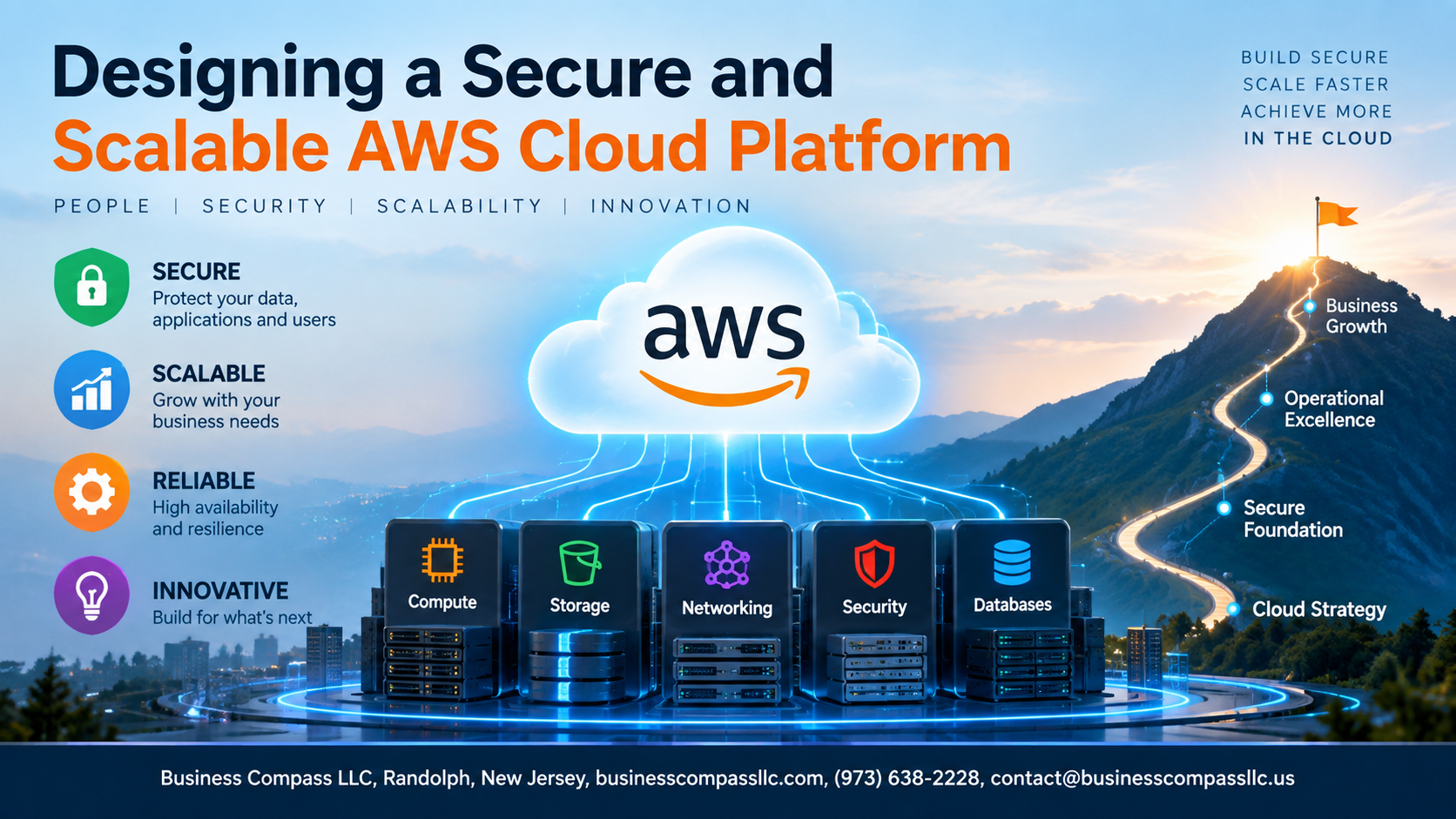
Designing a Secure and Scalable AWS Cloud Platform: What You Actually Need to Know
If you’re building on AWS and want your infrastructure to hold up under real-world pressure, security and scalability can’t be afterthoughts. They need to be baked in from the start.
This guide is for cloud architects, DevOps engineers, and technical leads who are responsible for building or hardening AWS environments — whether you’re starting fresh or tightening up what you already have.
Here’s what we’ll walk through:
- AWS network security foundation and identity management — how to structure your VPCs, lock down access with AWS Identity and Access Management, and make sure only the right people and services can touch the right resources
- Data protection and encryption — covering AWS data protection encryption strategies for data at rest and in transit, so your sensitive information stays safe at every layer
- Scaling and continuous improvement — cloud platform scalability strategies that keep your infrastructure responsive as demand grows, plus the AWS monitoring and auditing tools that help you catch problems before they catch you
Everything here lines up with the AWS Well-Architected Framework security pillar, so you’re not just building something that works today — you’re building something that holds up long-term.
Let’s get into it.
Establishing Core AWS Architecture Principles

Choosing the Right AWS Regions and Availability Zones for Resilience
Pick regions close to your users and deploy across multiple Availability Zones to avoid single points of failure.
Designing a Multi-Tier Architecture for Maximum Flexibility
Separate web, app, and database layers for better control.
Leveraging AWS Well-Architected Framework security
Run regular reviews across all five pillars to catch gaps early.
Building a Robust Network Foundation

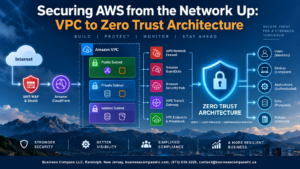
Structuring VPCs and Subnets for Isolation and Control
- Separate public and private subnets across multiple Availability Zones
Optimizing Traffic Flow with Load Balancers and Route Tables
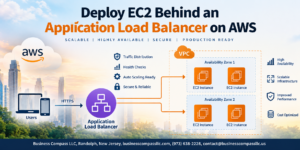
- Use Application Load Balancers to distribute traffic smartly
Securing Boundaries with Network ACLs and Security Groups
- Layer both controls for defense-in-depth
Enabling Private Connectivity with VPN and AWS Direct Connect
- Keep sensitive data off the public internet entirely
Implementing Strong Identity and Access Management

Enforcing Least Privilege with IAM Roles and Policies
- Grant only permissions users genuinely need—nothing extra.
Protecting Accounts with Multi-Factor Authentication
- Enable MFA on every account, especially root.
Centralizing Access Control with AWS Organizations and SCPs
- Use SCPs to enforce guardrails across all accounts, keeping AWS identity and access management consistent and your secure AWS architecture design airtight.
Protecting Data Across Storage and Transit

Encrypting Data at Rest Using AWS KMS and S3 Policies
- Use AWS KMS customer-managed keys with S3 bucket policies to enforce server-side encryption.
Securing Data in Transit with TLS and Certificate Manager
- ACM automates TLS certificate renewal, keeping connections encrypted.
Safeguarding Sensitive Workloads with AWS Macie and GuardDuty
- Macie flags exposed PII; GuardDuty detects threats automatically.
Automating Backup and Disaster Recovery
- AWS Backup schedules cross-region snapshots, cutting downtime significantly.
Maintaining Compliance with AWS Artifact and Config Rules
- Config Rules continuously audit resource configurations against compliance standards.
Scaling Infrastructure to Meet Demand Efficiently

Automating Capacity with Auto Scaling Groups and Policies
AWS Auto Scaling Groups automatically adjust EC2 capacity based on real demand, keeping costs tight.
Reducing Latency and Cost with CloudFront and Edge Locations
CloudFront caches content globally, cutting load times dramatically.
Optimizing Compute Costs with Reserved and Spot Instances
Mix Reserved and Spot Instances to slash compute spending while maintaining scalable cloud infrastructure on AWS.
Monitoring, Auditing, and Continuous Improvement

Gaining Full Visibility with CloudWatch Metrics and Alarms
Set custom alarms to catch anomalies before they escalate.
Tracking Changes and Activity with AWS CloudTrail
Log every API call for complete audit trails.
Accelerating Incident Response with Automated Remediation
Use Lambda-triggered workflows to auto-fix misconfigurations instantly.
Continuously Improving Security Posture with AWS Security Hub
Aggregate findings across services, prioritize risks, and keep your AWS cloud security best practices sharp through regular reviews.

Building a secure and scalable AWS cloud platform comes down to getting the fundamentals right. From setting up a solid network foundation and locking down identity and access management to protecting your data and keeping your infrastructure ready to grow, every layer plays a critical role. Throw in consistent monitoring and regular audits, and you have a platform that doesn’t just work today but stays strong as your needs evolve.
The good news is that none of this has to be overwhelming. Start with your core architecture principles, build from there, and treat security and scalability as ongoing habits rather than one-time checkboxes. The more intentional you are about each piece, the more resilient and future-ready your AWS environment will be. So take it one layer at a time and keep improving as you go.