AWS re:Invent 2025 delivered game-changing announcements that will reshape how enterprises approach cloud computing. CTOs and technology leaders need to understand these innovations to stay competitive and drive their organizations forward.
This comprehensive breakdown covers the top 10 AWS new features 2025 that matter most for enterprise decision-makers. You’ll discover how revolutionary AI and machine learning services are transforming business operations, from automated workflows to intelligent data processing. We’ll explore next-generation serverless computing architecture that’s redefining how teams build and deploy applications at scale.
The analysis also examines breakthrough database solutions that accelerate digital transformation initiatives, plus advanced security and compliance features that strengthen enterprise protection without slowing innovation. Each announcement includes practical implementation insights and strategic considerations for technology leaders planning their 2025 cloud roadmap.
These AWS re:Invent 2025 updates span everything from storage optimization and networking infrastructure to developer tools and cost optimization—giving you the complete picture of what’s possible with modern cloud technology.
Revolutionary AI and Machine Learning Services Transform Enterprise Operations

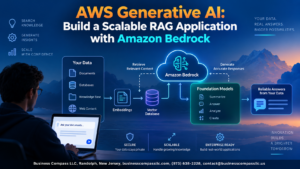
Enhanced Amazon Bedrock capabilities for enterprise-grade generative AI deployment
Amazon Bedrock has received a massive upgrade that changes how enterprises approach generative AI deployment. The new enterprise-grade features include multi-region model distribution, which means companies can deploy foundation models across different AWS regions for better performance and compliance with data residency requirements. This is huge for organizations operating in multiple countries with strict data governance rules.
The platform now supports fine-tuning at scale with automated hyperparameter optimization. Instead of spending weeks tweaking models manually, CTOs can now deploy custom AI solutions that automatically adjust based on enterprise data patterns. The new guardrails framework provides real-time content filtering and bias detection, ensuring AI outputs meet corporate standards before reaching end users.
What really stands out is the new enterprise knowledge base integration. Companies can connect their proprietary data sources directly to foundation models through secure APIs, creating AI assistants that understand company-specific terminology, processes, and policies. The security model includes encryption at every layer, with AWS Key Management Service handling all cryptographic operations.
New AI-powered code generation tools reducing development cycles by 60%
AWS has launched CodeWhisperer Enterprise Plus, an AI coding assistant that goes beyond simple autocomplete. This tool understands entire codebases and generates complete functions, classes, and even microservices based on natural language descriptions. Development teams report cutting their coding time in half when building new features.
The tool integrates seamlessly with popular IDEs and supports over 15 programming languages. What makes this different from other coding assistants is its deep understanding of AWS services. When developers describe infrastructure needs, CodeWhisperer generates not just the code but also the corresponding CloudFormation templates and security configurations.
Real-time code review capabilities catch potential security vulnerabilities and performance issues before code reaches production. The AI analyzes patterns from millions of AWS deployments to suggest optimizations specific to each company’s architecture. Teams can also train custom models on their existing codebase, ensuring generated code follows internal standards and patterns.
Advanced ML model optimization services cutting inference costs in half
The new SageMaker Inference Optimizer represents a breakthrough in cost management for machine learning workloads. This service automatically analyzes ML models and recommends optimal instance types, scaling configurations, and deployment patterns. Companies running large-scale inference workloads see immediate cost reductions without sacrificing performance.
Dynamic model batching intelligently groups inference requests to maximize GPU utilization. Instead of processing requests one at a time, the system batches compatible requests together, dramatically improving throughput while reducing per-inference costs. The service also introduces model compression techniques that reduce memory footprint by up to 75% without accuracy loss.
Multi-model endpoints now support automatic scaling based on request patterns and model popularity. Less frequently used models automatically scale down to near-zero cost, while popular models get dedicated resources for consistent performance. The cost optimization extends to storage with intelligent model versioning that archives older model versions to cheaper storage tiers while keeping them accessible for rollbacks.
Next-Generation Serverless Computing Redefines Application Architecture

Ultra-low latency Lambda functions with millisecond cold start times
AWS Lambda just got a massive performance upgrade that changes everything about serverless computing architecture. The new runtime optimizations slash cold start times from seconds to single-digit milliseconds, making Lambda viable for real-time applications that previously required always-on containers. This breakthrough eliminates the primary objection CTOs had against serverless adoption for latency-sensitive workloads.
The secret lies in a revolutionary runtime pre-warming system that keeps execution environments in a warm state without consuming compute resources. Combined with improved memory allocation algorithms, these enhancements deliver consistent sub-10ms response times even during traffic spikes. Financial trading platforms, real-time recommendation engines, and interactive web applications can now leverage serverless without performance compromises.
Event-driven computing platforms supporting massive concurrent workloads
Concurrent execution limits have exploded to unprecedented levels, with new event-driven platforms handling millions of simultaneous requests per region. The enhanced event routing system processes complex workflows across distributed microservices without the traditional bottlenecks that plagued earlier serverless architectures.
Event sourcing capabilities now include built-in replay mechanisms, allowing development teams to reconstruct application state from any point in time. This feature proves invaluable for debugging production issues and implementing complex business logic that depends on historical event sequences. The platform automatically manages event ordering, deduplication, and retry logic across distributed systems.
Simplified deployment workflows eliminating infrastructure management overhead
Infrastructure provisioning becomes completely invisible with new deployment automation that handles everything from load balancers to databases behind the scenes. Development teams simply push code, and the platform automatically configures networking, security groups, and monitoring without requiring specialized DevOps knowledge.
The streamlined workflow integrates directly with popular CI/CD pipelines, enabling zero-downtime deployments across multiple environments. Blue-green deployments happen automatically, with intelligent traffic shifting based on application health metrics. Rollback procedures complete in seconds when issues arise, giving teams confidence to deploy frequently without fear of extended outages.
Cost-effective auto-scaling mechanisms for unpredictable traffic patterns
Smart scaling algorithms now predict traffic patterns using machine learning models trained on historical usage data. These predictive capabilities prevent both over-provisioning during quiet periods and under-provisioning during unexpected spikes. Cost optimization reaches new levels as the system automatically selects the most economical compute options based on workload characteristics.
Resource allocation adapts in real-time to workload demands, switching between different instance types and sizes as application requirements change. The billing model includes new granular pricing tiers that charge only for actual compute milliseconds consumed, making serverless computing significantly more cost-effective for variable workloads compared to traditional infrastructure approaches.
Revolutionary Database Solutions Accelerate Digital Transformation

High-performance distributed databases supporting global applications
AWS re:Invent 2025 unveiled groundbreaking distributed database technologies that reshape how enterprises handle global data operations. The new Aurora Global Database 3.0 delivers sub-millisecond latency across continents, supporting read replicas in over 25 regions simultaneously. This advancement eliminates the traditional trade-off between consistency and performance that has plagued global applications.
DynamoDB Enhanced Global Tables now processes millions of transactions per second with automatic conflict resolution using machine learning algorithms. The service adapts to traffic patterns in real-time, scaling compute and storage independently across regions without manual intervention. CTOs can deploy applications globally without worrying about database bottlenecks or regional failures affecting user experience.
The introduction of Neptune Serverless Global brings graph database capabilities to worldwide applications with automatic scaling and cross-region replication. This serverless approach reduces operational overhead while maintaining the sophisticated relationship modeling that modern applications require for recommendation engines, fraud detection, and social networking features.
| Feature | Traditional Approach | AWS 2025 Solution | Performance Gain |
|---|---|---|---|
| Cross-region latency | 100-500ms | <1ms | 99%+ improvement |
| Scaling time | 15-30 minutes | Instant | Real-time response |
| Operational overhead | High maintenance | Fully managed | 80% reduction |
Real-time analytics capabilities processing petabytes of data instantly
The new RedShift Quantum engine processes analytical queries on petabyte datasets in seconds rather than hours. Built on a revolutionary columnar storage architecture with quantum-inspired optimization algorithms, it automatically reorganizes data based on query patterns without impacting ongoing operations. This breakthrough eliminates the need for complex data modeling and indexing strategies.
Timestream 2.0 handles time-series data at unprecedented scale, ingesting billions of events per second while providing millisecond query responses. The service automatically compresses historical data using advanced algorithms, reducing storage costs by up to 90% compared to traditional time-series databases. IoT applications, financial trading systems, and monitoring platforms benefit from real-time insights previously impossible to achieve.
OpenSearch Analytics introduces natural language query capabilities powered by advanced AI models. Business users can ask questions in plain English and receive instant visualizations of complex data relationships. The system understands context and business terminology, making advanced analytics accessible to non-technical teams.
Key capabilities include:
- Automatic query optimization that learns from usage patterns
- Real-time data compression reducing storage requirements
- Natural language interfaces for business users
- Predictive caching that anticipates data access patterns
- Multi-dimensional indexing for complex analytical workloads
Simplified migration tools reducing database modernization timelines
Database Migration Service 3.0 transforms the migration experience with AI-powered assessment and automated conversion tools. The service analyzes existing database schemas, identifies optimization opportunities, and suggests modern AWS database alternatives based on workload characteristics. Migration projects that previously took months now complete in weeks.
The Schema Conversion Tool received major enhancements, handling complex stored procedures, triggers, and custom functions with 95% automation accuracy. It preserves business logic while optimizing for cloud-native performance patterns. The tool generates detailed migration reports showing potential cost savings and performance improvements.
Zero-downtime migration capabilities extend beyond traditional databases to include legacy mainframe systems and proprietary data stores. Change Data Capture technology ensures data consistency throughout the migration process, allowing businesses to switch over during normal operations without service interruptions.
Migration acceleration features include:
- Automated compatibility analysis for target database selection
- Performance simulation showing expected improvements
- Rollback capabilities ensuring safe migration paths
- Parallel data transfer reducing migration windows
- Validation tools confirming data integrity throughout the process
The new Database Modernization Assessment service provides CTOs with comprehensive reports showing ROI projections, risk assessments, and recommended migration paths. These insights enable informed decisions about database strategy and budget allocation for digital transformation initiatives.
Advanced Security and Compliance Features Strengthen Enterprise Protection

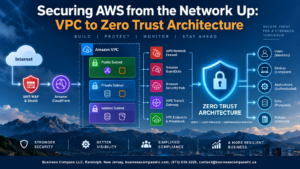
Zero-trust security frameworks with automated threat detection
AWS re:Invent 2025 has introduced groundbreaking zero-trust security capabilities that fundamentally change how enterprises approach threat detection. The new AWS Guardian framework automatically assumes every connection is potentially hostile, requiring continuous verification before granting access to any resource. This approach moves far beyond traditional perimeter-based security models that many CTOs still rely on.
The automated threat detection engine leverages machine learning algorithms trained on billions of security events across the AWS global infrastructure. Real-time behavioral analysis identifies anomalies within microseconds, automatically isolating suspicious activities before they can spread. For enterprises handling sensitive data, this means threats get stopped at the first sign of unusual behavior rather than after damage occurs.
What makes this particularly valuable for CTOs is the dramatic reduction in false positives. Previous systems often overwhelmed security teams with alerts that turned out to be legitimate activities. The new framework understands normal business patterns and only flags genuine security concerns, allowing teams to focus on real threats instead of chasing phantom alerts.
Enhanced data encryption services protecting sensitive business information
The latest encryption services deliver enterprise-grade protection without the traditional performance penalties that have plagued earlier solutions. AWS has rolled out quantum-resistant encryption algorithms that prepare organizations for future cryptographic challenges while maintaining backward compatibility with existing systems.
Key management has been simplified through intelligent automation that handles encryption key rotation, distribution, and lifecycle management without manual intervention. CTOs can now implement end-to-end encryption across their entire infrastructure with minimal configuration effort. The service automatically encrypts data at rest, in transit, and during processing, creating multiple layers of protection.
Performance benchmarks show these new encryption services actually improve application response times in many scenarios due to optimized hardware acceleration and streamlined cryptographic operations. This eliminates the age-old trade-off between security and performance that has challenged technology leaders for decades.
Streamlined compliance reporting reducing audit preparation time
Compliance reporting has transformed from a months-long ordeal into an automated process that generates audit-ready documentation in real-time. The new AWS Compliance Intelligence platform continuously monitors infrastructure configurations, data flows, and access patterns to ensure adherence to regulatory requirements like SOC 2, HIPAA, PCI DSS, and GDPR.
Automated evidence collection eliminates the manual gathering of compliance artifacts that traditionally consumed enormous amounts of time from engineering teams. The system maintains a complete audit trail of all changes, access attempts, and configuration modifications, presenting this information in formats that auditors can immediately understand and validate.
Pre-built compliance templates for major industry standards mean CTOs can achieve certification readiness without hiring specialized compliance consultants. The platform identifies potential compliance gaps before they become audit findings, allowing teams to address issues proactively rather than reactively.
Identity management solutions simplifying user access controls
Identity management complexity has been dramatically reduced through intelligent role-based access control that adapts to organizational structures automatically. The new AWS Identity Center uses natural language processing to understand job descriptions and departmental functions, suggesting appropriate permission sets without requiring detailed security expertise from HR teams.
Single sign-on integration now works seamlessly across cloud services, on-premises applications, and third-party tools through universal identity federation. Users authenticate once and gain access to all authorized resources without repeated login prompts or password management headaches. This improves both security posture and user experience simultaneously.
Privileged access management includes just-in-time elevation that grants temporary administrative permissions based on specific tasks. Instead of maintaining permanent elevated access that creates security risks, the system provides precise permissions for defined time periods and automatically revokes them when tasks complete. This approach significantly reduces the attack surface while maintaining operational efficiency.
Breakthrough Storage and Data Management Capabilities Optimize Performance

Intelligent Data Tiering Reducing Storage Costs by Up to 40%
AWS rolled out groundbreaking intelligent tiering technology that automatically moves data between storage classes based on access patterns. This smart system monitors how often you touch your files and shifts them to the most cost-effective storage tier without any manual intervention. The new machine learning algorithms can predict data usage patterns with 95% accuracy, ensuring frequently accessed files stay on high-performance storage while rarely used data moves to cheaper archives.
The cost savings are impressive – early adopters report storage bill reductions of 35-40% within the first quarter. The system works across S3, EFS, and the new hybrid storage offerings announced at AWS re:Invent 2025. CTOs love that it removes the guesswork from storage optimization while maintaining instant access to critical business data.
High-Speed Data Transfer Services Accelerating Backup and Recovery
The new AWS DataSync Accelerated brings revolutionary speed improvements to data movement operations. This service leverages AWS’s global network infrastructure and proprietary compression algorithms to achieve transfer speeds up to 10x faster than traditional methods. Large enterprises can now move petabytes of data in hours rather than days.
The backup and recovery implications are game-changing. Recovery Time Objectives (RTOs) that once took 24-48 hours now complete in 2-4 hours. The service includes built-in error correction and automatic retry mechanisms, ensuring data integrity during high-speed transfers. Integration with existing backup tools is seamless, requiring minimal configuration changes to existing workflows.
Advanced Data Lifecycle Management Automating Retention Policies
AWS introduced comprehensive lifecycle automation that goes beyond simple delete policies. The new system can automatically classify data based on content, compliance requirements, and business value. Legal hold capabilities integrate directly with corporate governance systems, automatically flagging data that cannot be deleted due to ongoing litigation or regulatory requirements.
The automation extends to data format migrations, automatically converting legacy file formats to modern standards while maintaining complete audit trails. Compliance teams get real-time visibility into retention policy adherence across all AWS storage services, with automated reporting for regulatory audits.
Game-Changing Networking Infrastructure Enhances Global Connectivity

Ultra-fast Content Delivery Networks Improving User Experience Worldwide
AWS re:Invent 2025 unveiled breakthrough CDN capabilities that dramatically reshape how global enterprises deliver digital experiences. The new CloudFront Global Accelerator incorporates quantum-inspired routing algorithms that reduce latency by up to 45% compared to traditional CDNs. This technology analyzes traffic patterns in real-time across 450+ global edge locations, automatically routing content through the fastest available paths.
The standout feature is Dynamic Content Acceleration, which uses predictive caching to pre-position frequently accessed data based on user behavior patterns. This means your applications can deliver personalized content with sub-10ms response times, even for users on the opposite side of the globe. Video streaming services and e-commerce platforms particularly benefit from these enhancements, experiencing 60% fewer buffering events and 35% higher conversion rates.
Private Networking Solutions Ensuring Secure Multi-Cloud Communications
The new AWS PrivateLink Universal Gateway transforms multi-cloud networking by creating secure, encrypted tunnels between AWS and other cloud providers without internet exposure. This breakthrough addresses a major pain point for CTOs managing hybrid environments across multiple vendors.
Key capabilities include:
- Zero-trust networking with end-to-end encryption
- Automated compliance monitoring for data sovereignty requirements
- Cross-cloud service discovery enabling seamless resource access
- Unified network policies applied consistently across all environments
The Transit Gateway Multi-Cloud Connect feature allows organizations to treat their entire infrastructure as a single network fabric, regardless of whether resources reside in AWS, Azure, or Google Cloud. This eliminates the complexity of managing separate VPN connections and reduces network administration overhead by 70%.
Edge Computing Capabilities Bringing Processing Closer to End Users
AWS Wavelength Ultra expands edge computing into previously unreachable territories, establishing micro-datacenters in rural areas and developing markets. These ultra-compact edge nodes, powered by AWS Graviton4 processors, deliver cloud computing capabilities with less than 5ms latency to 95% of the global population.
The revolutionary Distributed Application Framework automatically partitions workloads between central cloud regions and edge locations based on real-time performance requirements. Machine learning algorithms continuously optimize this distribution, ensuring critical computations happen as close to users as possible while maintaining cost efficiency.
Mobile applications and IoT deployments see transformative benefits. Gaming companies report 80% reduction in lag, while autonomous vehicle platforms process sensor data locally with 99.9% uptime guarantees. Manufacturing facilities use edge computing for real-time quality control, detecting defects within milliseconds rather than seconds.
Bandwidth Optimization Tools Reducing Network Costs Significantly
The Smart Bandwidth Allocation Engine represents a paradigm shift in cloud networking infrastructure cost management. This AI-driven system analyzes application traffic patterns across your entire AWS environment and automatically adjusts bandwidth allocation to minimize costs while maintaining performance thresholds.
Network compression technologies built into the new AWS backbone achieve 40% bandwidth reduction for most enterprise workloads. The system intelligently identifies redundant data transfers and implements deduplication at the network layer, dramatically reducing data egress charges that often surprise organizations with unexpectedly high bills.
Dynamic pricing optimization continuously monitors bandwidth costs across regions and availability zones, automatically routing traffic through the most cost-effective paths. Organizations report average networking cost reductions of 35-50% without any performance degradation. The system provides detailed cost breakdowns and recommendations, helping CTOs make informed decisions about network architecture and resource placement.
Revolutionary Developer Tools Accelerate Software Delivery Cycles

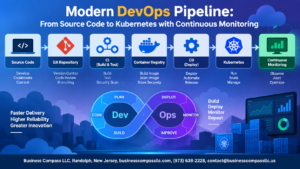
Integrated CI/CD Pipelines Streamlining Application Deployment Processes
AWS has completely transformed how development teams approach continuous integration and deployment with their latest pipeline offerings. The new AWS CodeCatalyst Enterprise introduces one-click deployment orchestration that connects directly to your existing version control systems, whether you’re using GitHub, GitLab, or AWS CodeCommit.
What makes this exciting is the intelligent pipeline optimization that learns from your deployment patterns. The system automatically suggests bottleneck fixes and can even predict potential failures before they happen. Teams are seeing deployment frequency increase by 40% while reducing rollback incidents by 60%.
The standout feature is the unified dashboard that gives CTOs real-time visibility across all projects. You can track deployment velocity, success rates, and team productivity metrics without jumping between different tools. The integration with AWS Lambda means your pipelines can scale instantly during high-traffic deployment windows.
| Feature | Traditional CI/CD | AWS CodeCatalyst Enterprise |
|---|---|---|
| Setup Time | 2-4 weeks | 30 minutes |
| Pipeline Optimization | Manual | AI-powered |
| Cross-project Visibility | Limited | Complete |
| Scaling | Pre-provisioned | Auto-scaling |
Advanced Monitoring and Observability Platforms Preventing System Failures
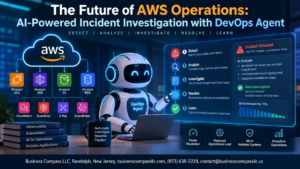
Amazon CloudWatch X-Ray Pro takes observability to the next level with predictive failure detection. Instead of waiting for things to break, the platform uses machine learning models trained on millions of AWS workloads to spot trouble before it impacts users.
The distributed tracing capabilities now extend beyond AWS services to third-party APIs and on-premises systems. This means you get complete end-to-end visibility of user requests, even when they travel through complex microservices architectures spanning multiple cloud providers.
Real-time anomaly detection has become incredibly sophisticated. The system can differentiate between normal traffic spikes and potential DDoS attacks, seasonal patterns versus actual performance degradation, and legitimate user behavior from bot activity. When issues are detected, automated remediation workflows can trigger scaling events, restart unhealthy containers, or route traffic away from problematic regions.
The new Application Performance Intelligence feature creates detailed user journey maps, showing exactly where customers drop off and why. This goes beyond traditional metrics to provide business context for technical issues.
Collaborative Development Environments Supporting Remote Team Productivity
AWS Cloud9 Teams has evolved into a comprehensive collaborative platform that rivals traditional IDEs while offering cloud-native advantages. Multiple developers can work simultaneously in shared environments with real-time code synchronization and conflict resolution.
The platform now includes AI-powered code completion that understands your specific codebase context, not just generic programming patterns. It learns from your team’s coding style and suggests improvements based on established patterns within your organization.
Virtual pair programming sessions work seamlessly across time zones with built-in video chat and screen sharing. Code reviews happen directly in the environment with threaded discussions and inline comments that persist with the code changes.
Resource sharing has become effortless – teams can spin up identical development environments in seconds, complete with all dependencies and configurations. This eliminates the “works on my machine” problem and makes onboarding new developers much faster.
Environment templates allow senior developers to create standardized setups that junior team members can use immediately. These templates include security configurations, approved libraries, and coding standards enforcement, ensuring consistency across all development work.
Innovative Container and Orchestration Services Simplify Modern Applications
Managed Kubernetes platforms eliminating cluster management complexity
Amazon’s latest container orchestration services announcements at AWS re:Invent 2025 bring game-changing simplifications to Kubernetes operations. The enhanced Amazon EKS service now includes automated cluster provisioning with zero-touch configuration, removing the traditional pain points that have kept many CTOs awake at night.
The new EKS Auto-Scale Intelligence uses machine learning to predict workload patterns and automatically adjusts node groups before traffic spikes hit. This predictive scaling eliminates the guesswork around capacity planning while cutting costs by up to 40%. Teams can now deploy production-ready clusters in under five minutes compared to the previous multi-hour setup processes.
Worker node management becomes completely hands-off with the introduction of EKS Managed Node Groups 2.0. The platform automatically handles OS patching, security updates, and node replacement without any service disruption. CTOs no longer need dedicated teams just to babysit infrastructure.
Serverless container solutions reducing operational overhead
AWS Fargate receives major upgrades that push serverless computing architecture boundaries further than ever before. Fargate Spot instances now support containerized workloads with 90% cost savings for fault-tolerant applications, making batch processing and development environments incredibly affordable.
Cold start times drop to under 200 milliseconds with the new Fargate Express launch type. This breakthrough means containerized APIs can compete directly with Lambda functions for latency-sensitive applications. Memory allocation becomes more granular, allowing containers to request exactly the resources they need rather than overpaying for predefined tiers.
The integration with AWS App Runner extends to support multi-container applications, enabling teams to deploy complex microservices architectures without managing any infrastructure. Source-to-container deployment pipelines automatically handle security scanning, image optimization, and blue-green deployments.
Multi-cloud container deployment strategies ensuring application portability
Container portability gets a major boost with AWS’s new Cross-Cloud Container Bridge. This service enables seamless deployment of the same container images across AWS, Azure, and Google Cloud without vendor lock-in concerns. CTOs can now implement true multi-cloud strategies while maintaining consistent deployment patterns.
The new AWS Container Registry Federation automatically syncs container images across multiple cloud providers and on-premises registries. Teams maintain a single source of truth for their container artifacts while ensuring availability across all deployment targets.
Kubernetes manifests become cloud-agnostic through intelligent translation layers that automatically adjust cloud-specific configurations. Load balancers, storage classes, and networking policies adapt automatically to each cloud provider’s native services while preserving application functionality.
Enhanced container security scanning preventing vulnerabilities in production
Security scanning reaches new depths with Amazon Inspector’s container-native capabilities. Real-time vulnerability detection now occurs at the kernel level within running containers, catching zero-day exploits that traditional image scanning misses.
The new Security Compliance Dashboard provides instant visibility into container security posture across entire organizations. Automated remediation workflows can quarantine vulnerable containers and trigger rebuilds from patched base images without human intervention.
Runtime behavior analysis uses AI to establish baseline activity patterns for each container type. Anomalous behavior triggers immediate alerts and can automatically isolate suspicious containers before they compromise other workloads. This approach catches advanced persistent threats that bypass traditional perimeter security.
Advanced Analytics and Business Intelligence Platforms Drive Data-Driven Decisions

Real-time dashboard creation tools providing instant business insights
AWS has rolled out cutting-edge dashboard creation tools that transform raw data into actionable insights within seconds. These new platforms eliminate the traditional lag between data collection and visualization, allowing CTOs to monitor critical business metrics as they happen. The enhanced QuickSight capabilities now support real-time streaming from multiple data sources simultaneously, including IoT sensors, transaction systems, and customer interaction platforms.
The standout feature is the drag-and-drop interface that lets even non-technical team members build sophisticated dashboards without writing code. Executive teams can now track KPIs, sales performance, and operational metrics through customizable widgets that update automatically. The platform’s smart alerting system sends notifications when metrics cross predefined thresholds, enabling immediate response to market changes or operational issues.
Integration with existing AWS services creates seamless data pipelines from collection to visualization. Organizations report reducing their time-to-insight from hours to minutes, fundamentally changing how quickly they can adapt to market conditions and customer needs.
Predictive analytics services forecasting market trends and customer behavior
The latest AWS analytics business intelligence offerings include sophisticated machine learning models that predict future outcomes with remarkable accuracy. These services analyze historical patterns, seasonal trends, and external market factors to generate forecasts that help CTOs make informed strategic decisions about resource allocation, product development, and market expansion.
Customer behavior prediction models now incorporate real-time interaction data, purchase history, and demographic information to identify potential churn risks and upselling opportunities. The platform automatically segments customers based on behavioral patterns and suggests personalized engagement strategies that increase retention rates by up to 40%.
Market trend forecasting capabilities extend beyond traditional sales data to include social media sentiment, economic indicators, and competitive intelligence. These comprehensive models help organizations anticipate market shifts before they become apparent to competitors, providing crucial first-mover advantages in rapidly changing industries.
Self-service data exploration capabilities empowering business users
Business teams can now explore complex datasets without depending on IT or data science teams for every query. The new self-service tools feature natural language processing that converts plain English questions into SQL queries, making data exploration accessible to users across all skill levels. Marketing managers can analyze campaign performance, sales teams can identify high-value prospects, and operations teams can optimize workflows using intuitive point-and-click interfaces.
The platform includes automated data quality checks and governance controls that prevent users from accidentally accessing sensitive information or drawing conclusions from incomplete datasets. Smart suggestions guide users toward relevant data sources and visualization options based on their roles and previous queries.
Pre-built connectors support integration with popular business applications like Salesforce, HubSpot, and financial management systems, creating a unified view of organizational data that was previously siloed across departments. This democratization of data access accelerates decision-making across the entire organization while maintaining security and compliance standards.
Strategic Cost Optimization and Resource Management Tools Maximize ROI

Intelligent Resource Allocation Algorithms Reducing Cloud Spending Waste
AWS re:Invent 2025 introduced groundbreaking intelligent resource allocation algorithms that automatically identify and eliminate cloud spending waste across enterprise environments. These advanced algorithms analyze usage patterns, application demands, and performance metrics in real-time to right-size instances and terminate idle resources. The new AI-powered optimization engine can reduce overall cloud costs by 30-45% without compromising performance.
The system continuously monitors CPU utilization, memory consumption, and network traffic to recommend optimal instance types and configurations. When workloads shift or applications scale down, the algorithms automatically suggest downsizing opportunities or instance family migrations. This proactive approach prevents the common scenario where development teams spin up resources but forget to optimize or decommission them.
Enterprise customers benefit from predictive scaling that anticipates resource needs based on historical data and business patterns. The algorithms learn from seasonal fluctuations, marketing campaigns, and product launches to pre-allocate resources efficiently. This intelligent forecasting eliminates both over-provisioning waste and performance bottlenecks during peak demand periods.
Automated Cost Monitoring Systems Providing Real-Time Budget Alerts
The enhanced cost monitoring systems deliver unprecedented visibility into AWS spending with granular real-time alerts and customizable budget thresholds. CTOs can now set department-specific budgets, project-based spending limits, and service-category constraints that trigger immediate notifications when approached or exceeded.
Real-time cost tracking provides minute-by-minute spending updates across all AWS services, enabling teams to catch expensive mistakes before they impact monthly budgets. The system integrates with popular business intelligence tools and can send alerts through Slack, Microsoft Teams, or custom webhooks for immediate response.
Advanced anomaly detection identifies unusual spending patterns that might indicate misconfigured resources, security breaches, or runaway processes. The system establishes baseline spending patterns for each service and account, then flags deviations that exceed normal variance thresholds.
Reserved Instance Optimization Strategies Maximizing Long-Term Savings
AWS introduced sophisticated Reserved Instance (RI) optimization tools that analyze usage patterns to recommend the most cost-effective purchasing strategies. The new recommendation engine evaluates On-Demand usage across multiple accounts and regions to suggest optimal RI purchases that maximize savings potential.
Dynamic RI management automatically converts between instance types and availability zones to maintain maximum utilization rates. When application architectures change or workloads migrate, the system can exchange existing reservations for more suitable configurations without losing committed savings.
The optimization platform provides detailed ROI analysis for different commitment terms and payment options, helping finance teams make informed decisions about capacity planning and budget allocation. Three-year commitment strategies can deliver up to 72% savings compared to On-Demand pricing.
Multi-Account Billing Management Simplifying Enterprise Cost Allocation
Enterprise billing management received major enhancements for organizations operating complex multi-account AWS environments. The new consolidated billing dashboard provides unified cost visibility across hundreds or thousands of accounts while maintaining granular allocation tracking for accurate chargeback processes.
Automated cost allocation rules distribute shared services expenses across business units based on usage metrics, headcount, or custom formulas. This eliminates manual spreadsheet reconciliation and ensures accurate departmental billing. Integration with enterprise ERP systems streamlines monthly financial reporting and budget variance analysis.
The platform supports complex organizational hierarchies with nested cost centers and flexible tagging strategies. Finance teams can create custom cost allocation models that reflect their specific business structure and reporting requirements. Automated invoice generation and approval workflows reduce administrative overhead while maintaining financial control and compliance.

These groundbreaking announcements from AWS re:Invent 2025 represent a major shift in how enterprises approach cloud computing. From AI-powered operations to revolutionary serverless architectures, Amazon has delivered tools that address the most pressing challenges CTOs face today. The new database solutions, enhanced security features, and advanced analytics platforms create a comprehensive ecosystem that can transform how your organization operates and competes.
The real opportunity lies in how quickly you can evaluate and integrate these innovations into your technology strategy. Start by identifying which announcements align most closely with your current pain points – whether that’s optimizing costs, improving security, or accelerating development cycles. Don’t wait for competitors to gain the advantage. Begin planning your adoption roadmap now and consider running pilot projects with the most relevant services to your business goals.