


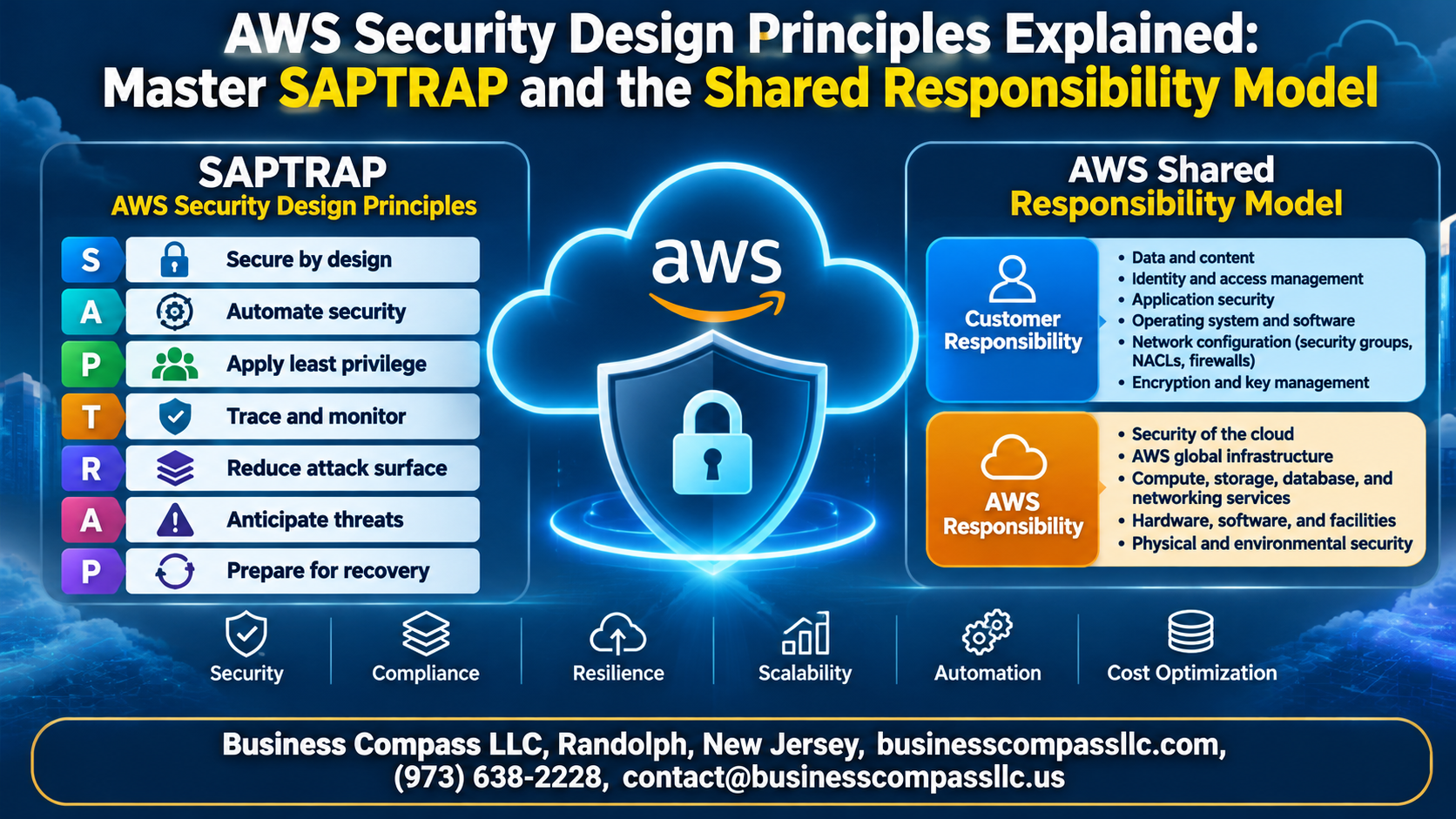
AWS Security Design Principles Explained: Master SAPTRAP and the Shared Responsibility Model
If you’re studying for an AWS certification or trying to build a more secure cloud environment, two frameworks come up constantly — SAPTRAP and the AWS shared responsibility model. Most people hear these terms, nod along, and then quietly Google them later. This guide skips the fluff and gets straight to what they actually mean and how they work together.
This one’s for cloud architects, DevOps engineers, and anyone working toward AWS certifications who wants a clear, practical breakdown — not just a glossary definition.
Here’s what you’ll walk away with:
- A solid understanding of the AWS shared responsibility model and where AWS’s job ends and yours begins
- A plain-English breakdown of SAPTRAP AWS principles — what each letter stands for and why it matters
- A practical look at how to apply both frameworks together to strengthen your real-world AWS security posture
No overcomplicated theory. Just the core ideas, explained clearly, so you can actually use them.
Understanding the AWS Shared Responsibility Model

What AWS Manages So You Don’t Have To
AWS owns the physical infrastructure—servers, networking, and hypervisors.
What You Are Responsible for Securing
You handle data, IAM, and app-level configs.
How the Model Shifts Based on Service Type
IaaS gives you more control; SaaS gives AWS more.
Common Misconceptions
Managed services ≠ fully secured.
Breaking Down SAPTRAP: What Each Letter Means

A. Scalability and How It Affects Your Security Architecture
Security controls must scale alongside your infrastructure automatically.
B. Automation as a Foundation for Consistent Security
Automate policy enforcement to eliminate human error.
C. Performance Efficiency Tied to Secure Design
Efficient architectures balance speed with strong AWS security design principles.
D. Trust and the Principle of Least Privilege
Grant only necessary permissions.
E. Reliability Through Redundant Security Controls
Layered controls keep systems resilient against failures.
Applying SAPTRAP Principles to Real AWS Environments

Designing IAM Policies That Reflect SAPTRAP Values
Apply least privilege by scoping permissions tightly to roles, not users.
Using AWS Native Tools to Automate Security Enforcement
- AWS Config, GuardDuty, and Security Hub continuously monitor drift.
Building Resilient Architectures That Minimize Attack Surface
Segment workloads across VPCs, enforce encryption, and restrict public exposure.
Aligning SAPTRAP With the Shared Responsibility Model

Where SAPTRAP Principles Reinforce Your Side of the Model
SAPTRAP directly maps to your customer-side responsibilities. AWS secures the cloud infrastructure, but principles like least privilege, encryption, and auditing fall squarely on you. Ignoring any one principle creates real exposure—gaps attackers actively exploit. Both frameworks working together close those holes cleanly.
Strengthening Your AWS Security Posture Using Both Frameworks

Conducting Security Reviews With SAPTRAP as Your Checklist
Run regular audits using SAPTRAP as your security checklist — it keeps reviews structured and nothing slips through.
Training Your Team on Shared Responsibility
Help your team clearly own their layer. When everyone knows what AWS handles versus what they control, gaps close fast.

Securing your AWS environment doesn’t have to feel overwhelming. By getting comfortable with the Shared Responsibility Model, you know exactly where AWS’s job ends and yours begins. And with SAPTRAP as your guiding framework, you have a practical, memorable way to think through every layer of your cloud security strategy — from scalability and automation to protection, resiliency, and beyond.
The real power comes from using both together. When you map SAPTRAP principles to your specific AWS responsibilities, you stop guessing and start building with intention. So take what you’ve learned here, revisit your current AWS setup, and look for the gaps. Small, deliberate improvements today can make a huge difference in how well your environment holds up tomorrow.