Understanding AI Agents: The Technology Powering Autonomous AI Systems
AI agents are everywhere right now — and for good reason. These autonomous AI systems can plan, decide, and act on their own without someone manually guiding every step. If you’re a developer, business leader, or tech enthusiast trying to cut through the hype and actually understand how AI agents work, this guide is for you.
Here’s what we’ll break down:
- What AI agents actually are and why they’re a big deal right now
- The core components that make AI agent technology tick
- The different types of AI agents you’ll likely encounter in the real world
By the end, you’ll have a clear, practical understanding of intelligent autonomous agents — what they can do today, where they fall short, and where the future of AI agents is headed.
What AI Agents Are and Why They Matter

The Core Definition of an AI Agent
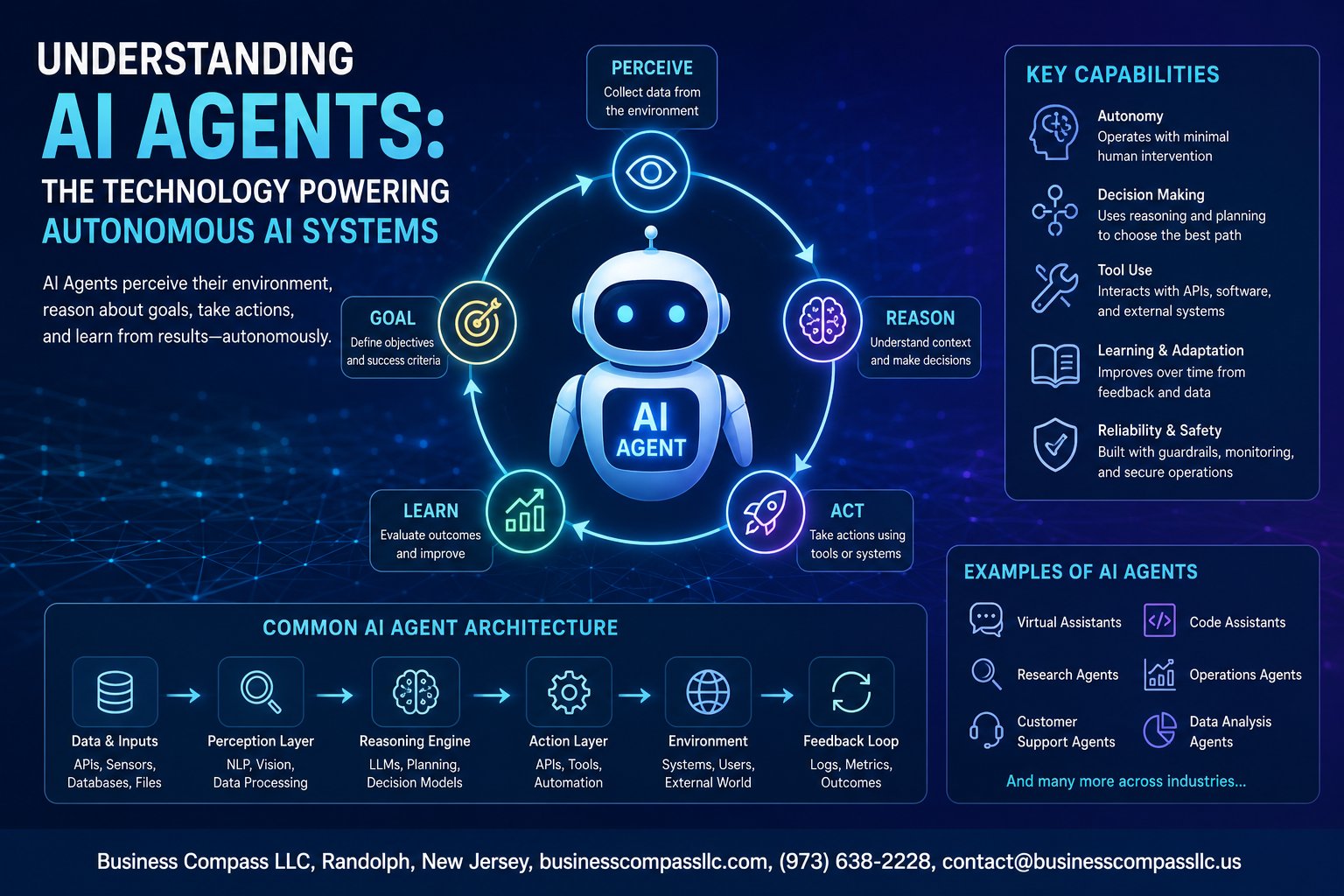
An AI agent is a software system that perceives its environment, makes decisions, and takes actions to achieve specific goals — all without someone holding its hand through every step. Think of it as a digital worker that can plan, reason, and execute tasks on its own.
How AI Agents Differ from Traditional AI Systems
Traditional AI systems are essentially reactive tools — you ask a question, they give an answer, and that’s the end of the interaction. AI agents are a completely different story:
- Traditional AI: Responds to a single prompt, waits for the next instruction
- AI agents: Set a goal, break it into steps, execute those steps, and adjust when things go sideways
- Traditional AI: No memory between interactions
- AI agents: Can retain context, learn from outcomes, and refine their approach over time
The biggest shift is autonomy. Autonomous AI systems don’t just answer — they act.
Why Businesses and Developers Are Embracing AI Agents
The appeal is pretty straightforward — AI agents can handle complex, multi-step workflows that would otherwise eat up hours of human time. Businesses are deploying intelligent autonomous agents to automate customer support, run data analysis pipelines, manage scheduling, and even write and test code. Developers love them because AI agent technology lets them build systems that scale without requiring constant human oversight, turning what used to take a team into something a single agent handles overnight.
The Key Components That Make AI Agents Work
Perception and Input Processing
AI agents take in information from the world around them — this could be text, images, sensor data, audio, or even live API feeds. Think of this as the agent’s senses. Without solid input processing, the agent is essentially flying blind, so this layer is critical to everything that follows.
Decision-Making and Reasoning Engines
This is the brain of the operation. AI agent technology relies on large language models or specialized reasoning systems to evaluate incoming data, weigh options, and decide what action makes the most sense. Many autonomous AI systems chain multiple reasoning steps together, almost like thinking out loud before acting.
Memory and Knowledge Storage
- Short-term memory holds context within a single conversation or task session
- Long-term memory lets the agent recall past interactions and learned preferences
- External knowledge bases give the agent access to facts beyond its training data
Self-learning AI systems get smarter over time precisely because of how well their memory architecture is designed.
Action Execution and Output Mechanisms
Once a decision is made, the agent needs to actually do something — send an email, run code, search the web, call an API, or generate a response. How AI agents work in practice comes down to how cleanly this execution layer connects intentions to real-world outcomes, with minimal errors and maximum reliability.
How AI Agents Operate Autonomously
The Perception-Reasoning-Action Cycle Explained
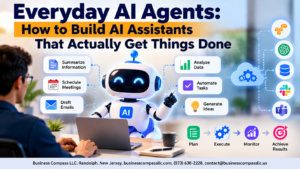
Autonomous AI systems don’t just react randomly — they follow a structured loop that keeps them grounded and effective. Here’s how that cycle actually breaks down:
- Perception: The agent pulls in data from its environment — this could be text, sensor readings, API responses, or user inputs.
- Reasoning: Using its underlying model, the agent interprets that data, weighs its options, and decides what move makes the most sense given its current goal.
- Action: It executes — whether that’s running a search, calling a tool, writing code, or sending a message.
This loop runs continuously, not just once. Each action changes the environment, which feeds back into the next round of perception.
How Agents Set and Pursue Goals Independently
What separates AI agents from basic chatbots is goal-directed behavior. When given a high-level objective, an agent breaks it down into smaller, manageable sub-tasks on its own. It prioritizes steps, sequences them logically, and adapts when something doesn’t go as planned — all without waiting for a human to spell out every move.
The Role of Feedback Loops in Continuous Improvement
Self-learning AI systems get sharper over time because feedback is baked into how they operate. Every outcome — successful or not — becomes a signal. The agent checks whether its action moved it closer to the goal, adjusts its approach, and tries again, creating a cycle of ongoing refinement.
The Different Types of AI Agents You Should Know

Reactive Agents and Their Practical Uses
Reactive agents are the simplest type of AI agents — they respond directly to what’s happening right now without storing memories or planning ahead. Think of a thermostat or a spam filter. These agents follow straightforward “if this, then that” logic, making them fast, reliable, and easy to deploy in environments where immediate responses matter more than deep thinking.
- Smart home devices that adjust lighting or temperature based on sensor readings
- Fraud detection systems that flag suspicious transactions in real time
- Game NPCs that react to player movements without complex planning
Goal-Based Agents and Strategic Decision Making
Goal-based agents go a step further by working backward from a desired outcome. Instead of just reacting, they ask, “What do I need to do to get there?” This makes them far more capable of handling complex, multi-step problems.
- Navigation apps that calculate the fastest route based on traffic conditions
- Scheduling tools that optimize calendar blocks around meeting priorities
- AI chess engines that plan several moves ahead to secure a win
Learning Agents That Improve Over Time
Self-learning AI systems are among the most exciting types of AI agents because they actually get better the more they operate. They collect feedback, adjust their internal models, and refine future decisions — all without a human rewriting their rules.
- Recommendation engines on streaming platforms that learn your taste over time
- Chatbots that improve response accuracy based on past conversations
- Predictive maintenance tools that learn equipment failure patterns
Multi-Agent Systems and Collaborative AI
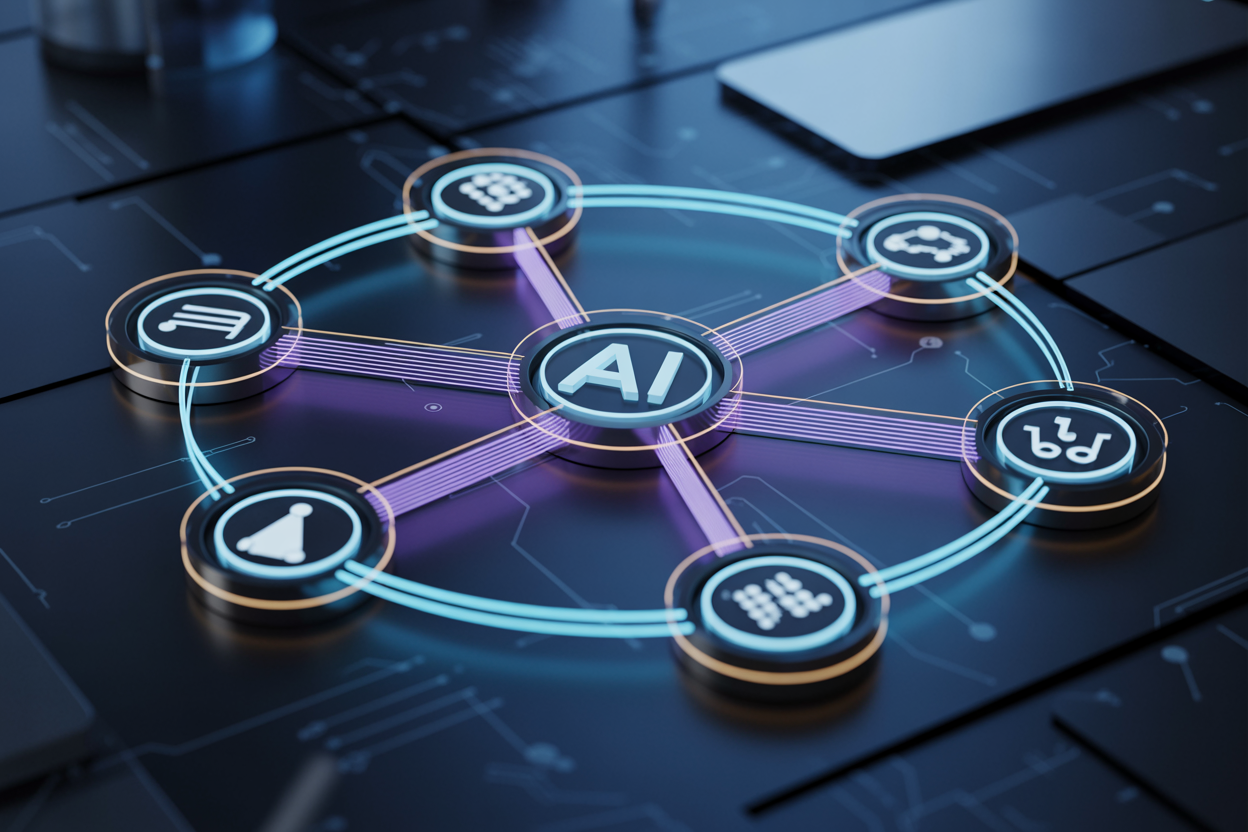
Multi-agent systems put multiple intelligent autonomous agents to work together, each handling a specific role while communicating and coordinating to achieve shared goals. The result is a level of problem-solving power no single agent could pull off alone.
- Supply chain networks where agents manage inventory, logistics, and demand forecasting simultaneously
- Autonomous vehicle fleets sharing road condition data in real time
- AI-driven financial markets where agents compete and cooperate to optimize trading strategies
Hybrid Agents Combining Multiple Approaches
Hybrid agents are exactly what they sound like — a blend of reactive, goal-based, and learning capabilities packed into one system. Most real-world AI agent technology today falls into this category because complex environments rarely fit neatly into a single approach.
- Virtual assistants like Siri or Google Assistant that react instantly, pursue goals, and learn preferences over time
- Autonomous drones that respond to obstacles, follow mission objectives, and adapt to changing terrain
- Customer service AI that handles simple queries reactively while escalating complex cases using goal-based reasoning
Real-World Applications Driving Value Today
AI Agents in Customer Service and Support
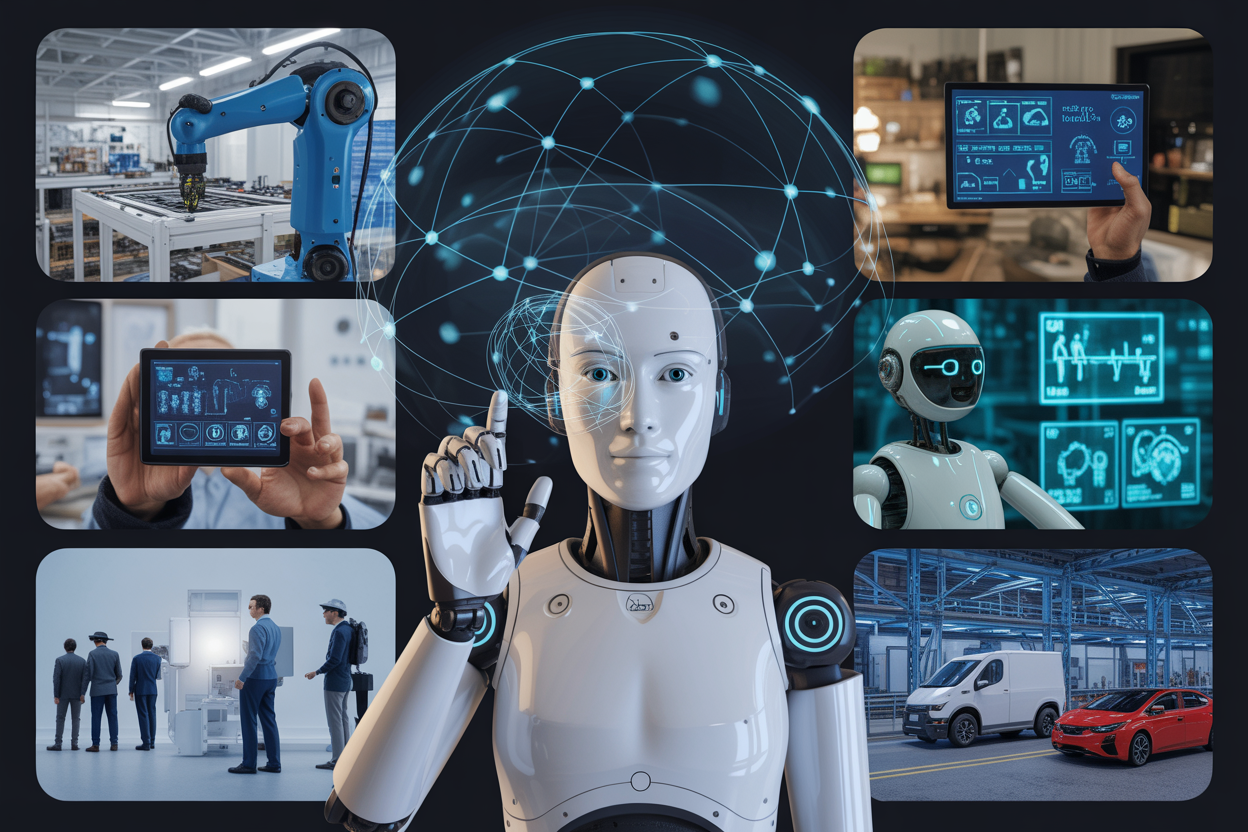
AI agent applications are reshaping customer service in a big way. Instead of waiting on hold for 20 minutes, customers now get instant, accurate help around the clock. These autonomous AI systems handle thousands of conversations at once, resolving common issues without any human stepping in.
- Ticket routing and prioritization based on urgency and customer history
- Instant troubleshooting for billing, account access, and product questions
- Seamless handoffs to human agents when situations get complex
- Multilingual support without needing separate regional teams
Transforming Software Development and Automation
Developers are leaning on AI agent technology to handle repetitive coding tasks, catch bugs early, and even write boilerplate code from scratch. Tools like GitHub Copilot and autonomous coding agents can review pull requests, suggest fixes, and run test suites, cutting development cycles dramatically.
- Automated code review and bug detection
- AI-generated unit tests and documentation
- End-to-end pipeline automation without manual triggers
Accelerating Research and Data Analysis
Intelligent autonomous agents are doing in hours what used to take research teams weeks. They crawl through massive datasets, identify patterns, and surface insights that humans might overlook entirely.
- Literature review automation across thousands of academic papers
- Real-time market trend detection from unstructured data
- Drug discovery support by modeling molecular interactions
Powering Personalized User Experiences
Self-learning AI systems track behavior, preferences, and context to serve up experiences that feel genuinely tailored rather than generic. Streaming platforms, e-commerce sites, and learning apps all rely on AI agents to keep users engaged and coming back.
- Dynamic content recommendations based on real-time behavior
- Adaptive learning paths in educational platforms
- Hyper-personalized product suggestions that improve with every interaction
The Challenges and Limitations Worth Understanding

Reliability and Unpredictable Behavior Risks
Autonomous AI systems can go off the rails in ways that are genuinely hard to predict. Even well-designed AI agents sometimes make decisions that look completely logical from their perspective but create real problems in practice. A small error in reasoning can cascade into a chain of bad actions — especially when the agent is operating without human oversight in the loop.
- Hallucination carry-over: AI agents built on large language models can confidently act on incorrect information, turning a reasoning mistake into a real-world consequence.
- Task drift: Without tight guardrails, agents may wander away from their original goal, optimizing for something slightly different than what was intended.
- Compounding errors: Each step in an autonomous workflow depends on the last — one shaky decision can snowball fast.
Security Vulnerabilities in Autonomous Systems
Giving an AI agent access to tools, APIs, databases, and external systems opens up a serious attack surface. Bad actors have already figured out that prompt injection — slipping malicious instructions into content the agent reads — can hijack its behavior entirely. When self-learning AI systems can browse the web, execute code, or send emails autonomously, the stakes get much higher.
- Prompt injection attacks: Hidden instructions in web pages or documents can redirect an agent’s actions without the user knowing.
- Privilege escalation: Agents with broad permissions become high-value targets — compromising one can unlock access to entire systems.
- Data leakage: Agents handling sensitive information may inadvertently expose it through poorly scoped tool access or logging.
Ethical Concerns Around Independent Decision Making
When AI agents start making calls that affect people’s lives — hiring decisions, loan approvals, medical triage — the question of accountability gets complicated fast. Who’s responsible when an autonomous AI system gets it wrong? Right now, there’s no clean answer, and that gap matters enormously.
- Bias amplification: Agents trained on flawed data can reinforce and scale discriminatory patterns without any human noticing in time.
- Lack of transparency: Many AI agent decisions happen inside black-box reasoning chains that even developers struggle to explain after the fact.
- Consent and autonomy: People interacting with AI agents often don’t know they’re dealing with one — raising real questions about informed consent.
What the Future of AI Agents Looks Like
Advances in Agent Reasoning and Planning Capabilities
AI agents are getting dramatically better at breaking down complex, multi-step problems without human hand-holding. Expect near-future agents to chain reasoning across longer time horizons, catching their own errors mid-task and self-correcting before things go sideways — a massive leap from today’s more brittle systems.
The Rise of Collaborative Multi-Agent Ecosystems
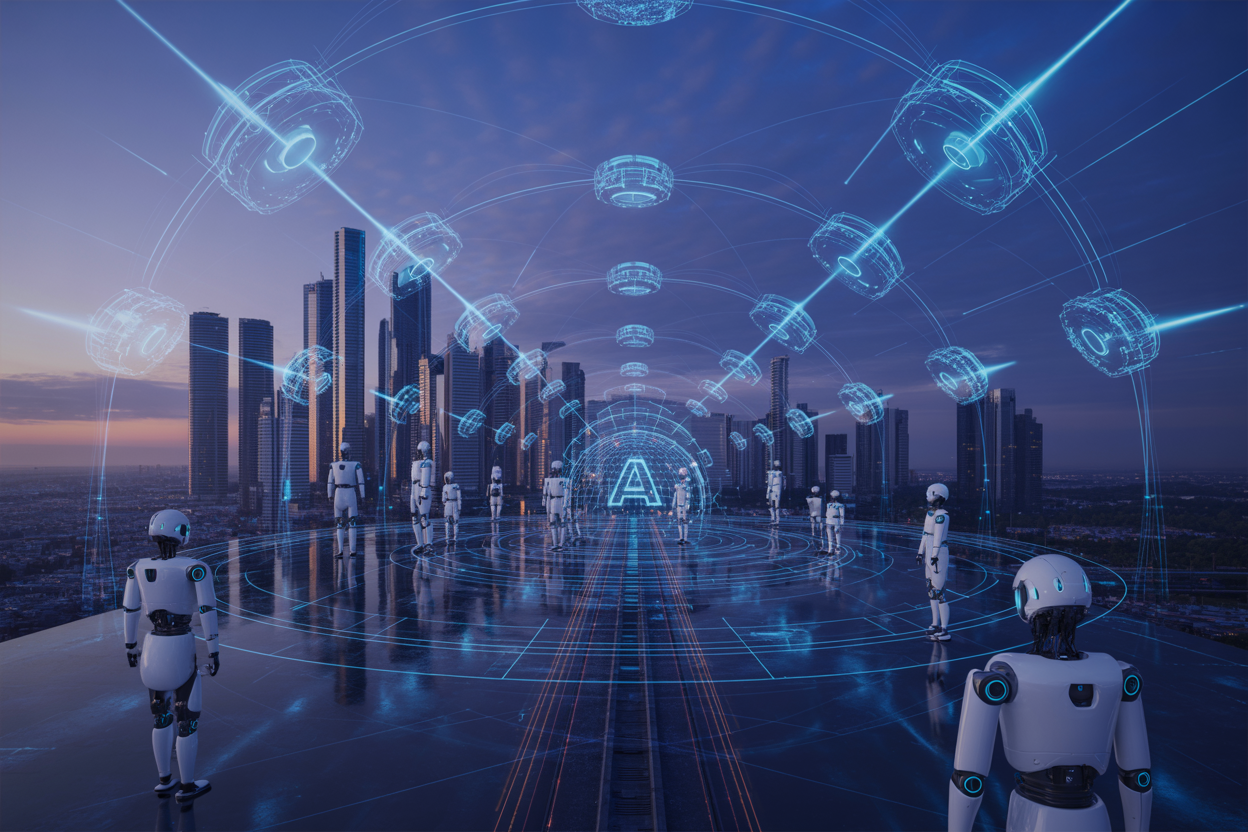
Rather than one autonomous AI system doing everything alone, the real power will come from networks of specialized agents working together — one researching, one executing, one verifying. These collaborative multi-agent setups will tackle goals that no single agent could realistically handle, making the technology exponentially more capable across industries.
How AI Agents Will Reshape Work and Industry
- Knowledge work — drafting, analysis, and research get handled end-to-end by intelligent autonomous agents, freeing humans for higher-judgment decisions
- Healthcare — AI agents monitor patient data continuously and flag risks proactively
- Supply chain — self-learning AI systems adapt logistics in real time without waiting for human instructions
- Software development — agents write, test, and deploy code autonomously
The future of AI agents isn’t about replacing people wholesale — it’s about compressing the time between having a goal and actually achieving it.

AI agents are reshaping how we think about automation and intelligence. From understanding what they are and how their core components fit together, to seeing how they operate on their own, make decisions, and show up across industries — it’s clear this technology is moving fast and doing real work in the world right now. Yes, there are challenges and limitations to keep in mind, but the trajectory points toward systems that are only going to get smarter and more capable.
If you’re curious about where AI is headed, keeping an eye on AI agents is a great place to start. Whether you’re a business leader, a developer, or just someone who wants to stay informed, understanding this technology puts you ahead of the curve. Start exploring how AI agents could fit into your world — because this isn’t a distant future concept. It’s already here.