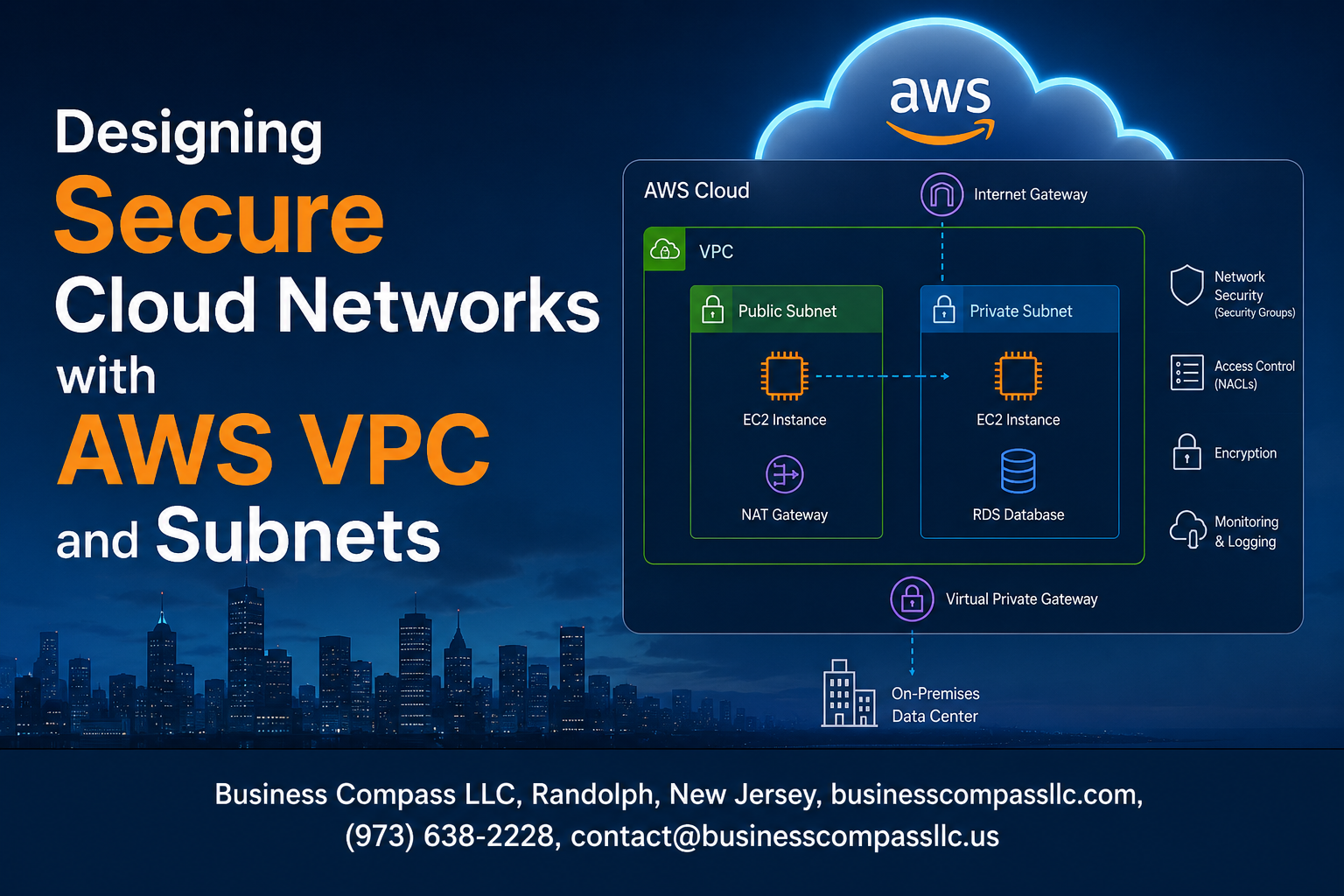
Designing Secure Cloud Networks with AWS VPC and Subnets
Building a secure cloud infrastructure starts with getting your network foundation right. This guide walks you through AWS VPC security and cloud network design strategies that protect your applications while keeping them accessible to legitimate users.
This resource is designed for cloud architects, DevOps engineers, and security professionals who need practical knowledge about secure subnet architecture and AWS network security best practices. Whether you’re migrating to AWS or hardening an existing setup, you’ll find actionable steps to build networks that scale securely.
We’ll cover how to structure your VPC subnet design patterns for optimal security isolation, configure VPC security groups configuration and network access controls that actually work, and set up AWS security monitoring systems that catch threats before they become problems. You’ll also learn proven techniques for balancing network performance with security requirements, plus troubleshooting methods for common secure cloud networking challenges.
By the end, you’ll have a clear roadmap for implementing AWS network access control policies and cloud infrastructure security measures that protect your resources without slowing down your team.
Understanding AWS VPC Fundamentals for Network Security

Define Virtual Private Cloud benefits for enterprise security
Amazon Web Services VPC creates an isolated network environment within the AWS cloud, acting as your private data center with complete control over network configuration. Organizations gain enhanced security through logical separation from other AWS accounts, customizable IP address ranges, and granular access controls. VPC security groups and network ACLs provide multiple layers of protection, while private subnets keep sensitive resources completely isolated from internet traffic. This foundation enables enterprises to meet compliance requirements while maintaining the flexibility and scalability of cloud infrastructure.
Explore isolation capabilities that protect your infrastructure
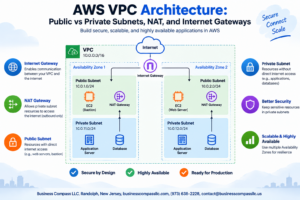
AWS VPC isolation operates at multiple levels to safeguard your cloud network design. Each VPC exists as a completely separate network boundary, preventing unauthorized access from other AWS accounts or regions. Subnets within your VPC can be configured as public or private, with private subnets offering complete isolation from direct internet access. Security groups act as virtual firewalls for individual instances, while network access control lists provide subnet-level filtering. Route tables control traffic flow between subnets, and NAT gateways enable secure outbound connectivity for private resources without exposing them to inbound traffic.
Master IP address planning for scalable network design
Effective IP address planning forms the backbone of secure subnet architecture and future growth capacity. Choose CIDR blocks that accommodate current requirements while leaving room for expansion – typically starting with /16 networks for large deployments or /20 for smaller environments. Reserve IP ranges for different tiers like web, application, and database layers, ensuring proper segmentation. Plan for multiple availability zones by allocating sufficient address space across regions. Avoid overlapping with on-premises networks if you plan hybrid connectivity, and consider using RFC 1918 private ranges (10.0.0.0/8, 172.16.0.0/12, 192.168.0.0/16) for maximum compatibility and security.
Identify key VPC components that enhance security posture
Core VPC components work together to create comprehensive AWS network security best practices. Internet gateways provide controlled access to public resources, while NAT gateways enable secure outbound connectivity for private subnets. VPC endpoints allow private access to AWS services without internet routing, reducing attack surface. Route tables define traffic paths and can block unwanted connections. VPC Flow Logs capture network traffic for security monitoring and compliance auditing. Network Load Balancers distribute traffic while maintaining security boundaries. VPC peering enables secure communication between networks, and Transit Gateway simplifies complex multi-VPC architectures while maintaining isolation and security controls.
Building Robust Subnet Architecture for Maximum Protection

Design public and private subnet strategies for multi-tier applications
Creating a solid subnet strategy starts with separating your application layers across public and private subnets. Place web servers in public subnets with internet access, while keeping application servers and databases in private subnets protected from direct internet exposure. This multi-tier approach follows AWS network security best practices by creating natural barriers between components. Route database traffic through application servers only, and use NAT gateways for outbound connections from private subnets. Configure security groups to allow traffic between specific tiers while blocking unauthorized access patterns.
Implement subnet segmentation to minimize attack surfaces
Subnet segmentation creates isolated network zones that limit potential breach impact across your secure subnet architecture. Dedicate separate subnets for different environments like development, staging, and production to prevent cross-contamination. Use micro-segmentation for sensitive workloads by creating dedicated subnets for payment processing or customer data handling. Apply the principle of least privilege through subnet-level routing rules and network ACLs. This VPC subnet design pattern ensures that compromised resources can’t easily pivot to other network segments, significantly reducing your overall attack surface.
Configure availability zone distribution for high resilience
Distribute your subnet architecture across multiple availability zones to achieve maximum fault tolerance and disaster recovery capabilities. Create matching subnet pairs in at least two AZs – one public and one private subnet per zone to maintain consistent network topology. This approach protects against single-zone failures while maintaining application availability. Deploy load balancers across multiple AZ subnets to distribute traffic evenly. Configure automated failover mechanisms that can redirect traffic to healthy subnets when zone-level issues occur, ensuring your cloud infrastructure security remains intact during outages.
Implementing Advanced Security Controls and Access Management

Configure Network Access Control Lists for granular traffic filtering
Network Access Control Lists (NACLs) serve as your first line of defense at the subnet level, operating as stateless firewalls that evaluate traffic based on rules you define. Unlike Security Groups, NACLs examine both inbound and outbound traffic separately, requiring explicit allow rules for return traffic. Create custom NACLs with numbered rules processed sequentially – lower numbers take precedence. Best practice involves denying all traffic by default and allowing only necessary protocols, ports, and IP ranges. For example, web servers might allow HTTP/HTTPS traffic (ports 80/443) while blocking database ports. Remember that NACLs apply to all instances within a subnet, making them perfect for broad network segmentation policies.
Deploy Security Groups as virtual firewalls for instance protection
Security Groups act as virtual firewalls that control traffic at the instance level, providing stateful filtering where allowed inbound traffic automatically permits corresponding outbound responses. Each EC2 instance can have multiple Security Groups attached, with rules evaluated collectively using a “least restrictive” approach. Design groups around specific functions – web servers, application tiers, databases – rather than creating overly permissive rules. Reference other Security Groups in rules instead of IP addresses when possible, creating dynamic relationships that adapt as instances scale. Default deny policies ensure only explicitly allowed traffic passes through. AWS VPC security groups configuration becomes more manageable when you establish naming conventions and document rule purposes for team collaboration.
Establish VPC Flow Logs for comprehensive network monitoring
VPC Flow Logs capture metadata about IP traffic flowing through your network interfaces, providing visibility into connection patterns, rejected traffic, and potential security threats. Enable Flow Logs at VPC, subnet, or individual network interface levels depending on your monitoring requirements. Logs capture source/destination IPs, ports, protocols, packet counts, and accept/reject decisions. Store data in CloudWatch Logs or S3 for analysis using tools like Amazon Athena or third-party SIEM solutions. Monitor for unusual traffic patterns, connection attempts to unauthorized ports, or traffic from suspicious IP addresses. Flow Logs help with compliance reporting and network troubleshooting while supporting AWS network security best practices for threat detection and forensic analysis.
Set up IAM policies that govern VPC resource access
Identity and Access Management policies control who can modify your VPC infrastructure, preventing unauthorized changes to critical network configurations. Create specific policies that grant minimum necessary permissions for VPC operations – network administrators might need full VPC access while developers only require read permissions. Use resource-level permissions to restrict access to specific VPCs, subnets, or Security Groups. Implement condition keys to enforce additional constraints like IP address restrictions or MFA requirements for sensitive operations. Separate policies for different roles: infrastructure teams managing VPCs, application teams configuring Security Groups, and monitoring teams accessing Flow Logs. Regular policy reviews ensure permissions align with current responsibilities and maintain secure cloud networking principles.
Enable AWS CloudTrail for complete audit trails
CloudTrail provides comprehensive logging of API calls made to VPC services, creating an immutable audit trail of who performed what actions and when. Enable CloudTrail across all AWS regions to capture VPC-related activities including Security Group modifications, NACL changes, subnet creations, and route table updates. Configure log file integrity validation to detect unauthorized modifications to audit logs. Store CloudTrail logs in dedicated S3 buckets with appropriate access controls and lifecycle policies. Set up CloudWatch Events to trigger alerts for critical VPC changes like Security Group rule modifications or VPC deletions. This audit capability supports compliance requirements while providing forensic data for security incident investigations and change management processes essential for cloud infrastructure security.
Optimizing Network Performance While Maintaining Security Standards

Leverage VPC Peering for secure inter-network communication
VPC peering creates encrypted connections between virtual networks while maintaining network isolation. Route traffic directly between VPCs without exposing data to the internet, reducing latency and enhancing AWS VPC security. Configure route tables carefully to control which subnets communicate across peered networks, preventing unauthorized access while enabling necessary resource sharing.
Configure NAT Gateways for secure outbound internet access
NAT Gateways provide managed outbound internet connectivity for private subnets without exposing internal resources to inbound traffic. Deploy highly available NAT Gateways across multiple availability zones to ensure redundancy. This AWS network security best practice keeps sensitive workloads isolated while allowing software updates, API calls, and external integrations to function properly.
Implement VPC Endpoints to reduce data transfer costs
VPC Endpoints enable private connections to AWS services without routing traffic through internet gateways. Gateway endpoints for S3 and DynamoDB eliminate data transfer charges, while interface endpoints connect privately to other services. This secure cloud networking approach reduces costs and improves performance by keeping traffic within AWS backbone infrastructure.
Deploy Transit Gateway for scalable multi-VPC connectivity
Transit Gateway simplifies complex network topologies by acting as a central hub for multiple VPCs, VPNs, and Direct Connect connections. Implement route tables and security group rules to control inter-VPC communication patterns. This cloud network design scales efficiently as your infrastructure grows, supporting thousands of connections while maintaining granular access controls and monitoring capabilities.
Monitoring and Troubleshooting Your Secure Cloud Network
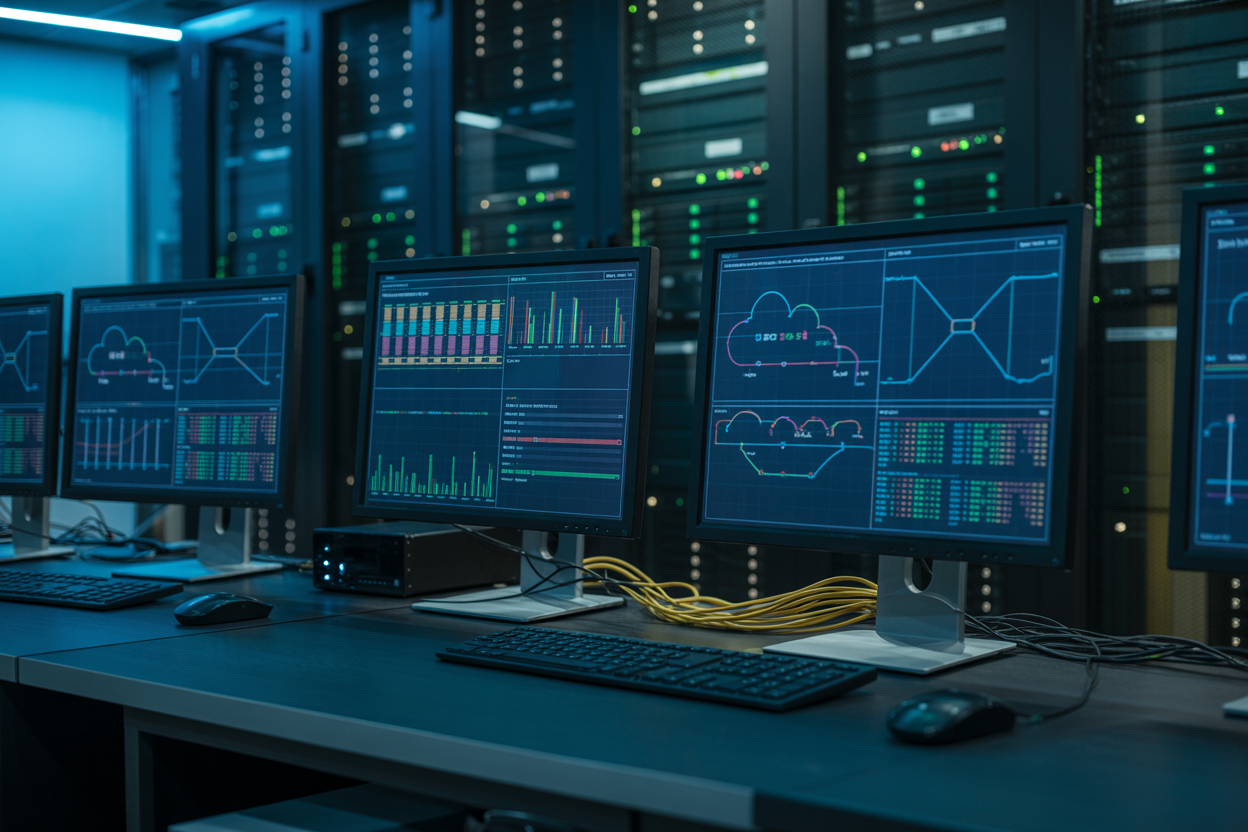
Set up CloudWatch metrics for proactive network health monitoring
CloudWatch provides comprehensive visibility into your AWS VPC security and network performance through custom metrics and dashboards. Monitor key indicators like VPC Flow Logs, NAT Gateway bandwidth utilization, and security group rule violations to detect potential issues before they escalate. Create custom dashboards that track network latency, packet loss, and connection success rates across your secure subnet architecture. Set up detailed monitoring for VPN connections, Direct Connect links, and inter-subnet traffic patterns to maintain optimal AWS network security best practices.
Configure automated alerts for security breach detection
Automated alerting systems form the backbone of effective AWS security monitoring for cloud network design. Configure CloudWatch alarms that trigger when suspicious traffic patterns emerge, such as unusual data transfer volumes or connections from unauthorized IP ranges. Implement SNS notifications for immediate response to security events like failed authentication attempts, unexpected port scanning, or VPC security groups configuration changes. Create threshold-based alerts for bandwidth spikes, connection timeouts, and resource exhaustion that could indicate DDoS attacks or compromised instances within your secure cloud networking environment.
Establish incident response procedures for network anomalies
Developing structured incident response procedures ensures rapid containment of security threats in your AWS VPC security infrastructure. Document escalation paths for different severity levels, from minor configuration drift to major security breaches affecting your cloud infrastructure security. Create runbooks for common scenarios like compromised instances, network intrusion attempts, and AWS network access control violations. Establish communication protocols between security teams, network administrators, and stakeholders during incidents. Regular tabletop exercises help validate response procedures and improve team readiness for real-world security events.

AWS VPC and subnets give you the building blocks to create a secure, well-organized cloud network that protects your applications and data. By setting up your VPC properly, designing your subnets with security in mind, and adding the right access controls, you create multiple layers of protection that keep threats at bay. Smart monitoring helps you catch issues early and keeps everything running smoothly.
The best part about cloud networking is that you can start simple and grow your setup as your needs change. Take time to plan your network architecture upfront, test your security controls regularly, and don’t forget to document your setup for your team. Your future self will thank you when you need to make changes or troubleshoot problems down the road.