Amazon Cognito authentication can feel overwhelming when you’re trying to build secure user login systems for your web or mobile apps. This guide breaks down the complex world of AWS authentication service into digestible pieces that actually make sense.
Who this is for: Developers and technical teams working with AWS who need to implement user authentication, whether you’re building your first app or scaling an existing system.
You’ll learn how JWT tokens explained in simple terms can protect your users’ data and sessions. We’ll also walk through OAuth 2.0 integration so you can let users sign in with Google, Facebook, or other third-party authentication providers without the headaches.
Finally, you’ll discover how Cognito User Pools work as the backbone of user identity management, giving you everything from password policies to user registration flows. By the end, you’ll have the knowledge to implement Cognito security best practices that keep your users safe and your apps running smoothly.
Master Amazon Cognito Fundamentals for Secure User Management

Discover what Amazon Cognito offers for modern applications
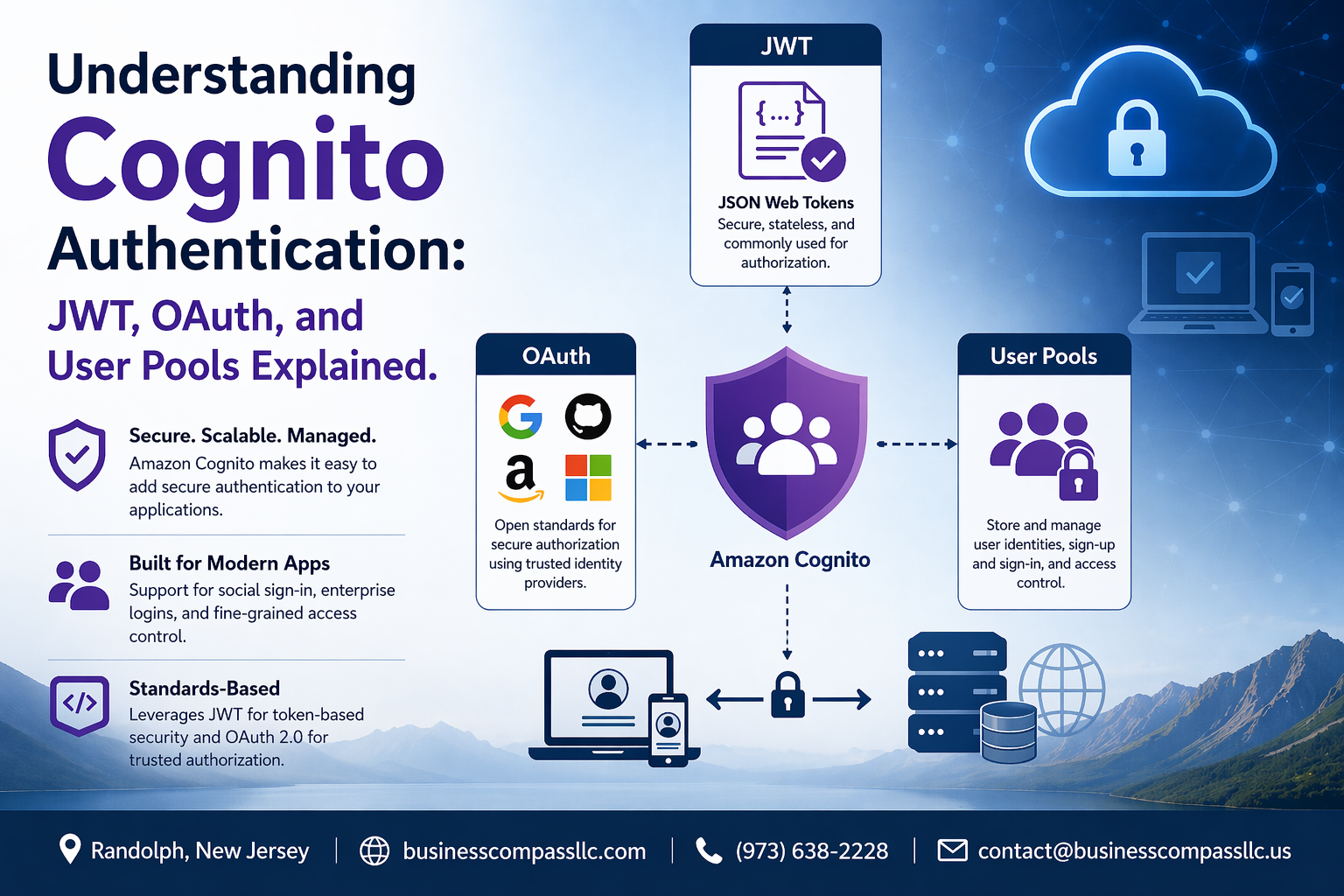
Amazon Cognito authentication serves as AWS’s comprehensive identity management solution, handling millions of users across web and mobile applications. This managed service eliminates the complexity of building custom authentication systems from scratch, offering features like user registration, sign-in, and access control out of the box.
The platform supports multiple authentication methods including social logins, enterprise identity providers, and custom user databases. With built-in security features like multi-factor authentication and advanced security monitoring, Cognito provides enterprise-grade protection while maintaining developer-friendly APIs for quick implementation.
Learn the core components that power scalable authentication
User Pools and Identity Pools form the backbone of Cognito’s architecture, each serving distinct purposes in the authentication flow. User Pools manage user registration and authentication, generating JWT tokens for secure session management, while Identity Pools provide temporary AWS credentials for accessing other AWS services.
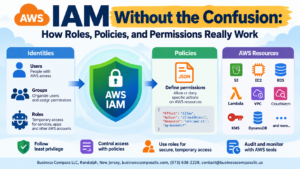
The service integrates seamlessly with AWS IAM authentication, enabling fine-grained access control across your entire infrastructure. This dual-component approach allows applications to scale from hundreds to millions of users without compromising security or performance.
Understand the benefits of managed identity services
Managed identity services reduce development overhead by handling complex security protocols automatically. Teams can focus on core business logic instead of maintaining authentication infrastructure, password policies, and security compliance requirements that constantly evolve with regulatory changes.
Cost efficiency becomes apparent as applications scale, since you only pay for active users rather than maintaining dedicated authentication servers. The service provides automatic scaling, global availability, and built-in disaster recovery without requiring additional configuration or management effort.
Explore integration possibilities with existing systems
Cognito supports SAML 2.0 and OAuth 2.0 integration, making it compatible with existing enterprise identity providers like Active Directory, Okta, and Google Workspace. Custom authentication flows can be implemented using Lambda triggers, allowing businesses to maintain their unique user experience requirements.
The service offers SDKs for popular programming languages and frameworks, enabling rapid integration across different technology stacks. API Gateway integration provides additional security layers, while CloudFormation templates automate deployment across multiple environments for consistent configuration management.
Decode JWT Tokens for Bulletproof Authentication

Grasp JWT structure and token-based security principles
JSON Web Tokens work like digital passports that prove user identity without storing session data on servers. Amazon Cognito authentication creates these self-contained tokens with three parts: header, payload, and signature. The header specifies the algorithm, payload contains user claims and permissions, while the signature ensures nobody tampered with the token.
JWT tokens explained simply: they carry encrypted user information that applications can verify independently. This stateless approach means your servers don’t need to remember who’s logged in, making scaling easier and reducing database lookups for every request.
Implement secure token validation in your applications
Handle token expiration and refresh strategies effectively
Harness OAuth 2.0 for Seamless Third-Party Integrations

Navigate OAuth 2.0 flows for different application types
OAuth 2.0 offers several authorization flows tailored to specific application architectures. The Authorization Code flow works best for server-side applications where client secrets can be securely stored, while the Implicit flow suits single-page applications that run entirely in browsers. Public clients like mobile apps should use the Authorization Code with PKCE (Proof Key for Code Exchange) to prevent code interception attacks.
Each flow handles token exchange differently based on security requirements. Server-side apps can safely store refresh tokens for long-term access, whereas browser-based applications rely on shorter-lived access tokens. Amazon Cognito authentication seamlessly supports these patterns, automatically selecting appropriate flows based on your application configuration.
Configure social media login providers efficiently
Setting up social providers in Cognito User Pools requires careful attention to redirect URLs and application credentials. Each provider has specific requirements – Google needs OAuth client IDs, Facebook requires app secrets, and Apple demands team identifiers. The key is mapping user attributes consistently across providers to maintain unified user profiles.
Cognito handles the complexity of different provider APIs behind a standardized interface. Configure attribute mapping to ensure email, name, and other profile data flows correctly into your user pool regardless of the authentication source.
Secure API access with proper scope management
OAuth scopes define granular permissions for API access, acting as gatekeepers for sensitive resources. Design your scope strategy around the principle of least privilege – grant only the minimum permissions required for each client application. Common scopes include read access for basic profile data and write permissions for updating user information.
Cognito integrates with AWS IAM authentication to translate OAuth scopes into specific AWS resource permissions. This creates a powerful security model where JWT tokens carry both identity information and fine-grained authorization details for your backend services.
Troubleshoot common OAuth implementation challenges
Token expiration issues plague many OAuth implementations, especially when refresh token rotation isn’t handled properly. Monitor token lifetimes and implement automatic refresh logic before tokens expire. Invalid redirect URI errors often stem from mismatched URLs between your application and provider configuration – ensure exact matches including protocols and ports.
Cross-origin resource sharing (CORS) problems frequently appear in browser-based applications during the authorization flow. Configure your API endpoints to accept requests from your application domain, and verify that Cognito’s hosted UI URLs are properly whitelisted in your CORS policy.
Build Robust User Pools for Complete Identity Management

Design user registration and verification workflows
Amazon Cognito User Pools streamline user onboarding through configurable registration flows that automatically handle email and phone verification. You can customize sign-up forms to collect essential user attributes while implementing verification codes sent via SMS or email to confirm user identities before account activation.
Customize user attributes and profile management
Built-in standard attributes like email, phone number, and name work alongside custom attributes tailored to your application’s needs. Users can update their profiles through secure APIs, while administrators control which attributes are required, mutable, or readable by different user types.
Implement multi-factor authentication for enhanced security
Enable SMS-based MFA or TOTP authenticator apps to add an extra security layer beyond passwords. Cognito supports adaptive authentication that triggers MFA based on risk assessment, device recognition, or user behavior patterns, balancing security with user experience.
Configure password policies and account recovery options
Set minimum password requirements including length, character types, and complexity rules to meet your security standards. Account recovery options include email-based password reset flows, SMS verification, and security questions that guide users through self-service password restoration.
Manage user groups and role-based access control
Create user groups with specific permissions and automatically assign users based on attributes or manual administration. Groups integrate with AWS IAM roles to control access to backend resources, enabling fine-grained authorization policies that scale with your application’s complexity.
Optimize Cognito Performance for Production Environments

Monitor authentication metrics and user activity
CloudWatch metrics give you deep visibility into your Amazon Cognito authentication patterns and user behavior. Track successful sign-ins, failed attempts, and token refresh rates to spot performance bottlenecks before they impact users. Set up custom dashboards monitoring active users, peak authentication times, and geographic distribution of requests.
Real-time monitoring helps identify suspicious activity patterns and potential security threats. Configure alerts for unusual spikes in failed authentication attempts or unexpected geographic access patterns. This proactive approach protects your user base while maintaining optimal AWS authentication service performance across all regions.
Scale your identity infrastructure cost-effectively
Smart capacity planning keeps your Cognito User Pools running efficiently without breaking the budget. Analyze your monthly active user trends and authentication request patterns to right-size your infrastructure. Consider implementing user pool federation to reduce direct authentication costs when users already have trusted identity providers.
Optimize token lifetimes based on your security requirements and user experience goals. Shorter JWT tokens improve security but increase refresh frequency and costs. Balance these factors by setting appropriate session durations for different user types and access patterns.
Implement best practices for security and compliance
Multi-factor authentication strengthens your Cognito security best practices beyond basic username-password combinations. Enable adaptive authentication that analyzes risk factors like device fingerprinting, IP geolocation, and user behavior patterns. This intelligent approach reduces friction for legitimate users while blocking suspicious access attempts.
Regular security audits ensure your identity management system meets compliance requirements. Document your authentication flows, review user permissions quarterly, and maintain audit trails for all administrative changes. Keep your OAuth 2.0 integration configurations updated and rotate secrets according to industry standards.

Amazon Cognito brings together powerful authentication tools that can transform how you handle user management in your applications. From JWT tokens that secure your API calls to OAuth flows that connect with social media platforms, Cognito gives you everything needed to build a rock-solid authentication system. User pools act as your central command center, managing everything from sign-ups to password resets, while proper configuration keeps your production environment running smoothly.
The real magic happens when you combine these pieces strategically. Start by setting up your user pools with the right attributes and policies, then layer in JWT validation for your APIs and OAuth connections for third-party services. Don’t forget to test your setup thoroughly and monitor performance as you scale. With Cognito handling the heavy lifting of user authentication, you can focus on building features that matter most to your users while keeping their data safe and secure.