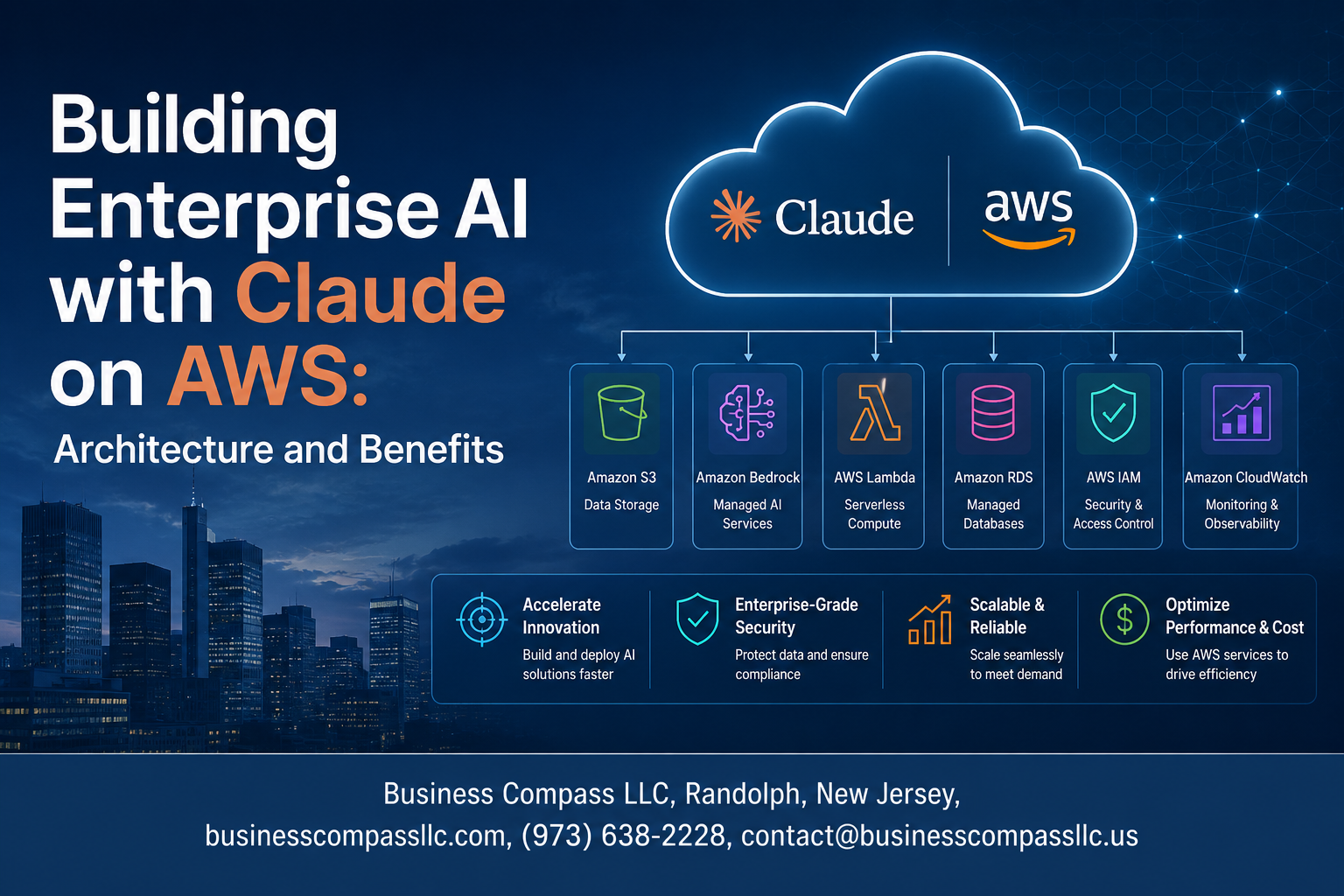
Enterprise teams are discovering that combining Claude AI enterprise capabilities with AWS AI architecture creates powerful business solutions. This guide is designed for IT leaders, cloud architects, and decision-makers who want to understand how Claude AWS integration can transform their organization’s AI strategy.
You’ll learn about AWS infrastructure advantages that make enterprise AI deployment more reliable and scalable than traditional approaches. We’ll break down the core architecture components needed for smooth Claude API implementation and show you practical implementation strategies for maximum ROI.
The guide also covers essential security and compliance framework benefits that help meet enterprise standards, plus proven techniques for performance optimization and cost management that keep your AWS AI services running efficiently without breaking the budget.
Understanding Claude’s AI Capabilities for Enterprise Solutions

Advanced natural language processing and reasoning abilities
Claude AI enterprise solutions excel at understanding complex business contexts, analyzing nuanced customer communications, and generating sophisticated responses that maintain your brand voice. The model handles multi-step reasoning tasks, processes technical documentation with remarkable accuracy, and supports decision-making through comprehensive data analysis across various enterprise departments.
Multi-modal content analysis and generation features
Beyond text processing, Claude integrates seamlessly with AWS AI services to analyze documents, images, and structured data simultaneously. This capability transforms how enterprises handle content workflows – from automated report generation to visual data interpretation. Teams can upload mixed-format materials and receive coherent summaries, actionable insights, and formatted outputs tailored to specific business requirements.
Enterprise-grade security and compliance standards
Claude AWS integration maintains strict data governance protocols, ensuring sensitive information remains protected throughout AI processing workflows. The platform supports GDPR, HIPAA, and SOC 2 compliance requirements while providing audit trails and access controls. Enterprise AI deployment benefits from AWS’s robust security infrastructure, including encryption at rest and in transit, role-based permissions, and comprehensive monitoring capabilities.
Scalable performance for high-volume business operations
AWS AI architecture enables Claude enterprise benefits through auto-scaling capabilities that handle fluctuating workloads efficiently. Whether processing thousands of customer inquiries simultaneously or analyzing massive datasets, the infrastructure adapts to demand patterns. AI ROI optimization becomes measurable through performance metrics, cost tracking, and resource allocation dashboards that help organizations maximize their artificial intelligence investments while controlling operational expenses.
AWS Infrastructure Advantages for Enterprise AI Deployment

Global Cloud Infrastructure with High Availability Guarantees
AWS operates 33 geographic regions with 105 availability zones worldwide, ensuring Claude AI enterprise deployments maintain 99.99% uptime through automatic failover and redundancy. This global reach enables low-latency AI responses for distributed teams while meeting data residency requirements across different jurisdictions.
Comprehensive Security and Data Protection Frameworks
Built-in encryption at rest and in transit protects sensitive enterprise data during Claude API implementation. AWS Identity and Access Management (IAM) provides granular permissions control, while VPC isolation ensures secure AI infrastructure AWS environments. Compliance certifications including SOC 2, HIPAA, and GDPR streamline enterprise AI security audits and regulatory approval processes.
Cost-Effective Scaling Options for Variable Workloads
Pay-as-you-go pricing models align AI costs with actual usage patterns, eliminating upfront infrastructure investments. Auto-scaling capabilities automatically adjust compute resources based on Claude enterprise workload demands, optimizing AWS AI cost management. Reserved instances and spot pricing options can reduce long-term operational expenses by up to 70% for predictable AI processing tasks.
Core Architecture Components for Claude Integration

API Gateway Configuration for Secure Access Management
AWS API Gateway serves as the front door for Claude AI enterprise applications, providing authentication, rate limiting, and request validation. Configure OAuth 2.0 or AWS Cognito for user authentication, implement API keys for service-to-service communication, and set up custom authorizers for fine-grained access control. Enable request/response logging, configure CORS policies for web applications, and establish stage-based deployment workflows. Set up throttling limits based on user tiers and implement caching strategies to reduce backend load while maintaining security compliance standards.
Compute Resource Optimization Using EC2 and Lambda Services
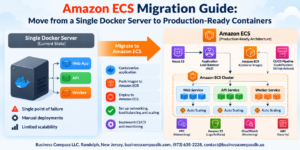
Choose EC2 instances with GPU capabilities for intensive AI workloads requiring sustained performance, while Lambda functions handle event-driven processing and API responses. Auto Scaling Groups automatically adjust EC2 capacity based on demand, reducing costs during low-usage periods. Container orchestration with ECS or EKS provides scalable deployment options for Claude API integrations. Lambda’s serverless architecture eliminates server management overhead and scales automatically, making it perfect for processing Claude responses, data transformations, and webhook handlers in enterprise AI workflows.
Data Storage Solutions with S3 and Database Integration
S3 provides cost-effective storage for training data, model artifacts, and conversation logs with built-in encryption and lifecycle policies. Implement S3 Transfer Acceleration for global data access and configure Cross-Region Replication for disaster recovery. RDS manages structured data like user profiles and application metadata, while DynamoDB handles high-velocity session data and real-time analytics. ElastiCache reduces database load by caching frequently accessed data. Establish data lakes using S3 and AWS Glue for analytics, ensuring seamless integration between storage layers and Claude AI processing workflows.
Network Architecture for Optimal Performance and Security
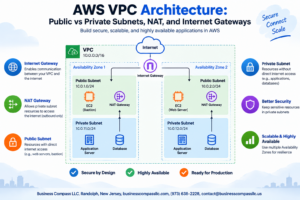
Deploy Claude AI infrastructure across multiple Availability Zones using VPC for network isolation and security. Private subnets host sensitive compute resources while public subnets handle load balancers and NAT gateways. Configure Security Groups as virtual firewalls, restricting access to specific ports and IP ranges. VPC Endpoints enable private connectivity to AWS services without internet routing, reducing latency and improving security. CloudFront CDN accelerates global access to AI applications, while Route 53 provides intelligent DNS routing and health checks for high availability across regions.
Monitoring and Logging Infrastructure Setup
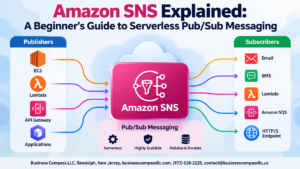
CloudWatch collects metrics from all AWS services, providing real-time visibility into Claude AI performance, API response times, and resource utilization. Set up custom dashboards tracking key performance indicators like request latency, error rates, and cost metrics. CloudTrail logs all API calls for security auditing and compliance reporting. X-Ray provides distributed tracing for complex AI workflows, identifying bottlenecks across microservices. Configure SNS alerts for critical thresholds, automated scaling events, and security incidents, ensuring proactive monitoring of enterprise AI deployments with comprehensive logging capabilities.
Implementation Strategies for Maximum ROI

Phased Deployment Approach to Minimize Business Disruption
Rolling out Claude AI enterprise solutions requires careful orchestration to avoid operational hiccups. Start with pilot projects in non-critical departments, allowing teams to familiarize themselves with Claude AWS integration before expanding. This gradual approach lets you identify potential bottlenecks, refine workflows, and build internal expertise. Each phase should include clear success metrics, user feedback loops, and rollback procedures. By segmenting deployment across business units, you maintain productivity while teams adapt to new AI-powered processes.
Integration with Existing Enterprise Systems and Workflows
Claude API implementation shines when it seamlessly connects with your current tech stack. Map out existing data flows, authentication systems, and approval processes before integration begins. Most enterprises find success connecting Claude to their CRM, ERP, and collaboration platforms through well-documented APIs. Consider middleware solutions that can bridge legacy systems with modern AI infrastructure AWS components. The key is preserving familiar user experiences while adding intelligent capabilities that enhance rather than replace established workflows.
Custom Model Fine-Tuning for Industry-Specific Requirements
Generic AI models rarely deliver optimal enterprise AI solutions without customization. Claude’s fine-tuning capabilities allow you to train models on your industry’s specific terminology, compliance requirements, and business logic. Healthcare organizations might focus on medical terminology and HIPAA compliance, while financial services emphasize regulatory language and risk assessment protocols. Document your training datasets carefully and establish version control for model iterations. This targeted approach significantly improves accuracy and relevance for your specific use cases.
Automated Scaling Policies for Cost Optimization
Smart AWS AI cost management starts with dynamic scaling policies that match resource allocation to actual demand. Configure auto-scaling rules based on API call volumes, response times, and processing queues. During peak business hours, your Claude enterprise deployment can scale up automatically, then scale down during off-hours to minimize costs. Set up monitoring dashboards that track usage patterns and cost per interaction. This data-driven approach to AI ROI optimization helps justify continued investment while maintaining performance standards across your organization.
Security and Compliance Framework Benefits

End-to-end Encryption for Data Protection
Claude AI enterprise deployments on AWS implement military-grade AES-256 encryption across all data touchpoints. Your sensitive business information stays protected during transit through TLS 1.3 protocols and at rest using AWS Key Management Service. This comprehensive encryption framework ensures that even AWS administrators cannot access your proprietary data, maintaining complete confidentiality while enabling powerful AI capabilities for your organization.
Role-based Access Controls and Audit Trails
AWS Identity and Access Management integrates seamlessly with Claude enterprise solutions, providing granular permission controls down to individual API calls. Every interaction with Claude AI services generates detailed audit logs through AWS CloudTrail, creating an immutable record of who accessed what data and when. These comprehensive audit trails meet enterprise governance requirements and simplify compliance reporting for internal teams and external auditors.
Compliance with Industry Regulations and Standards
Claude AWS integration automatically inherits AWS’s extensive compliance certifications including SOC 2 Type II, ISO 27001, HIPAA, and PCI DSS. This built-in compliance foundation accelerates your AI deployment timeline by eliminating lengthy certification processes. The platform continuously monitors and maintains compliance status through automated security assessments, ensuring your Claude enterprise implementation meets evolving regulatory requirements without additional overhead.
Data Residency and Sovereignty Management
AWS global infrastructure gives you complete control over where your Claude AI processing occurs, supporting data residency requirements across multiple geographic regions. You can specify exact AWS regions for data storage and processing, ensuring compliance with local data protection laws like GDPR. This geographic flexibility allows multinational enterprises to deploy Claude AI solutions while respecting diverse regulatory frameworks and maintaining data sovereignty across different jurisdictions.
Performance Optimization and Cost Management

Resource allocation strategies for peak efficiency
Smart resource allocation makes or breaks your Claude AWS integration performance. Auto-scaling groups automatically adjust EC2 instances based on API request volume, ensuring you’re not paying for idle resources during low-traffic periods. Container orchestration through ECS or EKS allows dynamic resource distribution across your Claude workloads. Reserved instances provide up to 75% cost savings for predictable baseline traffic, while spot instances handle batch processing tasks at fraction of on-demand pricing. Memory-optimized instances like R5 series deliver better performance per dollar for Claude’s memory-intensive operations. Implement CloudWatch metrics to track resource utilization patterns and identify optimization opportunities. Right-sizing instances based on actual usage prevents over-provisioning while maintaining response times.
Caching mechanisms to reduce latency and costs
Strategic caching dramatically reduces Claude API calls and associated costs while improving response times. ElastiCache with Redis stores frequently requested responses, eliminating redundant API calls for common queries. Application-level caching using Amazon DynamoDB provides millisecond latency for user session data and conversation context. CDN integration through CloudFront caches static AI-generated content at edge locations worldwide. Implement intelligent cache invalidation strategies to balance freshness with cost savings. Session-based caching maintains conversation context without repeated API calls for follow-up questions. Database query result caching reduces computation overhead for analytics and reporting functions generated by Claude.
Load balancing for consistent user experience
Application Load Balancers distribute Claude API requests across multiple availability zones, preventing single points of failure. Health checks automatically route traffic away from unhealthy instances, maintaining service availability during maintenance or unexpected issues. Weighted routing allows gradual traffic shifts during deployments or A/B testing different Claude model versions. Global load balancing through Route 53 directs users to nearest regional endpoints, reducing latency. Connection draining ensures graceful handling of in-flight requests during scaling events. Sticky sessions maintain conversation context when required while distributing new sessions for optimal resource usage. Target group configuration optimizes request distribution based on instance capacity and current load.

Claude’s enterprise AI capabilities combined with AWS infrastructure create a powerful foundation for businesses ready to transform their operations. The architecture components we’ve explored provide the flexibility and scalability needed for real-world deployment, while the security framework ensures your data stays protected. Smart implementation strategies help you maximize return on investment, and AWS’s cost management tools keep expenses predictable.
Getting started with Claude on AWS doesn’t have to be overwhelming. Focus on one use case, build your pilot project with proper security measures, and scale gradually as you see results. The combination of Claude’s advanced reasoning abilities and AWS’s enterprise-grade infrastructure gives you everything needed to build AI solutions that actually work for your business. Your next step is choosing that first project where AI can make the biggest impact.