Managing AWS infrastructure through clicking around the console gets old fast. DevOps with Terraform: AWS Infrastructure Automation Guide shows you how to build, manage, and scale your AWS resources using code instead of manual processes.
This guide is perfect for DevOps engineers, cloud architects, and developers who want to automate their AWS infrastructure deployment and stop worrying about configuration drift. You’ll learn how to treat your infrastructure like software – version controlled, repeatable, and reliable.
We’ll start with Terraform AWS fundamentals and walk through building your first infrastructure as code setup. You’ll discover AWS deployment automation techniques that make scaling your applications seamless and predictable.
Next, we’ll dive into Terraform state management strategies that keep your team working together without stepping on each other’s toes. You’ll also learn Terraform security AWS best practices that protect your infrastructure while maintaining the flexibility your team needs.
By the end, you’ll have the skills to implement DevOps automation workflows that turn infrastructure management from a headache into a competitive advantage.
Understanding Terraform Fundamentals for AWS Infrastructure

Master Infrastructure as Code concepts and benefits
Infrastructure as Code revolutionizes how teams manage cloud resources by treating infrastructure configurations like application code. With Terraform AWS deployments, you define your entire infrastructure using declarative configuration files, enabling version control, peer reviews, and automated deployments. This DevOps automation approach eliminates manual server provisioning, reduces human error, and ensures consistent environments across development, staging, and production.
The benefits extend beyond automation – Infrastructure as Code provides reproducible deployments, easier disaster recovery, and simplified scaling. Teams can quickly spin up identical environments, track infrastructure changes through Git, and collaborate effectively on complex AWS infrastructure as code projects.
Set up Terraform development environment
Installing Terraform requires downloading the binary from HashiCorp’s official website and adding it to your system PATH. Most developers prefer using package managers like Homebrew on macOS or Chocolatey on Windows for simplified installation and updates.
Configure your IDE with Terraform extensions for syntax highlighting and auto-completion. VS Code offers excellent Terraform support through official extensions, while IntelliJ provides robust HashiCorp Configuration Language (HCL) support for professional development workflows.
Configure AWS provider and authentication
AWS provider configuration establishes the connection between Terraform and your AWS account. Create an AWS IAM user with programmatic access and appropriate permissions for resource management. Store credentials securely using AWS CLI profiles, environment variables, or IAM roles for EC2 instances.
The provider block specifies your target AWS region and version constraints. Best practice involves pinning provider versions to ensure consistent behavior across team members and deployment environments, preventing unexpected changes from automatic updates.
Learn essential Terraform syntax and commands
Terraform uses HashiCorp Configuration Language (HCL) for defining infrastructure resources. Core components include providers, resources, data sources, variables, and outputs. The terraform init command initializes your working directory, downloading required providers and modules.
Key workflow commands include terraform plan for previewing changes, terraform apply for executing configurations, and terraform destroy for cleanup. The terraform fmt command formats code consistently, while terraform validate checks syntax errors before deployment in your Terraform tutorial workflow.
Building Your First AWS Infrastructure with Terraform

Create VPC and networking components
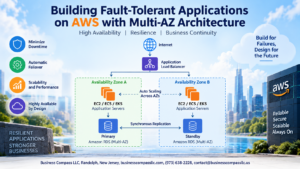
Setting up your AWS infrastructure with Terraform starts with creating a Virtual Private Cloud (VPC) and its essential networking components. Define your VPC with specific CIDR blocks, then configure public and private subnets across multiple availability zones for high availability. Add an internet gateway for public subnet connectivity and configure route tables to manage traffic flow between your network segments.
Deploy EC2 instances with security groups
EC2 instance deployment through Terraform requires careful configuration of compute resources and security groups. Create security group rules that define inbound and outbound traffic permissions, ensuring your instances remain secure while maintaining necessary connectivity. Configure your EC2 instances with appropriate AMI selections, instance types, and key pairs for SSH access, then attach them to your previously created subnets and security groups.
Implement version control for infrastructure code
Version control becomes critical when managing AWS infrastructure as code with Terraform. Store your Terraform configuration files in Git repositories to track changes, collaborate with team members, and maintain deployment history. Structure your repository with clear directory organization, use descriptive commit messages, and implement branching strategies that support development, staging, and production environments for reliable infrastructure automation workflows.
Advanced AWS Resource Management Using Terraform

Automate RDS database provisioning and configuration
Creating Amazon RDS instances through Terraform AWS automation streamlines database deployment while ensuring consistent configurations. Define your database specifications using resource blocks that include engine type, instance class, allocated storage, and backup retention periods. Terraform handles the complex provisioning process, automatically creating subnet groups, parameter groups, and security configurations based on your infrastructure as code definitions.
Set up Application Load Balancers and auto-scaling groups
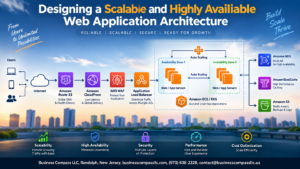
Application Load Balancers work seamlessly with auto-scaling groups to distribute traffic and maintain application availability. Configure target groups that define health check parameters and routing rules for your EC2 instances. Auto-scaling groups monitor application performance metrics and automatically adjust instance counts based on demand, ensuring optimal resource utilization while maintaining performance standards.
Configure S3 buckets with proper access policies
S3 bucket configuration requires careful attention to access policies and security settings. Define bucket policies using JSON syntax within your Terraform configurations, specifying read/write permissions for different user groups and applications. Enable versioning, encryption, and lifecycle policies to protect data while optimizing storage costs across different access patterns and compliance requirements.
Implement CloudWatch monitoring and logging
CloudWatch integration provides comprehensive monitoring capabilities for your AWS infrastructure deployment. Create custom metrics, alarms, and dashboards that track application performance, resource utilization, and security events. Configure log groups and streams to centralize application logs, enabling efficient troubleshooting and performance analysis across your entire infrastructure stack.
Terraform State Management and Team Collaboration

Configure remote state storage with S3 and DynamoDB
AWS Terraform state management requires setting up remote backend storage to prevent conflicts and data loss. Store your state files in S3 buckets with versioning enabled, while DynamoDB tables handle state locking mechanisms. This combination ensures your infrastructure deployments remain consistent across team environments and prevents corruption during concurrent operations.
Implement state locking for concurrent operations
State locking prevents multiple team members from modifying infrastructure simultaneously, avoiding conflicts and broken deployments. Configure DynamoDB tables with proper IAM permissions to enable automatic locking when Terraform operations begin. Your team can work confidently knowing that only one person can apply changes at a time, maintaining infrastructure integrity throughout your DevOps automation workflows.
Organize code with modules and workspaces
- Terraform modules create reusable infrastructure components across projects
- Workspaces separate environments like development, staging, and production
- Directory structure organizes resources logically for better maintainability
- Variable management standardizes configurations across different environments
Breaking your AWS infrastructure as code into modules promotes consistency and reduces duplication. Each module handles specific resources like VPCs, databases, or security groups, making your codebase more manageable and easier to debug.
Establish team workflows and code review processes
- Branch protection requires pull request reviews before merging
- Automated testing validates syntax and security configurations
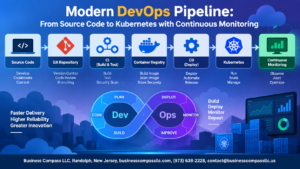
- CI/CD pipelines run terraform plan on every commit
- Documentation standards ensure clear change descriptions
Successful Terraform AWS deployments depend on structured team collaboration. Implement code review processes that catch configuration errors before they reach production environments, and establish clear workflows that every team member follows for infrastructure changes.
Production-Ready Infrastructure Deployment Strategies

Create multi-environment infrastructure pipelines
Building robust multi-environment pipelines requires structuring your Terraform configurations with workspace management and environment-specific variable files. Start by creating separate .tfvars files for development, staging, and production environments, each containing environment-specific settings like instance sizes, database configurations, and network ranges. Use Terraform workspaces to isolate state files between environments, enabling parallel deployments without state conflicts.
Implement automated CI/CD pipelines that trigger Terraform deployments based on Git branch strategies. Development branches automatically deploy to dev environments, while merge requests to main trigger staging deployments, and tagged releases initiate production deployments with manual approval gates.
Implement blue-green deployment patterns
Blue-green deployments with Terraform AWS infrastructure require maintaining two identical production environments and switching traffic between them. Create duplicate infrastructure stacks using Terraform modules, with load balancers directing traffic to the active environment. When deploying updates, provision the inactive environment with new configurations, run health checks, then update Route 53 DNS records or Application Load Balancer target groups to switch traffic.
This pattern minimizes downtime and provides instant rollback capabilities by simply redirecting traffic back to the previous environment. Use Terraform’s count or for_each meta-arguments to manage both environments from a single configuration.
Set up disaster recovery and backup automation
Disaster recovery automation starts with cross-region resource replication using Terraform modules that deploy identical infrastructure across multiple AWS regions. Configure automated S3 bucket replication, RDS cross-region snapshots, and EBS snapshot scheduling through Terraform resources. Create Lambda functions for backup orchestration and use CloudWatch Events to trigger regular backup routines.
Design your Terraform state management for disaster scenarios by storing state files in versioned S3 buckets with cross-region replication enabled. Document recovery procedures that include Terraform commands for rebuilding infrastructure from backups in alternate regions.
Monitor infrastructure drift and compliance
Infrastructure drift detection requires continuous monitoring tools that compare actual AWS resources against your Terraform configurations. Implement AWS Config rules to track resource compliance and use tools like Terragrunt or custom scripts to regularly run terraform plan in read-only mode, alerting when drift is detected. Set up CloudWatch alarms for unauthorized resource modifications and integrate with notification systems.
Establish automated compliance checks by embedding policy-as-code tools like Open Policy Agent or AWS Config into your DevOps automation pipelines. These tools validate infrastructure changes against security policies before deployment, ensuring your AWS infrastructure as code maintains compliance standards throughout its lifecycle.
Security Best Practices for Terraform AWS Deployments

Secure sensitive data with AWS Secrets Manager integration
Store database passwords, API keys, and other sensitive information in AWS Secrets Manager rather than hardcoding them in Terraform configurations. Use the aws_secretsmanager_secret_version data source to retrieve secrets dynamically during deployment. This approach prevents credentials from appearing in state files or version control systems while maintaining automated infrastructure provisioning.
Configure automatic rotation for secrets to enhance security posture. Terraform AWS deployments benefit from this integration by eliminating manual credential management and reducing exposure risks across your DevOps automation pipeline.
Implement least-privilege IAM roles and policies
Create specific IAM roles with minimal permissions required for each AWS resource and service. Define granular policies that grant access only to necessary actions and resources, avoiding wildcard permissions wherever possible. Use Terraform’s aws_iam_role and aws_iam_policy resources to establish role-based access control that aligns with your infrastructure requirements.
Regular audits of IAM permissions help maintain security standards as your AWS infrastructure as code evolves. Implement cross-account roles for multi-environment deployments while ensuring each role follows least-privilege principles.
Enable infrastructure scanning and vulnerability assessment
Integrate security scanning tools into your Terraform AWS workflow to identify misconfigurations before deployment. Tools like Checkov, tfsec, or AWS Config Rules can automatically scan Terraform files for security vulnerabilities, compliance violations, and best practice deviations. Configure these scans in your CI/CD pipeline to catch issues early in the development cycle.
Set up continuous monitoring of deployed infrastructure using AWS Security Hub and AWS Inspector. These services provide ongoing vulnerability assessments and compliance monitoring, ensuring your infrastructure automation guide includes proactive security measures that scale with your deployment growth.

Mastering Terraform for AWS infrastructure automation puts you in control of your cloud resources like never before. You’ve learned how to build everything from simple EC2 instances to complex multi-tier applications, manage state files effectively, and collaborate seamlessly with your team. The security practices and production deployment strategies we covered will help you avoid costly mistakes and keep your infrastructure rock-solid.
Ready to take your DevOps game to the next level? Start small with a basic Terraform configuration, experiment with different AWS services, and gradually work your way up to more complex setups. Your infrastructure-as-code journey begins now – and your future self will thank you for building systems that are reliable, scalable, and easy to manage.