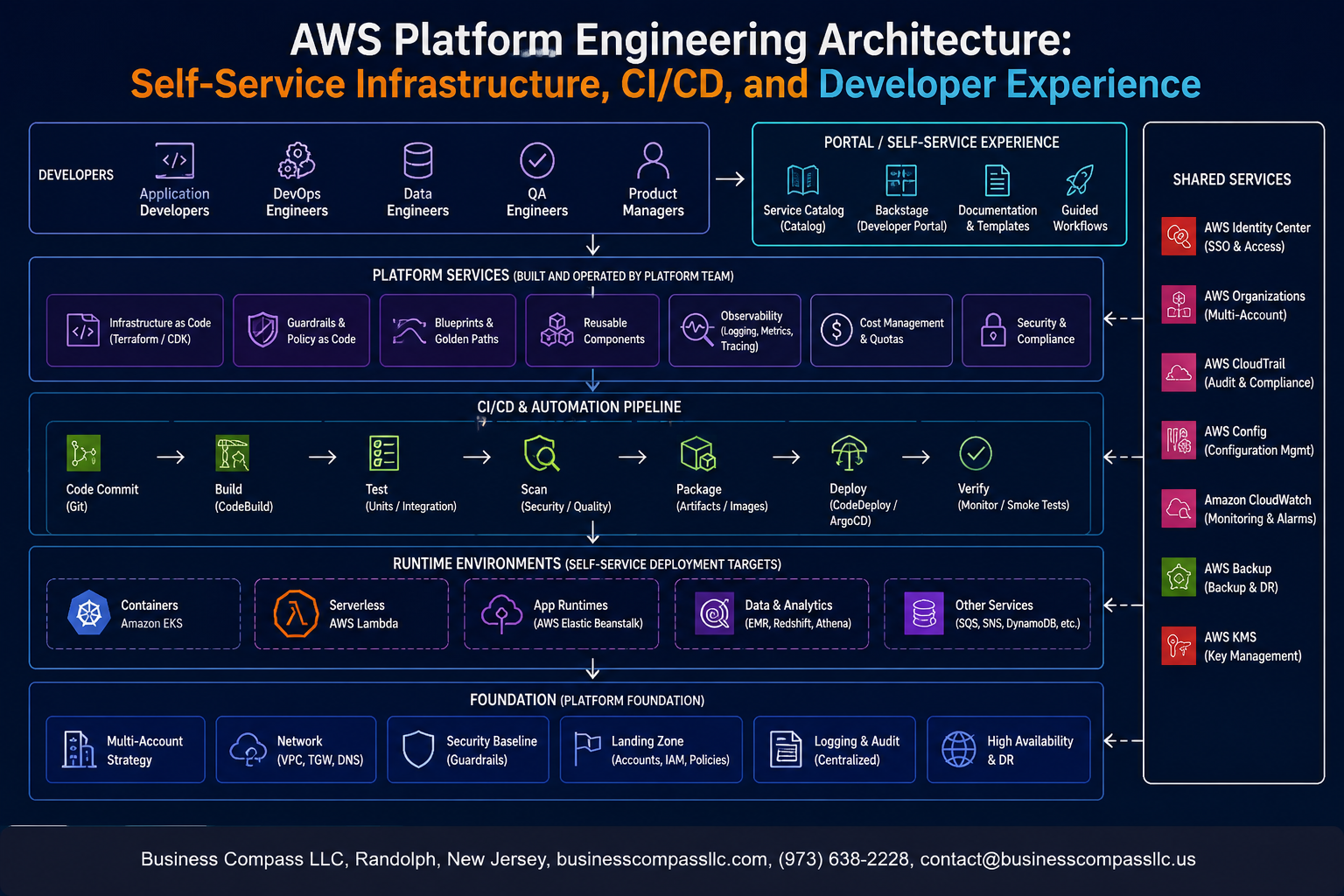
AWS Platform Engineering Architecture: Self-Service Infrastructure, CI/CD, and Developer Experience
If your engineering teams are spending more time waiting on infrastructure tickets than actually shipping code, this is for you.
Platform engineering on AWS is how fast-moving organizations fix that problem. Instead of developers depending on ops teams for every environment, resource, or deployment, they get a self-service infrastructure layer that hands them what they need, when they need it. The result? Less friction, faster delivery, and a developer experience that doesn’t feel like pulling teeth.
This guide is written for platform engineers, DevOps leads, and cloud architects who are either building an internal developer platform on AWS from scratch or trying to bring more structure to what they already have.
Here’s what we’ll cover:
- How to build a self-service infrastructure framework that gives developers autonomy without creating chaos
- How to design a scalable CI/CD pipeline architecture on AWS that holds up as your teams and services grow
- How multi-account governance fits into the picture so you can move fast without losing visibility or control
By the end, you’ll have a clear view of the moving parts behind a solid AWS platform engineering setup, along with practical direction on where to start and what actually matters at scale.
Understanding Platform Engineering on AWS

What Platform Engineering Means for Modern Cloud Teams
AWS platform engineering builds shared infrastructure foundations so developers ship faster without wrestling with cloud complexity. Think of it as building an internal developer platform — golden paths that handle self-service infrastructure AWS teams need, baked-in security, and pre-approved patterns, letting engineers focus purely on product work rather than infrastructure plumbing.
Building a Self-Service Infrastructure Framework

Designing Internal Developer Platforms That Empower Teams
Build your AWS self-service infrastructure around golden paths—pre-approved, ready-to-deploy templates teams actually want to use. Combine AWS Service Catalog, Terraform modules, and automated guardrails to standardize provisioning without bottlenecks. Automated lifecycle management kills idle resources, cutting costs while freeing platform teams from repetitive operational toil.
Designing a Scalable CI/CD Pipeline Architecture

Choosing the Right AWS Native CI/CD Tools
Use CodePipeline, CodeBuild, and CodeDeploy together for a fully managed scalable CI/CD pipeline architecture AWS teams love.
Integrating Security Into Every Deployment
- Run SAST, DAST, and policy checks automatically
- Use AWS CodeGuru and Security Hub inline
- Gate deployments on compliance failures across all accounts
Accelerating Developer Experience with the Right Tooling

Creating Golden Paths That Reduce Cognitive Load for Developers
Golden paths give developers pre-approved, opinionated workflows, cutting decision fatigue instantly.
Leveraging AWS CDK and Projen for Faster Bootstrapping
AWS CDK combined with Projen automates project scaffolding, enforcing standards from day one.
Building Centralized Developer Portals with Backstage on AWS
Backstage centralizes service catalogs, documentation, and pipelines, dramatically improving developer experience on AWS.
Achieving Multi-Account Governance at Scale

Structuring AWS Organizations for Platform Scalability
AWS multi-account governance works best with a clear OU hierarchy separating workloads by environment and team.
Applying Service Control Policies
SCPs enforce guardrails org-wide — blocking risky actions before they happen.
Centralizing Logging and Observability
Route CloudTrail, Config, and CloudWatch logs to a dedicated security account.
Managing Cost Visibility
Tag resources by team; use AWS Cost Explorer for accountability.
Measuring Platform Engineering Success

Defining DORA Metrics to Track Developer Productivity Gains
Track deployment frequency, lead time, change failure rate, and MTTR to gauge real platform impact.
Monitoring Platform Reliability and Uptime for Internal Consumers
Use CloudWatch SLOs to keep internal teams unblocked.
Using Feedback Loops to Continuously Improve Platform Capabilities
Run regular developer surveys and act on them fast.

Getting platform engineering right on AWS isn’t a one-time project — it’s an ongoing practice. From building self-service infrastructure that empowers teams to move fast, to designing CI/CD pipelines that scale without becoming a bottleneck, every layer plays a role in shaping how developers experience their day-to-day work. Pair that with solid multi-account governance and the right tooling, and you’ve got a platform that doesn’t just support engineering — it actively accelerates it. And when you tie it all together with meaningful metrics, you can actually see what’s working and where to push harder.
If you’re thinking about where to start, pick the pain point your developers complain about most and work backward from there. Maybe it’s slow deployments, maybe it’s too much manual setup, or maybe it’s a lack of visibility across accounts. Start small, show value fast, and build from there. A great platform engineering setup on AWS isn’t about having every tool in place on day one — it’s about creating an environment where developers can do their best work without constantly hitting walls.