AWS compute and networking form the backbone of every successful cloud deployment. This guide is designed for cloud engineers, system administrators, and DevOps professionals who need to master these AWS fundamentals to build robust, scalable applications.
Getting your cloud architecture right starts with understanding how AWS compute services work together with networking components. You’ll learn how EC2 instances scalability drives application performance, while AWS networking fundamentals keep your infrastructure secure and connected.
We’ll walk through essential AWS compute services that power modern applications, from basic virtual machines to container orchestration. You’ll discover how AWS load balancing auto scaling creates resilient systems that handle traffic spikes automatically. Finally, we’ll cover AWS VPC configuration and hybrid cloud connectivity options that let you integrate on-premises systems with cloud resources seamlessly.
By the end, you’ll have the practical knowledge to design AWS high availability architecture using these core building blocks, whether you’re migrating existing workloads or building new cloud-native applications from scratch.
Essential AWS Compute Services for Scalable Applications

EC2 Instances: Flexible Virtual Servers for Any Workload
Amazon EC2 provides the backbone of AWS compute services, offering resizable virtual machines that adapt to any business requirement. From small development environments to enterprise-grade applications, EC2 instances deliver consistent performance with over 500 instance types optimized for different workloads including compute-intensive, memory-optimized, and storage-focused scenarios.
Lambda Functions: Serverless Computing for Cost-Effective Automation
AWS Lambda eliminates server management overhead by running code in response to events without provisioning infrastructure. This serverless approach dramatically reduces costs since you only pay for actual compute time used, making it perfect for microservices, API backends, and automated workflows that scale automatically based on demand.
ECS and EKS: Container Orchestration for Modern Applications
Amazon ECS and EKS provide robust container orchestration platforms for deploying Docker applications at scale. ECS offers a fully managed container service that integrates seamlessly with AWS services, while EKS delivers Kubernetes compatibility for teams requiring open-source container orchestration with enterprise-grade security and reliability.
Elastic Beanstalk: Simplified Application Deployment and Management
Elastic Beanstalk streamlines application deployment by handling infrastructure provisioning, load balancing, and auto-scaling automatically. Developers simply upload code, and Beanstalk manages the underlying EC2 instances, monitoring, and capacity planning, allowing teams to focus on building features rather than managing servers and deployment complexities.
AWS Networking Fundamentals for Secure Cloud Infrastructure

VPC: Create Isolated Network Environments
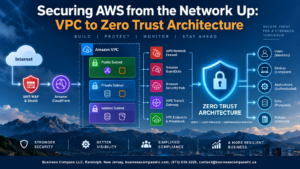
AWS VPC configuration forms the backbone of secure cloud infrastructure, creating isolated virtual networks within AWS where you control IP address ranges, routing, and security settings. Your VPC acts as a private data center in the cloud, allowing complete control over network topology while maintaining security through logical separation from other AWS accounts.
The beauty of AWS VPC lies in its flexibility to design custom network architectures that match your specific requirements. You can span multiple Availability Zones, integrate with on-premises networks, and configure custom DNS settings to support complex enterprise workloads while maintaining the isolation needed for regulatory compliance.
Subnets: Organize Resources with Strategic Network Segmentation
Subnets divide your VPC into smaller network segments, enabling strategic placement of resources based on security requirements and access patterns. Public subnets host resources needing direct internet access like web servers, while private subnets protect sensitive components like databases from external exposure.
Strategic subnet design enhances both security and performance by grouping related resources and applying appropriate routing rules. This segmentation allows granular control over traffic flow, making it easier to implement security policies and troubleshoot network issues across your AWS infrastructure.
Internet and NAT Gateways: Control External Connectivity
Internet Gateways enable bidirectional communication between your VPC and the internet, allowing public subnets to receive inbound traffic and send outbound requests. This component is essential for web-facing applications and services that need direct internet connectivity for user access.
NAT Gateways provide secure outbound internet access for resources in private subnets without exposing them to inbound connections. This setup allows private instances to download updates, access external APIs, and communicate with cloud services while maintaining their protected status from internet-based threats.
Route Tables: Direct Traffic Flow Efficiently
Route tables define how network traffic moves within your VPC and to external destinations, acting as the traffic control system for your cloud infrastructure. Each subnet associates with a route table that determines whether traffic goes to the internet gateway, NAT gateway, or stays within the VPC.
Proper route table configuration optimizes network performance and ensures traffic follows intended paths for security and compliance. Custom routing enables advanced scenarios like traffic inspection, load distribution, and integration with AWS networking fundamentals that support hybrid cloud connectivity requirements.
Load Balancing and Auto Scaling for High Availability

Application Load Balancer: Distribute Traffic Intelligently
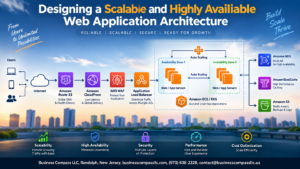
AWS load balancing auto scaling capabilities start with the Application Load Balancer, which operates at Layer 7 and excels at routing HTTP/HTTPS traffic based on content. This intelligent distribution mechanism examines request headers, paths, and query strings to direct traffic to the most appropriate targets across multiple availability zones.
| Feature | Application Load Balancer | Traditional Load Balancer |
|---|---|---|
| Target Types | EC2, IP addresses, Lambda functions | EC2 instances only |
| Routing Rules | Path-based, host-based, header-based | Basic round-robin |
| SSL Termination | Advanced with SNI support | Basic SSL offloading |
| Health Checks | Granular path-specific checks | Instance-level only |
The Application Load Balancer integrates seamlessly with AWS high availability architecture by supporting multiple target groups and weighted routing. You can gradually shift traffic between different application versions, enabling blue-green deployments and canary releases. Advanced features like sticky sessions, WebSocket support, and integration with AWS WAF make it the go-to choice for modern web applications requiring sophisticated traffic management.
Network Load Balancer: Handle Extreme Performance Demands
Network Load Balancers operate at Layer 4, handling millions of requests per second with ultra-low latency. Unlike Application Load Balancers, they preserve source IP addresses and excel in scenarios requiring extreme performance, such as gaming applications, IoT data ingestion, or real-time financial trading systems.
- Performance: Handles millions of requests per second with microsecond latency
- Static IP: Provides fixed IP addresses for whitelisting and DNS configurations
- Protocol Support: TCP, UDP, and TLS traffic without content inspection
- Cross-Zone Load Balancing: Optional feature for even traffic distribution
The Network Load Balancer’s ability to handle sudden traffic spikes without warming up makes it perfect for unpredictable workloads. It automatically scales to handle traffic increases and integrates with Auto Scaling Groups to trigger instance launches based on connection metrics rather than CPU utilization.
Auto Scaling Groups: Automatically Adjust Capacity Based on Demand
Auto Scaling Groups form the backbone of AWS compute services scalability, automatically launching or terminating EC2 instances based on predefined policies. These groups monitor metrics like CPU utilization, network traffic, or custom CloudWatch metrics to maintain optimal performance while controlling costs through dynamic capacity adjustments.
Scaling Policies and Triggers:
- Target Tracking: Maintains specific metric values (CPU at 70%)
- Step Scaling: Adds/removes instances based on threshold breaches
- Scheduled Scaling: Predictable traffic patterns (business hours)
- Predictive Scaling: Machine learning-based capacity forecasting
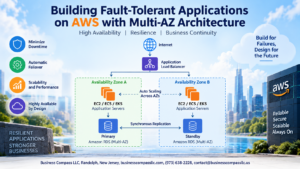
Auto Scaling Groups work hand-in-hand with load balancers to create robust, self-healing infrastructure. When the load balancer detects unhealthy instances, the Auto Scaling Group automatically replaces them, maintaining your desired capacity across multiple availability zones. This combination ensures your applications remain responsive during traffic surges while minimizing costs during quiet periods.
Security Groups and Network Access Control

Security Groups: Create Firewall Rules at Instance Level
Security groups function as virtual firewalls for your EC2 instances, controlling both inbound and outbound traffic at the instance level. These stateful security controls allow you to define precise rules based on protocol, port range, and source or destination IP addresses, creating a robust first line of defense for your AWS compute services.
NACLs: Implement Subnet-Level Traffic Control
Network Access Control Lists (NACLs) provide an additional security layer at the subnet level, acting as stateless firewalls that evaluate traffic entering and leaving your VPC subnets. Unlike security groups, NACLs are evaluated in numerical order and can explicitly deny traffic, making them perfect for implementing broad network security policies across multiple instances within your AWS VPC configuration.
VPC Flow Logs: Monitor and Audit Network Traffic
VPC Flow Logs capture detailed information about IP traffic flowing through your network interfaces, providing comprehensive visibility into network activity for security analysis and troubleshooting. These logs integrate seamlessly with CloudWatch and S3, enabling real-time monitoring and long-term storage of network traffic patterns for compliance auditing and performance optimization across your cloud architecture building blocks.
Connectivity Options for Hybrid and Multi-Cloud Environments

VPN Connections: Secure Site-to-Site Network Links
AWS VPN provides encrypted connections between your on-premises infrastructure and AWS cloud environments. Site-to-Site VPN connections establish secure tunnels over the internet, enabling organizations to extend their existing networks into AWS while maintaining data privacy and compliance requirements.
Direct Connect: Dedicated High-Speed Private Connections
AWS Direct Connect delivers dedicated network connections from your premises to AWS data centers, bypassing the public internet entirely. This service offers consistent network performance, reduced bandwidth costs, and enhanced security for hybrid cloud connectivity. Direct Connect supports speeds from 50 Mbps to 100 Gbps, making it ideal for mission-critical workloads requiring predictable performance.
Transit Gateway: Centralize Multi-VPC Connectivity
Transit Gateway acts as a regional network hub that connects VPCs, on-premises networks, and AWS services through a single gateway. This centralized approach simplifies network architecture by eliminating the need for complex peering relationships. Organizations can manage routing policies centrally while maintaining isolation between different network segments.
VPC Peering: Enable Direct Communication Between Networks
VPC Peering creates private network connections between Virtual Private Clouds, allowing resources to communicate as if they’re on the same network. Peering connections work across regions and AWS accounts, supporting both IPv4 and IPv6 traffic. This feature enables secure data sharing and resource access without traversing the public internet.
CloudFront: Accelerate Content Delivery Globally
CloudFront operates as a global content delivery network that caches content at edge locations worldwide. By serving content from locations closest to users, CloudFront reduces latency and improves application performance. The service integrates seamlessly with other AWS services and supports dynamic content acceleration for real-time applications.

AWS compute and networking services form the backbone of any successful cloud architecture. From EC2 instances and Lambda functions that power your applications to VPCs and security groups that protect your data, these foundational services work together to create scalable, secure, and highly available systems. The combination of load balancers, auto scaling groups, and proper network segmentation ensures your applications can handle varying workloads while maintaining optimal performance.
Getting started with AWS doesn’t have to be overwhelming. Begin with the basics—launch a simple EC2 instance, set up a VPC with proper subnets, and configure security groups to control access. As your needs grow, gradually introduce more advanced features like auto scaling and hybrid connectivity options. The key is to build incrementally, testing each component thoroughly before adding complexity. Your cloud journey starts with understanding these core building blocks, so dive in and start experimenting with these powerful AWS services today.