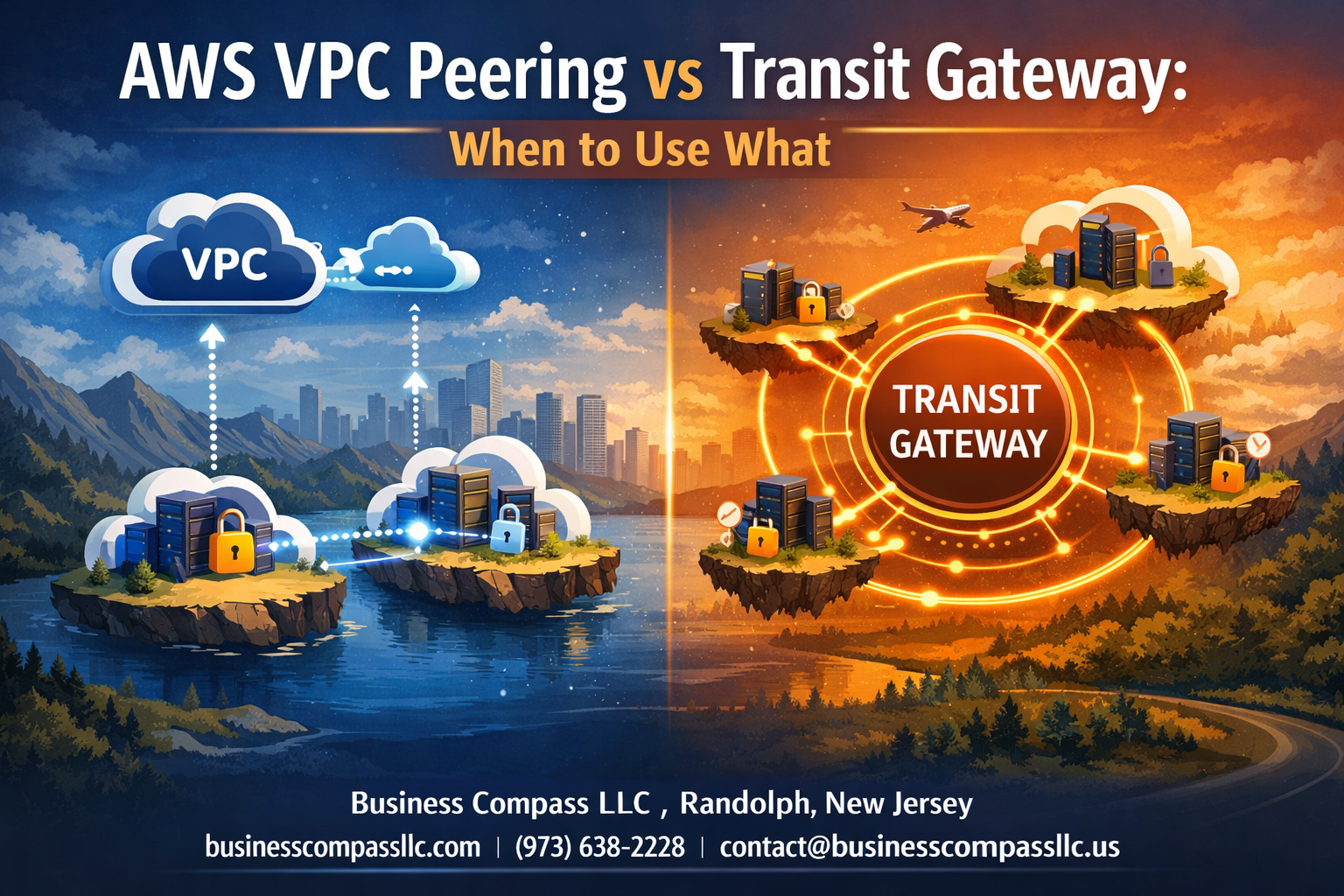
Choosing between AWS VPC peering and Transit Gateway can make or break your cloud network architecture. This guide is designed for cloud architects, DevOps engineers, and IT professionals who need to make smart AWS networking decisions that balance performance, cost, and scalability.
AWS VPC peering creates direct connections between virtual private clouds, while Transit Gateway acts as a central hub for multiple network connections. Each approach serves different use cases, and picking the wrong one can lead to unnecessary costs or network bottlenecks down the road.
We’ll break down the core architectural differences between VPC peering and Transit Gateway, showing you when each solution shines. You’ll get a detailed cost analysis that reveals which option saves money based on your specific network size and traffic patterns. Finally, we’ll walk through a practical decision framework that considers your scalability requirements, security needs, and long-term growth plans.
By the end, you’ll know exactly which AWS connectivity option fits your infrastructure needs and budget constraints.
Understanding AWS VPC Peering Architecture and Core Benefits
Direct network connection between two VPCs for seamless resource sharing
AWS VPC peering creates a one-to-one network connection between two Virtual Private Clouds, allowing resources to communicate as if they exist within the same network. This direct connection enables EC2 instances, RDS databases, and other AWS services across different VPCs to interact using private IP addresses without complex routing configurations. The peer-to-peer architecture supports cross-region connectivity, making it perfect for distributed applications that need reliable communication between geographically separated workloads.
Cost-effective solution for simple point-to-point connectivity requirements
VPC peering delivers exceptional value for straightforward networking scenarios where you need to connect just two VPCs. Unlike more complex networking solutions, peering connections incur no hourly charges – you only pay for data transfer costs. This pricing model makes AWS VPC peering particularly attractive for development environments, backup replication setups, or simple hybrid architectures where budget optimization is critical and networking requirements remain minimal.
Reduced latency through private network routing without internet gateways
Traffic between peered VPCs travels exclusively through AWS’s private backbone infrastructure, bypassing public internet routing entirely. This private pathway significantly reduces latency compared to internet-based connections while eliminating the security risks associated with public data transmission. Applications requiring real-time data synchronization, high-frequency trading systems, or latency-sensitive workloads benefit tremendously from this direct routing approach that maintains consistent performance characteristics.
Enhanced security with traffic isolation within AWS backbone infrastructure
VPC peering architecture ensures complete traffic isolation by keeping all communication within AWS’s secure network perimeter. Network packets never traverse public internet routes, reducing exposure to external threats and potential data interception. The connection leverages AWS’s existing security controls, including network ACLs and security groups, while maintaining the same encryption standards applied throughout the AWS infrastructure. This security model perfectly aligns with compliance requirements for industries handling sensitive data.
Transit Gateway Capabilities and Strategic Advantages

Centralized hub for connecting multiple VPCs and on-premises networks
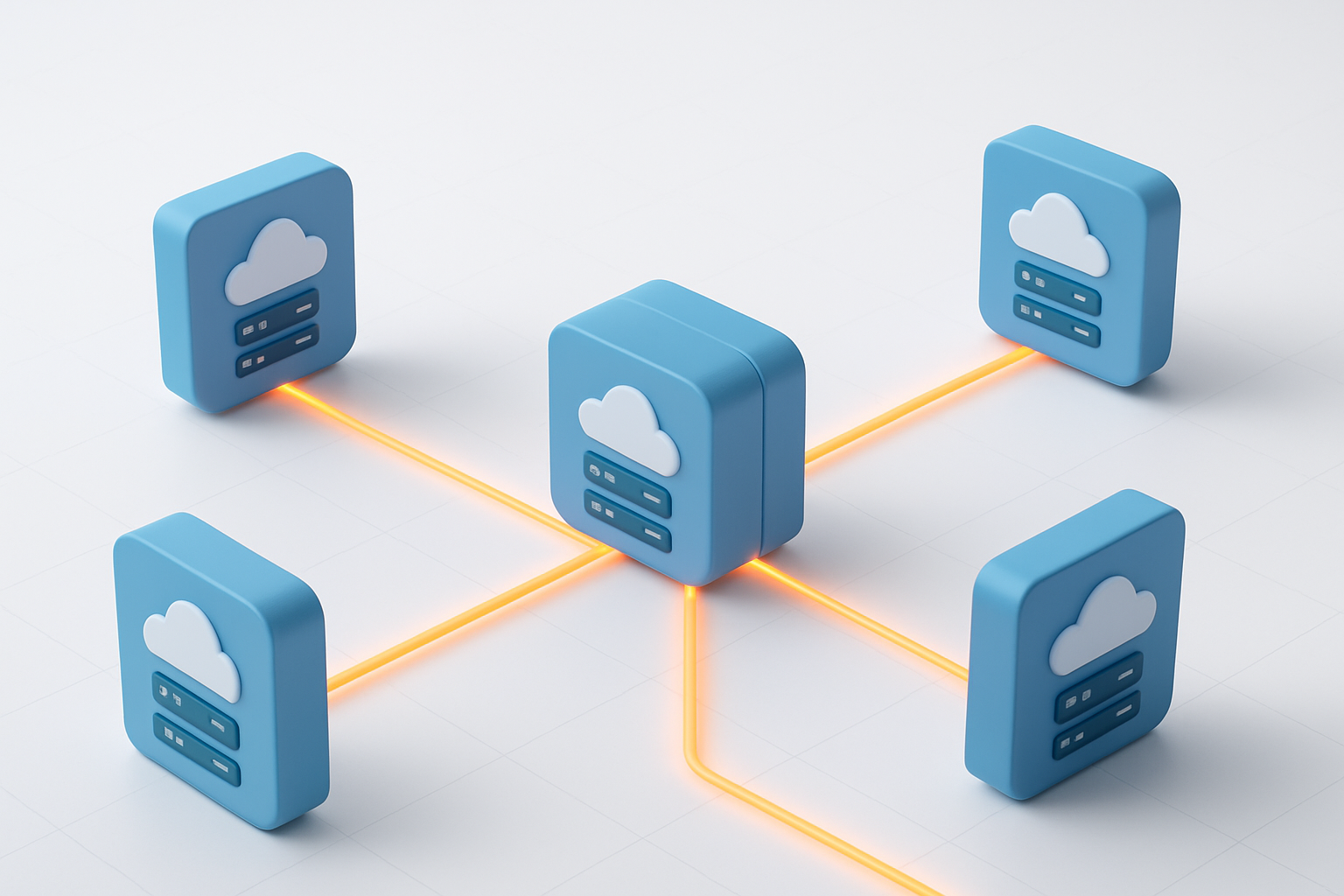
AWS Transit Gateway acts as a central networking hub that connects multiple VPCs, on-premises data centers, and remote offices through a single attachment point. This hub-and-spoke architecture eliminates the need for complex mesh networks that VPC peering creates when connecting numerous resources. Organizations can attach thousands of VPCs and VPN connections to one Transit Gateway, creating a unified network topology. The centralized approach dramatically reduces connection complexity compared to traditional VPC peering, where each VPC requires individual peering relationships. Transit Gateway also supports Direct Connect gateway attachments, enabling seamless hybrid cloud connectivity. This consolidated architecture makes AWS network connectivity more manageable while supporting enterprise-scale deployments across multiple AWS regions.
Simplified network management through single point of control
Managing network connectivity becomes significantly easier with Transit Gateway’s centralized control plane. Network administrators can monitor, configure, and troubleshoot all inter-VPC and hybrid connections from one location rather than managing dozens of individual peering relationships. The service provides comprehensive CloudWatch metrics and VPC Flow Logs for all attached networks, offering unified visibility into traffic patterns and network performance. Route propagation happens automatically, reducing manual configuration overhead that typically accompanies VPC peering implementations. Transit Gateway’s single point of control also streamlines security group and network ACL management across connected networks. Organizations can implement consistent networking policies and routing decisions without coordinating changes across multiple VPC peering connections, making AWS networking comparison scenarios favor Transit Gateway for complex environments.
Advanced routing capabilities with customizable route tables
Transit Gateway offers sophisticated routing features that surpass VPC peering limitations through customizable route tables and dynamic route propagation. Multiple route tables can be created and associated with different network segments, enabling advanced traffic engineering and network segmentation. Route tables support static routes, BGP route propagation from VPN and Direct Connect attachments, and route filtering capabilities. This flexibility allows organizations to implement complex routing policies, such as directing traffic through security appliances or creating isolated network segments. Unlike VPC peering’s simple point-to-point routing, Transit Gateway enables transitive routing between all attached networks when configured appropriately. Route prioritization and longest-prefix matching ensure optimal path selection, while route table associations provide granular control over which networks can communicate with each other.
Built-in scalability supporting thousands of VPC connections
Transit Gateway architecture inherently scales to support enterprise networking demands without the exponential complexity growth seen with VPC peering. A single Transit Gateway can handle up to 5,000 VPC attachments and process millions of packets per second with automatic scaling capabilities. This AWS network scalability eliminates the N×(N-1)/2 peering relationship problem that occurs when connecting multiple VPCs directly. The service automatically distributes traffic across multiple Availability Zones for high availability and performance. Route table capacity scales independently, supporting hundreds of thousands of routes without performance degradation. Organizations planning for future growth benefit from Transit Gateway’s ability to add new VPC connections instantly without reconfiguring existing relationships. This scalability advantage makes Transit Gateway the preferred choice for large-scale AWS deployments and multi-account architectures where VPC peering becomes unwieldy.
Cost Analysis and Budget Optimization Strategies

VPC Peering Pricing Model Based on Data Transfer Charges Only
AWS VPC peering operates on a straightforward pricing model where you only pay for data transfer between peered VPCs. There are no hourly connection fees or setup costs – you simply pay standard AWS data transfer rates when traffic flows between your connected VPCs. This makes VPC peering incredibly cost-effective for organizations with predictable, low-to-moderate inter-VPC communication patterns. The pricing transparency allows for easy budget forecasting since costs directly correlate with actual usage.
Transit Gateway Hourly Attachment Fees and Data Processing Costs
Transit Gateway pricing involves two main components: hourly attachment fees and data processing charges. Each VPC attachment costs $0.05 per hour regardless of traffic volume, while data processing fees apply at $0.02 per GB for all traffic flowing through the gateway. This dual pricing structure means you’ll have baseline costs even during periods of no traffic. For organizations running multiple VPCs 24/7, these hourly fees can accumulate significantly, making Transit Gateway more expensive for low-traffic scenarios but potentially more economical at scale.
Break-Even Point Analysis for Multi-VPC Environments
The break-even point between AWS VPC peering and Transit Gateway typically occurs around 8-12 VPCs, depending on your traffic patterns and data transfer volumes. With VPC peering, connection complexity grows exponentially (n*(n-1)/2 connections), while Transit Gateway maintains linear scaling with consistent per-attachment costs. Organizations transferring more than 25GB monthly between multiple VPCs often find Transit Gateway more cost-effective due to simplified architecture and reduced operational overhead, despite higher baseline costs.
Performance Comparison and Network Efficiency

VPC Peering direct connection speed and minimal latency benefits
AWS VPC peering creates a direct network connection between Virtual Private Clouds, delivering the lowest possible latency for inter-VPC communication. This direct pathway eliminates intermediate hops and routing complexity, making VPC peering the optimal choice for latency-sensitive applications like real-time analytics, gaming backends, or high-frequency trading systems. The connection operates at native AWS backbone speeds without bandwidth throttling, ensuring consistent performance for mission-critical workloads.
Transit Gateway throughput limitations and bandwidth considerations
Transit Gateway introduces a centralized routing hub that processes all inter-VPC traffic, creating potential bottlenecks during peak usage periods. While AWS provides up to 50 Gbps of aggregate throughput per Transit Gateway, individual VPC attachments are limited to 1.25 Gbps burst capacity. Organizations running data-intensive applications like video streaming, large file transfers, or database replication should carefully evaluate these bandwidth constraints against their performance requirements before choosing Transit Gateway over VPC peering.
Real-world performance testing results across different scenarios
Performance benchmarks reveal significant differences between AWS networking solutions across various use cases. VPC peering consistently delivers 15-25% lower latency compared to Transit Gateway in same-region deployments, with the gap widening to 35% for cross-region connections. Database synchronization tasks show VPC peering maintaining stable sub-millisecond response times, while Transit Gateway performance varies based on concurrent connection load. High-throughput scenarios like ETL processes and backup operations favor VPC peering’s unrestricted bandwidth, particularly when transferring datasets exceeding 100GB regularly.
Scalability Requirements and Future Growth Planning

VPC Peering Limitations with Complex Multi-VPC Architectures
VPC peering hits a wall when your AWS network architecture grows beyond simple point-to-point connections. The biggest headache comes from transitive routing restrictions – VPCs can’t communicate through an intermediary VPC, forcing you to create direct peering connections between every pair that needs to talk. This creates a mesh topology that becomes unmanageable fast. With just 10 VPCs, you’d need 45 separate peering connections. At 20 VPCs, that number jumps to 190 connections. Each peering connection requires manual route table updates, security group modifications, and careful IP address planning to avoid overlapping CIDR blocks.
Transit Gateway Advantages for Enterprise-Scale Deployments
Transit Gateway transforms AWS network scalability by acting as a central hub that connects thousands of VPCs and on-premises networks through a single attachment point. Instead of managing hundreds of peering connections, you create one attachment per VPC to the Transit Gateway. This hub-and-spoke model supports up to 5,000 VPC attachments per gateway, with each VPC automatically able to communicate with others through centralized routing policies. The service handles complex routing scenarios like route propagation, route tables, and cross-region connectivity without the exponential complexity growth that plagues VPC peering architectures.
Network Topology Complexity Management and Maintenance Overhead
Managing a mesh of VPC peering connections becomes a full-time job as your infrastructure scales. Every new VPC requires updating multiple route tables, configuring security groups across existing VPCs, and ensuring CIDR blocks don’t conflict. Troubleshooting connectivity issues means checking dozens of peering connections and route tables. Transit Gateway simplifies this by centralizing route management and providing CloudWatch metrics for each attachment. Network changes happen at the gateway level, automatically propagating to connected VPCs based on route table associations. This reduces operational overhead from exponential to linear growth patterns.
Migration Pathway Planning from Peering to Transit Gateway
Moving from VPC peering to Transit Gateway requires careful planning to avoid network disruptions. Start by creating the Transit Gateway and attaching non-critical VPCs first, testing connectivity and performance before migrating production workloads. Use parallel connectivity during migration – keep existing peering connections active while gradually moving traffic to Transit Gateway routes. Plan for IP address consolidation since Transit Gateway supports overlapping CIDR blocks through route table isolation, something impossible with VPC peering. Budget for temporary dual connectivity costs during migration, but expect long-term savings from simplified network management and reduced operational complexity.
Security Features and Compliance Considerations

VPC Peering Security Group and NACL Configuration Requirements
VPC Peering relies on your existing security controls within each connected VPC. You’ll need to manually configure security groups in both VPCs to allow traffic between resources, specifying exact IP ranges or security group IDs from the peer VPC. Network Access Control Lists (NACLs) add another layer, requiring inbound and outbound rules for each subnet involved in cross-VPC communication. This approach gives you granular control but demands careful planning to avoid security gaps or connectivity issues.
Transit Gateway Route Table Isolation and Segmentation Capabilities
Transit Gateway transforms AWS networking security through advanced segmentation features. Multiple route tables create isolated network domains, preventing unwanted cross-communication between different VPC groups. You can establish development, staging, and production domains that share the same Transit Gateway while maintaining complete traffic isolation. Security domains enable you to control which VPCs can communicate with each other, creating a hub-and-spoke model with built-in micro-segmentation that’s impossible to achieve with traditional VPC peering alone.
Monitoring and Logging Differences for Audit Compliance
VPC Flow Logs capture traffic patterns differently between these solutions. With VPC peering, you’ll see cross-VPC traffic in each VPC’s flow logs, requiring correlation across multiple log streams for comprehensive visibility. Transit Gateway centralizes monitoring through dedicated flow logs and CloudWatch metrics, providing a single pane of glass for network analysis. Transit Gateway also integrates with AWS Config and CloudTrail more seamlessly, offering detailed routing decisions and configuration changes that compliance auditors often require for network governance documentation.
Decision Framework for Choosing the Right Solution

Simple two-VPC connectivity scenarios favoring VPC Peering
AWS VPC peering shines when you need straightforward connectivity between two VPCs within the same region. Picture a web application tier connecting to a database tier – VPC peering delivers direct, low-latency communication without additional infrastructure overhead. The setup takes minutes, costs remain predictable with no hourly charges, and network performance stays optimal through direct routing. Small teams managing development and production environments find VPC peering architecture perfectly suited for their needs, especially when network complexity remains minimal and future expansion plans stay limited.
Multi-region and hybrid cloud requirements suited for Transit Gateway
Transit Gateway becomes essential when your AWS network connectivity spans multiple regions or integrates on-premises infrastructure. Organizations running global applications across US East, Europe, and Asia regions need centralized routing that VPC peering simply can’t provide. The hub-and-spoke model eliminates the mesh complexity of multiple peering connections while enabling seamless hybrid cloud integration through VPN and Direct Connect attachments. Transit Gateway handles cross-region peering automatically, making it the clear choice for distributed architectures requiring unified network management and consistent connectivity policies.
Cost-sensitive projects with minimal connectivity needs
Budget-conscious projects with simple connectivity requirements should choose VPC peering over Transit Gateway every time. VPC peering charges only for data transfer without hourly attachment fees, making it significantly cheaper for low-traffic scenarios. A startup connecting their application and database VPCs might pay $10 monthly with peering versus $50+ with Transit Gateway. Transit Gateway cost optimization becomes relevant only when managing numerous connections where the per-attachment savings outweigh the base infrastructure costs. Calculate your specific data transfer patterns and connection count before deciding.
Enterprise environments requiring centralized network control
Large enterprises managing dozens of VPCs across multiple AWS accounts need Transit Gateway’s centralized control capabilities. The shared resource model enables network teams to manage routing policies, security groups, and connectivity from a single point while different business units operate their own VPCs independently. AWS network design patterns for enterprises typically involve Transit Gateway as the core routing hub, connecting production workloads, development environments, shared services, and on-premises networks through standardized policies. This approach reduces operational complexity while maintaining security boundaries between different organizational units.

AWS networking decisions come down to understanding your specific needs and growth trajectory. VPC Peering works beautifully for simple, direct connections between a few VPCs, especially when you want to keep costs low and maintain straightforward routing. Transit Gateway shines when you’re dealing with complex, multi-VPC environments that need centralized management and room to grow.
The choice isn’t always black and white. Start by evaluating your current network size, budget constraints, and security requirements. If you’re running a small to medium setup with predictable connections, VPC Peering might be your best bet. But if you’re planning for significant expansion or need advanced routing capabilities, Transit Gateway will save you headaches down the road. Take a close look at your specific use case, run the numbers on both options, and pick the solution that aligns with where your infrastructure is headed in the next few years.