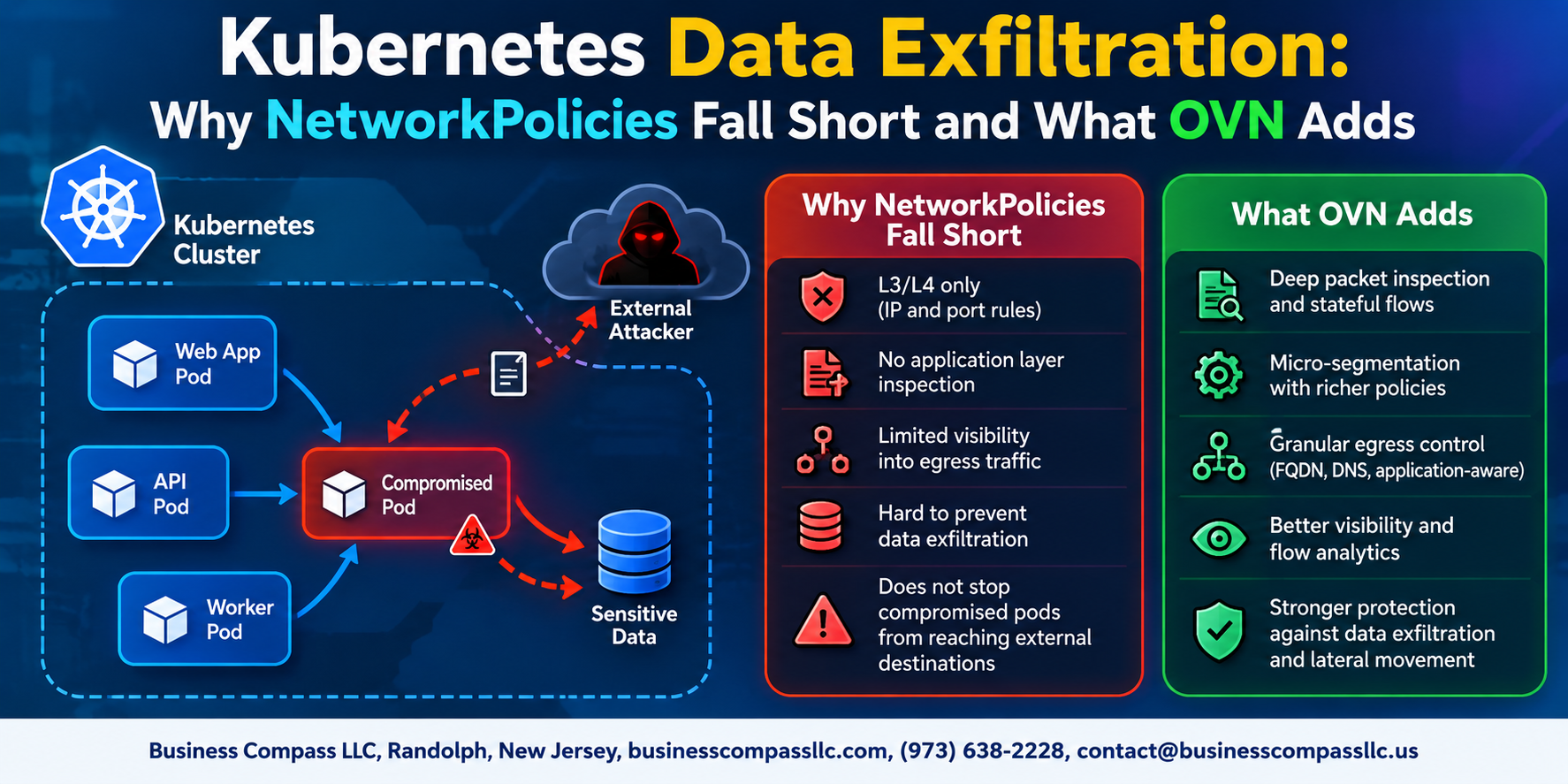
Kubernetes Data Exfiltration: Why NetworkPolicies Fall Short and What OVN Adds
If you’re running workloads in Kubernetes and relying solely on NetworkPolicies to keep data safe, you’ve got a gap in your defenses — and attackers know it.
This guide is for platform engineers, security architects, and DevSecOps teams who are responsible for locking down Kubernetes clusters and want to go beyond the basics. If you’ve already set up NetworkPolicies and assumed that was enough, this is the piece that’ll change your thinking.
Here’s what we’re going to dig into:
- Where Kubernetes NetworkPolicy limitations leave you exposed — specifically around egress traffic and DNS-based exfiltration that standard policies simply can’t catch
- What Open Virtual Network (OVN) actually adds to Kubernetes network security — not just in theory, but in practical enforcement capabilities that native policies don’t have
- How to build a layered Kubernetes defense strategy that combines OVN-powered controls with other tools to seriously reduce your Kubernetes data exfiltration risk
Kubernetes network security isn’t a checkbox — it’s a stack. By the end of this, you’ll know exactly which parts of that stack NetworkPolicies cover, which parts they don’t, and how OVN Kubernetes security fills those gaps in a way that actually holds up under real attack conditions.
Let’s get into it.
Understanding Data Exfiltration Risks in Kubernetes Environments
How Attackers Exploit Kubernetes to Steal Sensitive Data
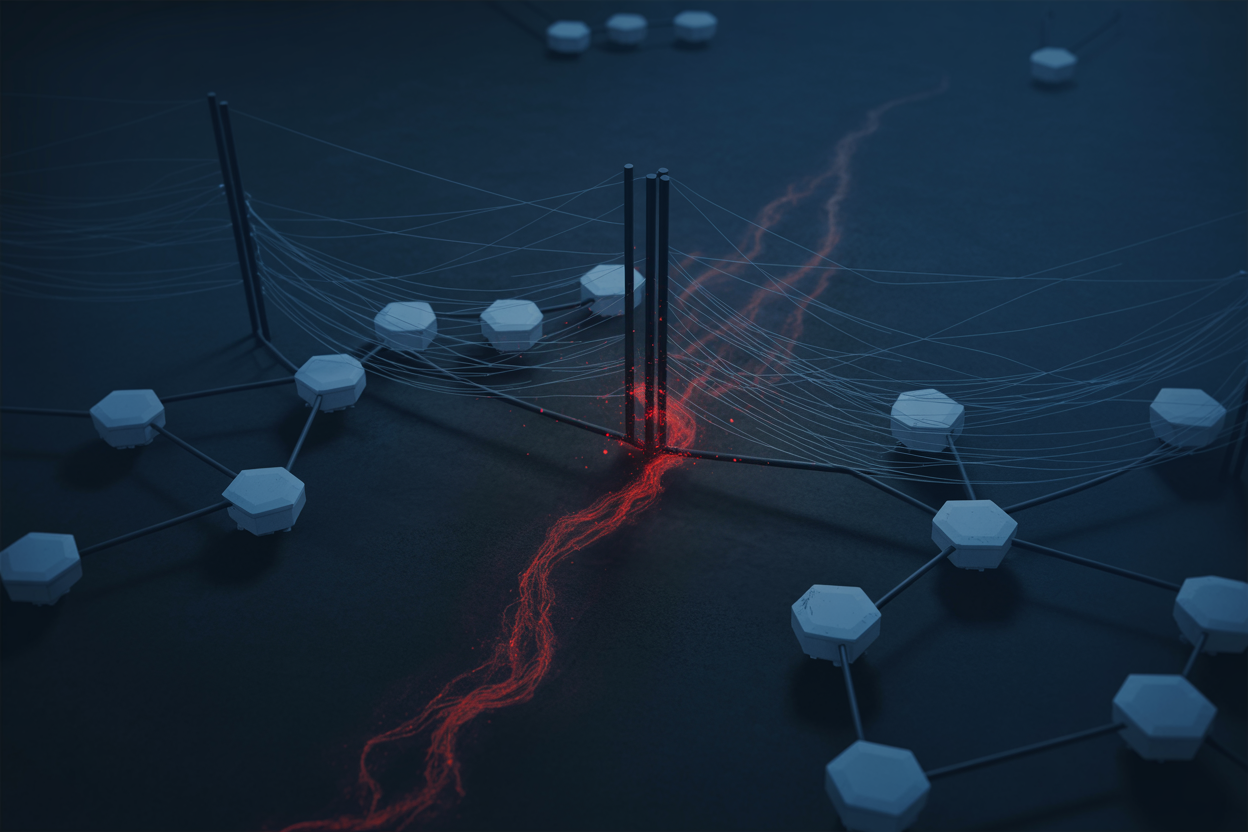
Kubernetes data exfiltration happens fast — compromised pods, stolen service account tokens, and misconfigured RBAC give attackers direct access to secrets, databases, and APIs. Cloud-native architectures expand this attack surface dramatically, turning lateral movement into a quiet, devastating breach with real financial and reputational damage.
How Kubernetes NetworkPolicies Work and Where They Stop

Core Mechanics of NetworkPolicy Enforcement
Kubernetes NetworkPolicies control pod traffic using label selectors, but enforcement depends entirely on your CNI plugin.
The Dependency on CNI Plugins and Its Hidden Risks
- Not all CNIs support NetworkPolicies fully
- Misconfigured plugins silently skip rules
Gaps in Egress Filtering That Leave Clusters Exposed
No built-in DNS-level filtering exists, making Kubernetes data exfiltration via external endpoints easy to miss.
Critical Limitations That Make NetworkPolicies Insufficient Alone

A. DNS-Based Exfiltration Goes Undetected
NetworkPolicies can’t inspect DNS queries, making DNS tunneling a wide-open exfiltration channel.
B. No Layer 7 Visibility
HTTP headers, payloads, and app-level traffic patterns stay invisible to NetworkPolicies.
C. No Cluster-Wide Enforcement
Policies are namespace-scoped, creating dangerous Kubernetes egress security gaps across tenants and workloads.
What OVN Brings to Kubernetes Network Security

How OVN Extends Network Control Beyond Standard CNI Capabilities
Open Virtual Network Kubernetes security goes deeper than basic CNI plugins by operating at the virtual switch and router level, enabling stateful connection tracking to catch malicious flows early. Unlike iptables-dependent approaches, OVN enforces granular egress policies that effectively stop Kubernetes data exfiltration before packets leave the cluster.
Stopping Exfiltration with OVN-Powered Policy Enforcement

Implementing Fine-Grained Egress Controls to Restrict Outbound Data
OVN-powered egress controls let you lock down exactly which pods can send data outside your cluster, blocking unauthorized destinations before packets even leave the node.
Leveraging OVN ACLs to Block Unauthorized External Connections
OVN ACLs enforce stateful rules at the hypervisor level, stopping exfiltration attempts that slip past standard Kubernetes NetworkPolicies.
Combining OVN with Threat Detection Tools for Real-Time Response
Pair OVN with tools like Falco for instant alerts on suspicious outbound traffic.
Building a Layered Defense Strategy Beyond NetworkPolicies

Integrating OVN with Service Mesh, Admission Controllers, and Zero-Trust
A solid layered Kubernetes defense strategy combines OVN egress controls, service mesh mTLS inspection, and admission controllers that block misconfigured NetworkPolicies before deployment. Pair these with continuous anomaly monitoring and zero-trust principles—every workload must authenticate, minimizing lateral movement and dramatically reducing your Kubernetes data exfiltration attack surface.

Kubernetes NetworkPolicies are a solid starting point, but they were never designed to be your last line of defense against data exfiltration. They lack DNS-aware filtering, have no built-in egress inspection, and leave too many gaps that attackers can slip through if your environment isn’t hardened beyond the basics.
OVN fills those gaps in meaningful ways — giving you stateful traffic control, granular egress enforcement, and the kind of visibility that helps you catch suspicious behavior before data walks out the door. Pair that with a layered defense strategy, and you’re in a much stronger position. If you’re running workloads in Kubernetes that touch sensitive data, now is a good time to audit your current network policies, explore OVN integration, and make sure your security stack isn’t leaning too hard on a single control.