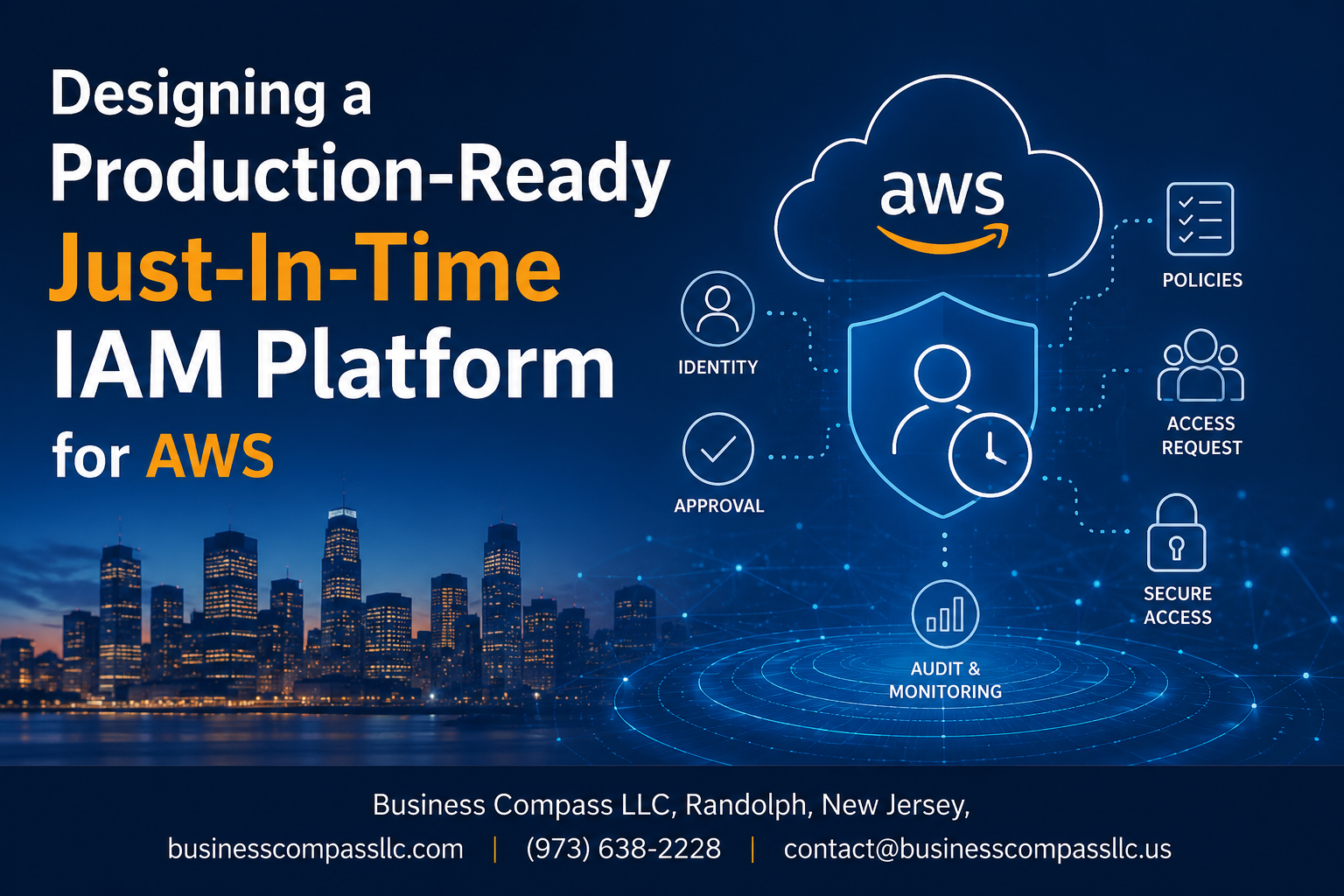
Designing a Production-Ready Just-In-Time IAM Platform for AWS
Permanent AWS permissions are a security liability. If your team is still handing out standing access to production environments, you’re carrying risk that doesn’t need to exist. A Just-In-Time IAM AWS platform fixes that by giving engineers exactly the access they need, exactly when they need it, and nothing more.
This guide is for AWS security engineers, cloud architects, and DevOps teams who want to move beyond static IAM roles and build something that actually holds up in production.
Here’s what we’ll walk through:
- What JIT access management actually means in an AWS context and why AWS least privilege access stops being theoretical once you build it this way
- The core architecture decisions that separate a proof-of-concept from a production-ready IAM platform — including how to design secure access request flows on AWS that don’t slow your developers down
- How to enforce temporary AWS permissions at scale while keeping your audit trail clean and your monitoring sharp enough to catch problems before they become incidents
By the end, you’ll have a clear picture of how to design AWS IAM architecture that’s both secure and usable — because a JIT provisioning AWS setup that developers work around is just standing access with extra steps.
Understanding Just-In-Time IAM and Why It Matters for AWS

The Security Risks of Standing Privileges in Cloud Environments
Permanent AWS credentials are a ticking time bomb. Stolen keys, misconfigured roles, or insider threats can expose your entire infrastructure instantly.
How JIT Access Reduces Attack Surface
Temporary AWS permissions shrink your attack window dramatically — no standing access means nothing for attackers to steal or misuse long-term.
Core Components of a Production-Ready JIT IAM Platform

Centralized Access Request and Approval Workflows
Slack-based approval bots or internal portals handle requests, routing them to the right approvers automatically.
Temporary Credential Issuance Using AWS STS and IAM Roles
AWS STS AssumeRole delivers short-lived credentials, expiring automatically—no cleanup needed.
Policy Engines for Fine-Grained Permission Scoping
Tools like Cedar or OPA scope permissions to exact resources.
Audit Logging and Real-Time Access Monitoring
CloudTrail captures every action for full JIT access management visibility.
Designing the Architecture for Scale and Reliability

Choosing the Right AWS Services to Power Your JIT Platform
Use Lambda, Step Functions, and STS AssumeRole for temporary AWS permissions orchestration.
Building High Availability Into Every Layer
- Multi-AZ deployments
- DynamoDB for state storage
Handling Multi-Account Environments With AWS Organizations
Centralize JIT IAM AWS policies through AWS Organizations SCPs.
Implementing Secure and Seamless Access Request Flows

Integrating Identity Providers and SSO for Smooth Authentication
Connect your existing IdP (Okta, Azure AD) via SAML or OIDC to AWS IAM Identity Center, letting users request temporary AWS permissions without separate credentials.
Defining Approval Chains That Balance Speed With Security
- Auto-approve low-risk requests
- Route sensitive access to managers
Setting Intelligent Time-to-Live Policies
Scope session duration to task length — production database access might allow 2 hours, admin roles just 30 minutes.
Automating Access Revocation
AWS Lambda triggers automatically strip permissions when TTL expires, removing human error from JIT access management workflows.
Enforcing Least Privilege at Production Scale

Using Permission Boundaries to Constrain Maximum Access Levels
Set hard ceilings on what JIT-provisioned roles can ever do, regardless of attached policies.
Leveraging AWS IAM Access Analyzer to Detect Over-Permissioning
Catch unused permissions automatically before they become risks.
Applying Attribute-Based Access Control for Context-Aware Policies
Tag resources and principals to drive dynamic, temporary AWS permissions decisions.
Monitoring, Auditing, and Continuously Improving Your JIT Platform

Centralizing Logs With AWS CloudTrail and Amazon CloudWatch
Stream every JIT access event into CloudTrail, then push logs to CloudWatch for real-time visibility into temporary AWS permissions granted or revoked.
Setting Up Alerts for Anomalous Access Patterns
- Trigger alarms on unusual privilege escalation or off-hours access requests.
Conducting Regular Access Reviews
- Quarterly reviews refine least-privilege policies.

Building a Just-In-Time IAM platform for AWS is not a one-and-done project — it’s an ongoing commitment to keeping access secure, minimal, and auditable. From defining the core components and designing a scalable architecture to building smooth access request flows and enforcing least privilege at every layer, each piece plays a critical role in making the platform truly production-ready. Layering in solid monitoring and auditing practices ensures the system stays healthy and keeps improving over time.
If you’re ready to move forward, start small — pick a single access pattern, build the workflow around it, and prove the model works before scaling out. The teams that get the most out of JIT IAM are the ones that treat it as a living system, not a checkbox. Build it right, keep refining it, and your AWS environment will be a much safer place for it.