AWS IAM user migration can feel overwhelming when you’re managing hundreds or thousands of user accounts across multiple environments. This guide is designed for DevOps engineers, cloud architects, and IT administrators who need to move user identities safely while keeping systems running smoothly.
When done right, automated user migration AWS processes save time, reduce errors, and maintain security standards throughout the transition. The key is building a solid strategy that handles both the technical complexity and business requirements of enterprise-level moves.
We’ll walk through creating a secure IAM migration strategy that covers planning your automation approach from start to finish. You’ll also learn about the essential AWS tools for automated IAM migration, including native services and third-party solutions that streamline the entire process. Finally, we’ll dive into implementing secure migration workflows that protect sensitive access controls while scaling operations efficiently across your organization.
Understanding AWS IAM User Migration Challenges

Common Pitfalls in Manual IAM User Transfers
Manual AWS IAM migration often leads to costly mistakes that can compromise security and operational efficiency. Organizations frequently encounter incomplete user permission mapping, where access policies get partially transferred or misconfigured during the process. This creates access gaps that either leave users unable to perform their duties or inadvertently grant excessive permissions.
Human error ranks among the most significant challenges in manual migrations. Teams often struggle with:
- Inconsistent policy application across user groups
- Missing or duplicate user accounts due to tracking issues
- Incorrect role assignments that don’t match original permissions
- Lost custom policies that weren’t properly documented
- Broken service integrations requiring manual reconfiguration
Time-consuming processes plague manual approaches, especially when migrating hundreds or thousands of users. Teams spend weeks manually recreating user configurations, policies, and group memberships. This extended timeline increases the risk of errors and creates operational disruptions.
Documentation gaps compound these issues. Organizations rarely maintain comprehensive records of their existing IAM configurations, making it difficult to verify successful migrations or troubleshoot issues post-transfer.
Security Risks Associated with Improper Migration
Improper IAM user migration exposes organizations to serious security vulnerabilities that can have lasting consequences. The most critical risk involves privilege escalation, where users accidentally receive elevated permissions during the migration process. This typically happens when administrators apply overly broad policies to expedite the transfer, essentially granting users more access than they originally possessed.
Credential exposure represents another major concern. During manual migrations, temporary passwords or access keys often get transmitted through insecure channels like email or shared documents. These credentials may remain active longer than necessary, creating attack vectors for malicious actors.
Key security risks include:
- Orphaned accounts with active credentials but no oversight
- Policy conflicts that create unintended access paths
- Audit trail gaps during the migration window
- Multi-factor authentication disruptions affecting account security
- Cross-account access issues in complex AWS environments
Data breaches become more likely when migration teams rush through security validations. Organizations may inadvertently expose sensitive resources to unauthorized users or create backdoor access paths that bypass normal security controls.
Scalability Limitations of Traditional Approaches
Traditional manual IAM migration methods simply don’t scale for enterprise environments. Organizations with thousands of users quickly discover that manual processes become bottlenecks that slow business operations and strain IT resources.
Resource allocation becomes increasingly problematic as migration scope expands. Teams need dedicated administrators working full-time on user transfers, pulling valuable personnel away from other critical projects. The linear relationship between user count and required effort means that large migrations can consume months of dedicated work.
Manual approaches also struggle with:
- Concurrent migration limitations due to human capacity constraints
- Quality assurance bottlenecks when validating large user groups
- Rollback complexity if issues arise during large-scale transfers
- Integration challenges across multiple AWS accounts or regions
- Compliance verification delays for regulated industries
Automated IAM migration strategies address these scalability challenges by leveraging AWS tools and APIs to handle bulk operations efficiently. Organizations can migrate thousands of users in hours rather than weeks while maintaining consistent security standards throughout the process.
The cost implications of manual scaling become significant when factoring in administrator time, potential security incidents, and business disruption from extended migration timelines. Scalable AWS user migration requires purpose-built automation tools designed for enterprise IAM migration workflows.
Planning Your Automated IAM Migration Strategy

Assessing current IAM user configurations and dependencies
Before diving into your AWS IAM migration automation, you need a crystal-clear picture of what you’re working with. Start by running comprehensive audits across all your AWS accounts to catalog existing IAM users, their attached policies, group memberships, and access patterns. The AWS CLI and IAM API can help extract this data systematically, but don’t overlook third-party tools that provide enhanced visibility.
Pay special attention to programmatic users with access keys, as these often have complex dependencies spanning multiple applications and services. Document which users have MFA enabled, their last activity dates, and any custom inline policies that might complicate migration. Cross-reference users against your organization’s directory services like Active Directory to identify accounts that should be federated rather than migrated as standalone IAM users.
Map out service-to-service dependencies by analyzing CloudTrail logs to understand how different IAM users interact with AWS resources. This detective work prevents nasty surprises during migration when applications suddenly lose access to critical resources.
Defining migration scope and timeline requirements
Smart AWS IAM migration strategy starts with realistic scope definition. Break down your user base into logical groups based on business criticality, technical complexity, and organizational structure. Consider migrating non-production users first to iron out any kinks in your automated processes before touching production workloads.
Establish clear timelines that account for testing phases, rollback windows, and coordination with business stakeholders. Factor in maintenance windows for critical applications and consider regulatory requirements that might dictate specific migration sequences. Your timeline should include buffer time for unexpected issues—trust me, they always pop up.
Create migration waves that balance risk with efficiency. Group similar user types together to maximize your automation investment while keeping blast radius manageable. Document dependencies between user groups to avoid breaking workflows during phased migrations.
Establishing security compliance standards
Your automated IAM migration strategy must align with both AWS security best practices and your organization’s compliance requirements. Define baseline security standards that every migrated user must meet, including mandatory MFA activation, password policies, and access review schedules.
Establish policies for handling privileged accounts, service accounts, and emergency access procedures. Document which permissions require explicit approval during migration and create templates for common user roles to ensure consistency. Your automation should enforce these standards automatically rather than relying on manual verification.
Consider regulatory frameworks like SOX, HIPAA, or PCI DSS that might impact your IAM migration approach. Some compliance standards require specific audit trails or approval workflows that your automation must accommodate. Build these requirements into your migration workflow from the start rather than bolting them on later.
Creating rollback procedures for risk mitigation
Every solid AWS IAM migration automation strategy needs bulletproof rollback procedures. Design your automation to maintain complete snapshots of original user configurations before making any changes. This includes policy attachments, group memberships, access keys, and even password age information where possible.
Create automated rollback triggers based on specific failure conditions like authentication failures exceeding thresholds or critical applications losing access. Your rollback procedures should restore users to their exact pre-migration state within minutes, not hours. Test these procedures regularly in non-production environments to ensure they work when you need them.
Document manual rollback steps for scenarios where automation fails. Include contact information for key stakeholders and clear decision trees for determining when to trigger rollbacks. Consider implementing gradual rollback options that can restore subsets of users rather than requiring full migration reversal.
Build monitoring into your rollback strategy to detect issues early. Set up CloudWatch alarms for authentication failures, permission denied errors, and other indicators that might signal migration problems requiring immediate rollback action.
Essential AWS Tools for Automated IAM Migration
AWS CLI Commands for Bulk User Operations
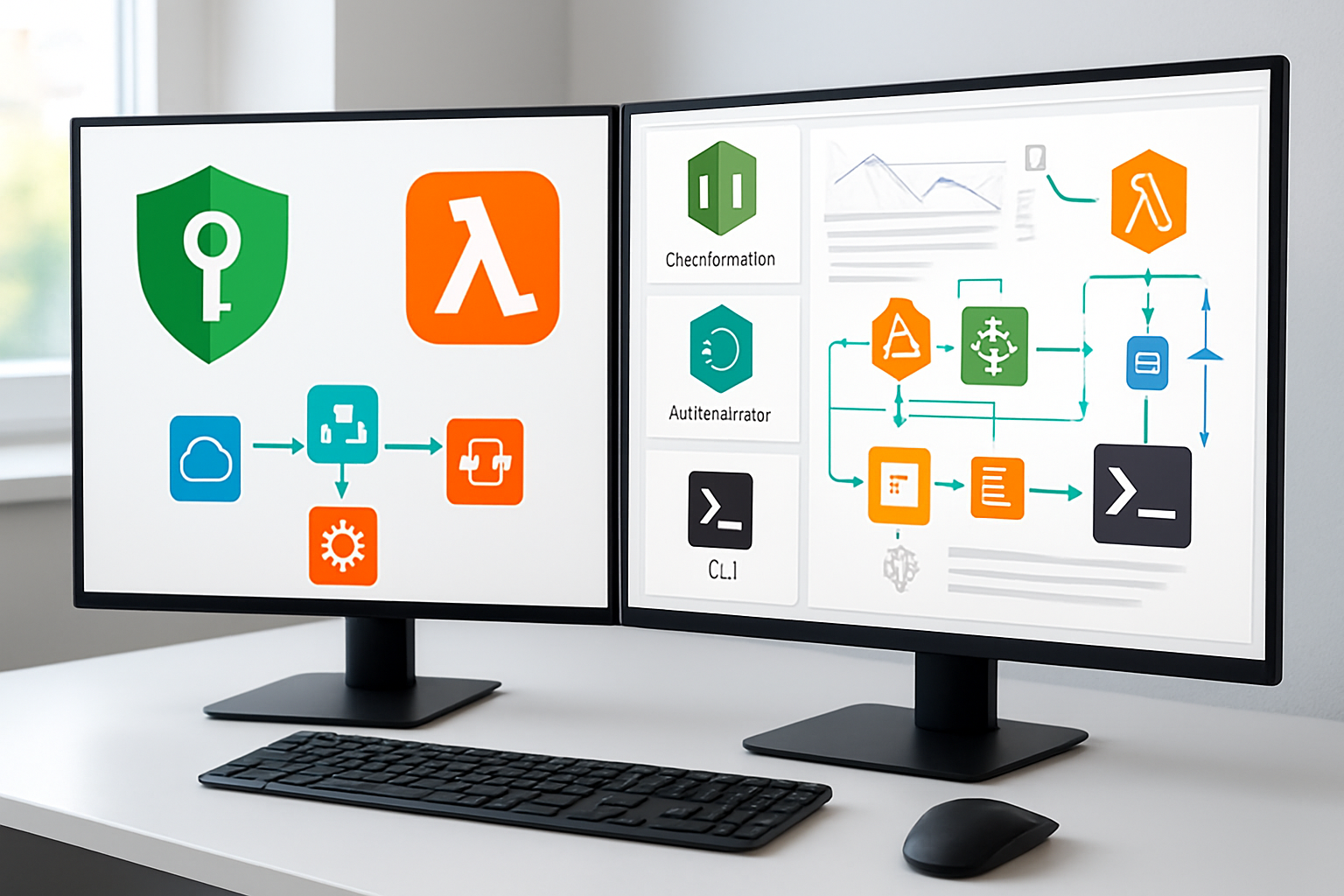
The AWS Command Line Interface serves as your primary weapon for executing bulk IAM operations during automated user migration. With the right commands, you can process hundreds or thousands of users without breaking a sweat.
Start with aws iam list-users to inventory your existing user base and export the data to JSON format for analysis. The --max-items parameter helps you paginate through large user datasets efficiently. For bulk user creation, combine aws iam create-user with shell scripting or batch files to process CSV imports containing user details.
Password management becomes streamlined using aws iam create-login-profile for users requiring console access, while aws iam attach-user-policy handles permission assignments at scale. The real power emerges when you chain these commands together using AWS CLI’s --cli-input-json parameter, feeding pre-formatted JSON files containing user configurations.
Key commands for AWS IAM migration automation include:
aws iam create-access-keyfor programmatic access setupaws iam put-user-policyfor inline policy assignmentsaws iam add-user-to-groupfor group membership managementaws iam tag-userfor organizational metadata
Error handling becomes critical during bulk operations. Implement retry logic using the --cli-read-timeout and --cli-connect-timeout parameters to handle API throttling gracefully. Always use --dry-run where available to validate operations before execution.
CloudFormation Templates for Infrastructure as Code
CloudFormation transforms IAM user migration from manual drudgery into repeatable, version-controlled processes. Your templates become the blueprint for consistent user provisioning across multiple AWS accounts and environments.
Design modular templates that separate user definitions, group structures, and policy attachments. This approach allows you to update specific components without affecting the entire infrastructure. Start with a master template that references nested stacks for users, groups, and roles respectively.
Parameters make your templates flexible enough to handle different migration scenarios:
Parameters:
  Environment:
    Type: String
    AllowedValues: [dev, staging, prod]
  UserPrefix:
    Type: String
    Default: "migrated-"
  BulkUserCount:
    Type: Number
    Default: 50
Resource loops using CloudFormation’s transform functions enable bulk user creation without template bloat. The AWS::IAM::User resource type supports all necessary properties for comprehensive user setup, including login profiles, access keys, and group memberships.
Stack policies protect against accidental deletions during migration updates. Apply protection to critical IAM resources while allowing modifications to user-specific properties. Drift detection helps maintain consistency between your templates and actual AWS resources after manual changes.
Cross-stack references using outputs and imports create dependencies between related IAM components. This ensures proper resource ordering during stack creation and updates, preventing permission errors during the automated IAM migration AWS process.
AWS SDK Integration for Custom Automation Scripts
The AWS SDK unlocks advanced automation capabilities beyond what CLI commands and CloudFormation can achieve alone. Python’s boto3 library offers the most comprehensive IAM functionality for building sophisticated migration scripts.
Custom scripts excel at complex conditional logic that standard tools struggle with. You can implement business-specific rules like user naming conventions, department-based group assignments, or permission inheritance patterns. The SDK’s exception handling provides granular error management for large-scale operations.
Parallel processing dramatically reduces migration time for enterprise-scale deployments. Python’s concurrent.futures module or asyncio libraries enable simultaneous user creation across multiple threads or processes. Always respect AWS API rate limits using exponential backoff strategies.
Essential SDK patterns for scalable AWS user migration include:
- Batch operations: Group API calls to minimize request overhead
- State management: Track migration progress in DynamoDB or S3
- Rollback capabilities: Implement cleanup functions for failed migrations
- Progress reporting: Real-time status updates for stakeholders
- Validation loops: Verify user creation success before proceeding
Integration with external identity providers becomes seamless through SDK automation. Connect to Active Directory, LDAP, or HR systems to synchronize user data automatically. Custom attribute mapping ensures your AWS users maintain consistent identity information across platforms.
The SDK’s pagination handlers automatically manage large result sets without memory issues. Use get_paginator() methods for operations like listing users or policies to avoid timeout errors during data collection phases of your migration workflow.
Implementing Secure Migration Workflows

Multi-factor Authentication Preservation During Transfers
Moving MFA-enabled IAM users requires special attention to maintain security without forcing users to reconfigure their authentication devices. The best approach involves capturing MFA device metadata before migration and establishing a seamless handoff process. When dealing with virtual MFA devices, extract the serial numbers and associated configurations from the source account using AWS CLI commands or CloudFormation templates.
For hardware tokens and SMS-based MFA, document the phone numbers and device serial numbers associated with each user. Create a mapping table that links old user ARNs to new user ARNs along with their MFA device information. This mapping becomes critical when reassigning MFA devices in the destination account.
During the AWS IAM migration process, avoid deleting MFA devices until you’ve successfully recreated them in the target environment. Instead, disable the devices temporarily and re-enable them once the migration validates successfully. This approach prevents users from losing access while maintaining the security benefits of multi-factor authentication throughout the transfer process.
Access Key Rotation and Credential Management
Automated user migration AWS workflows must handle access keys with extreme care since these credentials provide programmatic access to AWS resources. Start by inventorying all active access keys and their last usage timestamps. Keys that haven’t been used in 90+ days can often be deactivated before migration to reduce security risks.
Create a rotation schedule that staggers key updates across different user groups. Never rotate all access keys simultaneously, as this can cause widespread application failures. Instead, implement a phased approach:
- Identify applications and services using each access key
- Create new keys in the destination account
- Update application configurations with new credentials
- Test connectivity and functionality
- Deactivate old keys only after successful validation
Store temporary credentials in AWS Secrets Manager or Parameter Store during the transition period. This centralized approach allows you to track which applications have been updated and which still need attention. Set up automated alerts when old keys are still being used beyond the planned deactivation date.
Policy Validation and Permission Mapping
IAM migration workflow security depends heavily on accurate policy translation between accounts. AWS policies often contain account-specific ARNs that break when moved to different environments. Build validation scripts that scan for hardcoded account numbers, resource names, and cross-account trust relationships.
Create a comprehensive mapping strategy that handles different policy types:
- Identity-based policies: Check for resource ARNs that need updating
- Resource-based policies: Validate trust relationships and cross-account permissions
- Permission boundaries: Ensure boundary policies exist in the target account
- Service-linked roles: Verify automatic recreation in destination accounts
Use AWS Policy Simulator to test migrated policies before applying them to production users. This tool helps identify permission conflicts and validates that users retain appropriate access levels. Pay special attention to policies that reference S3 buckets, Lambda functions, or other resources by name, as these often require manual updates during migration.
Set up automated policy comparison tools that flag differences between source and destination permissions. These tools should highlight both missing permissions and excessive privileges that might have been accidentally introduced during migration.
Audit Trail Maintenance for Compliance Tracking
Secure IAM migration strategy requires comprehensive logging throughout the entire process. CloudTrail provides the foundation for audit trails, but you need additional logging for migration-specific activities. Create dedicated S3 buckets for storing migration logs and configure appropriate retention policies based on compliance requirements.
Track these critical migration events:
- User creation and deletion timestamps
- Policy attachment and detachment activities
- MFA device assignments and modifications
- Access key rotations and status changes
- Group membership modifications
Implement real-time monitoring that alerts administrators when migration activities occur outside scheduled maintenance windows. This helps detect unauthorized changes and ensures all modifications follow approved procedures. Use CloudWatch Events to trigger notifications for specific IAM actions during migration periods.
Document every step of the migration process with timestamps, user IDs, and the specific changes made. This documentation proves invaluable during compliance audits and helps troubleshoot issues that arise after migration. Store audit logs in immutable storage to prevent tampering and ensure data integrity for regulatory requirements.
Cross-reference migration logs with application logs to verify that user access remains functional throughout the transition. This correlation helps identify issues before they impact business operations and provides evidence that IAM user migration best practices were followed correctly.
Scaling Migration Operations Efficiently

Batch processing techniques for large user volumes
Enterprise-scale AWS IAM migration demands efficient batch processing to handle thousands of users without overwhelming your systems. Breaking large user datasets into manageable chunks of 50-100 users per batch prevents memory exhaustion and allows for better error isolation. When one batch fails, you won’t lose progress on the entire migration.
Create logical groupings based on organizational units, departments, or user roles to maintain consistency within each batch. This approach simplifies policy assignment and reduces complexity during automated user migration AWS operations. Store batch metadata in DynamoDB or S3 to track processing status, completion timestamps, and any errors encountered.
Implement exponential backoff between batch executions to respect AWS service limits while maintaining steady progress. Your batch size should adapt based on the complexity of user configurations—smaller batches for users with extensive policy attachments and larger batches for standard user accounts.
Parallel execution strategies to reduce downtime
Multi-threaded execution dramatically reduces migration timeframes by processing multiple user batches simultaneously. AWS Lambda functions excel at parallel processing for IAM migration workflow security, with each function handling independent user subsets. Configure Lambda concurrency limits based on your account’s service quotas to prevent resource contention.
Container-based solutions using Amazon ECS or EKS provide more control over parallel execution environments. Deploy worker containers that process different user segments concurrently, with each container maintaining its own error handling and retry logic. This scalable AWS user migration approach allows you to scale horizontally based on migration volume.
Thread pooling in EC2-based migration scripts enables controlled parallelism within single instances. Set thread counts based on instance CPU cores and memory capacity, typically 2-4 threads per core for I/O-intensive IAM operations. Monitor CloudWatch metrics to optimize thread allocation and prevent resource exhaustion during peak processing periods.
Resource throttling to prevent API rate limiting
AWS IAM API endpoints enforce strict rate limits that can halt migration progress if exceeded. Implement intelligent throttling mechanisms that monitor API call rates and automatically adjust request frequency. Track API calls per second across all parallel processes to stay within service limits.
Circuit breaker patterns protect against cascading failures when rate limits are reached. When consecutive API failures occur, temporarily halt requests and implement graduated retry intervals. This AWS IAM migration best practices approach prevents request queuing that could delay recovery once limits reset.
Use AWS SDK built-in retry logic with jittered backoff to distribute retry attempts across time. Configure maximum retry attempts and timeout values based on your migration timeline requirements. Consider using AWS STS assume role operations to distribute API calls across multiple credentials and increase effective rate limits.
Progress monitoring and error handling mechanisms
Real-time progress tracking keeps stakeholders informed and enables proactive issue resolution during enterprise IAM migration AWS operations. Implement CloudWatch custom metrics to track migration velocity, success rates, and error patterns. Create dashboards that visualize batch completion percentages and estimated completion times.
Dead letter queues capture failed migration attempts for later analysis and reprocessing. Store failed user records with detailed error context, including timestamps, specific API errors, and user configuration details. This enables targeted remediation without reprocessing successfully migrated users.
Implement comprehensive logging using CloudWatch Logs or centralized logging solutions. Structure log entries with consistent formatting to enable automated analysis and alerting. Include correlation IDs that link related operations across distributed processing components, making troubleshooting more efficient during complex migration scenarios.
Testing and Validation Best Practices

Pre-migration Environment Setup and Simulation
Setting up a dedicated testing environment that mirrors your production AWS infrastructure creates the foundation for successful IAM user migration best practices. This testing sandbox should replicate your current IAM structure, including user groups, policies, roles, and resource configurations. Creating an isolated environment prevents any disruption to live systems while allowing comprehensive validation of your automated user migration AWS processes.
Start by documenting your existing IAM architecture and recreating it in the test environment using Infrastructure as Code tools like CloudFormation or Terraform. This approach ensures consistency and enables rapid environment provisioning. Consider using AWS Organizations to create separate testing accounts that maintain billing isolation while preserving the same security boundaries as production.
Your simulation environment should include sample data that represents real-world scenarios without exposing sensitive information. Create test users with varying permission levels, from basic read-only access to administrative privileges. This diversity helps validate that your secure IAM migration strategy handles different user types correctly.
Populate the environment with mock resources across multiple AWS services that your users typically access. This includes EC2 instances, S3 buckets, RDS databases, and Lambda functions configured with appropriate tags and resource-based policies that match production patterns.
Permission Verification Through Automated Testing
Automated testing frameworks prove essential for validating IAM permissions at scale during AWS IAM migration projects. Building comprehensive test suites that verify user permissions across different scenarios saves time and reduces human error while ensuring migration accuracy.
Develop automated scripts that systematically test each migrated user’s access to specific resources. These scripts should attempt various operations like reading, writing, and deleting resources to confirm that permissions align with business requirements. Use AWS CLI or SDKs to programmatically test access patterns and capture results in structured formats for easy analysis.
Create permission matrices that map users to expected resources and actions. Your automated testing should validate each combination, flagging any discrepancies between intended and actual permissions. This systematic approach helps identify permission drift or misconfigured policies before they impact production workflows.
Implement continuous testing throughout the migration process rather than relying on single-point validation. As you migrate user batches, run automated tests to ensure previously migrated users maintain correct access while new users receive appropriate permissions. This ongoing validation catches configuration changes that might affect existing users.
Consider using AWS Access Analyzer to complement your automated testing. This tool provides insights into resource access patterns and can identify unused permissions or overly broad access grants that pose security risks.
User Access Validation Across Multiple Services
Validating user access across AWS services requires systematic testing that goes beyond simple permission checks. Your validation process should simulate real user workflows that span multiple services, ensuring seamless operation after migration completion.
Create user journey tests that replicate common business processes. For example, if users typically upload files to S3, process them with Lambda, and store results in RDS, your validation should test this entire workflow. These end-to-end tests reveal integration issues that isolated permission checks might miss.
Deploy monitoring tools that track user activities during validation testing. CloudTrail logs provide detailed records of API calls, helping you verify that users can perform their required tasks without encountering access denials. Set up CloudWatch dashboards to visualize access patterns and identify any anomalies.
Test cross-service permissions thoroughly, as many AWS workflows depend on services communicating with each other. Validate that users can create resources that trigger other services, such as S3 events that invoke Lambda functions or EC2 instances that access Systems Manager parameters.
Organize validation testing by service categories and user roles. Group similar services together and test users with comparable responsibilities in batches. This approach streamlines the validation process while ensuring comprehensive coverage across your AWS infrastructure.
Document validation results systematically, tracking which users have been tested, what services were verified, and any issues discovered. This documentation becomes valuable for troubleshooting post-migration problems and serves as evidence of due diligence for compliance audits.
Monitoring and Maintaining Post-Migration Security

Continuous compliance monitoring setup
Setting up continuous compliance monitoring after your AWS IAM migration creates a safety net that catches security issues before they become serious problems. CloudTrail serves as your primary audit log, capturing every API call and user action across your AWS environment. Enable CloudTrail on all regions and configure it to send logs to CloudWatch Logs for real-time analysis.
AWS Config becomes your compliance watchdog, automatically evaluating your IAM configurations against security best practices. Configure rules that check for unused access keys, overly permissive policies, and dormant user accounts. The AWS Config dashboard gives you a clear view of compliance status across your entire infrastructure.
Access Analyzer provides deep insights into resource permissions and potential security risks. It continuously monitors your IAM policies and identifies when resources can be accessed from outside your AWS account or organization. This tool becomes especially valuable after migration when you want to verify that permissions haven’t been inadvertently expanded.
Set up AWS Security Hub as your centralized security dashboard. It aggregates findings from multiple security services and provides a unified view of your security posture. The hub automatically runs security checks against industry standards like AWS Foundational Security Standard and CIS benchmarks.
Create custom CloudWatch metrics to track key security indicators like failed login attempts, privilege escalations, and policy changes. These metrics feed into your monitoring dashboards and provide early warning signs of potential security issues.
Automated alerting for policy violations
Automated alerting transforms your monitoring setup from passive observation to active security management. CloudWatch Alarms trigger when specific thresholds are breached, sending notifications through SNS topics to your security team via email, SMS, or integration with incident management tools like PagerDuty.
Configure EventBridge rules to capture specific IAM events in real-time. When someone creates a new user, modifies a policy, or attempts to access resources they shouldn’t, EventBridge can trigger Lambda functions that evaluate the event and send appropriate alerts. This automation ensures your team knows about security events within minutes rather than discovering them during periodic reviews.
AWS GuardDuty provides intelligent threat detection that goes beyond simple rule-based alerting. It uses machine learning to identify unusual patterns like impossible travel scenarios, cryptocurrency mining, or communication with known malicious IP addresses. GuardDuty findings automatically appear in Security Hub and can trigger custom response workflows.
Build alert severity levels that match your organization’s needs. Critical alerts for privilege escalation attempts should page your on-call security engineer immediately, while informational alerts about routine password changes can be batched into daily reports. This prevents alert fatigue while ensuring serious issues get immediate attention.
Lambda functions can serve as smart alert processors, enriching alerts with additional context before sending notifications. For example, when a policy violation occurs, your Lambda function can look up the user’s recent activity, check if they’re part of a known migration batch, and include relevant context in the alert.
Regular access review and cleanup processes
Establishing regular access review cycles keeps your post-migration environment clean and secure. Automated access reviews should run monthly for critical systems and quarterly for less sensitive resources. AWS Identity Center provides native access review capabilities that streamline this process for federated identities.
Create automated workflows using Step Functions that identify inactive users, unused roles, and overly broad permissions. These workflows can generate reports for managers to review and approve access changes. The automation handles the heavy lifting of data gathering while keeping humans in the approval loop for security-critical decisions.
Implement lifecycle management for temporary access grants. Many organizations create temporary elevated permissions during migrations or troubleshooting sessions but forget to revoke them afterward. Automated cleanup processes can identify time-bounded permissions that have expired and remove them without manual intervention.
Use AWS Cost Explorer to identify unused resources that might indicate orphaned permissions. When EC2 instances or RDS databases are terminated, their associated IAM roles and policies often remain active. Regular cleanup processes should cross-reference active resources with IAM configurations to identify and remove unnecessary permissions.
Build automated reports that track permission usage patterns over time. These reports help identify users who consistently need elevated permissions (candidates for permanent role assignments) versus those who rarely use their current access levels (candidates for permission reduction). This data-driven approach to access management reduces both security risk and administrative overhead.
Schedule quarterly permission audits where automated tools generate comprehensive access reports for business stakeholders to review. These audits should highlight any permissions that seem inconsistent with job roles or business requirements, creating opportunities for continuous security improvement.

Moving IAM users between AWS environments doesn’t have to be a nightmare of manual work and security risks. The right automation strategy, built on solid planning and the proper AWS tools, can turn what used to be a weeks-long project into a smooth, repeatable process. When you combine secure workflows with smart scaling techniques and thorough testing, you get migrations that actually work without breaking your security posture.
The real game-changer comes down to treating your IAM migration like any other critical infrastructure project. Set up proper monitoring from day one, validate everything before you flip the switch, and keep your automated processes running smoothly after the migration wraps up. Your future self will thank you when the next migration comes around and you can run the same proven playbook instead of starting from scratch.