Stop Leaving Your AWS Data Vulnerable — Here’s How KMS Fixes That
If you’re building applications on AWS and handling sensitive data, encryption isn’t optional — it’s the baseline. AWS Key Management Service (AWS KMS) gives you a straightforward way to manage encryption keys, control who accesses them, and keep a clean audit trail without spinning up your own key infrastructure.
This guide is for developers, cloud architects, and DevOps engineers who want to move beyond default security settings and actually lock down their AWS applications properly.
Here’s what we’ll walk through together:
- Setting up AWS KMS and getting your first keys running in your application
- Controlling access using IAM roles and AWS KMS key policies so the right people — and only the right people — can touch your keys
- Monitoring key usage to stay audit-ready and compliant without drowning in logs
You’ll also pick up some practical tips on AWS KMS cost optimization so you’re not paying more than you need to as your app scales.
No fluff, no hand-waving — just the stuff that actually matters when you’re trying to build secure AWS applications the right way. Let’s get into it.
Understanding AWS KMS and Its Role in Application Security

What AWS KMS Is and Why It Matters for Developers
AWS KMS security gives developers a managed service to create and control encryption keys without handling hardware.
Key Concepts: Customer Master Keys, Data Keys, and Key Policies
- CMKs protect data keys
- Data keys encrypt actual data
- Key policies control access
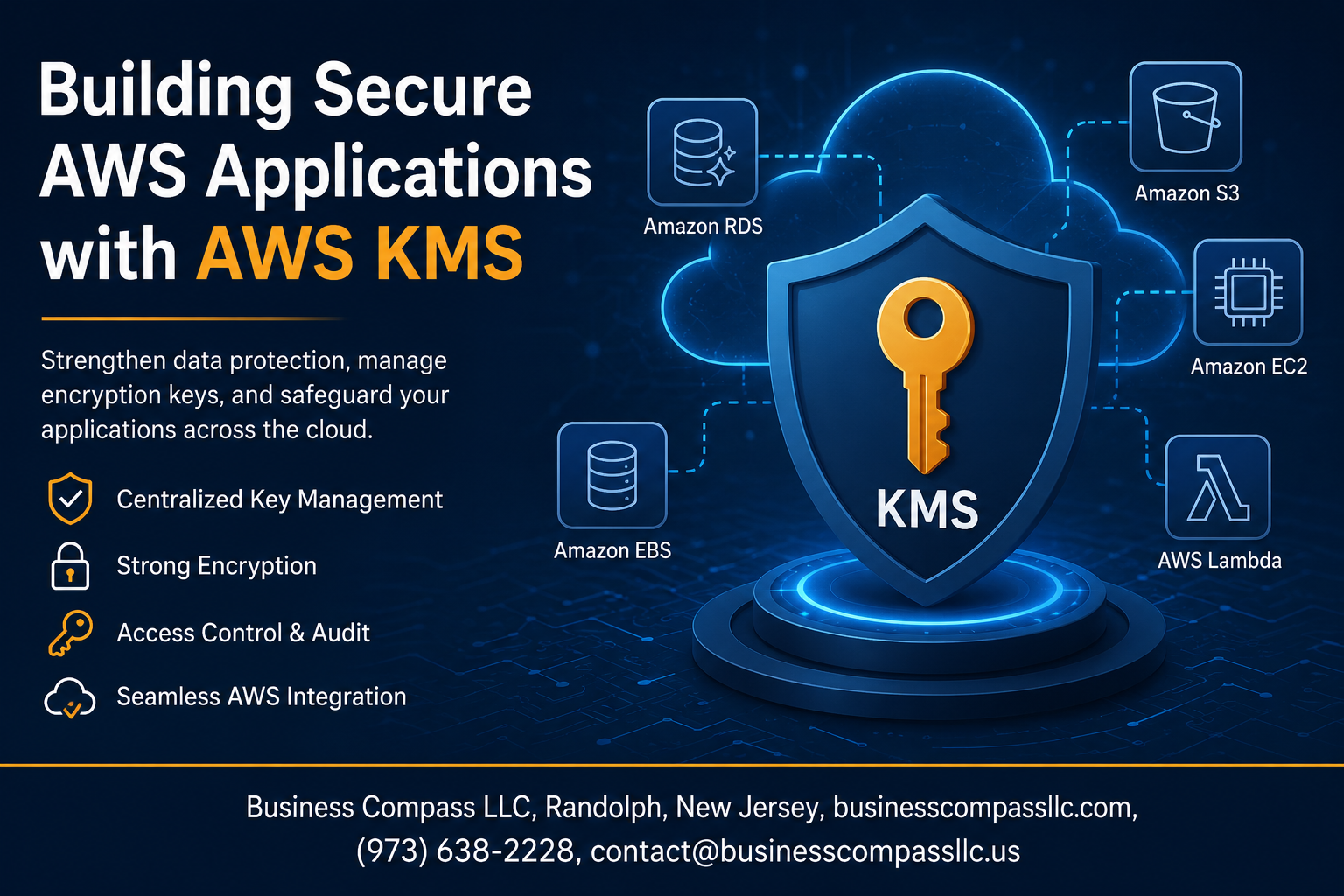
How AWS KMS Integrates with Other AWS Services
Works natively with S3, RDS, and Lambda.
Setting Up AWS KMS for Your Application

Creating and Configuring Customer Managed Keys
Go to AWS KMS console, select Create Key, choose symmetric encryption, and name it clearly.
Defining Key Policies
Set IAM principals with least-privilege access.
Automatic Key Rotation
Enable annually under key settings.
Aliases and Tags
Use alias/app-name and cost-allocation tags for clean managing encryption keys AWS-wide.
Encrypting and Protecting Sensitive Data Effectively

Using Envelope Encryption to Secure Large Data Sets
- Generate a data key via KMS, encrypt your data locally, then store the encrypted data key alongside it.
Encrypting Data at Rest with S3, RDS, and EBS
- Enable AWS KMS encryption directly in each service’s settings.
Protecting Data in Transit Using KMS with API Calls
- Always use HTTPS endpoints.
Controlling Access to Keys with IAM and Key Policies

Granting Least Privilege Access to Minimize Security Risks
Only give users the exact KMS permissions they need—nothing more.
Combining IAM Policies and Key Policies for Layered Protection
Both must allow access; one alone isn’t enough.
Using Grants to Enable Temporary and Delegated Key Access
Grants let services use keys without permanent IAM changes.
Restricting Cross-Account Key Usage Safely
Explicitly allow external accounts in your key policy only.
Monitoring and Auditing Key Usage to Stay Compliant

Tracking Key Activity with AWS CloudTrail Logs
Enable CloudTrail to capture every AWS KMS API call automatically.
Setting Up CloudWatch Alerts for Suspicious Key Usage
- Trigger alerts on unusual decrypt spikes or unauthorized access attempts.
Reviewing Key Access Reports to Meet Compliance Requirements
Regular AWS KMS audit reviews keep you aligned with SOC2 and PCI-DSS standards.
Optimizing Cost and Performance When Using AWS KMS

Reducing API Call Costs with Data Key Caching
Cache data keys locally to avoid repeated KMS API calls, cutting costs significantly.
Choosing the Right Key Type to Balance Security and Performance
Symmetric keys are faster and cheaper than asymmetric keys for most encryption tasks.
Avoiding Common Mistakes That Lead to Unnecessary KMS Charges
- Avoid calling
GenerateDataKeyper-request - Reuse cached keys whenever possible

Keeping your AWS applications secure doesn’t have to be overwhelming. AWS KMS gives you a solid foundation to encrypt sensitive data, control who gets access to your keys, and keep a close eye on how those keys are being used. When you pair that with smart IAM policies and regular auditing, you’re building security that actually holds up — not just checking a compliance box.
The best part? You don’t have to sacrifice performance or break the bank to do it right. With a little planning around cost optimization and thoughtful key management, AWS KMS fits naturally into your workflow. Start small if you need to — encrypt your most sensitive data first, lock down access, and build from there. Security is a journey, and AWS KMS is one of the best travel companions you can have for it.