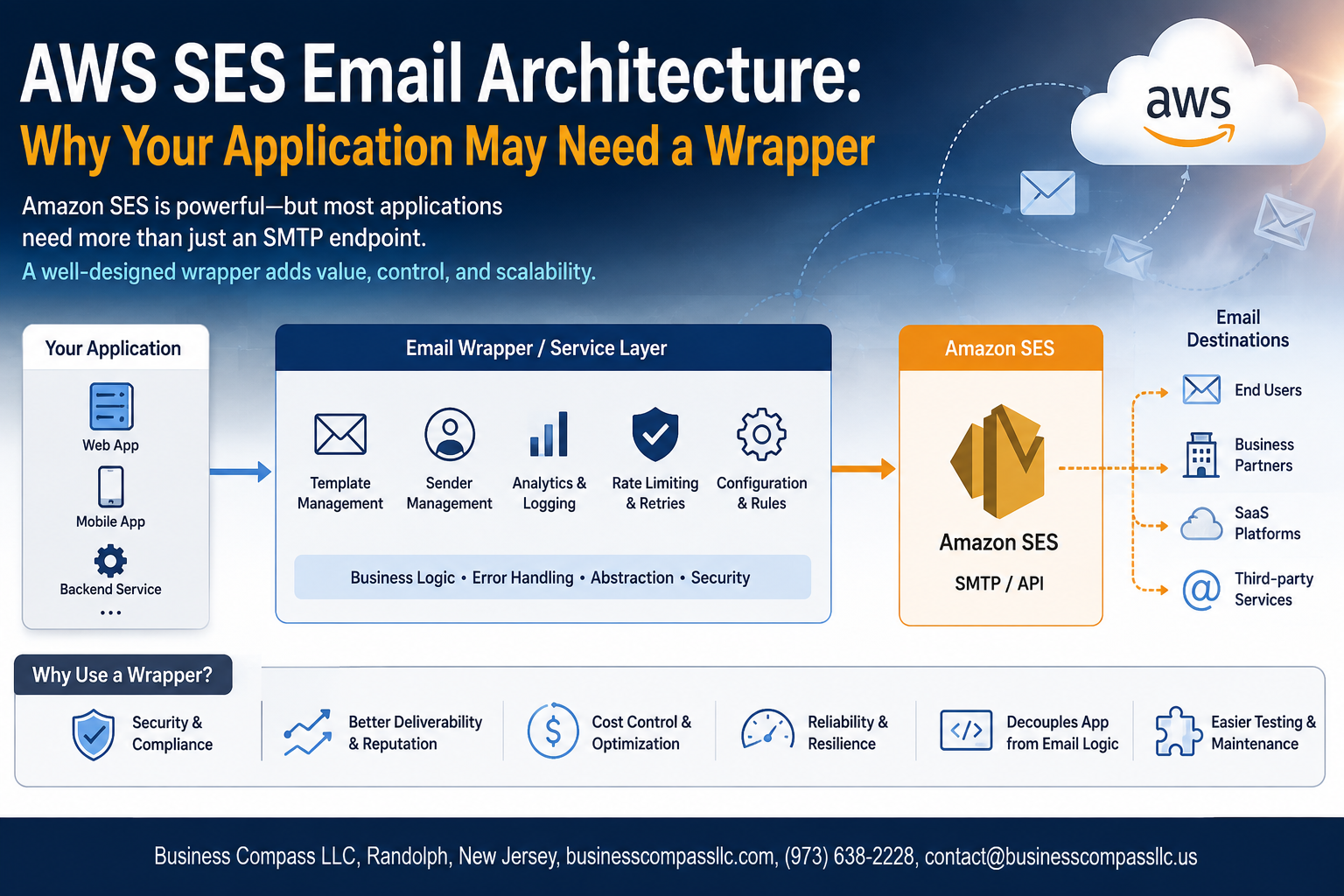
AWS SES Email Architecture: Why Your Application May Need a Wrapper
If you’re building an application that sends emails, AWS Simple Email Service probably made your shortlist fast. It’s affordable, scalable, and backed by Amazon’s infrastructure. But dropping raw SES calls directly into your application code is a decision that tends to age poorly.
This guide is for backend developers, software architects, and engineering leads who are either setting up SES email integration for the first time or untangling a setup that’s already gotten messy.
Here’s what we’ll walk through:
- What AWS SES actually does well — and where it stops short when your application starts growing
- What an AWS SES wrapper is and how this email service wrapper design sits between your app and SES to handle the heavy lifting
- The real benefits of building an SES wrapper — from cleaner code to easier debugging and better control over deliverability
By the end, you’ll have a clear picture of whether your current setup is working for you or quietly working against you — and what to do about it.
Understanding AWS SES and Its Core Capabilities

What AWS SES Offers for Transactional and Bulk Email
AWS SES email architecture handles transactional alerts, marketing blasts, and password resets at scale—cheaply.
Key Features That Make SES a Popular Choice
- High deliverability with DKIM/SPF support
- Detailed sending metrics
- Sandbox-to-production flexibility
Common Use Cases
E-commerce receipts, SaaS notifications, bulk newsletters.
The Limitations of Using AWS SES Directly in Your Application

A. Lack of Built-In Retry and Failure Handling Logic
AWS SES doesn’t automatically retry failed sends, leaving your app vulnerable to silent drops.
B. No Native Template Management
Teams end up duplicating templates across codebases, causing inconsistency.
C. Event Tracking Needs Extra Setup
Bounces and opens require manual SNS/CloudWatch configuration.
D. Sending Limits Can Sneak Up
Without throttling logic, you’ll hit SES rate limits fast.
What an Email Wrapper Is and How It Works
Defining the Wrapper Pattern in Application Architecture
An AWS SES wrapper sits between your app and SES, acting like a middleman that handles the messy details.
Key Components Every Effective Wrapper Should Include
- Template management – centralized email rendering
- Retry logic – automatic failure handling
- Logging – tracking delivery status
- Provider abstraction – swap SES anytime
Business and Technical Benefits of Building an SES Wrapper

An AWS SES wrapper gives your team centralized control, cleaner error handling, and dead-simple provider switching. Benefits include:
- Centralized behavior: one place to manage retries, throttling, and rules
- Provider flexibility: swap SES without touching app code
- Reliable delivery: catch failures early
- Easy debugging: isolated email logic
- Consistent logging: full visibility
Practical Steps to Designing Your SES Wrapper

A. Choosing the Right Architecture Layer
Place your AWS SES wrapper at the service layer, keeping email logic away from controllers or UI code.
B. Structuring for Reusability
Build generic methods like sendTransactional() and sendMarketing().
C. Bounce and Complaint Handling
Wire SNS topics to your wrapper from day one.
D. Configuration Sets
Track opens, clicks, and delivery rates immediately.
Signs Your Application Urgently Needs an SES Wrapper

A. Repeated Email Failures With No Clear Root Cause
Bounces and silent drops with zero visibility scream for a wrapper layer that centralizes logging.
B. Growing Complexity in Managing Multiple Email Templates
Scattered templates across codebases become unmanageable fast.
C. Inability to Scale Email Volume Without Breaking Existing Logic
Rate-limit errors signal your AWS SES email architecture desperately needs abstraction.

AWS SES is a powerful tool, but plugging it directly into your application without any abstraction layer can quietly create headaches down the road — from scattered email logic to painful debugging sessions. A well-designed wrapper keeps things clean, consistent, and easy to manage, while giving your team the flexibility to make changes without touching every corner of your codebase.
If your application is sending emails in more than one or two places, or you’re already noticing duplicate logic and inconsistent formatting creeping in, that’s your sign to build the wrapper now rather than later. Start simple, keep it focused, and let it grow with your needs. Your future self — and your teammates — will thank you.