

Stop Leaving Money on the Table With Amazon Bedrock
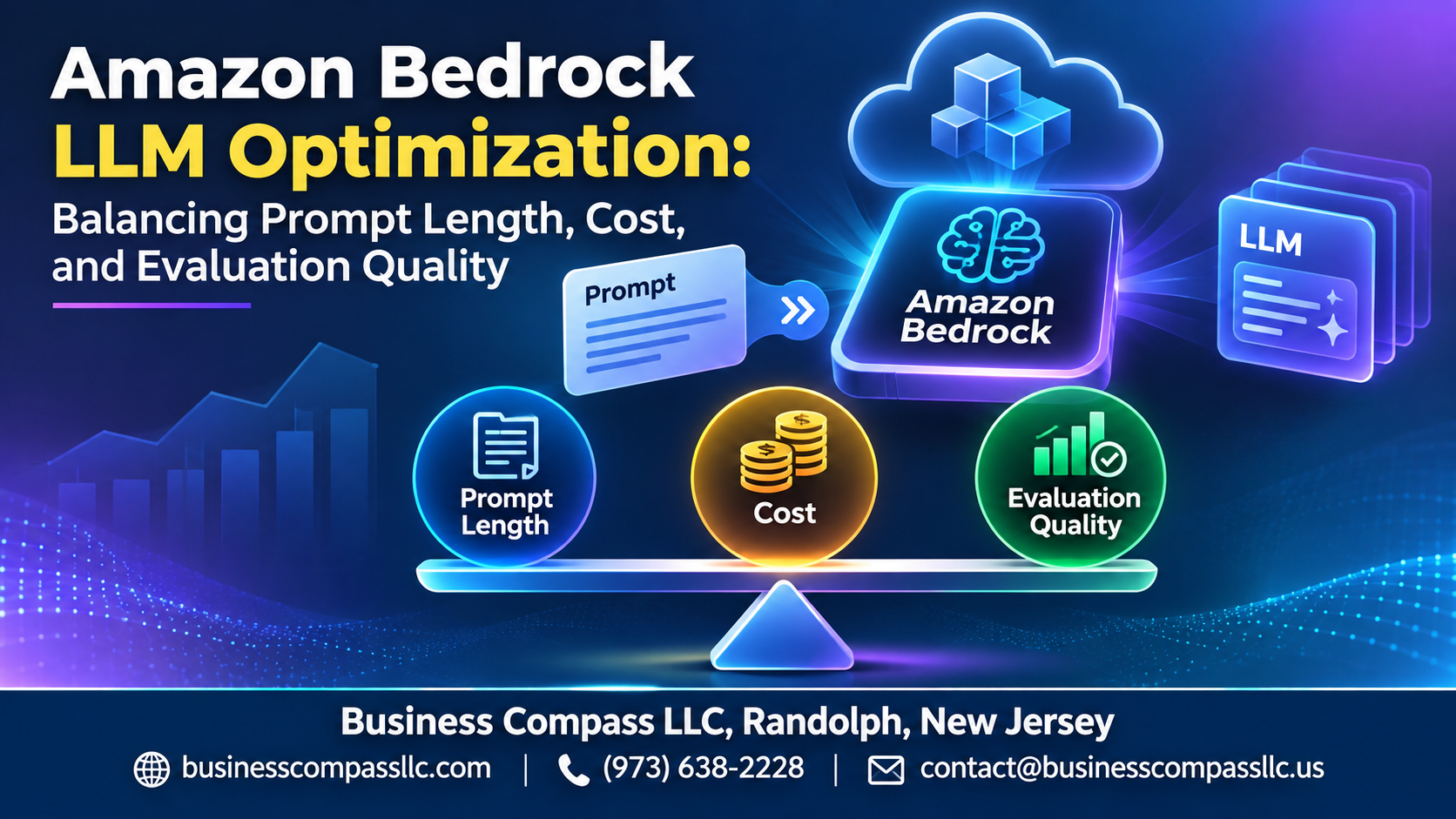
If you’re building AI-powered apps on AWS, you’ve probably already felt the sting of a surprise invoice or noticed your LLM outputs aren’t quite hitting the mark. Amazon Bedrock LLM optimization isn’t just a nice-to-have — it’s the difference between a production deployment that scales and one that drains your budget faster than you can ship features.
This guide is for ML engineers, cloud architects, and product teams who are past the “getting started” phase and ready to run leaner, smarter AI workloads on Bedrock.
Here’s what we’ll dig into:
- Prompt length and cost — How trimming or restructuring your prompts directly affects Amazon Bedrock pricing, and what prompt engineering best practices actually look like in the real world
- LLM output quality evaluation — How to measure whether your model is doing a good job without spinning up expensive test suites every time you tweak something
- Balancing cost and quality in AI — The honest trade-offs that come with large language model efficiency, and how to make smarter calls when performance and budget pull in opposite directions
No fluff, no vague advice. Just practical strategies you can take straight into your AWS generative AI cost management workflow.
Understanding Amazon Bedrock and Its LLM Capabilities

Key Features That Make Bedrock a Powerful LLM Platform
- Serverless access, built-in security, and single API for multiple models
Supported Foundation Models and Their Unique Strengths
- Claude, Titan, Llama, Mistral, and Cohere each handle different tasks
How Bedrock Fits Into Modern AI-Driven Workflows
Amazon Bedrock LLM optimization becomes seamless when teams plug foundation models directly into existing AWS pipelines, cutting setup time while keeping AWS generative AI cost management central to every deployment decision.
The True Cost of Running LLMs on Amazon Bedrock

How Token-Based Pricing Hits Your Budget
Amazon Bedrock charges per input/output token, so longer prompts = higher bills fast.
Hidden Costs With Longer Prompts
- Repeated context chunks inflate token counts
- Verbose system prompts silently drain budgets
Comparing Bedrock Model Costs
Claude costs more than Titan but delivers stronger results.
Control Spending Practically
Set token limits and track usage via AWS Cost Explorer.
Mastering Prompt Length for Maximum Efficiency

Why Shorter Prompts Don’t Always Mean Lower Quality
Trimming prompts smartly—removing filler, redundant context, and verbose instructions—keeps quality intact while cutting Amazon Bedrock token costs. Use these quick techniques:
- Remove repetitive examples
- Replace lengthy instructions with concise directives
- Test compressed prompts against quality benchmarks before full deployment
Evaluating LLM Output Quality Without Sacrificing Performance

Key Metrics to Measure Response Accuracy and Relevance
- BLEU, ROUGE, and BERTScore for textual accuracy
- Task-specific benchmarks tied to real business outcomes
Building a Reliable Evaluation Framework
Track LLM output quality evaluation consistently using versioned test sets.
Using Human Feedback Alongside Automated Scoring
Combine automated scoring with spot-check human reviews to catch subtle errors automated tools miss.
Balancing the Trade-Off Between Cost and Quality

A. Identifying Acceptable Quality Thresholds
- Simple tasks like classification need less accuracy than medical summaries.
B. Choosing the Right Model Tier
- Match task complexity to model size; avoid overkill.
C. Caching and Batching
- Reuse responses, batch similar requests, cut redundant token costs.
D. Monitoring Performance
- Track quality metrics regularly to catch drift early.
Advanced Optimization Techniques for Production Environments

Fine-tuning Models to Reduce Prompt Dependency
Fine-tuned models need shorter prompts, cutting Amazon Bedrock LLM optimization costs significantly.
Using Prompt Templates to Standardize Inputs
Templates eliminate redundant tokens across requests.
Integrating Cost and Quality Monitoring into CI/CD
- Track token usage per deployment
- Flag quality regressions automatically

Getting the most out of Amazon Bedrock comes down to making smart choices at every step — from how you write your prompts to how you measure what good output actually looks like. Keeping prompt length in check, understanding where your costs are coming from, and having a solid way to evaluate quality are not separate problems. They all feed into each other, and the teams that get this right treat optimization as an ongoing habit rather than a one-time fix.
Start small, measure everything, and don’t assume that longer prompts or more expensive models automatically mean better results. The sweet spot between cost and quality is real, and it’s absolutely reachable with the right techniques in place. Take what works for your use case, test it in production, and keep refining. That’s how you build LLM-powered applications that actually scale without burning through your budget.