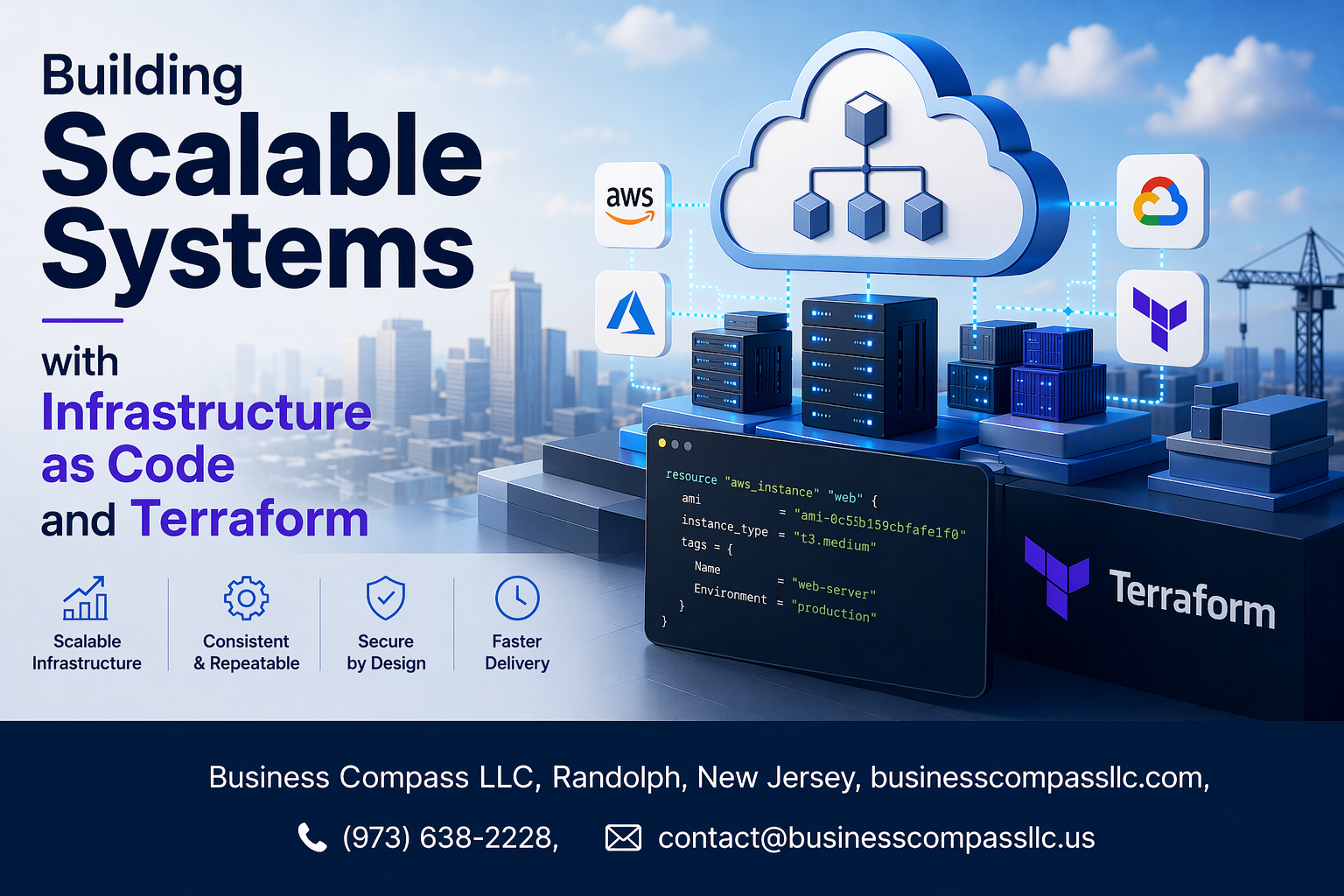
Managing cloud infrastructure manually becomes a nightmare when your applications grow beyond a few servers. Infrastructure as Code solves this problem by treating your infrastructure like software code—versioned, tested, and deployed automatically.
This Terraform tutorial is designed for DevOps engineers, cloud architects, and development teams who need to build and manage scalable infrastructure design that can grow with their business demands. You’ll learn practical techniques to automate your cloud infrastructure automation and avoid the common pitfalls that lead to messy, unmanageable systems.
We’ll start by exploring Infrastructure as Code fundamentals and Terraform architecture patterns that form the foundation of any robust system. You’ll discover proven Terraform best practices for organizing your code, managing state files, and implementing security controls that work in real production environments. Finally, we’ll cover advanced infrastructure scaling techniques and Terraform monitoring and maintenance strategies that keep your systems running smoothly as they grow.
By the end, you’ll have the knowledge to implement IaC implementation workflows and handle Terraform production deployment scenarios with confidence, turning infrastructure management from a source of stress into a competitive advantage.
Understanding Infrastructure as Code Fundamentals

Define Infrastructure as Code and its core principles
Infrastructure as Code (IaC) is a software engineering practice that manages and provisions computing infrastructure through machine-readable configuration files rather than manual processes. The core principles include treating infrastructure like software code with version control, automated testing, and reproducible deployments. This approach enables teams to define servers, networks, and storage resources using declarative configuration languages, making infrastructure management predictable and repeatable.
Compare traditional infrastructure management versus IaC approaches
Traditional infrastructure management relies on manual server configuration, point-and-click interfaces, and documentation that quickly becomes outdated. System administrators manually install software, configure networks, and manage resources through GUI tools or command-line interfaces. Infrastructure as Code automation transforms this workflow by codifying infrastructure definitions in files that can be executed consistently across environments. Teams can now deploy identical infrastructure configurations to development, staging, and production environments with a single command, eliminating configuration drift and human errors.
Identify key benefits of automated infrastructure provisioning
Automated infrastructure provisioning delivers significant advantages over manual approaches. Teams achieve faster deployment cycles, reducing infrastructure setup time from days to minutes. Consistency across environments eliminates the “works on my machine” problem, while version control provides complete audit trails and rollback capabilities. Cost optimization improves through automated resource management and right-sizing. Development teams gain self-service capabilities to provision resources without waiting for operations teams, accelerating development velocity and reducing bottlenecks.
Recognize common challenges in manual infrastructure setup
Manual infrastructure setup creates numerous operational challenges that scale poorly with team growth. Configuration drift occurs when environments diverge over time due to ad-hoc changes and manual interventions. Documentation becomes stale quickly, leading to knowledge silos and dependency on specific team members. Scaling operations requires significant manual effort, making it difficult to respond to changing business demands. Human errors in configuration can cause outages and security vulnerabilities. Recovery from failures takes longer due to the need to manually recreate complex environment configurations.
Terraform Architecture and Core Components

Explore Terraform’s Declarative Configuration Language
Terraform’s declarative configuration language lets you describe your desired infrastructure state using HashiCorp Configuration Language (HCL). Instead of writing scripts that execute commands step-by-step, you define what resources you want and their properties. Terraform automatically figures out how to create, update, or destroy resources to match your configuration. This approach makes infrastructure management predictable and eliminates configuration drift over time.
Understand Providers, Resources, and State Management
Providers act as plugins that enable Terraform to interact with different cloud platforms and services. Each provider offers specific resource types – from AWS EC2 instances to Kubernetes deployments. Terraform’s state management tracks the real-world status of your infrastructure, storing information about created resources and their relationships. The state file serves as Terraform’s memory, enabling it to detect changes and plan updates accurately during subsequent runs.
Learn About Modules for Reusable Infrastructure Components
Modules package related Terraform configurations into reusable units, promoting consistency across environments. A well-designed module encapsulates common infrastructure patterns like VPC setups or application stacks with configurable inputs and outputs. Teams can share modules through public registries or private repositories, accelerating development while maintaining standardized configurations. Modules support versioning, allowing controlled updates and rollbacks when needed across different projects.
Designing Scalable Infrastructure Patterns

Implement multi-environment deployment strategies
Smart teams deploy infrastructure across development, staging, and production environments using Terraform workspaces and variable-driven configurations. This approach maintains consistency while allowing environment-specific customizations like instance sizes and security groups.
Create modular and reusable Terraform configurations
Building blocks through modules transforms complex infrastructure into manageable, testable components. Well-designed modules encapsulate networking, compute, and storage resources with clear input variables and outputs, enabling teams to compose scalable infrastructure patterns quickly across projects.
Design for high availability and fault tolerance
Multi-zone deployment patterns:
- Distribute resources across availability zones
- Implement auto-scaling groups with health checks
- Configure load balancers with failover mechanisms
- Design stateless application architectures
Data resilience strategies:
- Set up automated database backups
- Implement cross-region replication
- Use managed services with built-in redundancy
- Plan disaster recovery procedures
Plan for elastic scaling and resource optimization
Auto-scaling configurations:
- Define scaling policies based on metrics
- Implement predictive scaling for known patterns
- Use spot instances for cost optimization
- Configure blue-green deployment strategies
Resource efficiency techniques:
- Right-size instances based on monitoring data
- Implement resource tagging for cost tracking
- Use reserved instances for predictable workloads
- Schedule non-critical resources during off-hours
Best Practices for Production-Ready Terraform

Establish proper state management and remote backends
Managing Terraform state effectively forms the backbone of production-ready infrastructure automation. Remote state backends like AWS S3 with DynamoDB locking prevent conflicts when multiple team members work simultaneously, while ensuring state files remain secure and backed up. Configure state encryption and implement proper IAM policies to protect sensitive infrastructure data.
Implement version control and collaboration workflows
Terraform best practices demand structured Git workflows with feature branches, pull request reviews, and automated validation pipelines. Teams should establish clear naming conventions, commit message standards, and code review processes that catch configuration errors before deployment. Workspace isolation allows different environments to coexist safely while maintaining consistent deployment patterns across development, staging, and production environments.
Set up automated testing and validation processes
Automated testing catches infrastructure misconfigurations before they reach production systems. Implement terraform validate, terraform plan, and custom policy checks using tools like Sentinel or Open Policy Agent within your CI/CD pipeline. Static analysis tools can identify security vulnerabilities, cost optimization opportunities, and compliance violations early in the development cycle, reducing deployment risks significantly.
Configure security scanning and compliance checks
Security scanning integrates seamlessly into Terraform workflows through tools like Checkov, tfsec, and Terrascan. These tools identify hardcoded secrets, insecure resource configurations, and compliance violations against industry standards like CIS benchmarks. Implement automated scanning in your CI/CD pipeline to block deployments that don’t meet security requirements while providing developers immediate feedback on potential issues.
Organize code structure for maintainability
Clean code organization makes Terraform projects scalable and maintainable across large teams. Structure modules with clear interfaces, separate environment-specific configurations, and use consistent variable naming conventions throughout your codebase. Group related resources logically, implement proper module versioning, and maintain comprehensive documentation that helps new team members understand infrastructure dependencies and deployment procedures quickly.
Advanced Scaling Techniques with Terraform

Leverage workspace management for multiple environments
Terraform workspaces create isolated state files for different environments while using the same configuration code. Each workspace maintains separate infrastructure states for development, staging, and production environments. This approach eliminates configuration duplication and reduces maintenance overhead. You can switch between workspaces using terraform workspace select and reference the current workspace name through terraform.workspace variable for environment-specific resource naming.
Implement dynamic infrastructure provisioning
Dynamic provisioning adapts infrastructure based on real-time requirements using Terraform’s count and for_each meta-arguments. Data sources fetch external information like availability zones or existing resources to make informed provisioning decisions. The locals block helps calculate dynamic values, while conditional expressions enable resource creation based on variables. This Infrastructure as Code approach automatically scales resources up or down based on demand patterns and application requirements.
Integrate with CI/CD pipelines for automated deployments
GitOps workflows trigger Terraform runs through GitHub Actions, GitLab CI, or Jenkins when code changes occur. Pipeline stages include validation, planning, and applying changes with proper approval gates for production deployments. Remote state backends like S3 or Terraform Cloud enable team collaboration and state locking. Automated testing validates infrastructure changes before deployment, while drift detection identifies manual changes that deviate from declared configuration.
Monitoring and Maintaining Scalable Infrastructure
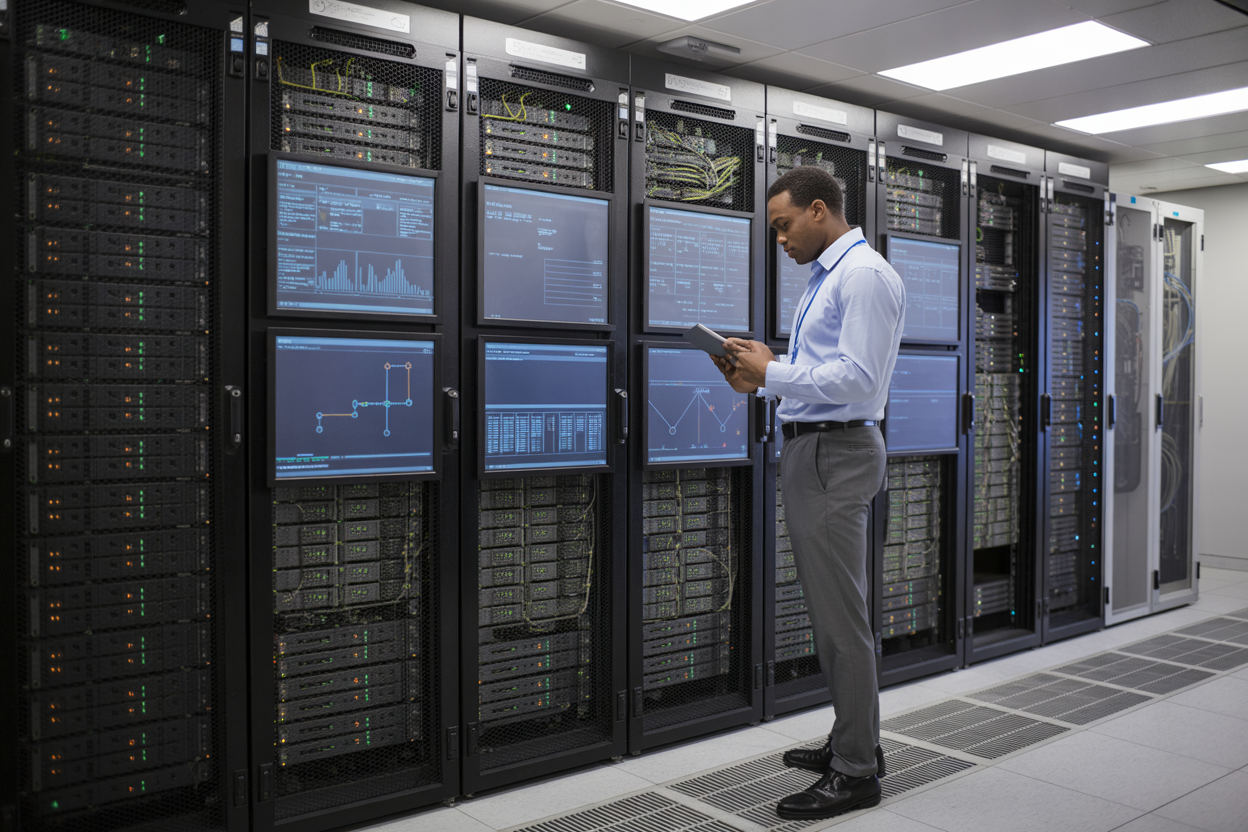
Set up comprehensive logging and monitoring systems
Terraform monitoring and maintenance requires robust observability across your infrastructure stack. CloudWatch, DataDog, or Prometheus provide real-time metrics for resource utilization, performance bottlenecks, and cost anomalies. Configure automated alerting for drift detection when manual changes occur outside your Terraform state files. State file monitoring prevents configuration conflicts and ensures your Infrastructure as Code remains the single source of truth.
Implement automated backup and disaster recovery
Backup strategies for Terraform production deployment include versioned state file storage in S3 with cross-region replication. Implement automated snapshots for databases, EBS volumes, and critical data stores through Terraform resources. Create disaster recovery runbooks that document restoration procedures and test them regularly. Remote state locking prevents concurrent modifications while maintaining backup integrity across distributed teams.
Plan for infrastructure updates and migrations
Rolling updates minimize downtime when applying Terraform architecture patterns changes to production environments. Use blue-green deployments for major infrastructure migrations, provisioning parallel environments before switching traffic. Version your Terraform modules and pin specific versions in production to avoid unexpected changes. Plan maintenance windows for updates that require resource recreation or significant configuration changes.
Optimize costs through resource management strategies
Cost optimization through Infrastructure as Code automation includes right-sizing instances based on actual usage metrics and implementing auto-scaling policies. Schedule non-production environments to shut down during off-hours using Terraform’s time-based resources. Regular cost reviews identify unused resources, oversized instances, and opportunities for reserved instance purchases. Tag all resources consistently to enable detailed cost allocation and chargeback reporting across teams and projects.

Infrastructure as Code with Terraform transforms how we build and manage systems at scale. The fundamentals show us that treating infrastructure like software code brings consistency, repeatability, and version control to our operations. Terraform’s modular architecture and core components provide the building blocks for creating robust, scalable patterns that grow with your business needs. Following production-ready best practices ensures your infrastructure remains reliable while advanced scaling techniques help you handle increasing demands efficiently.
The real power comes from combining smart design patterns with ongoing monitoring and maintenance strategies. Your infrastructure becomes more predictable, easier to troubleshoot, and simpler to scale when you embrace these approaches. Start small with basic Terraform modules, build your confidence with proven patterns, and gradually implement the advanced techniques that make sense for your specific use case. The investment in learning Infrastructure as Code pays dividends when your systems need to handle real-world growth and complexity.