Artificial intelligence feels mysterious and complicated, but it doesn’t have to be. This beginner’s guide to AI breaks down what is artificial intelligence in simple terms that anyone can understand.
Who this is for: Anyone curious about AI but intimidated by technical explanations. You don’t need a computer science degree or any tech background – just genuine curiosity about how AI works and affects your daily life.
You’ll discover what AI really means beyond the sci-fi hype and why it matters in your everyday world. We’ll explore the different types of artificial intelligence you already interact with, from your smartphone’s voice assistant to Netflix recommendations. You’ll also learn how AI actually learns and gets smarter, plus see real examples of AI applications in daily life that directly impact you.
By the end, you’ll have a clear picture of AI benefits and limitations, helping you separate realistic expectations from overblown promises. No confusing jargon, no intimidating formulas – just straightforward explanations that make sense.
What AI Really Is and Why It Matters to You

Breaking Down AI Into Simple Everyday Terms
Think of AI as a computer system that can recognize patterns and make predictions, just like how you learn to recognize faces or predict traffic patterns. Instead of following rigid programming, these systems adapt and improve through experience, similar to how a child learns to ride a bike through practice.
AI basics for beginners start with understanding that artificial intelligence isn’t magic—it’s math and statistics working together to find connections in data that humans might miss or take too long to discover.
How AI Already Powers Your Daily Activities
Your smartphone’s camera automatically focuses on faces, streaming services suggest movies you’ll enjoy, and navigation apps find the fastest routes home. These AI applications in daily life work behind the scenes, making technology more helpful and intuitive.
Email spam filters, voice assistants, and even your car’s safety features use AI to understand your needs and respond appropriately, creating a smoother digital experience.
Why Understanding AI Helps You Make Better Decisions
When you grasp how AI works, you can better evaluate which tools and services actually benefit your life versus those that just sound impressive. This knowledge helps you ask smarter questions about privacy, accuracy, and reliability.
Understanding AI without jargon also helps you spot misleading claims and choose products that genuinely solve your problems rather than just riding the AI hype wave.
Common Myths About AI That Hold People Back
Many people believe AI will either solve everything instantly or destroy all jobs overnight—both extremes miss the reality. AI for non-technical people means recognizing that these systems excel at specific tasks but struggle with common sense and creativity.
Another myth suggests AI is too complex for regular people to understand, but the core concepts are actually quite straightforward once you strip away the technical buzzwords.
The Different Types of AI You Encounter Daily
Smart Assistants That Help You Get Things Done
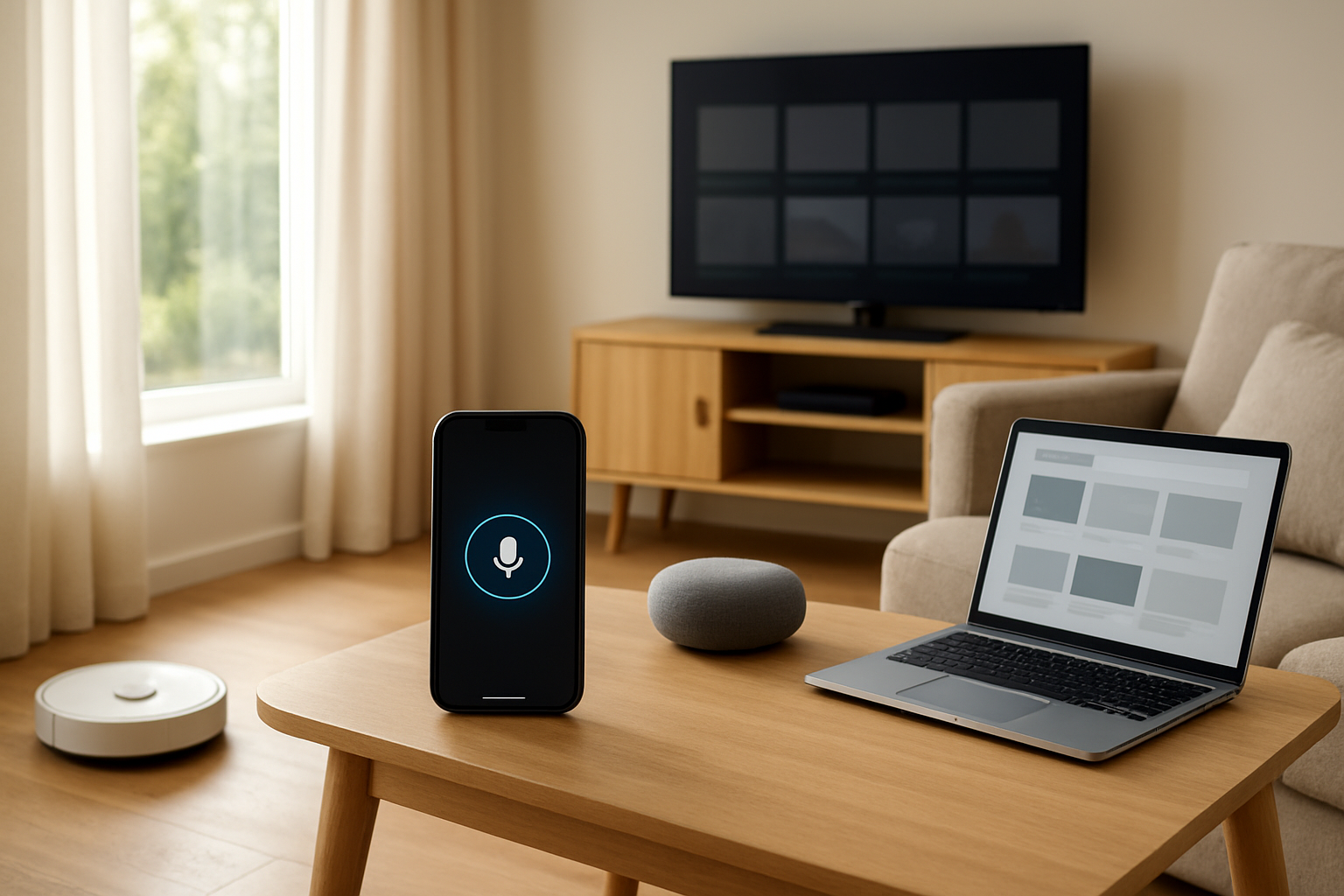
Your smartphone’s voice assistant represents one of the most recognizable types of AI you interact with daily. These AI systems understand your spoken requests and respond naturally, whether you’re setting reminders, checking weather, or controlling smart home devices. Behind the scenes, they process your voice patterns and convert speech into actionable commands.
Smart assistants learn your preferences over time, becoming more helpful as they understand your routines. They connect to various services and devices, making complex tasks feel effortless through simple voice commands or text interactions.
Recommendation Systems That Save You Time
Every streaming service, shopping website, and social media platform uses AI recommendation systems to personalize your experience. These systems analyze your past behavior, preferences, and patterns to suggest content, products, or connections you might enjoy. Netflix recommends movies, Amazon suggests products, and Spotify creates custom playlists based on your listening history.
These AI applications for daily life work continuously in the background, processing millions of data points to predict what you’ll find interesting or useful, saving you hours of browsing time.
Image and Voice Recognition That Simplify Your Life
Your phone’s camera automatically focuses on faces and suggests photo tags because of AI-powered image recognition. Banking apps let you deposit checks by simply photographing them, while translation apps can instantly convert foreign text through your camera lens. Voice recognition goes beyond assistants too—your car might respond to voice commands, and customer service phone systems route calls based on spoken keywords.
These AI basics for beginners showcase how artificial intelligence explained simply transforms everyday interactions, making technology more intuitive and accessible without requiring technical knowledge.
How AI Actually Learns and Gets Smarter
The Simple Truth About How AI Processes Information
AI processes information like a super-powered student taking notes. Instead of reading text or looking at images the way humans do, AI breaks everything down into numbers and mathematical patterns. When you show AI a picture of a cat, it doesn’t “see” whiskers and fur – it analyzes thousands of pixel values and their relationships to identify what makes something cat-like.
Why AI Needs Examples to Improve Performance
Think of AI like someone learning to cook without ever tasting food. AI systems need thousands or millions of examples to understand what “good” looks like. A spam filter learns by studying countless emails marked as spam versus legitimate messages. The more examples it sees, the better it gets at spotting patterns that distinguish unwanted emails from important ones.
How AI Recognizes Patterns Just Like Humans Do
Pattern recognition is where AI shines brightest. Just as you instantly recognize your friend’s voice on the phone, AI identifies recurring features in data. It might notice that photos taken at sunset often have warm orange tones, or that certain word combinations typically indicate positive customer reviews. This pattern-matching ability lets AI make predictions about new information it hasn’t seen before.
What Makes AI Different From Regular Computer Programs
Regular computer programs follow strict, pre-written instructions like a recipe. AI programs adapt and improve based on the data they encounter. While a traditional calculator always adds 2+2 to get 4, AI can learn that sometimes “2+2” in context might mean something completely different – like recognizing that “2+2” in a text message could be asking about meeting times rather than requesting math help.
Real-World AI Applications That Impact Your Life

Healthcare AI That Helps Doctors Make Better Diagnoses
Medical professionals now use AI applications in daily life to spot diseases earlier and more accurately than ever before. AI systems can analyze X-rays, MRIs, and CT scans in seconds, catching cancers and other conditions that human eyes might miss. These tools help radiologists work faster while reducing diagnostic errors, especially in busy hospitals where doctors see hundreds of patients daily.
Transportation AI That Makes Travel Safer and Faster
Your smartphone’s GPS uses artificial intelligence to find the quickest routes by analyzing real-time traffic data from millions of other drivers. Modern cars come equipped with AI-powered features like automatic emergency braking, lane-keeping assistance, and adaptive cruise control that prevent accidents before they happen. Ride-sharing apps use smart algorithms to match you with nearby drivers and predict exactly when your ride will arrive.
Financial AI That Protects Your Money and Investments
Banks use sophisticated AI systems to monitor every transaction on your account, instantly flagging suspicious purchases that don’t match your spending patterns. Credit card companies can block fraudulent charges within milliseconds of detection, often before you even notice something’s wrong. Investment apps analyze market trends and your financial goals to suggest portfolio adjustments, making professional-level advice accessible to everyday investors.
Entertainment AI That Personalizes Your Experience
Streaming platforms like Netflix and Spotify study your viewing and listening habits to recommend content you’ll actually enjoy watching or hearing. Gaming systems adjust difficulty levels based on your skill, keeping challenges engaging without becoming frustrating. Social media feeds use AI to show you posts from friends and pages you interact with most, creating a personalized experience that feels tailored specifically for you.
Shopping AI That Finds You Better Deals
E-commerce websites track your browsing history and purchase patterns to suggest products you might want before you even search for them. Price comparison tools automatically scan thousands of retailers to find the lowest prices on items in your cart. Customer service chatbots can answer questions, process returns, and solve problems 24/7, getting you help immediately instead of waiting on hold for human representatives.
The Benefits AI Brings to Society and Individuals

How AI Solves Complex Problems Faster Than Ever
AI tackles challenges that would take humans years to solve in just hours or days. Medical researchers use AI to discover new drugs by analyzing millions of molecular combinations simultaneously. Climate scientists process decades of weather data to predict environmental changes with unprecedented accuracy. Financial institutions detect fraud patterns across billions of transactions in real-time, protecting consumers from scams that traditional methods would miss entirely.
Ways AI Creates New Job Opportunities and Industries
The rise of AI has sparked entirely new career paths that didn’t exist a decade ago. AI trainers, prompt engineers, and algorithm auditors are now in high demand across industries. Companies need AI ethicists to ensure responsible development, while businesses require AI integration specialists to implement these technologies effectively. Traditional roles are evolving too – marketers now use AI insights to create better campaigns, and customer service representatives work alongside chatbots to provide faster, more personalized support.
How AI Improves Accessibility for People with Disabilities
AI breaks down barriers that have limited accessibility for years. Voice recognition software helps people with mobility challenges control their devices hands-free, while real-time transcription services make conversations accessible to the deaf and hard-of-hearing community. Smart navigation apps guide visually impaired users through complex environments using audio cues. AI-powered translation tools enable people with speech disabilities to communicate more easily, and predictive text helps those with dyslexia write more confidently and quickly.
Understanding AI Limitations and Realistic Expectations

What AI Cannot Do Despite Popular Beliefs
AI can’t think creatively like humans or understand context the way we do. It doesn’t have consciousness, emotions, or common sense reasoning. AI systems follow patterns in their training data rather than truly understanding meaning. They can’t adapt to completely new situations without additional training and struggle with tasks requiring genuine creativity or moral judgment.
Why Human Oversight Remains Essential
AI systems need human guidance to make ethical decisions and catch errors that automated systems miss. Humans provide the critical thinking and judgment that AI lacks, especially in sensitive areas like healthcare, finance, and legal matters. We must review AI outputs, validate results, and ensure decisions align with human values and real-world requirements.
How to Spot AI-Generated Content and Its Limitations
AI-generated text often sounds repetitive, lacks personal experience details, and may contain subtle factual errors. Look for overly formal language, generic examples, and information that seems plausible but isn’t quite right. AI struggles with recent events, personal anecdotes, and nuanced cultural references that humans naturally include in their writing.
Why AI Makes Mistakes and How to Work With Them
AI makes mistakes because it learns from imperfect data and can amplify existing biases. These systems predict based on patterns rather than understanding, leading to confident but wrong answers. To work effectively with AI, double-check important information, provide clear instructions, and treat AI as a helpful tool that needs verification rather than an infallible expert.

AI touches your life more than you probably realize, from the recommendations on your streaming service to the voice assistant on your phone. The key thing to remember is that AI isn’t some mysterious force – it’s a collection of tools designed to recognize patterns, make predictions, and automate tasks that would normally require human thinking. While AI can be incredibly helpful in areas like healthcare, education, and making our daily routines smoother, it’s not perfect and has clear boundaries in what it can actually do.
As AI continues to evolve, the best approach is to stay curious but realistic about its capabilities. Don’t believe every headline claiming AI will solve all problems or destroy the world – the truth lies somewhere in between. Take time to learn about the AI tools available to you, whether that’s using them to boost your productivity at work or simply understanding how they work behind the scenes in apps you already use. Being an informed user means you can make better decisions about when and how to use AI while keeping realistic expectations about what it can and can’t deliver.