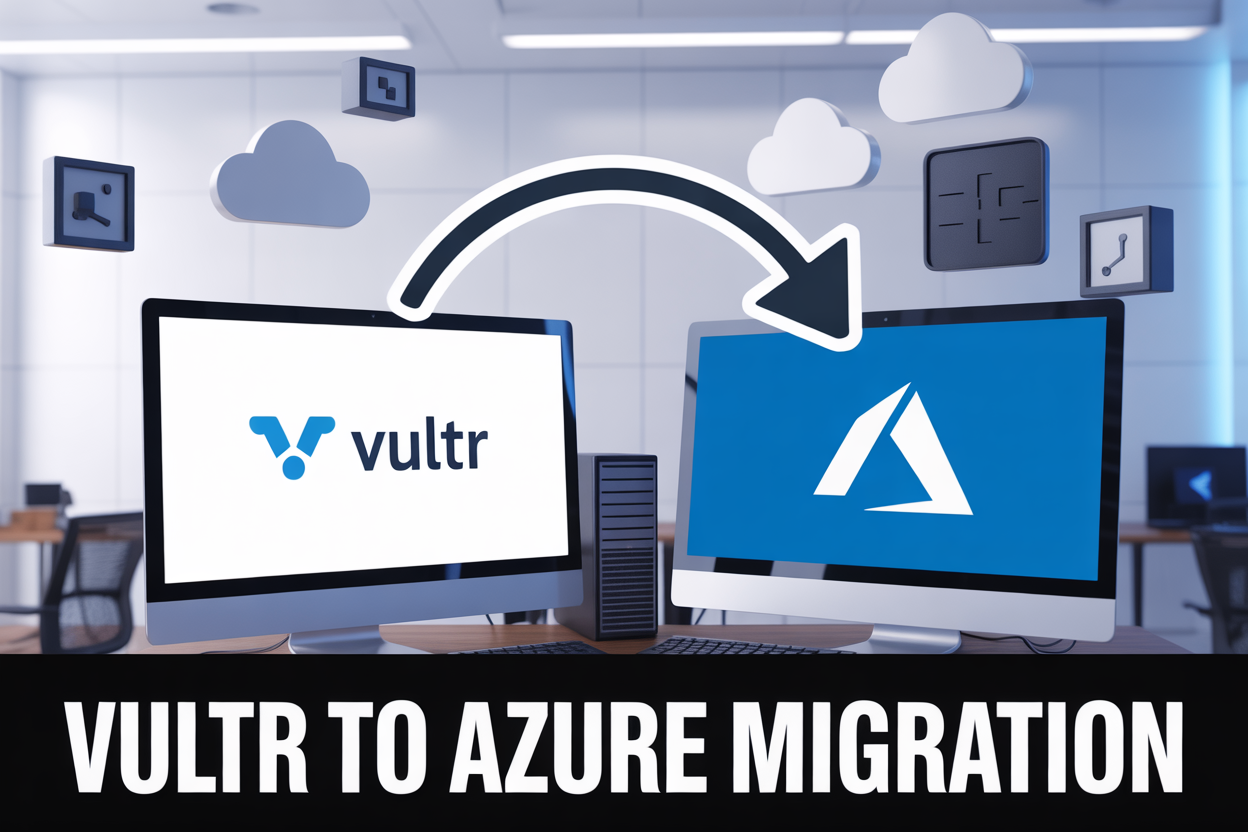
Many businesses start with Vultr for its simplicity and cost-effectiveness, but eventually hit walls when scaling becomes critical. Moving from Vultr to Azure opens doors to enterprise-grade features, global reach, and advanced services that can transform how your applications perform and grow.
This vultr to azure migration guide is designed for developers, IT managers, and business owners who’ve outgrown their current cloud setup and need a reliable path forward. You’ll get practical steps to move your workloads without the headaches that usually come with cloud provider migration.
We’ll walk you through creating a solid azure migration strategy that minimizes downtime and maximizes your return on investment. You’ll also learn how to set up your new Azure environment for peak performance from day one, plus get real solutions for the most common migration roadblocks that catch teams off guard.
By the end, you’ll have everything needed to execute a smooth transition and unlock Azure’s full potential for your growing business.
Understanding Why Migration from Vultr to Azure Makes Business Sense
Cost optimization opportunities and enterprise pricing benefits
Making the switch from Vultr to Azure often brings immediate cost advantages through Microsoft’s enterprise-grade pricing models. Azure’s Reserved Instances can deliver savings of up to 72% compared to pay-as-you-go pricing, while Vultr’s pricing structure remains relatively flat without significant volume discounts. Azure also offers Hybrid Use Benefits for existing Windows Server and SQL Server licenses, allowing organizations to repurpose on-premises investments.
The real game-changer comes through Azure’s spot pricing for non-critical workloads, which can reduce compute costs by up to 90%. Vultr doesn’t offer comparable dynamic pricing options. Azure Cost Management tools provide granular cost tracking and automated recommendations, helping businesses identify optimization opportunities that Vultr’s simpler billing model might miss.
Enterprise agreements with Microsoft unlock additional cost benefits through consolidated billing across multiple services, including Office 365 and Windows licenses. This holistic approach to cloud spending creates economies of scale that standalone providers like Vultr simply can’t match.
Enhanced scalability options for growing businesses
Azure’s auto-scaling capabilities far exceed what Vultr offers, with intelligent scaling based on custom metrics, time schedules, and resource consumption patterns. While Vultr provides basic vertical and horizontal scaling, Azure’s Virtual Machine Scale Sets automatically adjust capacity based on demand, ensuring optimal performance during traffic spikes without manual intervention.
The platform supports massive scale-out scenarios with thousands of instances, backed by Azure’s global infrastructure. Vultr’s scaling options, while functional, are limited to manual processes and smaller instance pools. Azure Container Instances and Kubernetes Service provide containerized scaling options that adapt to modern development practices.
Database scaling becomes effortless with Azure SQL Database’s automatic scaling features, adjusting performance tiers based on workload demands. Vultr’s database offerings require manual scaling decisions, which can lead to either over-provisioning costs or performance bottlenecks during growth periods.
Superior global infrastructure and availability zones
Azure operates from 60+ regions worldwide, significantly outpacing Vultr’s 25 global locations. This extensive footprint means lower latency for end users and better compliance with data residency requirements. Azure’s availability zones within regions provide redundancy that Vultr’s single-datacenter approach in most locations can’t match.
Each Azure region contains multiple physically separated datacenters with independent power, cooling, and networking. This architecture delivers 99.99% uptime SLAs for multi-zone deployments, while Vultr’s infrastructure doesn’t offer the same level of built-in redundancy.
Azure’s content delivery network spans 130+ edge locations, dramatically improving content delivery speeds compared to Vultr’s limited CDN presence. The global backbone network connecting Azure regions uses Microsoft’s private fiber infrastructure, providing consistent, predictable performance that public internet routing can’t guarantee.
Advanced security features and compliance standards
Azure maintains compliance with over 90 industry standards and regulations, including SOC 2, HIPAA, FedRAMP, and GDPR. Vultr offers basic compliance but lacks the comprehensive certification portfolio that enterprise customers require. Azure’s compliance scorecard provides real-time visibility into security posture across all services.
Built-in security features like Azure Security Center provide continuous threat monitoring and automated remediation recommendations. Azure Sentinel delivers cloud-native SIEM capabilities that Vultr doesn’t offer natively. Advanced threat protection uses machine learning to identify and respond to security incidents before they impact operations.
Identity and access management through Azure Active Directory integrates seamlessly with existing corporate directories and provides multi-factor authentication, conditional access policies, and privileged identity management. Vultr’s access controls are basic by comparison, lacking the enterprise-grade identity features that modern businesses need for secure cloud operations.
Pre-Migration Assessment and Planning Strategy

Auditing Your Current Vultr Infrastructure and Dependencies
Begin your Vultr to Azure migration strategy by conducting a thorough inventory of your existing infrastructure. Document every virtual machine, storage volume, network configuration, and database instance currently running on Vultr. Pay special attention to resource specifications like CPU cores, RAM allocation, storage types (SSD vs NVMe), and bandwidth requirements.
Create a detailed dependency map that shows how your applications interact with each other. Identify critical services that other components rely on, external APIs your systems connect to, and any third-party integrations. This mapping process reveals potential bottlenecks during migration and helps prioritize which services to move first.
Document your current backup procedures, monitoring tools, and security configurations. Note any custom scripts, cron jobs, or automated processes that keep your systems running smoothly. Don’t forget to catalog your DNS settings, SSL certificates, and load balancer configurations.
Track performance metrics from your Vultr environment over the past 3-6 months. Gather data on CPU usage patterns, memory consumption, storage IOPS, and network traffic. This baseline data becomes invaluable when configuring Azure resources to match or exceed your current performance levels.
Mapping Azure Equivalent Services for Seamless Transition
Transform your Vultr infrastructure inventory into an Azure service mapping plan. Vultr’s Compute instances translate directly to Azure Virtual Machines, but you’ll want to compare pricing tiers and performance characteristics. Azure’s B-series VMs work well for variable workloads, while D-series machines handle consistent compute demands.
Replace Vultr Block Storage with Azure Managed Disks, choosing between Standard HDD, Standard SSD, or Premium SSD based on your performance requirements. Azure’s Ultra Disk offers the highest IOPS for mission-critical applications that previously used Vultr’s NVMe storage.
Map your Vultr Load Balancers to Azure Load Balancer or Application Gateway, depending on whether you need Layer 4 or Layer 7 load balancing. Azure’s Traffic Manager can replace any global load balancing you’ve implemented across multiple Vultr regions.
Convert Vultr’s Object Storage to Azure Blob Storage, selecting the appropriate access tier (Hot, Cool, or Archive) based on your data access patterns. Azure Files can replace any shared storage solutions you’ve built on Vultr.
For networking, Azure Virtual Networks replace Vultr’s VPC functionality, while Network Security Groups handle firewall rules. Azure ExpressRoute or VPN Gateway connections can maintain hybrid connectivity during your migration period.
Creating a Comprehensive Migration Timeline and Budget
Build your cloud migration guide timeline around minimizing downtime and reducing business disruption. Start with a pilot migration using non-critical systems to validate your azure migration strategy and identify potential issues before moving production workloads.
Phase your migration over 4-6 weeks, grouping related services together. Move databases and storage first, followed by application servers, then load balancers and networking components. Schedule critical system migrations during low-traffic periods or maintenance windows.
Budget for both one-time migration costs and ongoing operational expenses. Factor in Azure’s pricing model differences – you might pay more for premium storage but save on bandwidth costs. Use Azure’s pricing calculator to estimate monthly costs based on your mapped services, but add a 20-30% buffer for unexpected requirements.
Include costs for migration tools, temporary dual-hosting during the transition period, and potential consulting services. Don’t forget expenses for staff training on Azure’s management interfaces and new operational procedures.
Set aside budget for post-migration optimization activities. You’ll likely need to right-size virtual machines, adjust storage tiers, and fine-tune network configurations after observing real-world performance in Azure.
Create contingency plans for each migration phase, including rollback procedures if critical issues arise. Document communication protocols for stakeholders and establish clear go/no-go decision points throughout your vultr vs azure comparison process.
Setting Up Your Azure Environment for Optimal Performance
Configuring Azure subscriptions and resource groups
Start with the foundation of your azure setup optimization by organizing your resources properly. Azure subscriptions act as billing containers and administrative boundaries, while resource groups function as logical containers for related resources. For your vultr to azure migration, create separate subscriptions for different environments like development, staging, and production to maintain clear cost separation and access control.
Structure your resource groups based on application lifecycle rather than resource type. Group all components of a single application together – virtual machines, databases, storage accounts, and networking resources should live in the same resource group. This approach simplifies management, billing tracking, and eventual cleanup operations.
Apply consistent naming conventions across all subscriptions and resource groups. Use descriptive names like “prod-web-app-rg” or “dev-database-rg” that immediately communicate purpose and environment. Tag everything with metadata including cost center, environment, owner, and project name to enable precise cost tracking and automated governance policies.
Establishing virtual networks and security protocols
Design your virtual network architecture with security and scalability in mind. Create hub-and-spoke network topologies where a central hub handles shared services like DNS, domain controllers, and security appliances, while individual spokes house specific workloads. This pattern reduces complexity while maintaining security isolation between different applications.
Configure network security groups (NSGs) at both subnet and network interface levels. Start with deny-all rules and explicitly allow only necessary traffic. Document every rule with business justification and review permissions quarterly. Implement Azure Firewall or third-party network virtual appliances for advanced threat protection and centralized logging.
Set up Azure Private Link endpoints for Platform-as-a-Service resources to keep traffic within your virtual network boundaries. This prevents data exfiltration and reduces attack surfaces compared to public endpoints. Configure Azure Bastion for secure administrative access to virtual machines without exposing RDP or SSH ports to the internet.
Implementing backup and disaster recovery solutions
Azure Site Recovery provides comprehensive disaster recovery capabilities for your migrated workloads. Configure replication to a secondary Azure region with recovery point objectives (RPO) and recovery time objectives (RTO) that match your business requirements. Test failover scenarios monthly to verify your disaster recovery procedures work correctly.
Set up Azure Backup for virtual machines, databases, and file shares. Create multiple backup policies with different retention periods – daily backups for 30 days, weekly for 12 weeks, monthly for 12 months, and yearly for long-term retention. Enable soft delete protection to prevent accidental backup deletion.
Document detailed recovery procedures for each application component. Create runbooks that non-technical staff can follow during actual disaster scenarios. Store these procedures in multiple locations including printed copies offsite. Regularly validate backup integrity by performing test restores to temporary environments.
Setting up monitoring and cost management tools
Deploy Azure Monitor across all resources to collect telemetry data and establish baseline performance metrics. Configure custom dashboards that display key performance indicators relevant to your migrated applications. Set up automated alerts for resource utilization thresholds, application errors, and security events.
Implement Azure Cost Management + Billing to track spending patterns and identify optimization opportunities. Create budgets with spending alerts at 50%, 80%, and 100% thresholds. Use cost allocation tags to attribute expenses to specific departments, projects, or applications for accurate chargeback billing.
Enable Azure Advisor recommendations to receive personalized guidance on cost optimization, performance improvements, security hardening, and operational excellence. Review recommendations monthly and implement applicable suggestions to continuously optimize your environment.
Configure Log Analytics workspaces to centralize log data from all Azure resources and on-premises systems. Create custom queries to identify trends, troubleshoot issues, and generate compliance reports. Set up automated log retention policies to balance compliance requirements with storage costs.
Executing the Data and Application Migration Process

Migrating Databases with Minimal Downtime Strategies
Database migration represents the most critical aspect of your vultr to azure migration journey. Azure Database Migration Service (DMS) serves as your primary tool for seamless transitions, supporting MySQL, PostgreSQL, and SQL Server environments. Start by creating a comprehensive backup strategy that includes both full and incremental snapshots.
The key to minimal downtime lies in implementing a phased migration approach. Set up Azure Database for your specific engine first, then establish continuous data replication between your Vultr database and Azure. This allows your applications to continue running on Vultr while data syncs in the background.
Consider using Azure’s online migration feature for production databases. This method maintains data consistency through transaction log replication, reducing downtime to just a few minutes during the final cutover. For MongoDB workloads, Azure Cosmos DB provides native migration tools that handle schema conversion automatically.
Test your migration process thoroughly in a staging environment before touching production. Create connection string variables that can be quickly updated during the switch, and prepare rollback procedures just in case something goes wrong.
Transferring Virtual Machines and Containerized Applications
Moving your VMs from Vultr to Azure requires careful planning around instance sizing and regional placement. Azure Migrate provides assessment tools that analyze your current Vultr infrastructure and recommend appropriate Azure VM sizes based on performance data.
For physical-to-virtual migrations, Azure Site Recovery offers automated replication with minimal configuration. Install the mobility service on your Vultr VMs, configure the replication policy, and let Azure handle the heavy lifting. This approach works particularly well for Windows Server environments and Linux distributions.
Container migrations follow a different path entirely. If you’re running Docker containers on Vultr, Azure Container Instances or Azure Kubernetes Service (AKS) provide modern alternatives. Export your container images to Azure Container Registry first, then redeploy using Azure’s orchestration tools.
Don’t forget about your application dependencies during the application migration process. Network security groups, load balancers, and storage configurations need to be recreated in Azure. Document your current Vultr network topology and plan the equivalent Azure architecture before starting the migration.
Updating DNS Records and Domain Configurations
DNS changes require precision timing to avoid service interruptions. Lower your TTL values to 300 seconds at least 24-48 hours before migration day. This ensures faster propagation when you update your records to point to Azure endpoints.
Azure DNS offers enterprise-grade name resolution with global anycast networks. Migrate your DNS zones to Azure DNS for better integration with other Azure services, or keep your existing DNS provider and simply update the A records and CNAME entries.
Plan your DNS cutover during low-traffic periods. Update your primary records first, then monitor traffic patterns to ensure requests are reaching your Azure infrastructure. Keep your Vultr instances running initially as a safety net until you confirm all DNS changes have propagated globally.
SSL certificates need special attention during this transition. If you’re using Let’s Encrypt or custom certificates, ensure they’re properly installed on your Azure resources before updating DNS. Azure Application Gateway and Azure Front Door can handle certificate management automatically for new domains.
Testing Application Functionality and Performance Benchmarks
Comprehensive testing prevents costly post-migration surprises. Start with functional testing to verify all application features work correctly in the Azure environment. Create test scripts that cover user authentication, database connections, file uploads, and any third-party integrations.
Performance benchmarking reveals potential bottlenecks before they impact users. Use tools like Apache JMeter or Azure Load Testing to simulate production traffic patterns. Compare response times, throughput, and resource utilization between your Vultr and Azure environments.
Pay special attention to database performance during testing. Azure’s managed database services often perform differently than self-managed instances on Vultr. Monitor query execution times and adjust connection pooling settings as needed.
Network latency can impact application performance, especially if you’re moving between different geographic regions. Test from multiple locations and consider implementing Azure CDN for static content delivery if you notice increased response times.
Managing User Access and Authentication Systems
User access migration requires coordination between technical implementation and user communication. If you’re using local authentication systems, Azure Active Directory provides enhanced security features and single sign-on capabilities.
Start by inventorying all user accounts, service accounts, and API keys currently in use. Create a migration plan that maintains access continuity while improving security posture. Azure AD Connect can synchronize existing Active Directory environments, while custom applications might need OAuth 2.0 integration updates.
Multi-factor authentication becomes easier to implement in Azure through conditional access policies. Use this migration as an opportunity to strengthen security requirements without disrupting user workflows.
Don’t overlook service-to-service authentication during your azure migration strategy. Update API endpoints, refresh access tokens, and verify that automated processes can authenticate properly with Azure services. Create service principals in Azure AD for applications that need programmatic access to Azure resources.
Post-Migration Optimization and Performance Tuning

Right-sizing resources to eliminate waste and reduce costs
After completing your Vultr to Azure migration, you’ll likely discover that your initial resource allocations don’t perfectly match your actual usage patterns. Azure provides powerful monitoring tools like Azure Monitor and Cost Management that give you detailed insights into resource utilization across your entire infrastructure.
Start by analyzing your virtual machines’ CPU, memory, and storage metrics over at least a 30-day period. Many organizations find they’re running oversized instances that consume unnecessary budget. Azure’s recommendation engine automatically suggests right-sizing opportunities, often identifying VMs running at 5-10% CPU utilization that could be downsized significantly.
Consider implementing Azure Reserved Instances for predictable workloads, which can reduce costs by up to 72% compared to pay-as-you-go pricing. For development and testing environments, explore Azure Dev/Test pricing tiers that offer substantial discounts on compute resources.
Storage optimization plays a crucial role in cost reduction. Review your blob storage tiers and move infrequently accessed data to cool or archive storage. Implement lifecycle management policies to automatically transition data between tiers based on access patterns.
Don’t forget about networking costs – data egress charges can surprise many newcomers to Azure. Optimize your network architecture by keeping related services within the same region and using Azure CDN for content distribution to reduce bandwidth costs.
Implementing Azure-native services for enhanced functionality
Moving beyond simple lift-and-shift migration opens opportunities to leverage Azure’s ecosystem of managed services. Replace traditional database instances with Azure Database for PostgreSQL, MySQL, or SQL Database to eliminate patching overhead and gain automatic scaling capabilities.
Transform your monitoring approach by implementing Azure Application Insights, which provides deep application performance monitoring that surpasses basic server monitoring. This service tracks user behavior, identifies performance bottlenecks, and enables proactive issue resolution before users notice problems.
Consider replacing custom authentication systems with Azure Active Directory integration. This change simplifies user management, enables single sign-on across applications, and provides enterprise-grade security features like multi-factor authentication and conditional access policies.
For applications handling file uploads or media content, integrate Azure Blob Storage with CDN capabilities instead of managing local storage solutions. This approach improves global performance while reducing infrastructure maintenance overhead.
Implement Azure Key Vault to centralize secrets management, replacing hardcoded credentials or file-based configuration with secure, auditable secret storage. This enhancement significantly improves security posture while simplifying credential rotation processes.
Leveraging automation tools for operational efficiency
Azure’s automation capabilities far exceed what most organizations utilized on Vultr, and implementing these tools dramatically reduces manual operational tasks. Start with Azure Resource Manager (ARM) templates or Bicep to codify your infrastructure, enabling consistent deployments and easy environment replication.
Set up Azure Automation runbooks to handle routine maintenance tasks like VM patching, backup verification, and resource cleanup. These PowerShell or Python-based scripts run on scheduled triggers, eliminating the need for manual intervention in repetitive processes.
Implement Azure Policy to enforce organizational standards automatically. Create policies that prevent users from deploying resources in unauthorized regions, enforce specific SKU types, or require mandatory tags for cost tracking. This proactive approach prevents configuration drift and ensures compliance without constant oversight.
Configure Azure Monitor alerts with action groups that automatically respond to issues. When disk space runs low, triggers can automatically expand storage or send notifications to specific teams. CPU spikes can trigger auto-scaling rules that add instances without human intervention.
Use Azure DevOps or GitHub Actions for continuous integration and deployment pipelines. Automate application deployments, infrastructure updates, and configuration changes through version-controlled processes that include automated testing and rollback capabilities.
Deploy Azure Update Management to centralize patch management across your entire infrastructure. Schedule maintenance windows, test updates in staging environments, and roll out patches systematically with automatic rollback if issues arise.
Troubleshooting Common Migration Challenges and Solutions

Resolving network connectivity and latency issues
Network problems can derail your Vultr to Azure migration faster than you can say “connection timeout.” The most common culprit is DNS propagation delays when switching nameservers. Your applications might work perfectly during testing but fail once live traffic hits them.
Start by configuring Azure Traffic Manager or Front Door to gradually route traffic from your old Vultr instances to new Azure resources. This approach lets you catch connectivity issues before they impact users. Set up health probes on all critical endpoints and monitor them religiously during the first 72 hours post-migration.
Latency spikes often occur when your new Azure region sits farther from your users than your previous Vultr location. Azure’s global network is extensive, but choosing the wrong region can add 100+ milliseconds to response times. Use Azure’s network latency testing tools to identify the optimal region before migration, not after.
VPN and ExpressRoute configurations frequently cause headaches. Double-check your subnet ranges don’t overlap between on-premises networks and Azure virtual networks. Enable flow logs on your Network Security Groups to trace packet drops and connection failures.
Addressing application compatibility and dependency problems
Applications that ran smoothly on Vultr might throw tantrums on Azure due to subtle differences in the underlying infrastructure. Legacy applications often hardcode IP addresses or rely on specific OS-level configurations that don’t translate directly.
Container-based applications usually migrate more smoothly, but even they can hit snags. Docker images that worked on Vultr might fail on Azure Container Instances due to different resource limits or networking configurations. Test your containers thoroughly in Azure’s environment before the actual migration.
Database connections represent another frequent trouble spot. Applications expecting specific MySQL or PostgreSQL versions might struggle with Azure Database services that use slightly different configurations or feature sets. Plan for connection string updates and test thoroughly with production-like data loads.
Dependency mapping becomes crucial when applications rely on external services or APIs. Create a comprehensive inventory of all third-party integrations, SSL certificates, and API keys that need updating. Many migrations stumble because teams forget to update webhook URLs or notification endpoints that point to the old Vultr infrastructure.
Managing unexpected costs and budget overruns
Azure’s pricing model differs significantly from Vultr’s straightforward approach, and cost surprises hit most organizations during their first month. Data transfer charges, which are minimal on Vultr, can explode on Azure if you’re moving large amounts of data between regions or out to the internet.
Storage costs often catch teams off guard. Azure’s different storage tiers (hot, cool, archive) require active management to optimize expenses. What seemed like a simple disk upgrade on Vultr becomes a complex decision tree involving performance requirements, access patterns, and cost optimization strategies.
Enable Azure Cost Management alerts immediately after migration. Set up budget thresholds at 50%, 75%, and 90% of your expected monthly spend. These alerts have saved countless organizations from bill shock during their cloud migration troubleshooting phase.
Right-sizing becomes critical on Azure. The temptation to over-provision resources “just to be safe” can double your monthly bills. Use Azure Advisor recommendations and resize instances based on actual usage patterns rather than peak capacity planning.
Handling data integrity and synchronization concerns
Data corruption or loss during migration represents every organization’s worst nightmare. Even with comprehensive backups, discovering missing records or corrupted files weeks after migration can be devastating.
Implement checksums and hash verification for all migrated data. Create automated scripts that compare record counts, file sizes, and data samples between your Vultr source and Azure destination. Run these comparisons multiple times during and after the migration window.
Database synchronization issues often surface when applications continue writing to old systems during migration. Establish clear cutover windows and implement read-only modes on source databases to prevent data divergence. Use Azure Database Migration Service for supported database types, as it handles many synchronization challenges automatically.
File-level synchronization requires special attention for applications with heavy file I/O requirements. Azure File Sync can help maintain consistency between on-premises and cloud storage, but initial sync times can stretch into days for large datasets. Plan your migration timeline accordingly and consider using Azure Data Box for massive data transfers to avoid network bottlenecks.

Moving your infrastructure from Vultr to Azure doesn’t have to feel overwhelming when you break it down into manageable steps. The key lies in thorough planning, understanding your current setup, and taking advantage of Azure’s robust tools and services. From conducting a detailed pre-migration assessment to optimizing your new environment for peak performance, each phase builds on the previous one to ensure a smooth transition that actually improves your operations.
The real payoff comes after migration when you can tap into Azure’s advanced features, better scalability options, and enterprise-grade security. Sure, you might hit some bumps along the way – network configurations can be tricky, and application dependencies sometimes surprise you – but having a solid troubleshooting plan keeps these challenges from derailing your progress. Take your time with the setup, test everything thoroughly, and don’t rush the optimization phase. Your future self will thank you for the extra effort when you’re running a more reliable, scalable, and cost-effective cloud infrastructure.