Deploying AWS AgentCore Runtime with CDK can transform how you manage intelligent agent workloads in the cloud, but getting the infrastructure right from the start is crucial. This guide is designed for cloud engineers, DevOps professionals, and developers who want to build scalable, secure AgentCore deployments using infrastructure as code.
AWS AgentCore Runtime provides a powerful foundation for running AI agents at scale, and CDK gives you the tools to deploy it consistently across environments. Setting up your AgentCore infrastructure properly means better performance, easier maintenance, and fewer headaches down the road.
We’ll walk through the complete AWS CDK AgentCore deployment process, starting with designing your CDK infrastructure stack to handle AgentCore’s specific requirements. You’ll learn how to implement AgentCore runtime resources with proper security configuration, ensuring your deployment follows AWS best practices. Finally, we’ll cover optimization strategies for scaling your AgentCore deployment as your workload grows.
By the end of this AgentCore runtime deployment guide, you’ll have a production-ready CDK stack AgentCore setup that you can deploy confidently in any environment.
Set Up Your Development Environment for AgentCore Deployment

Install and Configure AWS CDK Toolkit
Before diving into AWS AgentCore Runtime deployment, you’ll need the AWS CDK toolkit properly installed on your system. Start by installing Node.js version 18.x or later, as CDK requires this runtime environment to function correctly.
Install the AWS CDK globally using npm:
npm install -g aws-cdk
Verify your installation by checking the CDK version:
cdk --version
The CDK toolkit includes essential commands for AWS AgentCore infrastructure management. Bootstrap your AWS environment to create necessary resources CDK needs for deployment:
cdk bootstrap aws://ACCOUNT-NUMBER/REGION
This command sets up an S3 bucket and IAM roles that CDK uses to deploy your AgentCore infrastructure stack.
Set Up AWS CLI with Proper Credentials
Your AWS CLI configuration directly impacts your Deploy AgentCore CDK workflow. Install the AWS CLI v2 from the official AWS documentation for your operating system.
Configure your credentials using one of these methods:
- AWS CLI Configure: Run
aws configureand enter your access key ID, secret access key, default region, and output format - Environment Variables: Set
AWS_ACCESS_KEY_ID,AWS_SECRET_ACCESS_KEY, andAWS_DEFAULT_REGION - IAM Roles: Use EC2 instance profiles or assume roles for enhanced security
Test your configuration:
aws sts get-caller-identity
This command should return your AWS account information, confirming proper authentication for your AgentCore infrastructure setup.
Initialize Your CDK Project Structure
Create a new directory for your AWS CDK AgentCore deployment project:
mkdir agentcore-cdk-deployment
cd agentcore-cdk-deployment
Initialize your CDK project using TypeScript (recommended for AgentCore projects):
cdk init app --language typescript
This creates a structured project with these key directories:
lib/: Contains your CDK stack definitionsbin/: Entry point for your CDK applicationtest/: Unit tests for your infrastructure codecdk.json: CDK configuration file
Your project structure should look like this:
agentcore-cdk-deployment/
├── bin/
│   └── agentcore-cdk-deployment.ts
├── lib/
│   └── agentcore-cdk-deployment-stack.ts
├── test/
├── cdk.json
├── package.json
└── tsconfig.json
Install Required Dependencies and Libraries
Your AgentCore runtime deployment requires specific AWS CDK libraries. Install the core CDK dependencies:
npm install @aws-cdk/aws-lambda @aws-cdk/aws-iam @aws-cdk/aws-s3 @aws-cdk/aws-dynamodb
Add AgentCore-specific libraries:
npm install @aws-cdk/aws-bedrock @aws-cdk/aws-apigateway @aws-cdk/aws-events
Install development dependencies for better code quality:
npm install --save-dev @types/node typescript jest ts-jest @types/jest
Update your package.json to include useful scripts:
{
  "scripts": {
    "build": "tsc",
    "watch": "tsc -w",
    "test": "jest",
    "cdk": "cdk",
    "deploy": "cdk deploy",
    "destroy": "cdk destroy"
  }
}
Your development environment is now ready for CDK AgentCore implementation. The next step involves understanding the AgentCore architecture before building your infrastructure stack.
Understand AWS AgentCore Runtime Architecture

Core Components and Service Dependencies
AWS AgentCore Runtime architecture consists of several interconnected components that work together to provide intelligent agent capabilities. At its foundation, the runtime includes the Agent Execution Engine, which processes agent workflows and manages task orchestration. This engine connects to the Knowledge Base Service for information retrieval and the Memory Management System for maintaining conversation context.
The AgentCore runtime heavily depends on Amazon Bedrock for accessing foundation models, requiring proper service-linked roles and regional availability. Key dependencies include:
- Amazon Bedrock: Provides access to large language models for agent reasoning
- Amazon S3: Stores agent artifacts, knowledge bases, and session data
- AWS Lambda: Executes agent functions and custom business logic
- Amazon DynamoDB: Maintains agent state and conversation history
- Amazon EventBridge: Handles event-driven communications between components
- AWS Systems Manager Parameter Store: Manages configuration parameters
The runtime also integrates with Amazon CloudWatch for monitoring and AWS X-Ray for distributed tracing. When implementing CDK AgentCore deployment, you’ll need to account for these service dependencies in your infrastructure stack, ensuring proper networking configurations and service quotas.
Runtime Configuration Requirements
Configuring AWS AgentCore Runtime requires specific parameters that define agent behavior and operational characteristics. The runtime configuration encompasses model parameters, memory settings, and execution timeouts that directly impact agent performance.
Essential configuration elements include:
- Model Configuration: Specify the foundation model from Amazon Bedrock, including model ID, inference parameters, and token limits
- Memory Settings: Define short-term and long-term memory allocation for conversation context and knowledge retention
- Execution Timeout: Set maximum execution time for agent tasks to prevent runaway processes
- Resource Limits: Configure CPU, memory, and storage allocation for optimal performance
- Logging Level: Define verbosity for debugging and monitoring purposes
Environment-specific configurations vary between development, staging, and production deployments. Your CDK stack AgentCore implementation should parameterize these values using AWS CDK constructs like CfnParameter or environment variables. The AgentCore infrastructure setup requires careful tuning of these parameters based on your specific use case requirements.
Temperature settings for model inference typically range from 0.1 to 0.9, with lower values producing more deterministic responses. Token limits should align with your model’s maximum context window while leaving buffer space for system prompts and response generation.
Security and IAM Role Considerations
Security configuration forms the backbone of any AWS AgentCore architecture deployment. The runtime requires granular IAM permissions that follow the principle of least privilege while enabling necessary cross-service communication.
Core IAM roles and policies include:
- AgentCore Execution Role: Grants permissions to invoke Bedrock models, access S3 buckets, and write to CloudWatch logs
- Service-Linked Roles: Automatically created roles that allow AgentCore to access dependent AWS services
- Cross-Service Permissions: Enable communication between Lambda functions, DynamoDB tables, and EventBridge rules
The execution role must include policies for:
bedrock:InvokeModelfor foundation model accesss3:GetObjectands3:PutObjectfor artifact storagedynamodb:GetItem,dynamodb:PutItem, anddynamodb:UpdateItemfor state managementlogs:CreateLogGroupandlogs:PutLogEventsfor monitoring
Data encryption requirements mandate using AWS KMS for encrypting sensitive agent data at rest and in transit. Your AgentCore security configuration should implement envelope encryption for knowledge base content and conversation histories stored in DynamoDB and S3.
Network security involves configuring VPC endpoints for private communication between services, implementing security groups that restrict traffic to necessary ports, and using AWS WAF for web-facing components. When deploying with CDK, create dedicated security groups for each component layer and implement proper subnet isolation between public and private resources.
Design Your CDK Infrastructure Stack

Define VPC and Network Resources
Building a solid foundation for your AWS AgentCore Runtime deployment starts with creating a well-architected Virtual Private Cloud (VPC). Your CDK infrastructure stack needs to establish isolated network environments that provide security boundaries while enabling seamless communication between AgentCore components.
Create a dedicated VPC with multiple availability zones to ensure high availability. Design your subnet architecture with both public and private subnets – public subnets for load balancers and NAT gateways, private subnets for your AgentCore runtime instances and databases. This separation creates layers of security while maintaining internet connectivity where needed.
const vpc = new ec2.Vpc(this, 'AgentCoreVpc', {
  maxAzs: 3,
  subnetConfiguration: [
    {
      name: 'public',
      subnetType: ec2.SubnetType.PUBLIC,
      cidrMask: 24
    },
    {
      name: 'private',
      subnetType: ec2.SubnetType.PRIVATE_WITH_EGRESS,
      cidrMask: 24
    }
  ]
});
Configure security groups that follow the principle of least privilege. Create specific security groups for different AgentCore components – separate groups for the runtime instances, databases, and load balancers. Each security group should only allow necessary traffic on required ports.
Set up VPC endpoints for AWS services that your AgentCore deployment will interact with, like S3, DynamoDB, or CloudWatch. These endpoints keep traffic within AWS’s network backbone, reducing latency and improving security by avoiding internet routing.
Configure Compute Resources for AgentCore
Your AgentCore runtime deployment requires compute resources that can handle the workload demands while providing flexibility for scaling. Design your compute infrastructure using a combination of EC2 instances and container orchestration services based on your specific requirements.
Choose the right instance types for your AgentCore workloads. For CPU-intensive agent processing, consider compute-optimized instances like C5 or C6i families. For memory-intensive operations, M5 or R5 instances provide the right balance of compute, memory, and network performance.
const launchTemplate = new ec2.LaunchTemplate(this, 'AgentCoreLaunchTemplate', {
  instanceType: ec2.InstanceType.of(ec2.InstanceClass.C5, ec2.InstanceSize.XLARGE),
  machineImage: ec2.MachineImage.latestAmazonLinux2(),
  userData: ec2.UserData.forLinux(),
  securityGroup: agentCoreSecurityGroup,
  role: agentCoreInstanceRole
});
Implement Auto Scaling groups to handle varying workloads automatically. Configure scaling policies based on CPU utilization, memory usage, or custom CloudWatch metrics specific to your AgentCore runtime performance. Set up both scale-out and scale-in policies to optimize costs while maintaining performance.
Consider using Amazon ECS or EKS if your AgentCore runtime benefits from containerization. Containers provide better resource utilization, faster deployment times, and easier management of different AgentCore versions. ECS Fargate eliminates the need to manage underlying infrastructure while EKS offers more control and Kubernetes ecosystem benefits.
Set Up Storage and Database Components
AgentCore runtime deployments typically require various storage solutions for different data types and access patterns. Design your storage architecture to handle agent state, configuration data, logs, and temporary processing files efficiently.
Amazon RDS serves as the primary database for storing agent metadata, configuration, and persistent state information. Choose between PostgreSQL or MySQL based on your application requirements. Configure RDS in a Multi-AZ setup for high availability and automatic failover capabilities.
const database = new rds.DatabaseInstance(this, 'AgentCoreDatabase', {
  engine: rds.DatabaseInstanceEngine.postgres({
    version: rds.PostgresEngineVersion.VER_14_9
  }),
  instanceType: ec2.InstanceType.of(ec2.InstanceClass.T3, ec2.InstanceSize.MEDIUM),
  vpc: vpc,
  subnetGroup: new rds.SubnetGroup(this, 'DbSubnetGroup', {
    vpc: vpc,
    description: 'Subnet group for AgentCore database',
    vpcSubnets: { subnetType: ec2.SubnetType.PRIVATE_WITH_EGRESS }
  }),
  multiAz: true,
  backupRetention: Duration.days(7)
});
Implement Amazon S3 buckets for storing large files, agent artifacts, and backup data. Create separate buckets for different data types with appropriate lifecycle policies. Configure bucket versioning and cross-region replication for critical data that requires additional protection.
Add Amazon EFS for shared file storage if your AgentCore instances need concurrent access to common files or configuration data. EFS provides scalable, fully managed file storage that can be mounted across multiple instances simultaneously.
Consider Amazon ElastiCache for Redis to improve performance by caching frequently accessed data. This reduces database load and provides faster response times for agent operations that require quick data retrieval.
Implement Monitoring and Logging Infrastructure
Comprehensive monitoring and logging infrastructure is essential for maintaining visibility into your AgentCore runtime deployment. Build observability into your CDK stack from the beginning to enable proactive monitoring and quick troubleshooting.
Set up CloudWatch dashboards that display key metrics for your AgentCore deployment. Create custom metrics for agent-specific operations like task completion rates, error frequencies, and resource utilization patterns. These dashboards provide real-time visibility into system health and performance trends.
const dashboard = new cloudwatch.Dashboard(this, 'AgentCoreDashboard', {
  dashboardName: 'AgentCore-Runtime-Metrics',
  widgets: [
    [new cloudwatch.GraphWidget({
      title: 'Agent Task Completion Rate',
      left: [completionRateMetric],
      width: 12
    })]
  ]
});
Configure centralized logging using CloudWatch Logs with proper log groups for different components. Set up log retention policies to manage storage costs while maintaining necessary audit trails. Create log insights queries for common troubleshooting scenarios to speed up issue resolution.
Implement AWS X-Ray for distributed tracing if your AgentCore runtime involves complex service interactions. X-Ray helps identify performance bottlenecks and understand request flows across different system components.
Set up CloudWatch alarms for critical metrics like high error rates, resource exhaustion, or unusual activity patterns. Configure SNS topics to send notifications to your operations team when thresholds are breached. Create both immediate alerts for critical issues and trend-based alerts for gradual performance degradation.
Add AWS Systems Manager Parameter Store or AWS Secrets Manager integration for secure configuration management. This ensures sensitive information like database credentials and API keys are properly encrypted and rotated without requiring code changes.
Implement AgentCore Runtime Resources with CDK
Create Lambda Functions for Agent Execution
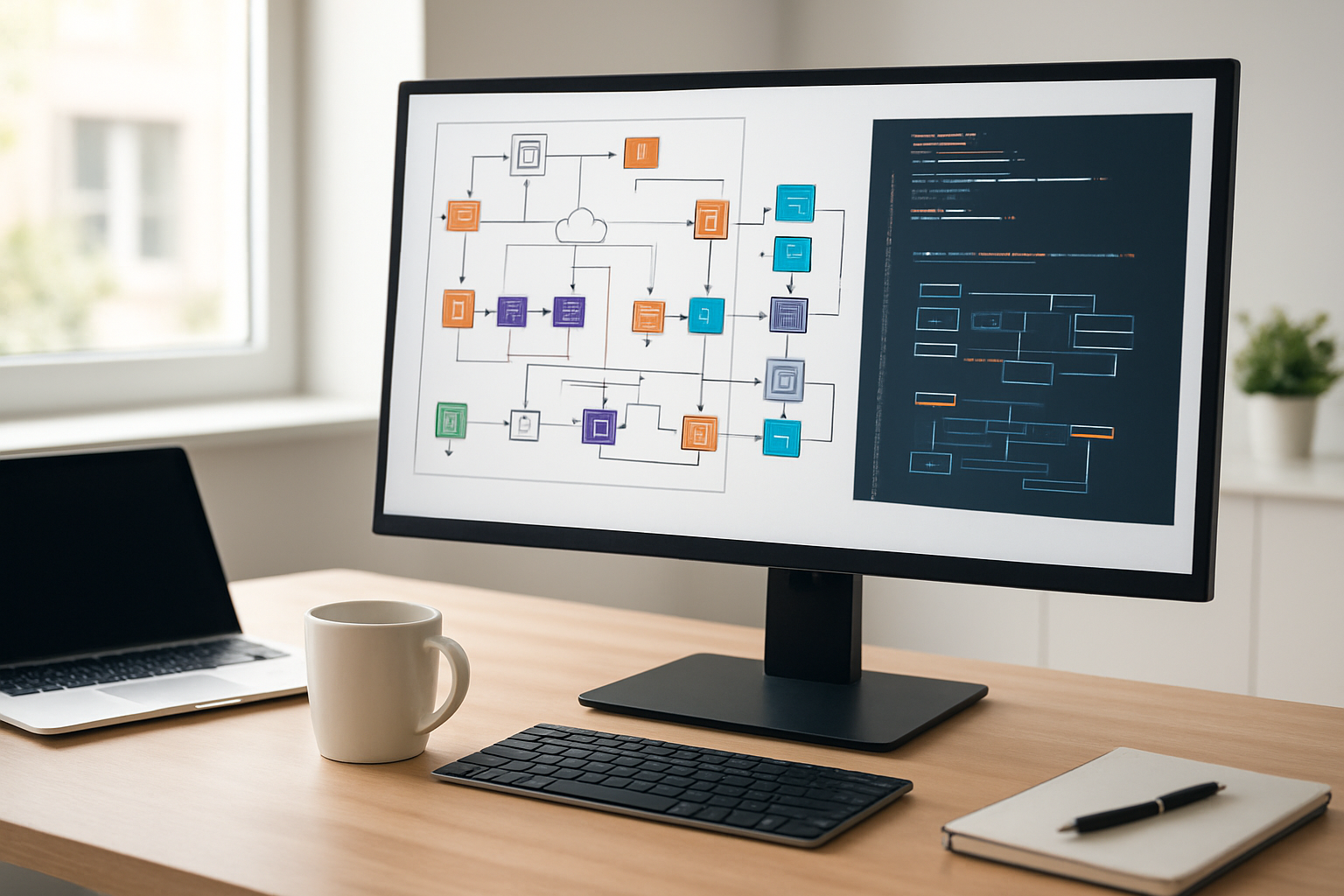
Building Lambda functions forms the backbone of your AWS AgentCore Runtime deployment. These serverless functions handle the core agent logic, processing tasks, and managing state transitions within your intelligent agent workflows.
Start by defining your Lambda function construct within your CDK stack. Create separate functions for different agent responsibilities – one for task orchestration, another for decision-making logic, and additional functions for specific agent capabilities like data processing or external API interactions.
const agentExecutorFunction = new Function(this, 'AgentExecutorFunction', {
  runtime: Runtime.PYTHON_3_9,
  handler: 'agent_executor.handler',
  code: Code.fromAsset('lambda/agent-executor'),
  timeout: Duration.minutes(15),
  memorySize: 1024,
  environment: {
    AGENT_STATE_TABLE: dynamoTable.tableName,
    WORKFLOW_QUEUE_URL: workflowQueue.queueUrl
  }
});
Configure your Lambda functions with appropriate IAM roles and permissions to access other AWS services like DynamoDB for state management, S3 for artifact storage, and SQS for message queuing. The CDK AgentCore implementation requires careful attention to execution timeouts and memory allocation based on your agent’s computational requirements.
Implement error handling and retry logic within your Lambda functions. AgentCore runtime deployment benefits from robust exception management since agents often interact with external systems that may experience temporary failures. Set up dead letter queues for failed executions and implement exponential backoff strategies.
Configure API Gateway and Service Endpoints
API Gateway serves as the entry point for your AWS AgentCore Runtime, providing RESTful endpoints for agent interaction and management. Design your API structure to support standard agent operations like task submission, status checking, and result retrieval.
Create resource paths that align with agent workflows. Typical endpoints include /agents/{agentId}/tasks for task submission, /agents/{agentId}/status for monitoring, and /agents/{agentId}/results for output retrieval. Each endpoint should map to specific Lambda functions that handle the corresponding operations.
const agentApi = new RestApi(this, 'AgentCoreApi', {
  restApiName: 'AgentCore Runtime API',
  description: 'API for AgentCore Runtime operations',
  defaultCorsPreflightOptions: {
    allowOrigins: Cors.ALL_ORIGINS,
    allowMethods: Cors.ALL_METHODS
  }
});

const agentsResource = agentApi.root.addResource('agents');
const agentResource = agentsResource.addResource('{agentId}');
const tasksResource = agentResource.addResource('tasks');
Implement request validation and response transformation using API Gateway models and mapping templates. This ensures your AgentCore infrastructure setup maintains consistent data formats and handles edge cases gracefully. Configure throttling and rate limiting to protect your backend Lambda functions from overwhelming traffic spikes.
Set up custom authorizers if your agents require authentication. Many AgentCore deployments need secure access control, especially when handling sensitive data or performing privileged operations. Lambda authorizers provide flexible authentication mechanisms that integrate seamlessly with your existing identity systems.
Set Up Event-Driven Triggers and Workflows
Event-driven architecture powers the reactive nature of AWS AgentCore Runtime, enabling agents to respond to various triggers and maintain complex workflows. Design your event system using Amazon EventBridge, SQS queues, and DynamoDB Streams to create responsive agent behaviors.
Configure EventBridge rules to capture relevant events from your AWS environment. These might include S3 object creations, CloudWatch alarms, or custom application events that should trigger agent actions. Create specific event patterns that route different event types to appropriate Lambda functions.
const agentEventBus = new EventBus(this, 'AgentEventBus', {
  eventBusName: 'agent-core-events'
});

new Rule(this, 'TaskCompletionRule', {
  eventBus: agentEventBus,
  eventPattern: {
    source: ['agent.core'],
    detailType: ['Task Completed'],
    detail: {
      status: ['SUCCESS', 'FAILURE']
    }
  },
  targets: [new LambdaFunction(taskProcessorFunction)]
});
Implement SQS queues for reliable message processing between agent components. Use standard queues for general task distribution and FIFO queues when task ordering matters. Configure dead letter queues to capture and analyze failed message processing attempts.
Set up DynamoDB Streams on your agent state tables to trigger downstream processing when agent status changes occur. This creates reactive workflows where state transitions automatically initiate follow-up actions, maintaining agent autonomy and reducing manual intervention requirements.
Design workflow orchestration using Step Functions for complex agent processes that require multiple steps, conditional logic, or human approval gates. While Lambda functions handle individual tasks, Step Functions coordinate the overall agent workflow, managing state transitions and error recovery across the entire process chain.
Configure Security and Access Management

Define IAM Roles and Policies
Creating proper IAM roles and policies forms the backbone of your AWS AgentCore security configuration. Start by establishing a service role that allows AgentCore to interact with other AWS services your application needs. This role should follow the principle of least privilege, granting only the minimum permissions required for AgentCore to function properly.
Your CDK stack should define specific roles for different AgentCore components. Create a runtime execution role that handles the core processing tasks, and separate roles for monitoring, logging, and data access functions. Each role needs carefully crafted policies that align with your AgentCore runtime deployment requirements.
const agentCoreExecutionRole = new iam.Role(this, 'AgentCoreExecutionRole', {
  assumedBy: new iam.ServicePrincipal('agentcore.amazonaws.com'),
  managedPolicies: [
    iam.ManagedPolicy.fromAwsManagedPolicyName('service-role/AWSAgentCoreServiceRolePolicy')
  ]
});
Attach resource-based policies to limit access to specific S3 buckets, DynamoDB tables, or Lambda functions that your AgentCore deployment uses. These granular permissions prevent unauthorized access while maintaining operational flexibility.
Implement Encryption for Data at Rest and Transit
Encryption protects your AgentCore data throughout its lifecycle. Enable S3 bucket encryption using AWS KMS keys for any storage components in your CDK AgentCore deployment. Configure your CDK stack to create customer-managed KMS keys with proper key rotation policies.
For databases supporting your AgentCore infrastructure setup, enable encryption at rest using RDS encryption or DynamoDB encryption features. Your CDK implementation should specify encryption parameters explicitly rather than relying on defaults.
Transit encryption requires configuring HTTPS endpoints for all AgentCore API communications. Set up Application Load Balancers with SSL/TLS certificates from AWS Certificate Manager. Enable VPC endpoint encryption for services like S3 and DynamoDB to keep traffic within the AWS network.
const agentCoreKmsKey = new kms.Key(this, 'AgentCoreKmsKey', {
  enableKeyRotation: true,
  description: 'KMS key for AgentCore data encryption'
});
Configure your AgentCore runtime to use encrypted connections for all external communications. This includes database connections, API calls to other services, and any message queue interactions.
Set Up VPC Security Groups and Network ACLs
Network security controls traffic flow to and from your AgentCore components. Design security groups with specific inbound and outbound rules that match your AgentCore architecture requirements. Create separate security groups for different tiers of your application – web tier, application tier, and database tier.
Your CDK AgentCore implementation should define security groups that allow only necessary ports and protocols. For example, if AgentCore communicates over HTTPS, open port 443 from specific source ranges rather than allowing all traffic.
Network ACLs provide an additional layer of subnet-level security. Configure them as a backup to security groups, implementing deny rules for known malicious IP ranges or unwanted traffic patterns. Keep ACL rules simple and focus on broad traffic categories.
const agentCoreSecurityGroup = new ec2.SecurityGroup(this, 'AgentCoreSecurityGroup', {
  vpc: vpc,
  description: 'Security group for AgentCore runtime',
  allowAllOutbound: false
});

agentCoreSecurityGroup.addIngressRule(
  ec2.Peer.ipv4('10.0.0.0/16'),
  ec2.Port.tcp(443),
  'Allow HTTPS from VPC'
);
Implement VPC Flow Logs to monitor network traffic patterns and identify potential security issues. Your AgentCore security configuration benefits from this visibility into network communications.
Configure Secrets Management Integration
AWS Secrets Manager integration keeps sensitive AgentCore configuration data secure. Store database passwords, API keys, and other credentials in Secrets Manager rather than hardcoding them in your CDK stack or application code.
Create secrets for each environment (development, staging, production) with appropriate naming conventions. Your AgentCore runtime deployment guide should include automatic secret rotation where possible, especially for database credentials and service-to-service authentication tokens.
Configure your CDK stack to grant AgentCore components read access to specific secrets through IAM policies. Use resource-based restrictions to ensure each component can only access the secrets it needs.
const agentCoreSecret = new secretsmanager.Secret(this, 'AgentCoreSecret', {
  description: 'AgentCore runtime configuration secrets',
  generateSecretString: {
    secretStringTemplate: JSON.stringify({ username: 'agentcore' }),
    generateStringKey: 'password',
    excludeCharacters: '"@/\\'
  }
});
Integrate Parameter Store for non-sensitive configuration values that your AgentCore application needs. This separation keeps secrets in Secrets Manager while storing operational parameters in a more cost-effective solution.
Set up CloudTrail logging for all secrets access to maintain an audit trail. Monitor unusual access patterns that might indicate compromised credentials or unauthorized secret usage.
Deploy and Test Your AgentCore Infrastructure

Execute CDK Deployment Commands
Start your CDK AgentCore deployment by running the synthesis command to generate CloudFormation templates. Execute cdk synth to review the infrastructure code and catch any syntax errors before deployment. This step validates your stack configuration and shows exactly what resources AWS will create.
Deploy your AgentCore infrastructure using cdk deploy --require-approval never for automated deployments or cdk deploy for interactive approval. The command creates all necessary resources including IAM roles, Lambda functions, API Gateway endpoints, and networking components. Monitor the deployment progress through the terminal output, which displays each resource creation step.
For production environments, use cdk deploy --profile production to target specific AWS accounts. Add the --context flag to pass environment-specific parameters like VPC IDs or security group configurations. Consider using cdk deploy --rollback to automatically revert changes if deployment fails.
Validate Resource Creation and Configuration
Verify your AWS AgentCore Runtime deployment through the AWS Management Console. Check that all Lambda functions appear in the correct regions with proper runtime configurations and memory allocations. Navigate to IAM to confirm that service roles have appropriate permissions for AgentCore operations.
Inspect the API Gateway configuration to ensure endpoints match your CDK stack definitions. Test connectivity between components by examining VPC settings, security groups, and subnet configurations. Use AWS CloudTrail to track resource creation events and identify any permission issues.
Run validation scripts to check environment variables, configuration parameters, and network connectivity. Validate that your AgentCore components can communicate with external services like databases, message queues, or third-party APIs. Document any configuration drift between your CDK code and deployed resources.
Run Integration Tests for Agent Functionality
Execute comprehensive integration tests to verify your AgentCore infrastructure setup works correctly. Create test scenarios that simulate real-world agent workflows, including task processing, data retrieval, and response generation. Use automated testing frameworks to run these tests consistently across different environments.
Test agent communication pathways by sending sample requests through your API endpoints. Verify that agents can access required data sources, process information correctly, and return expected responses. Monitor test execution logs to identify bottlenecks or error conditions that might affect production performance.
Implement end-to-end testing scenarios that cover agent lifecycle management, including initialization, task execution, and cleanup processes. Test error handling mechanisms to ensure agents gracefully handle unexpected inputs or service failures. Create load testing scenarios to validate agent behavior under concurrent request loads.
Monitor Deployment Health and Performance
Set up CloudWatch monitoring for your AWS AgentCore scaling requirements. Configure custom metrics to track agent response times, error rates, and resource utilization patterns. Create dashboards that provide real-time visibility into system performance and agent activity levels.
Implement alerting rules for critical metrics like Lambda function timeouts, API Gateway throttling, or memory usage spikes. Configure SNS notifications to alert your team when performance thresholds are exceeded or when agents encounter recurring errors. Use CloudWatch Logs Insights to analyze agent execution patterns and identify optimization opportunities.
Monitor cost metrics to track resource consumption and identify potential savings opportunities. Review Lambda execution duration, API Gateway request volumes, and data transfer costs. Set up budget alerts to prevent unexpected charges from scaling events or inefficient agent configurations. Regular performance reviews help maintain optimal AgentCore runtime deployment efficiency and cost-effectiveness.
Optimize and Scale Your AgentCore Deployment

Implement Auto-Scaling Policies
Auto-scaling ensures your AWS AgentCore Runtime adapts to varying workloads without manual intervention. Configure horizontal pod autoscaling (HPA) in your CDK stack to automatically adjust the number of AgentCore instances based on CPU utilization, memory consumption, or custom metrics.
const agentCoreAutoScaling = new ecs.ScalableTarget(this, 'AgentCoreScaling', {
  serviceNamespace: ecs.ServiceNamespace.ECS,
  resourceId: `service/${cluster.clusterName}/${agentCoreService.serviceName}`,
  scalableDimension: 'ecs:service:DesiredCount',
  minCapacity: 2,
  maxCapacity: 10,
});

agentCoreAutoScaling.scaleOnCpuUtilization('CpuScaling', {
  targetUtilizationPercent: 70,
  scaleInCooldown: Duration.minutes(5),
  scaleOutCooldown: Duration.minutes(2),
});
Set up Application Load Balancer target tracking to distribute traffic evenly across scaled instances. Monitor CloudWatch metrics specific to AgentCore runtime performance, including agent response times, queue depths, and error rates. Create custom scaling policies that trigger based on business-specific metrics like the number of active agents or pending tasks.
Consider predictive scaling for predictable traffic patterns. If your AgentCore deployment experiences regular spikes during specific hours, configure scheduled scaling actions to pre-emptively increase capacity before peak periods begin.
Configure Cost Optimization Strategies
Cost control becomes critical as your AgentCore infrastructure scales. Implement Spot Instances for non-critical workloads within your CDK stack to reduce compute costs by up to 90%. Mix Spot and On-Demand instances using AWS ECS capacity providers to balance cost savings with availability guarantees.
const spotCapacityProvider = new ecs.AsgCapacityProvider(this, 'SpotCapacityProvider', {
  autoScalingGroup: spotAutoScalingGroup,
  enableManagedTerminationProtection: false,
  spotInstanceDraining: true,
});

cluster.addAsgCapacityProvider(spotCapacityProvider);
Right-size your AgentCore instances by analyzing historical usage patterns. Use AWS Compute Optimizer recommendations to identify overprovisioned resources. Implement lifecycle policies for CloudWatch logs and S3 data generated by AgentCore runtime to automatically transition older data to cheaper storage classes.
Set up budget alerts and cost allocation tags to track AgentCore deployment expenses across different environments and teams. Configure AWS Trusted Advisor to regularly review your infrastructure for cost optimization opportunities. Use Reserved Instances or Savings Plans for predictable baseline capacity to lock in significant discounts.
Enable container insights and use AWS Cost Explorer to identify the most expensive components of your AgentCore infrastructure setup. This data helps prioritize optimization efforts where they’ll have the biggest financial impact.
Set Up Blue-Green Deployment Patterns
Blue-green deployments eliminate downtime during AgentCore runtime updates while providing instant rollback capabilities. Create two identical production environments in your CDK stack – one active (blue) and one standby (green).
const blueService = new ecs.FargateService(this, 'AgentCoreBlue', {
  cluster,
  taskDefinition: agentCoreTaskDef,
  desiredCount: 3,
  enableExecuteCommand: true,
});

const greenService = new ecs.FargateService(this, 'AgentCoreGreen', {
  cluster,
  taskDefinition: newAgentCoreTaskDef,
  desiredCount: 0,
  enableExecuteCommand: true,
});
Use AWS CodeDeploy with ECS to orchestrate traffic shifting between environments. Configure health checks that validate AgentCore functionality before completing the deployment. Set up automated rollback triggers based on error rates, response times, or custom business metrics.
Implement feature flags within your AgentCore application to control which agents use new functionality. This approach allows gradual feature rollouts independent of infrastructure deployments. Use AWS AppConfig to manage feature toggles without code changes.
Monitor both environments during transitions using CloudWatch dashboards that display key AgentCore metrics side by side. Create alerts that notify teams if the green environment shows degraded performance compared to the blue environment. Store deployment artifacts in S3 with versioning enabled to support quick rollbacks to any previous AgentCore runtime version.
Test your blue-green process regularly in non-production environments to ensure smooth production deployments. Document the rollback procedure and practice it with your team to reduce mean time to recovery during incidents.
AWS AgentCore Runtime deployment through CDK transforms complex infrastructure management into manageable, code-driven processes. By setting up your development environment properly, understanding the architecture, and designing thoughtful CDK stacks, you create a foundation for reliable agent-based applications. The security configurations and access management practices you implement today will protect your deployments as they grow and evolve.
Start with a simple deployment and test everything thoroughly before moving to production. Your CDK code becomes the blueprint for consistent, repeatable infrastructure that scales with your needs. Take the time to optimize performance early – it pays dividends when your AgentCore applications face real-world demands and traffic patterns.