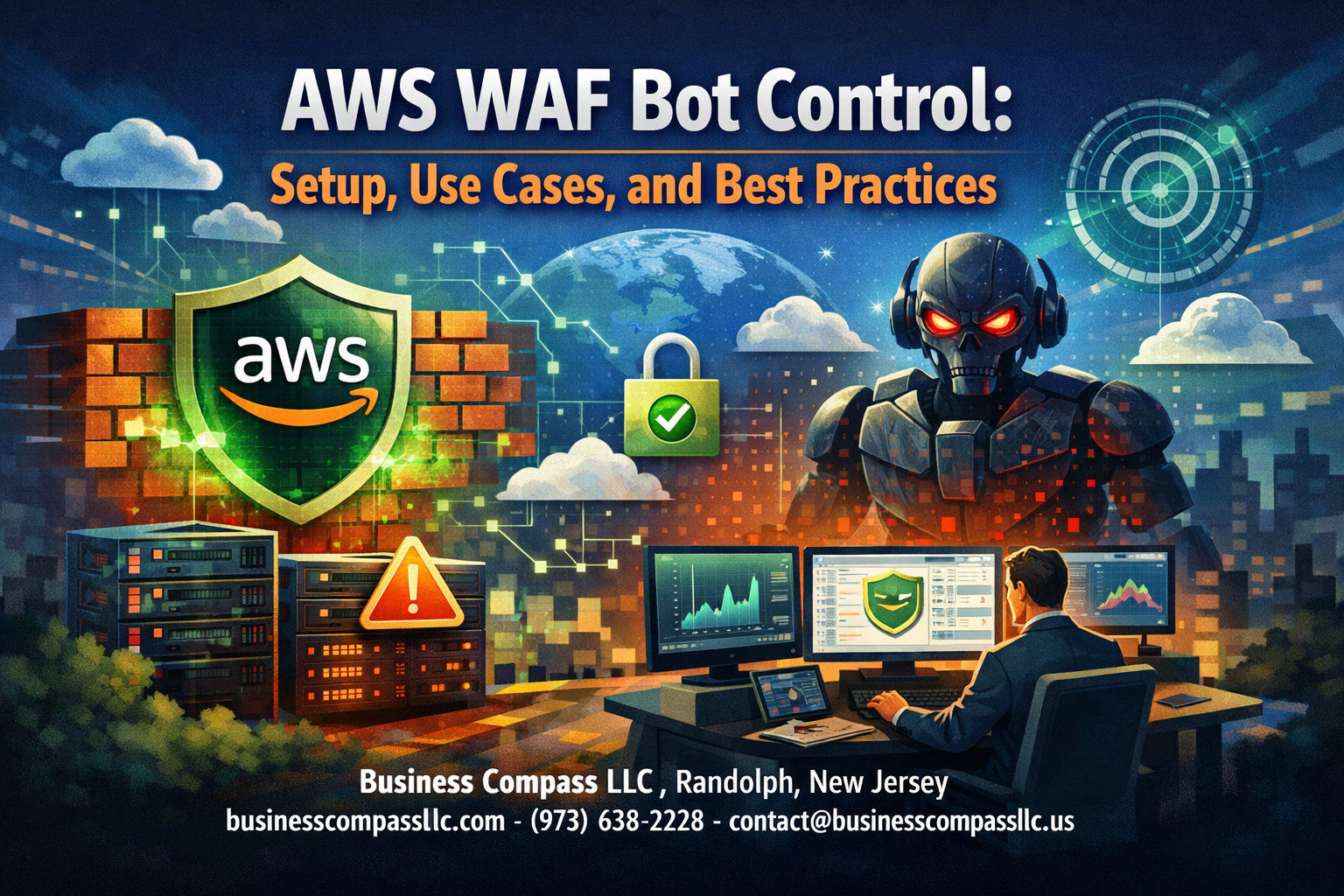
AWS WAF Bot Control protects your web applications from malicious bots that can drain resources, scrape content, and launch automated attacks. This comprehensive guide is designed for cloud engineers, DevOps professionals, and security teams who need to implement robust bot protection AWS solutions.
Malicious bots account for nearly 40% of all internet traffic, making automated bot blocking a critical security priority. AWS WAF Bot Control gives you the tools to identify and block unwanted automated traffic while allowing legitimate users and beneficial bots to access your applications.
We’ll walk you through the complete AWS WAF setup process, from basic configuration to advanced bot mitigation strategies that scale with your business needs. You’ll discover real-world scenarios where web application firewall bot control delivers measurable business value, including protecting e-commerce sites from inventory hoarding and preventing API abuse.
This guide also covers AWS WAF configuration best practices for optimizing performance while managing costs effectively. You’ll learn how to fine-tune detection rules, implement smart allow-listing, and troubleshoot common deployment issues that teams encounter during AWS security implementation.
Understanding AWS WAF Bot Control Fundamentals

What AWS WAF Bot Control Is and Why It Matters
AWS WAF Bot Control is a managed rule group that provides comprehensive bot protection AWS environments. Built directly into Amazon’s Web Application Firewall, this service automatically identifies and blocks malicious automated traffic while allowing legitimate bots to access your applications.
The reality is that bots account for over 40% of all web traffic, and distinguishing between helpful bots (like search engine crawlers) and harmful ones (like DDoS attackers or content scrapers) has become critical for maintaining application performance and security. AWS WAF Bot Control addresses this challenge by using machine learning models and threat intelligence to make real-time decisions about incoming requests.
What makes this service particularly valuable is its ability to protect against sophisticated attack vectors that traditional security measures often miss. These include credential stuffing attempts, inventory hoarding, web scraping operations, and fake account creation campaigns that can significantly impact your business operations and user experience.
Key Features That Protect Your Applications
The AWS WAF configuration for bot control includes several powerful features designed to provide comprehensive protection:
Intelligent Bot Classification: The service categorizes bots into different risk levels, allowing you to create nuanced responses rather than blanket blocking. Categories include verified bots, likely automated traffic, and confirmed malicious bots.
Real-time Detection Engine: Uses advanced algorithms to analyze request patterns, including timing, frequency, and behavioral indicators that distinguish human users from automated scripts.
Customizable Action Rules: You can configure different responses for each bot category:
- Allow verified search engine bots
- Challenge suspicious traffic with CAPTCHA
- Block confirmed malicious requests
- Rate limit potentially harmful bot traffic
Comprehensive Logging and Monitoring: Detailed request logs provide visibility into bot traffic patterns, helping you understand attack vectors and optimize your automated bot blocking rules.
Label-based Targeting: The service applies labels to requests based on bot detection results, enabling you to create custom rules that target specific types of automated traffic.
How Bot Control Integrates with Existing AWS Services
AWS WAF Bot Control seamlessly connects with your existing AWS infrastructure through multiple integration points. The service works natively with Amazon CloudFront distributions, Application Load Balancers, and API Gateway endpoints, providing consistent protection across your entire application stack.
Integration with AWS CloudWatch enables comprehensive monitoring and alerting capabilities. You can set up custom dashboards to track bot traffic patterns, monitor rule effectiveness, and receive notifications when unusual activity occurs. This visibility helps your security team respond quickly to emerging threats.
The service also integrates with AWS Config for compliance monitoring and AWS Organizations for centralized management across multiple accounts. When combined with AWS Security Hub, you get a unified view of your security posture that includes bot-related threats alongside other security findings.
For development teams, the integration with AWS Lambda allows for custom response actions when specific bot behaviors are detected. This flexibility enables you to implement business-specific logic, such as temporarily blocking IP addresses or triggering additional authentication steps.
Cost Benefits of Automated Bot Detection
Implementing AWS WAF best practices with Bot Control delivers significant cost savings across multiple areas of your infrastructure. Bot traffic consumes bandwidth, compute resources, and can trigger auto-scaling events that increase your AWS bills unnecessarily.
By blocking malicious bots before they reach your application servers, you reduce the load on your backend infrastructure. This translates to lower EC2 costs, reduced database queries, and decreased data transfer charges. Organizations typically see a 15-30% reduction in infrastructure costs after implementing effective bot mitigation strategies.
The automated nature of the service eliminates the need for manual threat analysis and rule creation. Security teams no longer need to spend hours analyzing traffic patterns and updating firewall rules, freeing up resources for other critical security initiatives.
Additionally, preventing bot attacks helps maintain application performance for legitimate users, reducing the risk of lost revenue due to slow page load times or service unavailability. The protection against inventory hoarding and price scraping also helps e-commerce businesses maintain competitive pricing and product availability.
The service operates on a pay-as-you-use model, making it cost-effective for organizations of all sizes. You only pay for the web requests that are evaluated, with no upfront commitments or minimum usage requirements.
Setting Up AWS WAF Bot Control for Maximum Protection

Prerequisites and Account Configuration Requirements
Before diving into AWS WAF bot control implementation, your AWS environment needs proper foundation elements in place. Your AWS account must have appropriate IAM permissions configured, specifically allowing access to AWS WAF, CloudFront, Application Load Balancer, or API Gateway depending on your architecture.
The IAM user or role requires permissions for wafv2:* actions, along with resource-specific permissions for your protected services. Create a dedicated service role for WAF operations to maintain security boundaries and audit trails.
Your web application should already be running behind a supported AWS service – CloudFront distributions, Application Load Balancers (ALB), or API Gateway. AWS WAF bot control cannot protect resources that aren’t integrated with these services.
Budget considerations matter here. AWS WAF bot control operates on a pay-per-use model with charges for web ACL usage, rule evaluations, and bot control requests. Each bot control request costs approximately $0.60 per million requests, which can add up quickly for high-traffic applications.
Network architecture review is crucial. Ensure your application logs capture sufficient detail for monitoring bot activity. CloudWatch integration should be enabled on your protected resources to track metrics and create meaningful dashboards.
Step-by-Step Bot Control Rule Creation Process
Creating effective bot protection starts with navigating to the AWS WAF console and selecting your target region. Remember that CloudFront requires WAF configuration in the US East (N. Virginia) region regardless of your application’s location.
Begin by creating a new web ACL or modifying an existing one. Choose “Add managed rule groups” and locate the AWS managed Bot Control rule set. The rule set comes in two tiers – the core rule set (included in standard WAF pricing) and the targeted protection rule set (additional cost).
Configure the bot control rule priority carefully. Bot detection should typically run before custom rules that might inadvertently block legitimate traffic. Set the rule priority between 100-500 to ensure proper execution order within your rule stack.
The rule configuration requires selecting your application type from predefined categories like e-commerce, social media, or general web application. This selection influences how the machine learning algorithms evaluate traffic patterns and behavioral analysis.
Add scope-down statements if needed to apply bot control only to specific URI paths or request characteristics. For example, you might want stricter bot protection on login pages while allowing more lenient policies for static content.
Save your configuration and associate the web ACL with your target resource. The propagation typically takes 2-3 minutes for ALB associations and up to 15 minutes for CloudFront distributions.
Configuring Detection Sensitivity Levels
AWS WAF bot control offers multiple detection sensitivity levels that balance security with user experience. The default “Allow” mode lets most traffic through while logging suspicious patterns for analysis. This approach works well during initial deployment phases.
“Block” mode provides aggressive protection by automatically blocking detected bot traffic. Use this setting for high-risk applications like financial services or e-commerce checkout processes where bot activity directly impacts business operations.
Custom challenge actions present CAPTCHAs or JavaScript challenges to suspicious requests. This middle-ground approach reduces false positives while maintaining strong protection against automated attacks. Configure challenge failure actions to either block or allow traffic based on your risk tolerance.
Rate limiting integrates seamlessly with bot control sensitivity settings. Combine bot detection with rate-based rules to create layered protection. For instance, allow verified bots like search engine crawlers while rate-limiting unverified automated traffic.
Geographic restrictions work alongside sensitivity configuration. Higher sensitivity levels in regions with frequent attack traffic while maintaining normal sensitivity for your primary user base locations.
Monitor the effectiveness of your sensitivity settings through CloudWatch metrics. Track blocked requests, challenged requests, and false positive rates to fine-tune your configuration over time.
Testing Your Bot Control Implementation
Validation of your AWS WAF bot control setup requires systematic testing across multiple scenarios. Start with basic functionality tests using curl commands or simple scripts to simulate automated requests. These basic tests should trigger bot detection mechanisms within minutes.
Create test traffic patterns that mimic legitimate user behavior – varied request timing, realistic user agents, and normal browsing patterns. Compare how your configuration handles this traffic versus obvious bot signatures like rapid-fire requests or outdated user agents.
User acceptance testing becomes critical here. Have real users navigate your application while monitoring WAF logs for false positives. Pay special attention to mobile users, legacy browsers, and assistive technologies that might trigger unexpected bot signatures.
Load testing tools like Apache JMeter or Artillery can simulate various bot attack patterns. Test scenarios should include credential stuffing attempts, inventory scraping, and distributed attacks from multiple IP addresses.
Monitor CloudWatch metrics during testing phases. Key metrics include AllowedRequests, BlockedRequests, and ChallengedRequests. Sudden spikes in blocked legitimate traffic indicate sensitivity adjustments needed.
Document your testing results and create playbooks for ongoing validation. Regular testing schedules ensure your bot protection adapts to evolving threat landscapes and application changes.
Monitoring and Alerting Setup
Effective monitoring transforms your AWS WAF bot control from a passive security tool into an active threat intelligence system. CloudWatch dashboards provide real-time visibility into bot activity patterns, blocked requests, and system performance metrics.
Configure CloudWatch alarms for critical thresholds like blocked request spikes, unusual geographic traffic patterns, or high challenge failure rates. Set alarm actions to notify security teams through SNS topics or trigger automated response procedures.
AWS WAF logs integration with CloudWatch Logs enables detailed analysis of bot traffic characteristics. Enable full logging initially to understand normal traffic patterns, then adjust to sampled logging for cost optimization in high-traffic environments.
Create custom metrics using CloudWatch Insights queries to track specific bot behaviors relevant to your application. Examples include login attempt patterns, API endpoint targeting, or session duration anomalies.
Third-party SIEM integration amplifies your monitoring capabilities. Export WAF logs to security tools like Splunk, Elastic Stack, or AWS Security Hub for correlation with other security events across your infrastructure.
Automated response systems can react to monitoring alerts by adjusting WAF rules, blocking IP ranges, or triggering incident response procedures. Lambda functions provide serverless automation for common response patterns.
Regular monitoring reviews help identify trends and adjust protection strategies. Weekly or monthly analysis of bot activity reports guides rule modifications and sensitivity adjustments for optimal protection balance.
Real-World Use Cases That Drive Business Value

E-commerce Site Protection from Price Scraping Bots
E-commerce businesses face constant threats from price scraping bots that automatically harvest product prices, inventory levels, and competitive intelligence. These bots can overwhelm your servers, skew analytics data, and give competitors unfair advantages in pricing strategies.
AWS WAF Bot Control provides sophisticated protection against these automated threats. The managed rule groups can distinguish between legitimate comparison shopping tools and aggressive scrapers that bypass robots.txt files or attempt to hide their identity through rotating user agents and IP addresses.
Key protection strategies include:
- Rate limiting based on request patterns: Block IP addresses making unusually high numbers of product page requests
- User agent validation: Identify and block bots using fake or suspicious browser signatures
- Session behavior analysis: Detect non-human browsing patterns like perfect navigation sequences
- Geographic filtering: Restrict access from regions where your business doesn’t operate
Implementation involves configuring custom rules that allow legitimate search engine crawlers while blocking commercial scrapers. You can set different thresholds for various product categories – allowing higher request rates for popular items while tightly controlling access to premium or limited inventory products.
The business impact is significant: reduced server costs, more accurate customer analytics, and protection of competitive pricing strategies. Many e-commerce sites report 40-60% reductions in bot traffic after implementing AWS WAF configuration tailored to their specific scraping patterns.
API Rate Limiting for SaaS Applications
SaaS applications depend on APIs for core functionality, making them attractive targets for various bot attacks including credential stuffing, data harvesting, and resource exhaustion attempts. Bot protection AWS services excel at protecting these critical endpoints.
AWS WAF Bot Control offers granular control over API access patterns. Unlike basic rate limiting, it analyzes request authenticity, user behavior patterns, and client fingerprints to make intelligent blocking decisions.
Effective SaaS protection strategies include:
- Endpoint-specific rules: Apply different protection levels to public APIs versus authenticated endpoints
- Token-based rate limiting: Implement per-user or per-application limits that scale with subscription tiers
- Progressive penalties: Gradually increase delays for suspicious clients before blocking completely
- Whitelist management: Maintain approved client lists for partner integrations and mobile applications
For authentication endpoints, bot mitigation strategies focus on preventing credential stuffing while maintaining user experience. This includes implementing CAPTCHA challenges for suspicious login patterns and temporary account locks after repeated failed attempts.
The AWS WAF setup for SaaS applications typically involves creating rule priorities that protect critical business logic APIs first, followed by public documentation endpoints. Custom dashboards help monitor API abuse patterns and adjust thresholds based on legitimate usage growth.
Preventing Account Takeover Attacks
Account takeover attacks represent one of the most serious security threats facing web applications today. Attackers use credential stuffing, brute force attacks, and sophisticated bot networks to gain unauthorized access to user accounts, leading to data breaches, financial fraud, and severe reputation damage.
AWS security implementation through WAF Bot Control provides multiple defense layers against these attacks. The service analyzes login attempt patterns, device fingerprints, and behavioral anomalies to identify automated attack tools before they can compromise accounts.
Critical defense mechanisms include:
- Login velocity monitoring: Detect rapid-fire login attempts across multiple accounts from single sources
- Credential stuffing detection: Identify patterns consistent with automated testing of breached password databases
- Device reputation scoring: Track and score devices based on their historical behavior patterns
- Geographic anomaly detection: Flag login attempts from unusual locations relative to user history
Automated bot blocking rules can be configured to trigger progressive responses. Initial suspicious activity might prompt additional authentication factors, while confirmed bot behavior results in immediate blocking and security team alerts.
The WAF bot management approach for account protection involves creating custom rules that understand your application’s normal authentication flows. This includes whitelisting legitimate mobile apps, handling password manager tools correctly, and accommodating users who frequently travel or use VPNs.
Regular tuning of these rules based on attack intelligence and false positive feedback ensures maximum protection without impacting legitimate user access. Many organizations report 90%+ reductions in successful account takeover attempts after implementing comprehensive AWS WAF best practices for authentication endpoint protection.
Advanced Configuration Strategies for Enhanced Security

Customizing Bot Detection Rules for Your Traffic Patterns
Every organization has unique traffic characteristics, and AWS WAF Bot Control configuration should reflect these patterns. Start by analyzing your baseline legitimate traffic using CloudWatch metrics to understand user behavior patterns, peak usage times, and geographic distribution.
Create custom rate-based rules that align with your application’s normal usage patterns. For e-commerce sites experiencing seasonal traffic spikes, establish dynamic thresholds that scale with expected volume increases. Set different rate limits for various endpoints – API calls might need stricter limits compared to content browsing.
Configure geographic restrictions based on your user base. If your application primarily serves North American customers, implement stricter controls for requests from regions where you have minimal legitimate traffic. This approach significantly reduces false positives while maintaining strong bot protection AWS security postures.
Implement progressive enforcement strategies using AWS WAF configuration options. Start with monitoring mode to collect data, then gradually move to challenge and block actions as you fine-tune detection accuracy. This phased approach prevents disruption to legitimate users while building comprehensive bot mitigation strategies.
Consider implementing custom labels for different traffic types. Tag mobile app traffic differently from web browser traffic, allowing for tailored bot detection rules that account for varying behavioral patterns between platforms.
Integrating with CloudWatch for Comprehensive Monitoring
CloudWatch integration transforms AWS WAF Bot Control from a simple blocking tool into a comprehensive security intelligence platform. Set up custom dashboards that visualize bot traffic patterns, blocked requests, and challenge success rates in real-time.
Configure CloudWatch alarms for critical metrics like sudden spikes in blocked requests, unusual geographic request patterns, or drops in legitimate traffic that might indicate overly aggressive filtering. These automated bot blocking triggers help maintain optimal protection without constant manual oversight.
Create custom metrics that track business-specific indicators. E-commerce platforms might monitor cart abandonment rates following bot challenges, while content sites could track user engagement metrics after implementing new bot controls. These insights help balance security with user experience.
Establish log analysis workflows using CloudWatch Logs Insights to identify emerging bot patterns. Query logs for specific user agents, IP ranges, or request patterns to stay ahead of evolving bot threats. Regular analysis reveals attack trends and helps refine web application firewall bot control rules.
Set up cross-account monitoring for organizations with multiple AWS environments. Centralized logging provides unified visibility across development, staging, and production environments, ensuring consistent AWS security implementation across all deployments.
Setting Up Automated Response Actions
Automated responses reduce manual intervention while maintaining rapid threat response capabilities. Configure AWS WAF to automatically escalate blocking actions based on threat severity and confidence scores. High-confidence bot traffic can bypass challenges and move directly to blocking, while suspicious traffic receives additional verification steps.
Implement time-based response variations that account for your application’s usage patterns. During peak business hours, configure more lenient challenge thresholds to avoid impacting legitimate users, while applying stricter controls during typically low-traffic periods when bot attacks are more common.
Create feedback loops between AWS WAF Bot Control and other AWS services. Use Lambda functions to automatically update IP reputation lists, adjust rate limits based on current traffic volumes, or trigger additional security measures in EC2 security groups when persistent attacks are detected.
Establish automated whitelisting procedures for verified legitimate traffic. Configure rules that automatically allow traffic from verified business partners, known API consumers, or authenticated users who have successfully passed previous challenges. This reduces unnecessary friction while maintaining security.
Design escalation procedures that automatically engage human oversight when attack patterns exceed predetermined thresholds. Configure SNS notifications to alert security teams when bot traffic volumes suggest coordinated attacks or when legitimate traffic success rates drop below acceptable levels.
Fine-Tuning False Positive Reduction
False positive reduction requires continuous refinement based on actual traffic analysis. Start by examining blocked requests that originated from legitimate users, identifying common characteristics that triggered incorrect bot classifications.
Implement exception rules for known legitimate automated traffic. Many organizations rely on monitoring services, SEO crawlers, or partner integrations that might appear bot-like. Create specific allowlists for these services while maintaining protection against malicious automation.
Use A/B testing approaches to validate rule changes before full deployment. Deploy new AWS WAF best practices configurations to a subset of traffic first, measuring impact on both security effectiveness and user experience metrics before broader implementation.
Configure graduated response mechanisms that provide multiple verification opportunities before blocking. Implement CAPTCHA challenges before JavaScript challenges, and JavaScript challenges before outright blocks. This layered approach catches more sophisticated bots while giving legitimate users multiple chances to prove their authenticity.
Regularly review and update bot management rules based on evolving attack patterns and legitimate traffic characteristics. Monthly analysis of blocked traffic, challenge success rates, and user feedback helps identify opportunities to refine detection accuracy while maintaining strong security postures.
Monitor user experience metrics closely during rule adjustments. Track conversion rates, session duration, and user satisfaction scores to ensure that enhanced security measures don’t negatively impact business objectives. The most effective WAF bot management configurations balance robust protection with seamless user experiences.
Performance Optimization and Cost Management

Balancing Security Strictness with User Experience
Finding the sweet spot between robust bot protection and seamless user experience requires careful tuning of your AWS WAF Bot Control rules. Start by implementing a gradual approach – begin with monitoring mode to understand your traffic patterns before switching to blocking mode. This prevents legitimate users from getting caught in overly aggressive filters.
Configure rate-based rules with appropriate thresholds that account for your typical user behavior. For e-commerce sites during peak shopping periods, you might need higher request limits to accommodate legitimate browsing patterns. Gaming platforms or API-heavy applications require different considerations compared to static content websites.
Use AWS WAF’s custom response feature to provide meaningful error messages when legitimate requests get blocked. Instead of generic 403 errors, create user-friendly pages that explain what happened and provide alternative contact methods. This reduces support tickets and improves customer satisfaction.
Monitor your false positive rates closely through CloudWatch metrics. High false positive rates often indicate rules that are too strict for your specific use case. Consider implementing CAPTCHA challenges for suspicious but potentially legitimate traffic rather than outright blocking, giving real users a chance to prove their humanity.
Monitoring Resource Usage and Associated Costs
AWS WAF Bot Control pricing consists of multiple components that can quickly add up without proper monitoring. Web ACL usage charges, rule evaluations, and request processing fees all contribute to your monthly bill. Set up CloudWatch billing alarms to track spending against predetermined thresholds.
Create custom CloudWatch dashboards to monitor key metrics like request volume, blocked requests, and rule evaluation counts. These metrics help identify cost spikes before they impact your budget. Pay special attention to rules that process large volumes of requests, as each evaluation incurs charges.
Review your AWS Cost Explorer regularly to understand which components drive your WAF expenses. Often, high request volumes from legitimate traffic can increase costs more than actual bot attacks. Consider implementing request sampling for less critical rules to reduce evaluation costs while maintaining protection.
Use AWS WAF’s logging feature strategically – full request logging provides valuable insights but generates significant data transfer and storage costs. Implement selective logging based on specific conditions or sample rates to balance visibility with cost efficiency.
Track the cost per blocked threat to measure your return on investment. High-value bot attacks that could result in fraud or data theft justify higher protection costs, while low-impact scrapers might not warrant expensive rule configurations.
Implementing Efficient Rule Prioritization
Rule order directly impacts both performance and costs in AWS WAF Bot Control. Place your most specific and frequently triggered rules at the top of your rule hierarchy. Rules that block obvious threats like known malicious IPs should process first to avoid unnecessary evaluations of subsequent rules.
Group related rules logically to minimize processing overhead. Bot Control managed rule groups work most efficiently when complemented by custom rules that address your specific threat landscape. Place rate-limiting rules before more complex pattern-matching rules to catch obvious abuse quickly.
Leverage rule labels and tagging to create efficient rule chains. When one rule identifies suspicious behavior, subsequent rules can check for these labels rather than re-evaluating the same conditions. This approach reduces computation costs while maintaining comprehensive protection.
Regular rule auditing helps identify redundant or underperforming rules that consume resources without adding value. Review CloudWatch metrics monthly to identify rules with low match rates or high false positives. Disable or refine these rules to optimize your configuration.
Consider geographic and time-based rule optimization. If your application primarily serves specific regions, implement geo-blocking rules early in your rule chain. Similarly, adjust rule sensitivity based on traffic patterns – tighter controls during off-hours when legitimate traffic is minimal can catch attacks more effectively.
Test rule changes in staging environments that mirror your production traffic patterns. This prevents performance surprises when deploying new configurations and helps estimate cost impacts before implementation.
Troubleshooting Common Implementation Challenges

Resolving False Positive Detection Issues
False positives represent one of the biggest headaches when implementing AWS WAF Bot Control. Your legitimate users might get blocked while actual bots slip through, creating a frustrating experience for everyone involved.
Start by examining your AWS WAF configuration logs to identify patterns in blocked traffic. Look for specific user agents, IP ranges, or request patterns that consistently trigger false positives. The AWS WAF bot management console provides detailed insights into why certain requests were flagged.
Create custom rules to whitelist known good traffic before the bot control rules execute. This approach works particularly well for:
- Internal monitoring tools and health checks
- Legitimate API clients with predictable patterns
- Partner integrations that might appear bot-like
- Mobile applications with automated refresh behaviors
Fine-tune your inspection level settings based on your traffic patterns. The “Common” inspection level catches obvious bots but may miss sophisticated ones, while “Targeted” provides deeper analysis but increases false positive risk.
Monitor your challenge rates and adjust the action for suspicious traffic from “Block” to “Challenge” when you’re uncertain about legitimacy. This gives borderline cases a chance to prove they’re human while maintaining security.
Set up CloudWatch alarms for unusual spikes in blocked requests, which often signal false positive issues before users start complaining.
Addressing Performance Impact Concerns
AWS WAF Bot Control adds processing overhead that can impact your application’s response times and increase costs if not properly managed.
Request inspection latency typically increases by 10-50 milliseconds depending on your configuration complexity. While this seems minimal, it compounds across high-traffic applications. Monitor your CloudFront or Application Load Balancer metrics to track any performance degradation.
Optimize rule ordering to minimize processing overhead. Place your most restrictive custom rules first, followed by rate limiting rules, then bot control rules. This sequence prevents unnecessary bot analysis on traffic you’re already planning to block.
Consider geographic filtering before bot analysis. If your application only serves specific regions, blocking other geographic areas early in the rule chain prevents wasted bot inspection cycles.
Use sampling for detailed logging instead of logging every request. Full request logging creates substantial CloudWatch costs and storage overhead without proportional security benefits.
Implement caching strategies for your web application to reduce the impact of any added latency. Static content delivery through CloudFront Edge locations helps offset WAF processing time.
Configure your WAF with appropriate capacity units. Underprovisioning leads to throttling and request failures, while overprovisioning wastes money. Start conservative and scale based on actual usage patterns.
Managing Complex Traffic Pattern Recognition
Modern web applications generate diverse traffic patterns that can confuse bot detection systems, especially single-page applications, API-heavy platforms, and mobile apps.
Single-page applications create unique challenges because they generate frequent AJAX requests that might appear automated. Configure your bot control rules to account for legitimate SPA behavior by examining request timing patterns and user session continuity rather than just request frequency.
API traffic requires special handling since programmatic access is expected. Create separate rule groups for API endpoints with different thresholds and inspection criteria. Consider implementing API key validation before bot control analysis to reduce false positives from legitimate API consumers.
Mobile applications often exhibit bot-like characteristics due to automated background processes, push notification handling, and app store validation requests. Identify your mobile user agents and create appropriate exceptions while maintaining protection against mobile-based attacks.
E-commerce platforms face particular complexity during sales events, product launches, or seasonal traffic spikes. Legitimate users might exhibit aggressive browsing behavior that resembles bot activity. Implement dynamic rule adjustments that account for these predictable traffic surges.
Social media integrations and web crawlers from legitimate services need careful consideration. Maintain an updated whitelist of known good crawlers like Google, Bing, and social media platforms while blocking unauthorized scraping attempts.
Fixing Integration Problems with Existing Infrastructure
AWS WAF Bot Control integration with existing security infrastructure often creates conflicts and gaps that require careful coordination to resolve.
CDN conflicts arise when multiple layers attempt bot detection simultaneously. If you’re using Cloudflare, Fastly, or other CDN services alongside AWS WAF, coordinate your bot protection strategies to prevent duplicate processing and conflicting actions. Configure your CDN to pass relevant headers that AWS WAF can use for better decision-making.
Load balancer health checks commonly trigger false positives. Configure your ALB or NLB health check paths as exceptions in your WAF rules, or use dedicated health check endpoints that bypass WAF inspection entirely.
Third-party security tools might interfere with bot control functionality. Vulnerability scanners, monitoring services, and security testing tools often appear as suspicious traffic. Maintain an inventory of authorized security tools and create appropriate allowlists.
Authentication system integration requires careful planning. Users behind corporate firewalls or VPNs might share IP addresses, leading to rate limiting issues. Implement authenticated user exceptions and consider user-based rate limiting instead of purely IP-based controls.
Existing logging and monitoring systems need updates to handle WAF-specific data. Ensure your SIEM solutions can parse WAF logs properly and create meaningful alerts. Configure log forwarding to your existing security operations center tools.
Database connection pooling and application-level caching might mask the true impact of blocked requests. Monitor application-level metrics alongside WAF metrics to get a complete picture of bot control effectiveness and user impact.

AWS WAF Bot Control gives you the power to protect your web applications from malicious bots while keeping the good ones running smoothly. From setting up basic protection to fine-tuning advanced rules, this comprehensive security solution helps you block scrapers, prevent credential stuffing attacks, and maintain your site’s performance. The real-world benefits are clear – reduced server costs, better user experience, and protection of your valuable data and resources.
Getting the most out of AWS WAF Bot Control means starting with the fundamentals and gradually building your defenses. Focus on proper rule configuration, monitor your traffic patterns regularly, and don’t forget to optimize for both security and cost efficiency. When challenges arise, the troubleshooting strategies we’ve covered will help you maintain robust protection. Take action today by implementing these best practices – your applications and your business will thank you for the investment in proper bot management.