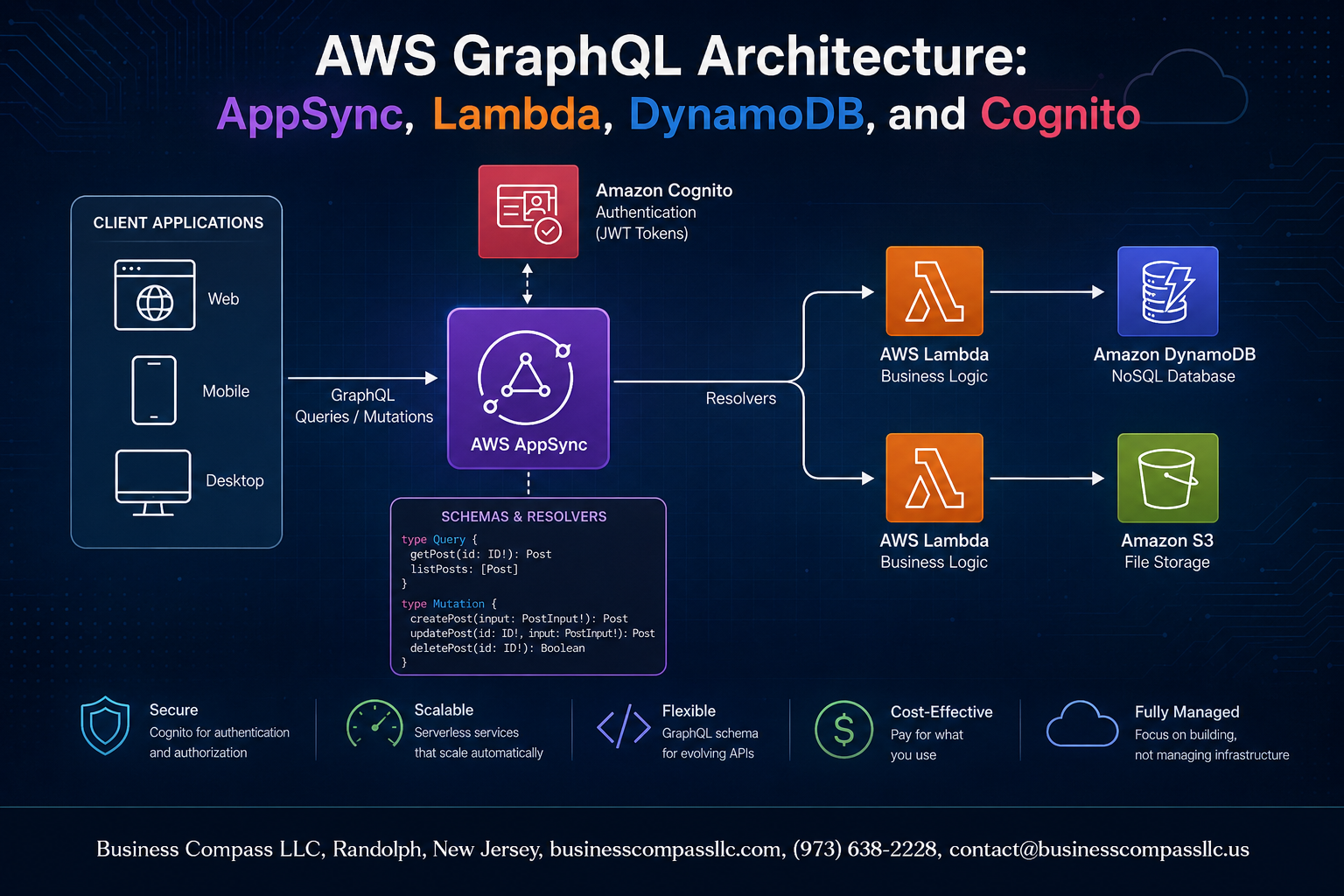
AWS GraphQL Architecture: AppSync, Lambda, DynamoDB, and Cognito
Building a production-ready GraphQL API on AWS sounds complicated until you see how the pieces fit together. This guide breaks down the full AWS GraphQL architecture — from schema design to deployment — so you can stop guessing and start shipping.
This is written for backend developers and cloud engineers who already know the basics of GraphQL and want a clear, practical path through AWS AppSync, Lambda, DynamoDB, and Amazon Cognito. No fluff, no hand-waving.
Here’s what we’re covering:
- How AppSync resolvers connect to Lambda and DynamoDB — and when to pick one over the other
- Locking down your API with Amazon Cognito — authentication, authorization, and what most tutorials skip
- Deploying everything with Infrastructure as Code — so your setup is repeatable and not just a one-time click-through in the console
By the end, you’ll have a solid mental model of the full stack and a path to building something scalable without burning through your AWS budget.
Let’s get into it.
Understanding the Core Components of AWS GraphQL Architecture

What Is AWS AppSync and Why It Powers Modern APIs
AWS AppSync is a managed GraphQL service that handles real-time data syncing, offline support, and automatic scaling — so you skip the heavy lifting.
How Lambda Functions Enable Serverless Business Logic
Lambda runs your custom code without managing servers, connecting seamlessly to AppSync resolvers for flexible, event-driven processing.
Why DynamoDB Is the Ideal Database for GraphQL Workloads
DynamoDB’s key-value model pairs naturally with GraphQL’s nested queries, delivering millisecond responses at any scale.
How Cognito Secures Your GraphQL API with Ease
Cognito handles authentication and authorization out-of-the-box, protecting AppSync endpoints with minimal configuration.
Designing a Scalable GraphQL Schema with AppSync

Defining Types, Queries, and Mutations for Real-World Use Cases
Design your scalable GraphQL schema around business domains — keep types focused, queries purposeful, and mutations atomic.
Leveraging Subscriptions for Real-Time Data Updates
AppSync subscriptions push live data instantly to connected clients.
Best Practices for Structuring a Maintainable GraphQL Schema
- Split schema by feature
- Version mutations carefully
- Avoid deeply nested types
Connecting AppSync Resolvers to Lambda and DynamoDB
Choosing Between Direct DynamoDB Resolvers and Lambda Resolvers
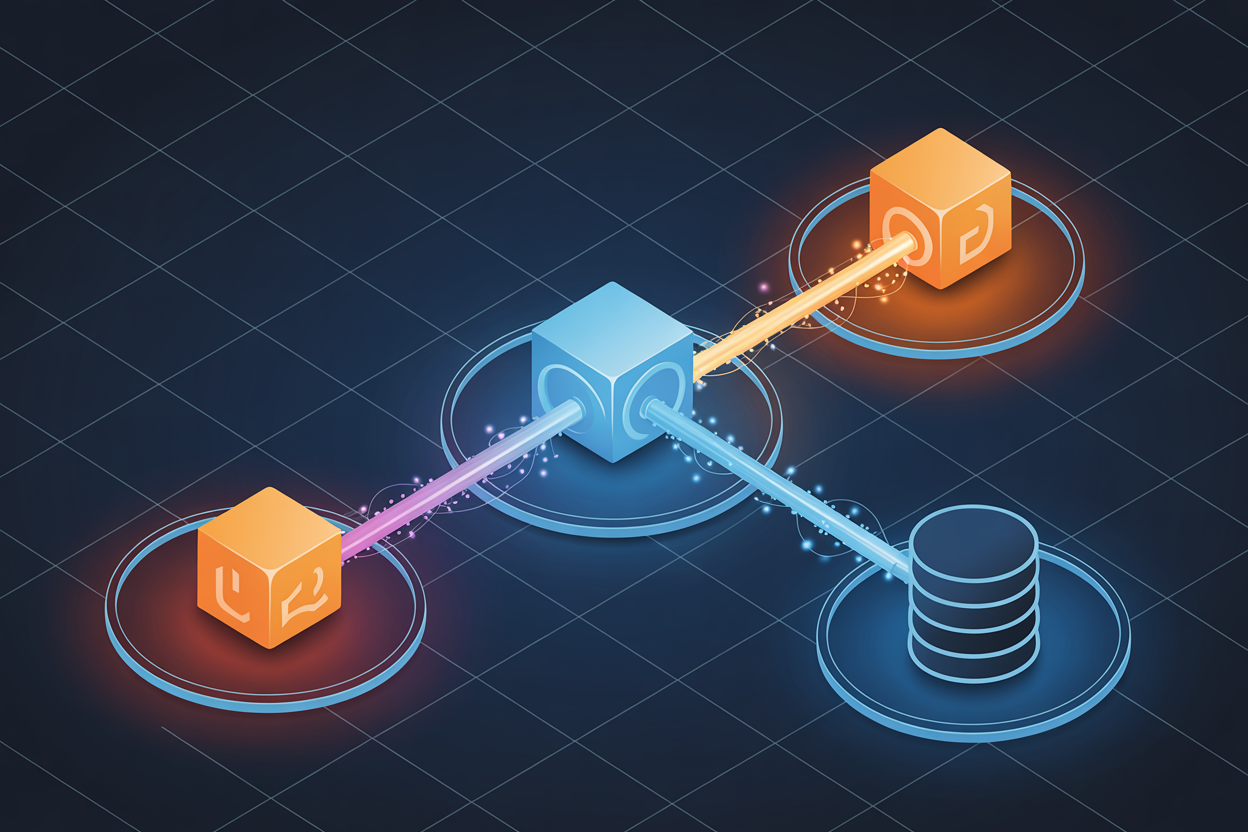
Direct resolvers are faster and cheaper for simple CRUD operations. Pick Lambda resolvers when you need complex business logic, third-party calls, or data transformations.
- Direct: Low latency, zero cold starts
- Lambda: Flexible, handles multi-step workflows
- Pipeline resolvers: Chain both for layered data access
Securing Your API with Amazon Cognito

Setting Up Cognito User Pools for Authentication
Configure Cognito User Pools by defining sign-up attributes, password policies, and MFA settings directly in your AppSync API settings.
Implementing Authorization Rules in AppSync
Use @auth directives in your GraphQL schema to restrict access by role.
Fine-Grained Access Control
- Limit field-level access per user group
- Combine Cognito claims with Lambda authorizers for Amazon Cognito API security
Boosting Performance and Reducing Costs at Scale

Caching, Performance & Monitoring
- AppSync Caching cuts latency by storing GraphQL responses — enable per-resolver caching to avoid redundant Lambda/DynamoDB calls.
- Reduce Lambda cold starts using provisioned concurrency.
- DynamoDB auto-scaling handles traffic spikes without over-provisioning.
- CloudWatch gives real-time metrics, logs, and alerts for your GraphQL API performance optimization.
Deploying and Managing Your Architecture with Infrastructure as Code

Automating Deployments Using AWS CDK or CloudFormation
Use AWS CDK to define your AWS GraphQL architecture—AppSync, Lambda, DynamoDB, and Cognito—as reusable code stacks.
Managing Environment Configurations
- Separate stacks per environment (dev, staging, production)
- Store secrets in AWS Parameter Store
Streamlining CI/CD Pipelines
Plug CodePipeline in for automated, faster releases.

Building a robust GraphQL API on AWS doesn’t have to be overwhelming. By bringing together AppSync, Lambda, DynamoDB, and Cognito, you get a stack that handles everything from flexible data querying to authentication, all while scaling smoothly as your application grows. A well-designed schema sets the foundation, smart resolver connections keep your data flowing efficiently, and infrastructure as code makes sure your deployments stay consistent and repeatable.
The real win here is that each piece of this architecture pulls its own weight. Cognito keeps your API locked down, DynamoDB gives you fast and reliable data storage, and Lambda handles your business logic without you worrying about managing servers. Start small, get comfortable with each component, and build from there. If you haven’t started experimenting with this stack yet, now is a great time to spin up a project and see how quickly things come together.