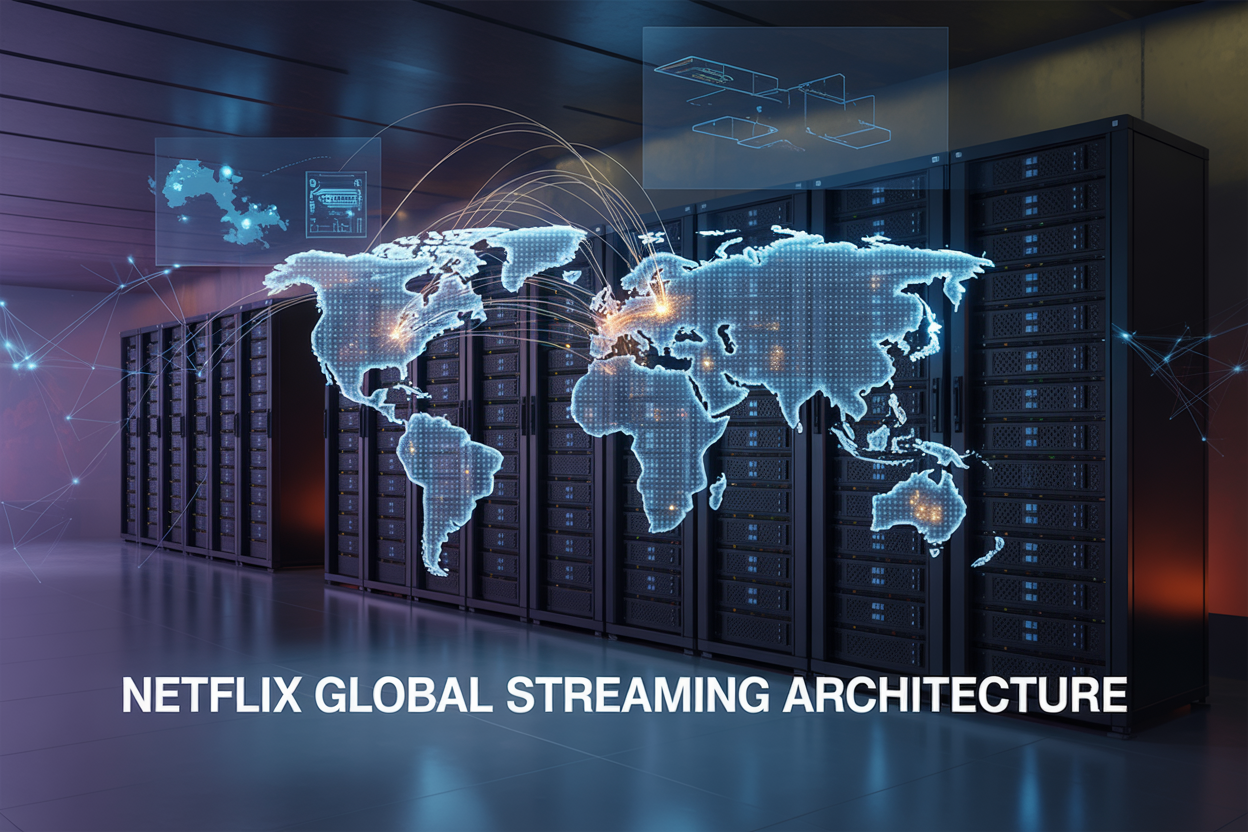
Netflix streams 15 billion hours of content monthly to 300+ million subscribers across 190+ countries. The Netflix architecture behind this massive operation combines cutting-edge microservices architecture, global CDN strategy, and real-time streaming technology to deliver seamless entertainment experiences worldwide.
This deep dive is for software engineers, system architects, and tech leaders who want to understand how Netflix achieves streaming at scale. You’ll discover the specific technologies and design decisions that power one of the world’s most complex distributed systems.
We’ll explore Netflix’s transition from a monolithic application to 1,000+ microservices that handle everything from user authentication to content recommendations. You’ll see how their AWS cloud infrastructure partnership enables global expansion while their custom content delivery network ensures smooth playback from São Paulo to Singapore. Finally, we’ll break down the real-time streaming technology stack that adapts video quality instantly based on network conditions and device capabilities.
Get ready to see how Netflix scalability principles can transform your own system design approach.
Netflix’s Microservices Architecture Foundation

Breaking Down the Monolith into 700+ Microservices
Netflix’s transformation from a single monolithic application to over 700 microservices represents one of the most dramatic architectural evolutions in tech history. The original Netflix architecture was a traditional three-tier application built around a single database and a monolithic Java application. As the company grew from a DVD-by-mail service to a global streaming giant, this monolith became a significant bottleneck.
The breaking point came around 2008 when Netflix experienced a major database corruption that took the service offline for three days. This incident catalyzed the company’s move toward a distributed microservices architecture. Each microservice now handles a specific business capability, from user authentication and recommendation algorithms to payment processing and content encoding.
The decomposition strategy focused on domain-driven design principles. Netflix identified bounded contexts within their business logic and created independent services around each context. For example, the recommendation service operates independently from the billing service, allowing teams to deploy updates without affecting other parts of the system.
| Service Category | Examples | Purpose |
|---|---|---|
| User Management | Authentication, Profiles, Preferences | Handle user-related operations |
| Content Services | Metadata, Encoding, Assets | Manage content catalog and processing |
| Recommendation | Algorithms, Personalization | Deliver personalized content suggestions |
| Playback | Streaming, Quality Control | Handle video delivery and optimization |
Service-to-Service Communication at Massive Scale
Managing communication between 700+ microservices requires sophisticated protocols and patterns. Netflix primarily uses REST APIs for synchronous communication and Apache Kafka for asynchronous messaging. The company processes over 2 trillion events per day through their messaging infrastructure, making real-time communication patterns essential for their operations.
Netflix implemented the “share nothing” principle, where each microservice maintains its own data store and doesn’t share databases with other services. This approach eliminates tight coupling but creates new challenges in maintaining data consistency across services. The company addresses this through eventual consistency patterns and careful service boundary design.
The service mesh architecture plays a crucial role in managing inter-service communication. Netflix developed Ribbon for client-side load balancing and Hystrix for latency and fault tolerance. These tools help services discover and communicate with each other reliably across their distributed infrastructure.
Service discovery becomes critical at this scale. Netflix uses Eureka, their own service registry, where each microservice registers itself and discovers other services. This dynamic service registry handles thousands of service instances spinning up and down constantly as traffic patterns change globally.
Fault Tolerance and Circuit Breaker Patterns
With hundreds of services communicating across global infrastructure, failure becomes inevitable rather than exceptional. Netflix embraces this reality through their “design for failure” philosophy. The circuit breaker pattern, implemented through their Hystrix library, prevents cascading failures by automatically stopping calls to failing services.
When a service experiences high error rates or slow response times, the circuit breaker opens and immediately returns cached responses or default values instead of making additional calls. This prevents the failure from spreading throughout the system. The circuit breaker automatically attempts to close after a predetermined time, allowing the system to heal itself.
Netflix takes fault tolerance further with their famous “Chaos Engineering” approach. They deliberately introduce failures into their production environment through tools like Chaos Monkey, which randomly terminates service instances. This practice helps identify weaknesses in their fault tolerance mechanisms before they cause customer-facing issues.
The company implements multiple levels of fallbacks for critical user journeys. If the primary recommendation algorithm fails, the system falls back to a simpler algorithm, then to popular content, and finally to cached recommendations. This layered approach ensures users always receive a functional experience, even during widespread service failures.
API Gateway Strategy for Unified Access
Netflix’s API Gateway serves as the single entry point for all client requests, handling over 2 billion requests per day. The gateway manages authentication, request routing, rate limiting, and response aggregation across their massive microservices ecosystem. This centralized approach simplifies client interactions while providing essential cross-cutting concerns.
The gateway implements intelligent request routing based on device types, geographic location, and user context. Mobile clients receive optimized payloads with reduced data to improve performance on slower connections, while smart TV applications get different service endpoints optimized for large screens and remote control navigation.
Netflix’s gateway architecture includes sophisticated caching strategies at multiple levels. Frequently requested data gets cached at the edge, reducing load on backend services and improving response times for users globally. The caching system invalidates automatically when underlying data changes, maintaining consistency across the platform.
Request aggregation represents another critical gateway function. Instead of mobile clients making dozens of individual service calls to render a single screen, the gateway orchestrates these calls internally and returns a single, optimized response. This approach dramatically reduces network overhead and improves the user experience, especially on mobile devices with limited bandwidth.
Global Content Delivery Network Strategy
Strategic Edge Server Placement Across 190+ Countries
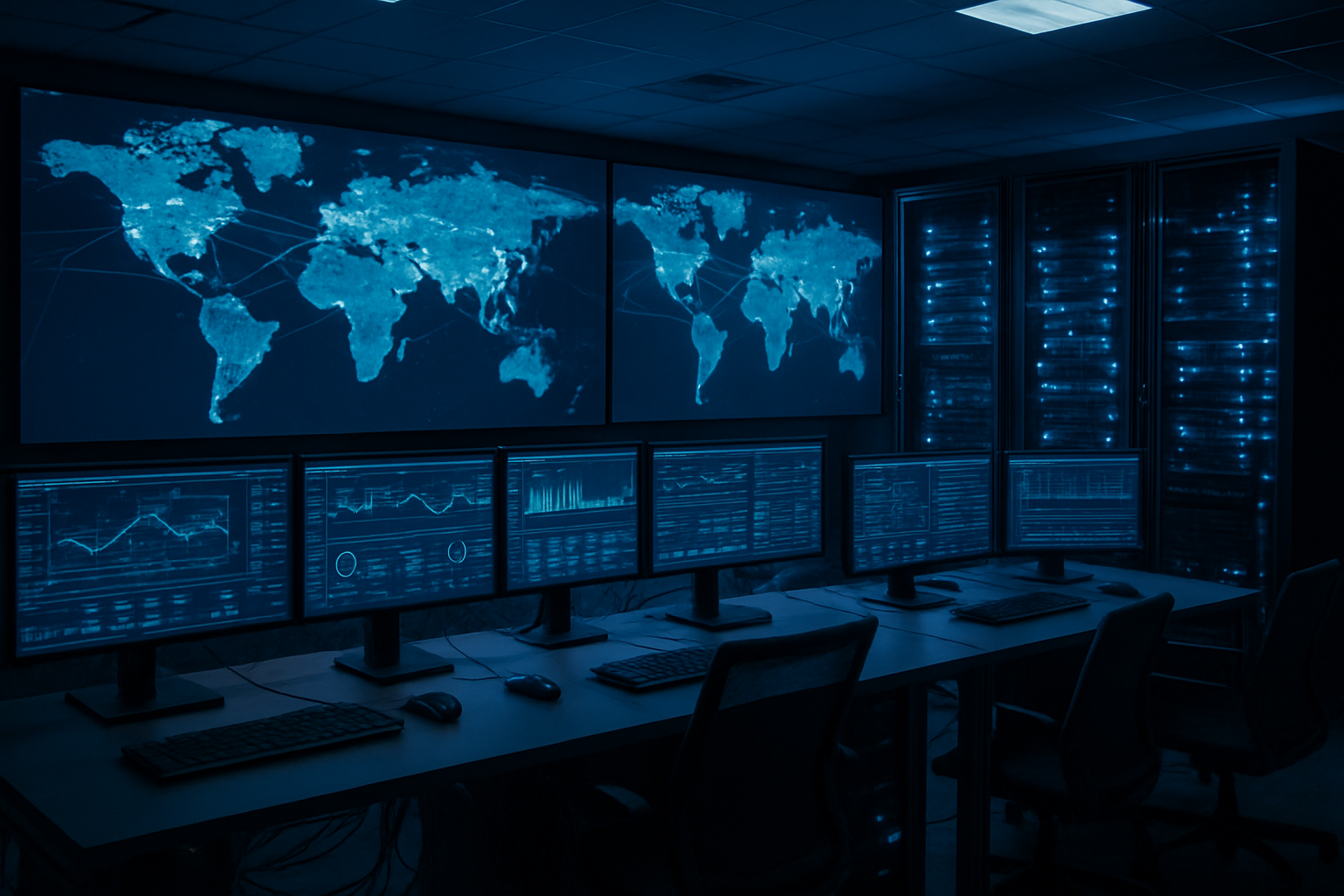
Netflix’s global CDN strategy centers around placing servers as close to viewers as possible. The company has strategically positioned thousands of edge servers across more than 190 countries, creating one of the world’s most extensive content delivery networks. This massive infrastructure includes major data centers in key regions like North America, Europe, Asia-Pacific, and Latin America.
The placement strategy follows a data-driven approach, analyzing user density, internet infrastructure quality, and regional content consumption patterns. High-traffic areas like Los Angeles, London, Tokyo, and São Paulo host multiple redundant server clusters to handle peak demand. Netflix also targets emerging markets with growing internet penetration, establishing servers in countries like India, Nigeria, and Indonesia to support expanding subscriber bases.
Each edge location houses specialized hardware designed for maximum throughput and minimal latency. These servers store popular content locally, reducing the distance data travels to reach viewers. The geographic distribution ensures that even users in remote locations experience consistent streaming quality without buffering issues.
Open Connect Appliances for ISP Integration
Netflix revolutionized content delivery by partnering directly with Internet Service Providers (ISPs) through their Open Connect program. Instead of relying solely on traditional CDN providers, Netflix deploys custom-built Open Connect Appliances (OCAs) directly inside ISP networks. This approach eliminates multiple network hops that typically slow down content delivery.
The Open Connect Appliances are purpose-built servers optimized specifically for Netflix’s streaming workload. Each appliance can store up to 280TB of content and serve thousands of concurrent streams. Netflix provides these appliances free to qualifying ISPs, creating a win-win scenario where ISPs reduce their transit costs while Netflix improves streaming performance.
ISPs can choose between two deployment models: embedded OCAs placed directly within their networks, or connect OCAs housed at Internet Exchange Points (IXPs). The embedded model offers the best performance by placing content as close to subscribers as possible. Major ISPs like Comcast, Verizon, and AT&T host hundreds of these appliances across their networks.
The program extends globally, with Netflix working closely with ISPs in every market they serve. This direct integration bypasses traditional CDN bottlenecks and ensures optimal performance even during peak viewing hours when network congestion typically degrades streaming quality.
Dynamic Content Caching and Prediction Algorithms
Netflix’s content caching system goes far beyond simple storage—it uses sophisticated machine learning algorithms to predict what content users will watch before they even search for it. The system analyzes viewing patterns, seasonal trends, and regional preferences to preemptively cache content on edge servers.
The caching strategy operates on multiple levels. Popular global content like “Stranger Things” or “Wednesday” gets cached on every edge server worldwide. Regional content receives priority placement on servers in specific geographic areas. Even personalized recommendations influence caching decisions, with algorithms predicting which shows individual users might watch based on their viewing history.
Netflix employs a technique called “predictive caching” that uses machine learning models trained on massive datasets of user behavior. These models consider factors like time of day, device type, user demographics, and historical viewing patterns. The system continuously learns and adapts, improving prediction accuracy over time.
Cache eviction policies ensure optimal storage utilization by removing less popular content to make room for trending shows. The algorithms balance content freshness with storage efficiency, automatically updating cache configurations as viewing patterns shift. During major content launches, the system can rapidly redistribute popular titles across the entire network within hours.
Regional Traffic Routing and Load Balancing
Netflix’s traffic routing system intelligently directs each user’s request to the optimal server location based on real-time network conditions. The system continuously monitors server health, network latency, and bandwidth availability across all edge locations to make split-second routing decisions.
The load balancing architecture uses multiple layers of intelligence. DNS-based routing initially directs users to the nearest geographic region. Application-layer routing then selects the specific server within that region based on current load levels. If a server becomes overloaded or experiences issues, traffic automatically redistributes to healthy alternatives within milliseconds.
Regional traffic patterns vary dramatically based on local viewing habits and time zones. Netflix’s routing algorithms account for these differences, automatically scaling capacity up during peak hours and redistributing resources during off-peak periods. The system handles massive traffic spikes during popular content releases without service degradation.
Advanced monitoring systems track performance metrics across all edge locations in real-time. When the system detects network congestion or server issues, it triggers automatic failover procedures that reroute traffic to alternative paths. This redundancy ensures uninterrupted streaming even when major network providers experience outages or capacity constraints.
The routing system also optimizes for different content types and device capabilities. High-resolution 4K content routes to servers with sufficient bandwidth capacity, while mobile devices may connect to servers optimized for adaptive bitrate streaming that adjusts quality based on network conditions.
Cloud Infrastructure and AWS Partnership
Multi-Region Deployment for 99.99% Availability
Netflix operates across multiple AWS regions worldwide to achieve their legendary uptime. Their AWS cloud infrastructure spans regions including US-East, US-West, Europe, Asia-Pacific, and South America, creating a robust foundation for global streaming services.
The company deploys identical service stacks across three primary AWS availability zones in each region. When one zone experiences issues, traffic automatically shifts to healthy zones within milliseconds. This Netflix architecture design ensures users rarely experience service disruptions, even during major AWS outages.
Each regional deployment includes dedicated instances of core services like user authentication, recommendation engines, and content metadata systems. Netflix maintains active-active configurations, meaning all regions simultaneously handle live traffic rather than sitting idle as backup systems.
| Region | Primary Services | Backup Capabilities |
|---|---|---|
| US-East-1 | Core APIs, User Auth | Full service redundancy |
| US-West-2 | Streaming, Analytics | Real-time failover |
| EU-West-1 | Content Delivery | Cross-region sync |
| AP-Southeast-1 | Regional CDN | Multi-zone protection |
Their chaos engineering practices regularly test these failover mechanisms. Netflix deliberately introduces failures into production systems to verify their resilience. This approach has proven essential for maintaining 99.99% availability across their global user base.
Auto-Scaling Systems for Traffic Spikes
Netflix’s auto-scaling infrastructure handles massive traffic variations throughout the day. Peak viewing hours can generate traffic spikes up to 300% above baseline levels, especially during popular show releases or global events.
Their microservices architecture automatically scales individual components based on real-time demand metrics. The system monitors CPU usage, memory consumption, request queues, and response times across thousands of service instances. When thresholds trigger, new instances spin up within seconds across multiple availability zones.
Application Load Balancers distribute incoming requests across healthy instances, while CloudWatch metrics feed into custom scaling algorithms. Netflix has fine-tuned these algorithms through years of data analysis, creating predictive scaling that anticipates demand patterns.
Key scaling triggers include:
- Request rate increases beyond 70% capacity
- CPU utilization exceeding 80% for 2+ minutes
- Queue depth growing beyond acceptable latency thresholds
- Memory usage approaching instance limits
The streaming technology stack scales differently than API services. Video encoding services scale based on content upload schedules, while recommendation engines scale according to user activity patterns. This granular approach optimizes resource usage while maintaining performance standards.
Database Sharding and Data Partitioning
Netflix’s data architecture relies heavily on strategic sharding and partitioning across multiple database systems. User data gets distributed across hundreds of database shards, each handling specific subsets of the global user base.
The primary user database uses a geographic sharding strategy, where users from specific regions connect to dedicated database clusters in their nearest AWS region. This reduces latency and improves response times for profile data, viewing history, and preferences.
Content metadata lives in a separate sharding scheme organized by content type and popularity. Frequently accessed show information stays in high-performance SSD storage, while archival content metadata moves to cost-optimized storage tiers.
Sharding strategies by data type:
- User profiles: Geographic-based sharding by region
- Viewing history: Time-based partitioning with recent data prioritized
- Content metadata: Popularity and access pattern-based distribution
- Analytics data: Event-time partitioning for efficient querying
Cassandra clusters handle the massive scale of viewing events and user interactions. Each cluster spans multiple availability zones with automatic replication factors ensuring data durability. Write operations distribute across cluster nodes using consistent hashing, while read operations leverage replica sets for optimal performance.
Cross-shard queries get handled through a distributed query engine that aggregates results from multiple database partitions. This Netflix scalability approach allows complex analytics queries across the entire user base while maintaining individual shard performance.
Real-Time Streaming Technology Stack

Adaptive Bitrate Streaming for Quality Optimization
Netflix’s streaming technology relies heavily on adaptive bitrate (ABR) streaming to deliver the best possible viewing experience across diverse network conditions and devices. The platform dynamically adjusts video quality in real-time based on available bandwidth, device capabilities, and network stability. This Netflix streaming technology ensures viewers get the highest quality video their connection can support without buffering interruptions.
The ABR algorithm continuously monitors network performance metrics like bandwidth, latency, and packet loss. When network conditions improve, the system automatically switches to higher resolution streams. Conversely, during network congestion, it drops to lower bitrates to maintain smooth playback. Netflix has developed proprietary algorithms that predict network changes up to 20 seconds in advance, allowing proactive quality adjustments rather than reactive ones.
Multiple video quality tiers are simultaneously available for each piece of content, ranging from 240p for severely constrained connections to 4K Ultra HD for premium viewing experiences. The system maintains separate audio and video streams, enabling independent quality optimization for each component based on available resources.
Video Encoding Pipeline and Format Management
Netflix operates one of the world’s most sophisticated video encoding infrastructures, processing thousands of hours of content daily across multiple formats and resolutions. The encoding pipeline uses cloud-based distributed computing to parallelize video processing tasks across thousands of AWS instances.
Each piece of content goes through multiple encoding passes to optimize for different viewing scenarios:
- Resolution variants: 240p, 480p, 720p, 1080p, and 4K
- Codec optimization: H.264, H.265 (HEVC), and AV1 for different device compatibility
- Audio formats: Multiple language tracks, surround sound, and Dolby Atmos
- Platform-specific optimizations: Mobile-first encoding for smartphones and tablets
The encoding process includes advanced techniques like shot-based encoding, where different scenes within the same video receive customized encoding parameters based on content complexity. High-motion action sequences get different treatment than dialogue-heavy scenes, optimizing both quality and file size.
Edge Computing for Reduced Latency
Netflix’s edge computing strategy places content and processing power as close as possible to end users through their Open Connect Content Delivery Network. This real-time streaming technology significantly reduces latency and improves user experience by minimizing the distance data travels.
Open Connect Appliances (OCAs) are deployed directly within Internet Service Provider (ISP) networks and at internet exchange points worldwide. These specialized servers cache the most popular content locally, serving up to 95% of Netflix traffic from these edge locations. The system uses machine learning algorithms to predict which content will be popular in specific geographic regions, pre-positioning it on local servers.
Edge computing also handles real-time personalization tasks, like generating customized thumbnails and recommendations without requiring round trips to central data centers. This distributed approach reduces load times and creates a more responsive user interface.
Mobile and Smart TV Optimization Strategies
Netflix has developed platform-specific optimizations to address the unique constraints and capabilities of different device categories. Mobile optimization focuses on battery efficiency, data usage, and touch-based interfaces, while smart TV optimization prioritizes picture quality and living room viewing experiences.
Mobile Optimization Features:
- Cellular data usage controls with quality settings
- Download capabilities for offline viewing
- Portrait and landscape video orientation support
- Background audio playback for audio-focused content
Smart TV Optimization Features:
- HDR and Dolby Vision support for premium displays
- Voice control integration with platform assistants
- 4K content delivery with frame rate matching
- Gaming console integration for seamless switching
The platform uses device fingerprinting to automatically detect capabilities and apply appropriate optimizations. Smart TVs with powerful processors receive higher quality streams and advanced features, while older devices get streamlined experiences that prioritize stability over advanced features. This tiered approach ensures consistent performance across Netflix’s massive device ecosystem.
Data Engineering and Analytics at Scale

Real-Time Data Processing with Apache Kafka
Netflix processes an astounding volume of data every second – we’re talking about billions of events from 300+ million users across the globe. Apache Kafka serves as the backbone of Netflix’s real-time data processing infrastructure, handling everything from user interactions to system telemetry data.
The streaming giant runs multiple Kafka clusters, each optimized for specific use cases. User engagement events like play, pause, and skip actions flow through dedicated clusters, while system metrics and application logs have their own dedicated pathways. This segregation prevents any single data stream from overwhelming the entire system.
Netflix’s Kafka implementation includes custom tooling for monitoring cluster health and automatic partition rebalancing. Their engineers built Kafka managers that can detect performance bottlenecks and redistribute workloads across brokers without service interruption. The company also developed specialized serialization formats to minimize network overhead while maintaining data integrity across their distributed systems.
Machine Learning Pipeline for Content Recommendations
The recommendation engine that suggests your next binge-worthy series relies on a sophisticated machine learning pipeline that processes petabytes of viewing data daily. Netflix’s ML infrastructure combines batch processing for model training with real-time inference serving to deliver personalized recommendations within milliseconds.
The pipeline starts with feature engineering systems that transform raw user behavior into meaningful signals. These systems track hundreds of features including viewing time, completion rates, device preferences, and temporal patterns. Netflix uses Apache Spark clusters running on AWS to process this data at scale, creating feature stores that feed into multiple recommendation algorithms simultaneously.
Model training happens continuously through automated pipelines that retrain algorithms as new data arrives. Netflix employs ensemble methods, combining collaborative filtering, content-based filtering, and deep learning models to create robust recommendations. Their MLOps platform automatically validates model performance and rolls out improvements without human intervention.
The serving infrastructure uses TensorFlow Serving and custom inference engines deployed across multiple AWS regions. This setup ensures that recommendation requests are handled locally, reducing latency and improving user experience regardless of geographic location.
A/B Testing Infrastructure for Feature Rollouts
Netflix runs thousands of A/B tests simultaneously across their platform, testing everything from UI changes to algorithm improvements. Their experimentation infrastructure is built to handle the complexity of testing at global scale while maintaining statistical rigor.
The testing framework uses a multi-layered approach where experiments can run at different levels – from individual user interfaces to backend algorithms. Netflix’s experimentation platform automatically handles traffic splitting, ensures proper randomization, and prevents contamination between different tests running concurrently.
Their A/B testing system integrates directly with the deployment pipeline, allowing product teams to gradually roll out features to increasing percentages of users. Real-time monitoring tracks key metrics like engagement rates, completion rates, and user satisfaction scores. If negative impacts are detected, the system can automatically halt experiments and revert changes.
Netflix has developed sophisticated statistical methods to handle the unique challenges of streaming media testing, including accounting for seasonal viewing patterns and regional preferences in their analysis frameworks.
User Behavior Analytics and Personalization Engine
Understanding how users interact with content goes far beyond simple view counts. Netflix’s analytics systems capture granular behavioral data including how users browse, what they hover over, when they abandon content, and how they navigate the interface.
The personalization engine processes this behavioral data to create detailed user profiles that go beyond demographic information. Machine learning algorithms identify viewing patterns, genre preferences, and optimal viewing times for each user. This data feeds into multiple personalization systems including homepage layout optimization, thumbnail selection, and content promotion strategies.
Netflix’s real-time personalization systems can adapt to user behavior changes within minutes. If someone starts watching a new genre, the recommendation algorithms immediately begin incorporating this signal into future suggestions. The system also handles cold start problems for new users by leveraging collaborative filtering and demographic-based recommendations.
Performance Monitoring and Business Intelligence
Netflix’s monitoring infrastructure tracks thousands of metrics across their entire technology stack, from CDN performance to user engagement rates. Their observability platform combines application performance monitoring with business intelligence to provide comprehensive insights into system health and user satisfaction.
The monitoring system uses distributed tracing to track requests across microservices, helping engineers quickly identify performance bottlenecks. Custom dashboards display real-time metrics for content delivery, streaming quality, and user experience indicators. Alert systems automatically notify teams when performance degrades or user satisfaction drops below acceptable thresholds.
Business intelligence platforms aggregate data from multiple sources to provide insights into content performance, regional viewing patterns, and feature adoption rates. These systems support decision-making processes for content acquisition, infrastructure investments, and product development priorities. Executive dashboards provide real-time visibility into key business metrics including subscriber growth, engagement rates, and revenue indicators across all global markets.
Security and Reliability Measures
DRM Protection for Content Security
Netflix’s content protection strategy revolves around multiple layers of Digital Rights Management (DRM) systems that safeguard billions of dollars worth of premium content. The streaming giant implements a comprehensive approach using Widevine, PlayReady, and FairPlay DRM technologies across different devices and platforms.
The company’s DRM implementation operates through encrypted content keys that are dynamically generated for each streaming session. When a user requests content, Netflix’s license servers validate the user’s subscription status, device capabilities, and regional permissions before issuing time-limited decryption keys. This process happens seamlessly within milliseconds, ensuring smooth playback while maintaining robust security.
Netflix employs adaptive DRM policies that adjust protection levels based on content value and device security capabilities. High-value original content like “Stranger Things” receives enhanced protection with hardware-backed security modules, while older catalog content may use lighter protection schemes to optimize performance. The system also implements watermarking technology that embeds invisible identifiers into video streams, enabling content tracing in case of unauthorized distribution.
Device-specific security measures include secure video path enforcement, HDCP compliance for external displays, and root detection for mobile devices. Netflix continuously updates its DRM implementations to counter new circumvention techniques, working closely with device manufacturers and DRM providers to maintain content security standards that satisfy studio licensing requirements.
Chaos Engineering for System Resilience Testing
Netflix pioneered chaos engineering with the creation of Chaos Monkey and its evolution into the Simian Army suite of tools. This practice involves deliberately injecting failures into production systems to test resilience and identify potential weaknesses before they cause real outages.
The chaos engineering program at Netflix operates on multiple levels, from individual service failures to entire data center outages. Chaos Monkey randomly terminates virtual machine instances during business hours, forcing engineering teams to build fault-tolerant systems from the ground up. Chaos Gorilla takes this further by simulating entire availability zone failures, while Chaos Kong tests the system’s ability to handle complete AWS region outages.
Netflix’s approach goes beyond simple random failures. The team uses sophisticated failure injection techniques that target specific system components:
| Tool | Target | Failure Type |
|---|---|---|
| Latency Monkey | Network connections | Artificial delays |
| Doctor Monkey | Health checks | False positive alerts |
| Janitor Monkey | Resource cleanup | Unused resource deletion |
| Security Monkey | Security policies | Configuration violations |
Game days represent scheduled chaos events where engineering teams deliberately break systems to practice incident response and validate recovery procedures. These exercises help teams understand system behavior under stress and improve automated recovery mechanisms. The insights gained from chaos engineering directly influence Netflix’s microservices architecture design, ensuring that services can gracefully handle dependencies becoming unavailable.
Real-time monitoring during chaos experiments provides immediate feedback on system behavior, allowing teams to observe how traffic patterns shift, how load balancers respond, and whether backup systems activate correctly.
Zero-Trust Network Architecture Implementation
Netflix’s zero-trust security model operates on the principle that no network connection, device, or user should be inherently trusted, regardless of their location or previous authentication status. This approach becomes critical when managing a global infrastructure spanning multiple cloud providers and regions.
The implementation centers around identity-based access controls rather than traditional network perimeters. Every service request, whether internal or external, must present valid authentication credentials and pass authorization checks. Netflix uses short-lived certificates and tokens that expire frequently, forcing continuous re-authentication and reducing the impact of credential compromise.
Service-to-service communication within Netflix’s microservices architecture requires mutual TLS authentication, where both the calling and receiving services must present valid certificates. This creates an encrypted communication channel that verifies the identity of both parties in every interaction. Certificate rotation happens automatically through internal certificate authorities, ensuring that expired or compromised certificates cannot be used for unauthorized access.
Netflix implements network segmentation through software-defined networking that isolates different service tiers and functions. Critical services like payment processing and user authentication operate in highly restricted network zones with limited connectivity to other systems. Traffic between zones requires explicit approval and continuous monitoring.
The zero-trust model extends to user access management, where employees must authenticate through multiple factors and receive time-limited access tokens for specific resources. Device health verification ensures that only managed, compliant devices can access sensitive systems, with continuous monitoring detecting anomalous behavior patterns that might indicate compromise.
Automated policy enforcement prevents manual configuration errors that could create security gaps, while real-time threat detection analyzes network traffic patterns to identify potential security incidents before they escalate.
Netflix has built one of the most sophisticated streaming platforms in the world by combining smart architectural choices with cutting-edge technology. Their microservices approach breaks down complex operations into manageable pieces, while their global CDN ensures viewers get smooth playback no matter where they are. The partnership with AWS gives them the flexibility to scale up during peak times, and their real-time streaming stack handles millions of concurrent viewers without breaking a sweat.
What makes Netflix truly special is how they’ve turned data into their secret weapon. Every click, pause, and rewatch feeds into their analytics engine, helping them decide what shows to make and how to improve the viewing experience. Their rock-solid security and reliability measures mean you can binge-watch your favorite series without worrying about interruptions. If you’re building any kind of large-scale system, Netflix’s approach shows that success comes from thinking big while keeping each piece simple and focused.