Choosing between JWT vs OAuth 2.0 for your cloud applications can make or break your security strategy. This guide is designed for cloud developers, DevOps engineers, and security professionals who need to implement robust authentication across AWS, Azure, and Google Cloud Platform environments.
JWT tokens and OAuth 2.0 protocols serve different purposes in cloud authentication, and understanding when to use each approach directly impacts your application’s security posture and performance. Major cloud providers offer distinct authentication services and integration patterns that can significantly affect your implementation decisions.
We’ll break down the fundamental differences between these authentication methods and explore practical AWS authentication scenarios using services like Cognito and API Gateway. You’ll also discover how Azure security solutions integrate OAuth 2.0 flows with Active Directory and examine Google Cloud authentication methods including Identity and Access Management best practices.
Finally, we’ll compare performance implications and scalability considerations across all three platforms, giving you the insights needed to choose the right authentication strategy for your specific cloud environment and use case requirements.
Understanding JWT and OAuth 2.0 Fundamentals

JWT Token Structure and Authentication Benefits
JSON Web Tokens represent a compact, self-contained way to securely transmit information between parties. A JWT consists of three parts separated by dots: the header, payload, and signature. The header specifies the token type and signing algorithm, while the payload contains claims about the user or system. The signature ensures the token hasn’t been tampered with during transmission.
JWT Structure Breakdown:
- Header: Declares token type (JWT) and hashing algorithm (typically HMAC SHA256 or RSA)
- Payload: Contains claims like user ID, expiration time, and permissions
- Signature: Verifies the token’s authenticity using a secret key or public/private key pair
JWTs shine in stateless authentication scenarios where you need to verify user identity without storing session data server-side. They’re perfect for microservices architectures and API-first applications. The token carries all necessary authentication information, reducing database lookups and improving response times.
Cloud platforms like AWS, Azure, and Google Cloud Platform leverage JWTs extensively for service-to-service authentication and user verification across distributed systems. The self-contained nature of JWTs makes them ideal for cross-platform integration.
OAuth 2.0 Authorization Framework Advantages
OAuth 2.0 solves the authorization puzzle by providing a secure way for applications to access resources on behalf of users without exposing their credentials. Think of it as a valet key system – you give limited access to specific resources without handing over your master password.
The framework defines four key roles: resource owner (user), client (application), authorization server, and resource server. This separation creates a robust security model where applications never handle user passwords directly.
OAuth 2.0 Grant Types:
| Grant Type | Use Case | Security Level |
|---|---|---|
| Authorization Code | Web applications | High |
| Client Credentials | Service-to-service | High |
| Implicit | Single-page apps | Medium |
| Resource Owner Password | Trusted applications | Low |
OAuth 2.0 excels in scenarios where third-party applications need controlled access to user data. Social media integrations, API access management, and single sign-on implementations all benefit from this framework. Major cloud providers implement OAuth 2.0 as their primary authorization mechanism for accessing cloud services and APIs.
Key Differences Between Authentication and Authorization
Authentication and authorization serve different security purposes, though they often work together. Authentication verifies “who you are” while authorization determines “what you can do.” Getting these concepts mixed up leads to security vulnerabilities and poor user experiences.
Authentication proves identity through credentials, biometrics, or tokens. When you log into your cloud console with username and password, you’re authenticating. The system confirms you are who you claim to be.
Authorization happens after authentication and controls resource access. Even authenticated users shouldn’t access everything – a developer might authenticate successfully but lack authorization to delete production databases.
Comparison Table:
| Aspect | Authentication | Authorization |
|---|---|---|
| Purpose | Verify identity | Control access |
| When | First step | After authentication |
| Methods | Passwords, biometrics, certificates | Permissions, roles, policies |
| Output | User identity | Access permissions |
Cloud environments handle these processes differently. AWS IAM policies define authorization rules, while authentication might use federated identity providers. Azure Active Directory combines both functions but maintains clear separation between identity verification and resource access control.
When to Use Each Technology for Maximum Security
Choosing between JWT and OAuth 2.0 depends on your specific security requirements and architecture. They’re not mutually exclusive – many implementations combine both technologies for comprehensive security coverage.
Use JWTs when:
- Building stateless APIs that need fast authentication
- Implementing microservices requiring service-to-service authentication
- Creating mobile applications with offline capability requirements
- Developing single-page applications with client-side authentication needs
Use OAuth 2.0 when:
- Third-party applications need controlled access to user data
- Implementing single sign-on across multiple applications
- Building applications that integrate with external services
- Creating systems where users grant limited access to their resources
Combined Approach:
Many cloud-native applications use OAuth 2.0 for the authorization flow and JWTs as the token format. The authorization server issues JWTs after successful OAuth authorization, combining the framework’s flexibility with JWT’s efficiency.
Cloud platforms often provide both options. AWS Cognito supports both JWT tokens and OAuth 2.0 flows. Azure AD uses OAuth 2.0 for authorization while issuing JWTs for authentication. Google Cloud Identity Platform similarly combines these technologies for robust security architectures.
Consider your application’s trust boundaries, scalability requirements, and integration needs when making this choice. High-traffic APIs benefit from JWT’s stateless nature, while complex authorization scenarios favor OAuth 2.0’s flexibility.
AWS Implementation Strategies and Best Practices

Amazon Cognito JWT Integration for User Management
Amazon Cognito serves as AWS’s managed identity service that seamlessly integrates with JWT tokens for user authentication and authorization. When implementing JWT vs OAuth 2.0 strategies, Cognito provides a robust foundation for managing user pools and identity pools.
Cognito User Pools automatically generate JWT tokens upon successful authentication, containing user claims and session information. These tokens follow the standard JWT structure with header, payload, and signature components. The service handles token rotation, validation, and expiration without requiring custom implementation.
Key configuration steps include:
- Token Expiration Settings: Configure access tokens (1 hour max) and refresh tokens (up to 10 years)
- Custom Claims: Add application-specific data to JWT payload through Lambda triggers
- Token Validation: Implement automatic signature verification using Cognito’s public keys
- Multi-Factor Authentication: Enable MFA to enhance JWT security
Cognito Identity Pools work alongside User Pools to provide temporary AWS credentials, bridging the gap between JWT authentication and AWS service access. This integration allows applications to use JWT tokens for user identification while obtaining IAM credentials for AWS resource access.
For high-traffic applications, consider implementing token caching strategies and connection pooling to optimize Cognito API calls. The service supports up to 50 requests per second for authentication operations, making it suitable for most enterprise applications.
AWS API Gateway OAuth 2.0 Configuration
AWS API Gateway provides multiple OAuth 2.0 implementation patterns, each serving different architectural needs. The choice between Cognito authorizers, Lambda authorizers, and third-party OAuth providers depends on specific requirements and existing infrastructure.
Cognito OAuth 2.0 Flow Configuration:
| Flow Type | Use Case | Token Endpoint | Redirect URI Required |
|---|---|---|---|
| Authorization Code | Web applications | Yes | Yes |
| Client Credentials | Service-to-service | Yes | No |
| Implicit | SPA (deprecated) | No | Yes |
Setting up OAuth 2.0 with API Gateway involves configuring resource servers, scopes, and client applications. Resource servers define the protected APIs, while scopes determine granular access permissions. Client applications represent the consuming services or applications.
Lambda authorizers offer flexibility for custom OAuth 2.0 implementations. These serverless functions can validate tokens from external OAuth providers, implement custom business logic, and return IAM policies for fine-grained access control.
Best practices for OAuth 2.0 configuration:
- Use HTTPS endpoints exclusively
- Implement proper CORS settings for browser-based clients
- Configure appropriate token caching (300 seconds default)
- Set up CloudWatch monitoring for authorization failures
- Use stage variables for environment-specific configurations
API Gateway’s built-in throttling mechanisms work alongside OAuth 2.0 to prevent abuse. Configure usage plans and API keys for additional protection beyond token validation.
IAM Roles and Policy Management with Both Technologies
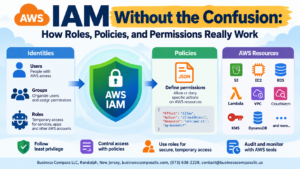
IAM integration with JWT and OAuth 2.0 creates a powerful security model that combines authentication tokens with AWS’s fine-grained authorization system. This approach enables organizations to maintain consistent access control across hybrid cloud environments.
Role Assumption Patterns:
When users authenticate via JWT or OAuth 2.0, they can assume IAM roles through several mechanisms:
- AssumeRoleWithWebIdentity: Direct role assumption using JWT tokens from trusted identity providers
- Cognito Identity Pool Role Mapping: Automatic role assignment based on user attributes or groups
- Custom Lambda Authorization: Programmatic role selection based on token claims
IAM policies should follow the principle of least privilege, granting only necessary permissions. Use condition keys to further restrict access based on token attributes:
{
  "Version": "2012-10-17",
  "Statement": [
    {
      "Effect": "Allow",
      "Action": "s3:GetObject",
      "Resource": "arn:aws:s3:::bucket/${cognito-identity.amazonaws.com:sub}/*",
      "Condition": {
        "StringEquals": {
          "cognito-identity.amazonaws.com:aud": "your-identity-pool-id"
        }
      }
    }
  ]
}
Cross-account access scenarios require careful trust relationship configuration. External IdP tokens can assume roles in different AWS accounts, enabling multi-tenant architectures while maintaining security boundaries.
Regular policy auditing becomes critical when managing multiple authentication methods. Use AWS CloudTrail and Access Analyzer to identify unused permissions and potential security gaps. Implement automated policy validation to ensure compliance with organizational security standards.
Azure Security Solutions and Integration Methods

Azure Active Directory B2C JWT Token Handling
Azure AD B2C simplifies JWT token management for customer-facing applications by providing pre-built user flows and custom policies. The service automatically handles token generation, validation, and refresh cycles without requiring manual JWT implementation. When users authenticate through Azure AD B2C, the platform issues JWT access tokens that contain essential user claims and permissions.
Token customization happens through claims mapping and custom policies. You can modify token payloads to include specific user attributes, group memberships, or custom claims that your application needs. The JWT tokens follow industry standards with proper signature verification using Azure’s managed keys.
Azure AD B2C supports multiple token formats including JWT access tokens, ID tokens, and refresh tokens. The platform automatically rotates signing keys and handles token expiration scenarios. Token validation occurs through Microsoft’s well-known endpoints, eliminating the need to manually verify signatures or manage key rotations.
Token Configuration Options:
- Custom claim mappings
- Token lifetime settings
- Audience restrictions
- Scope-based access control
Azure API Management OAuth 2.0 Setup
Azure API Management (APIM) provides comprehensive OAuth 2.0 Azure implementation that seamlessly integrates with Azure Active Directory. The service acts as an authorization server and can validate OAuth tokens from multiple identity providers simultaneously.
Setting up OAuth 2.0 in APIM involves configuring authorization servers, defining API scopes, and creating security policies. You can connect APIM to Azure AD, external OAuth providers, or custom authorization services. The platform supports all major OAuth flows including authorization code, client credentials, and device code flows.
APIM’s OAuth validation policies check token signatures, expiration dates, audience claims, and scope permissions before allowing API access. The service caches validated tokens to improve performance and reduce identity provider load. You can also implement custom validation logic through policy expressions.
APIM OAuth Features:
- Multiple identity provider support
- Token caching and optimization
- Scope-based API protection
- Custom validation policies
- Developer portal integration
Microsoft Graph API Authentication Patterns
Microsoft Graph API exclusively uses OAuth 2.0 Azure patterns for authentication and authorization. Applications must register in Azure AD and obtain proper consent for accessing Graph resources. The API supports both delegated permissions (on behalf of users) and application permissions (direct app access).
Graph API authentication follows specific patterns based on application types. Web applications typically use the authorization code flow with PKCE, while daemon services use client credentials flow. Mobile applications rely on device code flow or browser-based authentication with secure token storage.
Token management with Graph API requires careful attention to permission scopes and consent models. Applications should request minimal necessary permissions and handle incremental consent scenarios. Microsoft provides SDKs that automatically handle token acquisition, refresh, and retry logic for expired tokens.
Graph Authentication Scenarios:
- User-delegated access patterns
- Service-to-service authentication
- Cross-tenant application access
- Conditional access policy compliance
App Registration and Permission Scoping Techniques
Azure app registration forms the foundation of secure authentication for cloud applications. Each registration defines the application’s identity, authentication methods, and permission requirements. Proper registration configuration directly impacts security posture and user experience.
Permission scoping in Azure follows the principle of least privilege. Applications should request only necessary permissions and use incremental consent when possible. Azure supports both static consent (defined at registration) and dynamic consent (requested at runtime) models.
The registration process involves configuring redirect URIs, client secrets or certificates, and API permissions. For production applications, certificate-based authentication provides stronger security than client secrets. Azure also supports managed identity for Azure-hosted services, eliminating the need for stored credentials.
Registration Best Practices:
- Separate registrations for different environments
- Regular credential rotation schedules
- Audit permission usage patterns
- Implement proper redirect URI validation
- Use managed identities when available
Azure security solutions integrate seamlessly with existing identity infrastructure while providing enterprise-grade authentication capabilities. The platform’s OAuth 2.0 and JWT implementations offer flexibility for various application architectures while maintaining strong security standards.
Google Cloud Platform Authentication Architecture

Firebase Authentication JWT Implementation
Firebase Authentication serves as Google Cloud’s primary identity service, delivering JWT tokens that work seamlessly across GCP authentication methods. When users authenticate through Firebase, the service generates custom JWT tokens containing user claims and session data. These tokens follow the standard JWT structure with header, payload, and signature components, making them compatible with various GCP services.
Firebase handles token generation automatically, but developers can customize claims through Cloud Functions. The service supports multiple authentication providers including Google, Facebook, Twitter, and email/password combinations. Each successful authentication produces a JWT token with a one-hour expiration time, though refresh tokens enable automatic renewal without user intervention.
Integration with other GCP services happens through the Firebase Admin SDK, which validates JWT tokens server-side. This approach ensures secure communication between your application and Google Cloud resources while maintaining user session state across distributed systems.
Google Cloud Endpoints OAuth 2.0 Configuration
Google Cloud Endpoints implements OAuth 2.0 protocols to secure API access across multiple client types. The configuration process involves defining OAuth 2.0 scopes, redirect URIs, and client credentials through the Google Cloud Console. Endpoints supports both authorization code and client credentials flows, depending on your application architecture.
Setting up OAuth 2.0 with Cloud Endpoints requires creating an OAuth 2.0 client ID and configuring the endpoints.yaml file with appropriate authentication settings. The service validates access tokens against Google’s authorization servers, ensuring only properly authenticated requests reach your APIs.
| OAuth 2.0 Flow | Use Case | Token Type |
|---|---|---|
| Authorization Code | Web applications | Access + Refresh |
| Client Credentials | Service-to-service | Access only |
| Implicit | Single-page apps | Access only |
Cloud Endpoints also provides built-in rate limiting and quota management, working alongside OAuth 2.0 authentication to protect your APIs from abuse while maintaining performance standards.
Identity and Access Management Integration
Google Cloud IAM integrates deeply with both JWT and OAuth 2.0 authentication mechanisms, creating a unified security model across GCP services. IAM policies can reference JWT claims directly, enabling fine-grained access control based on user attributes or custom claims embedded in tokens.
The integration allows you to map OAuth 2.0 scopes to specific IAM roles, creating a bridge between external authentication providers and internal GCP resources. This mapping ensures that user permissions remain consistent whether they’re accessing web applications or calling APIs directly.
Service accounts play a central role in this integration, acting as both JWT issuers and OAuth 2.0 clients. When applications need to access GCP resources, they can use service account keys to generate JWT tokens or obtain OAuth 2.0 access tokens through the metadata service.
IAM conditional access policies add another layer of security by evaluating request context alongside authentication tokens. These conditions can check factors like IP address, time of day, or device certificates before granting resource access.
Service Account Authentication Strategies
Service accounts provide the foundation for secure service-to-service communication in GCP authentication methods. These special accounts can generate both JWT tokens and OAuth 2.0 access tokens, depending on the authentication requirements of target services.
The default approach uses the compute metadata service to obtain access tokens automatically. Applications running on Google Cloud can retrieve tokens without embedding credentials in code, reducing security risks while simplifying deployment processes.
For applications outside GCP, service account keys enable JWT-based authentication. The application signs JWT tokens using private keys, then exchanges these tokens for access tokens through Google’s token endpoint. This method requires careful key management but provides maximum flexibility.
Workload Identity represents the newest authentication strategy, allowing Kubernetes pods and external workloads to impersonate service accounts without managing long-lived keys. This approach significantly reduces the attack surface while maintaining seamless integration with GCP services.
Cross-project authentication becomes straightforward with proper service account configuration. You can grant service accounts access to resources in different projects, enabling complex multi-project architectures while maintaining security boundaries through IAM policies.
Performance and Scalability Considerations Across Platforms

Token Validation Speed and Resource Consumption
Token validation performance varies dramatically between JWT vs OAuth 2.0 implementations across cloud platforms. JWTs shine in scenarios requiring high-speed validation since they’re stateless and self-contained. Your application can verify a JWT locally without making external API calls, reducing network latency and database queries. This becomes crucial when handling thousands of requests per second.
AWS authentication services like AWS Cognito process JWT validation with sub-millisecond response times when cached properly. The computational overhead involves cryptographic signature verification, which modern CPUs handle efficiently. However, OAuth 2.0 token introspection requires round-trip calls to authorization servers, adding 50-200ms latency depending on network conditions.
Azure security implementations show similar patterns. Azure Active Directory B2C processes JWT validation faster than OAuth 2.0 introspection, but the difference narrows when using Azure’s proximity-based data centers. Resource consumption follows predictable patterns: JWTs use more CPU for signature validation, while OAuth 2.0 consumes more network bandwidth and connection pools.
Google Cloud authentication services optimize both approaches through intelligent caching and edge computing. GCP’s distributed architecture reduces OAuth 2.0 latency significantly, sometimes matching JWT performance for geographically distributed applications.
| Platform | JWT Validation (avg) | OAuth 2.0 Introspection (avg) | Resource Impact |
|---|---|---|---|
| AWS | 2-5ms | 50-150ms | CPU vs Network |
| Azure | 3-7ms | 45-120ms | Memory vs Bandwidth |
| GCP | 2-6ms | 40-100ms | Compute vs I/O |
Caching Strategies for Optimal Performance
Smart caching transforms authentication performance across all three platforms. JWT implementation AWS environments benefit from caching parsed tokens in memory, avoiding repeated signature verification for the same token. Redis or ElastiCache provide excellent caching layers that reduce validation times by 80-90%.
OAuth 2.0 Azure deployments require more sophisticated caching strategies. Cache token introspection responses with appropriate TTL values matching token lifetimes. Azure Cache for Redis integrates seamlessly with Azure AD, providing millisecond access to validation results. Implement cache warming strategies during peak hours to maintain consistent response times.
GCP authentication methods leverage Google’s global cache infrastructure. Cloud Memorystore offers low-latency caching for both JWT and OAuth 2.0 scenarios. The key lies in implementing cache invalidation strategies that handle token revocation and user permission changes effectively.
Distributed caching becomes essential for multi-region deployments. Each platform offers different approaches:
- AWS: ElastiCache with cross-region replication
- Azure: Azure Cache for Redis with geo-replication
- GCP: Cloud Memorystore with regional persistence
Cache hit ratios above 95% are achievable with proper implementation. Monitor cache performance metrics and adjust TTL values based on your security requirements and user patterns.
Load Balancing with Authentication Services
Authentication load balancing requires platform-specific strategies that account for session affinity and token distribution. Cloud security best practices emphasize distributing authentication loads while maintaining security integrity.
AWS Application Load Balancer integrates with AWS Cognito for intelligent request routing. Sticky sessions aren’t necessary with JWTs since they’re stateless, allowing true round-robin distribution. OAuth 2.0 flows benefit from session affinity during the authorization process but can distribute freely after token issuance.
Azure security implementations use Azure Load Balancer with Azure AD integration. The platform’s zone-redundant architecture ensures high availability during authentication spikes. Health checks should monitor both authentication service availability and response times to prevent cascading failures.
Google Cloud authentication leverages Global Load Balancing with Cloud Identity integration. GCP’s anycast IP addresses route users to the nearest healthy authentication endpoint automatically. This geographic distribution reduces latency and improves user experience globally.
API authentication cloud services require careful consideration of rate limiting and burst handling:
- Implement circuit breakers to prevent authentication service overload
- Use exponential backoff for retry mechanisms
- Deploy authentication services across multiple availability zones
- Monitor authentication success rates and response times continuously
Cloud platform security comparison shows that all three platforms handle authentication load balancing effectively, but implementation details matter. Choose load balancing strategies that align with your application architecture and geographic distribution requirements.
Security Best Practices and Common Pitfalls

Token Expiration and Refresh Management
Managing token lifecycles across AWS authentication, Azure security, and Google Cloud authentication requires careful planning. Short-lived access tokens paired with longer-lived refresh tokens create the sweet spot between security and user experience. AWS Cognito typically issues access tokens with 1-hour expiration, while Azure AD B2C allows customization from 5 minutes to 24 hours. GCP authentication methods default to 1-hour access tokens with refresh tokens lasting up to 6 months.
Implement automatic token refresh mechanisms in your applications before tokens expire. Set refresh triggers at 80% of token lifetime to avoid authentication failures. Store refresh tokens securely and implement rotation policies where new refresh tokens replace old ones upon use.
Token Management Best Practices:
- Monitor token usage patterns to optimize expiration times
- Implement graceful degradation when refresh fails
- Use sliding expiration for refresh tokens in active sessions
- Revoke all tokens immediately when security breaches occur
Secure Storage and Transmission Protocols
Never store JWT tokens in localStorage or sessionStorage in browsers. Use httpOnly cookies with secure and sameSite flags for web applications. Mobile applications should leverage platform-specific secure storage like iOS Keychain or Android Keystore.
Cloud platform security comparison shows consistent requirements for TLS 1.2 minimum across AWS, Azure, and Google Cloud. All token exchanges must occur over HTTPS with certificate pinning in mobile applications. Implement Content Security Policy headers to prevent token exposure through XSS attacks.
Storage Security Matrix:
| Platform | Recommended Storage | Encryption | Access Control |
|---|---|---|---|
| Web Apps | httpOnly Cookies | AES-256 | CSP Headers |
| Mobile | Platform Keystore | Hardware-backed | Biometric |
| Server | Environment Variables | Encrypted at rest | RBAC |
Cross-Platform Vulnerability Prevention
JWT implementation AWS environments face unique challenges compared to OAuth 2.0 Azure deployments. Validate all JWT signatures using proper libraries instead of manual verification. Implement algorithm whitelisting to prevent “none” algorithm attacks and RS256/ES256 downgrade attempts.
OAuth 2.0 flows across cloud platforms require state parameter validation to prevent CSRF attacks. Implement PKCE (Proof Key for Code Exchange) for all public clients, even when not strictly required. This protects against authorization code interception attacks.
Configure CORS policies restrictively across all platforms. Azure AD requires explicit redirect URI registration, while AWS Cognito and GCP allow wildcard patterns in development environments only.
Common Attack Vectors to Address:
- JWT algorithm confusion attacks
- Token substitution vulnerabilities
- Replay attacks using expired tokens
- Cross-site request forgery in OAuth flows
- Authorization code interception
Monitoring and Audit Trail Implementation
Comprehensive logging across cloud platform security requires capturing authentication events, token usage, and failure patterns. AWS CloudTrail, Azure Monitor, and Google Cloud Audit Logs provide foundation-level tracking, but application-specific monitoring fills critical gaps.
Track failed authentication attempts, unusual access patterns, and geographic anomalies. Implement rate limiting on authentication endpoints to prevent brute force attacks. Set up alerts for multiple failed attempts from single sources or successful logins from new devices.
API authentication cloud services generate substantial log volumes. Focus monitoring on high-value events like admin access, sensitive data operations, and cross-platform integrations. Use correlation IDs to trace requests across microservices and cloud boundaries.
Essential Monitoring Metrics:
- Authentication success/failure rates by platform
- Token refresh frequency and failure patterns
- Geographic distribution of access attempts
- API endpoint usage by authenticated users
- Cross-platform integration health checks
Implement automated response to security events. Temporary account lockouts, forced token revocation, and administrative notifications should trigger based on predefined thresholds. Regular security audits help identify gaps in authentication flows and validate monitoring effectiveness across all cloud environments.

JWT and OAuth 2.0 each bring unique strengths to cloud authentication, and your choice depends on your specific needs and cloud environment. JWT works great for simple, stateless authentication scenarios where you need fast token verification, while OAuth 2.0 shines when you’re dealing with complex authorization flows and third-party integrations. Each major cloud provider—AWS, Azure, and Google Cloud—offers robust implementations of both standards, but they each have their own quirks and optimal use cases that you’ll want to match with your application’s requirements.
The key is finding the right balance between security, performance, and complexity for your project. Don’t just pick the trendy option or stick with what you’ve always used. Take time to evaluate your authentication flows, consider your scalability needs, and test how each approach performs in your chosen cloud environment. Remember that proper implementation matters more than the technology itself—even the best authentication standard can create security holes if you skip the best practices or ignore the common pitfalls we’ve covered.