Building cloud-native applications with microservices architecture can feel overwhelming when you’re trying to figure out the best way to scale them on AWS. AWS ECS offers a powerful solution for container orchestration that takes the complexity out of managing hundreds or thousands of containers across your infrastructure.
This guide is designed for DevOps engineers, cloud architects, and development teams who want to master ECS container management and implement effective scaling strategies for their microservices. Whether you’re migrating from monolithic applications or optimizing existing containerized workloads, you’ll learn practical approaches that work in real production environments.
We’ll dive deep into AWS ECS fundamentals and show you how to set up robust container management systems that can handle enterprise-scale traffic. You’ll discover container orchestration best practices that prevent common pitfalls and keep your services running smoothly. We’ll also explore ECS performance optimization techniques that help you squeeze every bit of efficiency from your infrastructure while reducing costs.
By the end, you’ll have a clear roadmap for deploying scalable, resilient microservices on AWS that can grow with your business needs.
Understanding Microservices Architecture for Cloud-Native Applications
Breaking Down Monolithic Applications into Independent Services
Monolithic applications bundle all functionality into a single deployable unit, creating bottlenecks during development and deployment. Microservices architecture transforms these systems by decomposing business capabilities into loosely coupled, independently deployable services. Each service owns its data, communicates through well-defined APIs, and can be developed using different technologies. This approach enables teams to work autonomously, deploy features faster, and scale specific components based on demand rather than scaling the entire application.
Benefits of Microservices for Scalability and Maintainability
Microservices architecture delivers significant advantages for cloud-native applications. Teams can scale individual services independently, optimizing resource allocation and reducing costs compared to scaling monolithic systems. Development velocity increases as smaller codebases are easier to understand, test, and modify. Technology diversity becomes possible, allowing teams to choose the best tools for specific services. Fault isolation improves system resilience since failures in one service don’t cascade throughout the entire application, making AWS container services ideal for hosting these distributed components.
Key Challenges When Deploying Microservices at Scale
Scaling microservices AWS introduces complexity that requires careful planning. Network communication between services creates latency and potential failure points that don’t exist in monolithic applications. Data consistency across distributed services becomes challenging without traditional database transactions. Service discovery, configuration management, and monitoring multiply as the number of services grows. Container orchestration becomes essential to manage deployment, scaling, and health monitoring of numerous services. Teams need robust microservices deployment strategies to handle rolling updates, service mesh configuration, and distributed tracing for debugging across multiple components.
AWS ECS Fundamentals for Container Management
ECS Cluster Architecture and Core Components
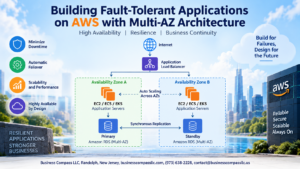
AWS ECS operates through clusters that serve as logical groupings of compute resources, either EC2 instances or AWS Fargate capacity. Each cluster manages container workloads across availability zones, providing fault tolerance and scalability. The ECS agent runs on EC2 instances to communicate with the control plane, while Fargate abstracts infrastructure management completely. Service discovery integrates with AWS Cloud Map, enabling dynamic container communication. Load balancers distribute traffic across healthy containers, and CloudWatch monitors performance metrics. This architecture supports both stateless microservices and persistent workloads through strategic resource allocation.
Task Definitions and Service Configuration Best Practices
Task definitions act as blueprints specifying container images, resource requirements, networking modes, and environment variables for your microservices architecture. Configure memory and CPU limits based on actual workload patterns rather than overprovisioning. Use placement strategies to optimize resource distribution across clusters, considering both cost and performance. Enable container insights for detailed monitoring and set appropriate health check parameters to prevent cascading failures. Rolling deployment strategies minimize downtime during updates, while blue-green deployments provide zero-downtime releases for critical applications.
Integration with AWS VPC and Security Groups
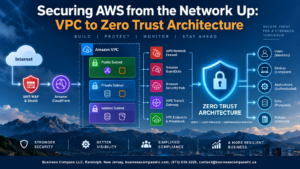
Container orchestration within AWS ECS leverages VPC networking for secure communication between microservices. Configure subnets strategically, placing containers in private subnets with NAT gateways for outbound internet access. Security groups function as virtual firewalls, controlling inbound and outbound traffic at the container level. Network modes like awsvpc assign dedicated elastic network interfaces to each container, enabling granular security policies. Service mesh integration through AWS App Mesh provides advanced traffic management and observability across your container services ecosystem.
Cost Optimization Through Resource Allocation
Smart resource allocation significantly reduces AWS ECS operational costs while maintaining performance standards. Fargate pricing follows a pay-per-use model, ideal for variable workloads, while EC2 instances offer better value for consistent traffic patterns. Right-size containers by analyzing CPU and memory utilization metrics over time. Spot instances can reduce costs by up to 70% for fault-tolerant workloads. Auto Scaling policies automatically adjust capacity based on demand, preventing over-provisioning. Reserved capacity provides predictable pricing for stable production workloads requiring guaranteed availability.
Container Orchestration Strategies for Production Workloads
Auto Scaling Policies for Dynamic Traffic Management
ECS auto scaling adapts your microservices to real-time demand through target tracking, step scaling, and scheduled scaling policies. Target tracking automatically adjusts container capacity based on CloudWatch metrics like CPU utilization or request count per target. Step scaling provides granular control with multiple thresholds, perfect for handling traffic spikes that follow predictable patterns. Application Auto Scaling integrates seamlessly with ECS services, enabling horizontal scaling that maintains performance during peak loads while reducing costs during quiet periods.
Load Balancing Techniques for High Availability
Application Load Balancers distribute incoming requests across healthy ECS tasks using advanced routing algorithms. Path-based routing directs API calls to specific microservices, while host-based routing enables multi-tenant architectures. Target groups automatically register and deregister tasks as they scale, ensuring traffic only reaches healthy instances. Sticky sessions maintain user context for stateful applications, while cross-zone load balancing maximizes availability. Integration with AWS WAF protects against common web exploits and DDoS attacks.
Health Checks and Automated Failure Recovery
ECS health checks monitor container health through command execution, HTTP endpoint validation, and custom health check scripts. The service scheduler automatically replaces failed tasks and drains unhealthy instances from load balancer target groups. CloudWatch alarms trigger automated recovery actions like task restarts or scaling events. Container insights provide deep visibility into resource utilization and application performance. Circuit breaker patterns prevent cascading failures across microservices, while graceful shutdown procedures ensure data consistency during task replacements.
Advanced ECS Features for Enterprise-Grade Deployments
Blue-Green Deployment Strategies with ECS Services
Blue-green deployments offer zero-downtime releases by running two identical production environments. ECS services support this pattern through task definition versioning and load balancer target group switching. Create separate service environments, deploy new versions to the green environment, then redirect traffic instantly. This approach minimizes risk while enabling quick rollbacks. ECS integrates seamlessly with CodeDeploy for automated blue-green deployments, managing traffic shifting and health checks automatically.
Multi-Region Distribution for Disaster Recovery
Multi-region ECS deployments protect against regional outages and reduce latency for global users. Cross-region service replication requires careful planning of data synchronization, networking, and failover mechanisms. Use Route 53 health checks to automatically redirect traffic between regions. Container images stored in ECR replicate across regions, ensuring consistent deployments. Regional ECS clusters can run identical services with shared databases or region-specific data stores for optimal disaster recovery strategies.
Integration with AWS Application Load Balancer
Application Load Balancers provide intelligent traffic distribution for containerized microservices. ECS services integrate directly with ALB target groups, enabling dynamic service discovery and health checking. Path-based and host-based routing distribute requests to appropriate service containers. ALB supports advanced features like sticky sessions, SSL termination, and WebSocket connections. Target group health checks automatically remove unhealthy containers from rotation, maintaining service availability during deployments and failures.
Monitoring and Logging with CloudWatch and X-Ray
CloudWatch Container Insights provides deep visibility into ECS performance metrics, resource utilization, and service health. Custom metrics track business KPIs and application-specific measurements. X-Ray distributed tracing maps request flows across microservices, identifying bottlenecks and dependencies. Log aggregation through CloudWatch Logs centralizes container output for analysis and debugging. Custom dashboards combine metrics, logs, and traces for comprehensive observability. Automated alerting triggers notifications for performance degradation or service failures.
Secret Management Using AWS Systems Manager
Systems Manager Parameter Store and Secrets Manager secure sensitive configuration data for containerized applications. ECS task definitions reference secrets through environment variables or mounted volumes. IAM roles control access to specific secrets at the task level. Automatic secret rotation maintains security without manual intervention. Parameter hierarchies organize configuration by environment and service. Integration with ECS prevents secrets from appearing in task definition JSON or container logs, maintaining security best practices.
Performance Optimization and Troubleshooting Techniques
Resource Utilization Monitoring and Right-Sizing Containers
Container right-sizing directly impacts your AWS ECS performance optimization and cost efficiency. CloudWatch Container Insights provides granular visibility into CPU, memory, and network metrics across your microservices architecture. Use these metrics to identify over-provisioned resources and adjust container definitions accordingly. ECS Service Utilization reports help you spot containers consuming excessive resources during peak loads. Set up automated scaling policies based on actual usage patterns rather than estimated capacity. AWS Compute Optimizer analyzes your container workloads and recommends optimal instance types and sizes. Memory-intensive applications often benefit from memory-optimized instances, while CPU-bound services perform better on compute-optimized infrastructure. Monitor application-level metrics alongside infrastructure metrics to get complete visibility into your scaling microservices AWS deployment.
Network Performance Tuning for Inter-Service Communication
Network latency between microservices can become a major bottleneck in container orchestration environments. ECS supports multiple networking modes, with awsvpc providing the best isolation and performance for production workloads. Place related services in the same Availability Zone to reduce cross-AZ data transfer costs and latency. Service mesh solutions like AWS App Mesh optimize inter-service communication by providing intelligent routing and load balancing. Enable connection pooling at the application level to reduce the overhead of establishing new connections. Use Application Load Balancers with sticky sessions when stateful communication is required. HTTP/2 multiplexing significantly improves performance for chatty microservices by allowing multiple requests over single connections. Configure appropriate timeout values and retry policies to handle transient network issues gracefully without cascading failures.
Database Connection Pooling and Caching Strategies
Database connections often become the limiting factor in high-throughput microservices deployments. Connection pooling reduces database load by reusing existing connections instead of creating new ones for each request. PgBouncer for PostgreSQL and connection poolers for other databases should run as sidecar containers in your ECS tasks. Amazon ElastiCache provides Redis and Memcached managed caching solutions that integrate seamlessly with your AWS container services. Implement cache-aside patterns for frequently accessed data and use write-through caching for critical updates. Database proxy services like Amazon RDS Proxy handle connection management automatically while providing built-in failover capabilities. Consider read replicas for read-heavy workloads and partition data strategically to distribute load. Monitor connection pool metrics and adjust pool sizes based on actual concurrent user patterns rather than theoretical maximum capacity.
Breaking down microservices architecture and mastering AWS ECS opens up incredible possibilities for building scalable, resilient applications. You’ve learned how container orchestration transforms complex distributed systems into manageable, automated deployments. With ECS handling the heavy lifting of scheduling, scaling, and monitoring your containers, you can focus on what really matters – delivering great software that grows with your business needs.
Ready to take your containerized applications to the next level? Start small with a single service migration to ECS, get comfortable with the orchestration features, and gradually expand your container ecosystem. The combination of microservices design patterns and AWS’s robust container platform gives you the foundation to build applications that can handle whatever your users throw at them. Your future self will thank you for making this investment in scalable architecture today.